Artwork
Four Studies of the Head of a Young Italian Woman
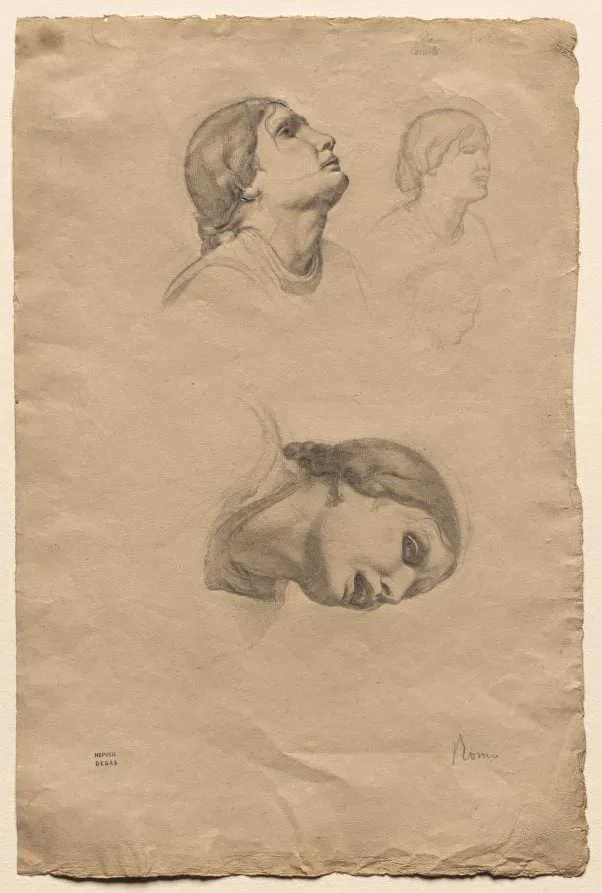
Four Studies of the Head of a Young Italian Woman is a drawing by the Impressionist artist Edgar Degas. It dates from 1856 and is held in the collection of the Cleveland Museum of Art. This sheet contains four rapid pencil studies of a young woman’s head, executed during Degas’s first visit to Italy in 1856.
About this work
He wrote the model’s name—Rita Cacciala—right on the paper, something artists often did to keep track of who posed for them.
You see four quick sketches of the same young woman’s head, each turned a little differently. Her face shifts from calm to tense, as if she’s holding back tears.
Degas drew these in 1856 while living in Italy. He wrote the model’s name—Rita Cacciala—right on the paper, something artists often did to keep track of who posed for them. The small changes in her expression show how much he cared about real, fleeting moments.
If you like how Degas worked, look up *sfumato*.
Overview
This sheet contains four rapid pencil studies of a young woman’s head, executed during Degas’s first visit to Italy in 1856. Each sketch captures a subtle shift in her posture and expression, revealing an intense focus on transient emotional states. The drawings are not idealized portraits but intimate observations, marked by loose, responsive lines that convey immediacy and psychological nuance.
Subject & Meaning
The model, identified as Rita Cacciala, is depicted in a sequence of expressions ranging from quiet stillness to visible strain, as if suppressing emotion. Degas does not narrate a story but isolates fleeting moments of vulnerability, suggesting an interest in the unguarded human condition. The repeated rendering of the same face implies a deliberate exploration of inner life through external variation.
Technique & Style
Degas employed quick, fluid pencil strokes to capture subtle changes in facial tension and head orientation. The lines are economical yet precise, avoiding heavy shading in favor of suggestive contours. This approach reflects his early commitment to observing reality directly, prioritizing the authenticity of gesture over polished finish or dramatic lighting.
History & Provenance
Created during Degas’s formative years in Italy, the drawing belongs to a series of figure studies made while he immersed himself in Renaissance art and local life. The inscription of the model’s name aligns with contemporary studio practices, serving as a practical record for future sittings. The sheet remained in the artist’s possession and later entered a major collection through documented acquisition.
Context
In mid-1850s Italy, artists frequently made studies from live models to hone observational skills, often outside formal academies. Degas’s focus on expressive nuance rather than classical idealism set him apart from academic norms. These sketches reflect his growing interest in psychological realism, a direction that would later define his depictions of dancers and bathers.
Legacy
Though lesser known than his later works, these studies reveal the foundations of Degas’s enduring concern with transient expression and bodily presence. The emphasis on unposed, momentary states influenced later generations of draftsmen who sought to capture authenticity over convention. The sheet stands as an early testament to his belief that drawing could reveal the unseen within the visible.
Artist & collection
Artist
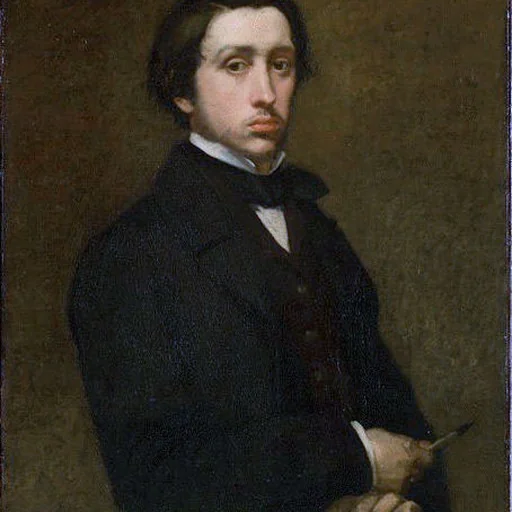
Born Hilaire-Germain-Edgar De Gas on 19 July 1834 in Paris, Edgar Degas came from an affluent banking family with aristocratic roots and spent his childhood among the cultivated circles of the French capital.

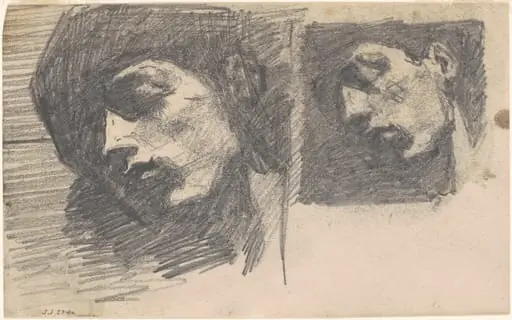 Two Heads
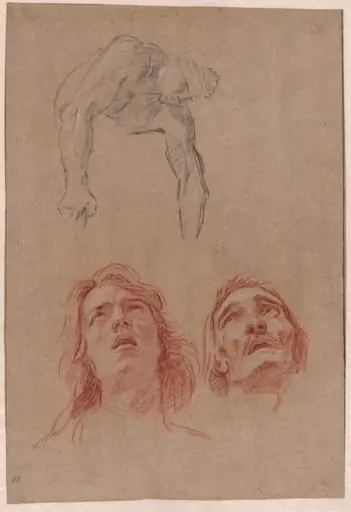 Man Reaching Down and Two Studies of Heads (recto)
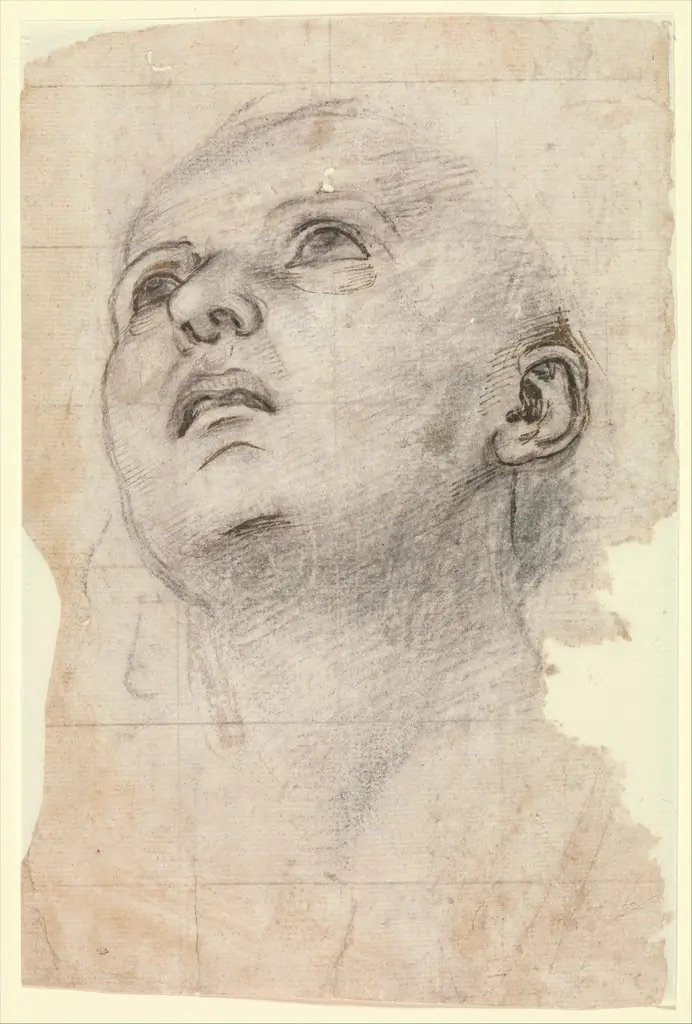 Study of the Head of a Youth Gazing Upward
![Figure Studies [verso], by George Romney](https://artifactworldgallery.com/img/george-romney--figure-studies-verso--19708132818b32a0-w320.webp) Figure Studies [verso]
Figure Studies [verso]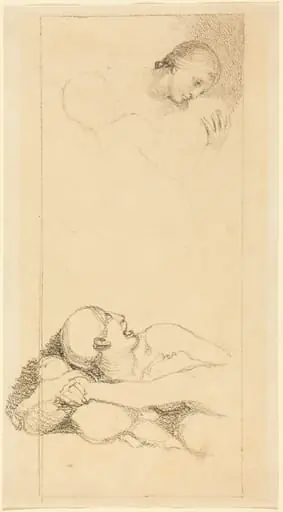 Frightened Man Looking Up; Woman and Children
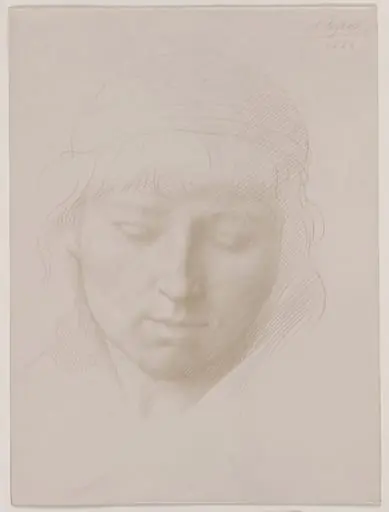 Head of a Man
![Man Reclining on the Ground and the Corner of a Bed [verso], by Jean-Baptiste Deshays](https://artifactworldgallery.com/img/jean-baptiste-deshays--man-reclining-on-the-ground-and-the-corner-of-a-bed-verso--3e054816ddd681bf-w320.webp) Man Reclining on the Ground and the Corner of a Bed [verso]
Man Reclining on the Ground and the Corner of a Bed [verso]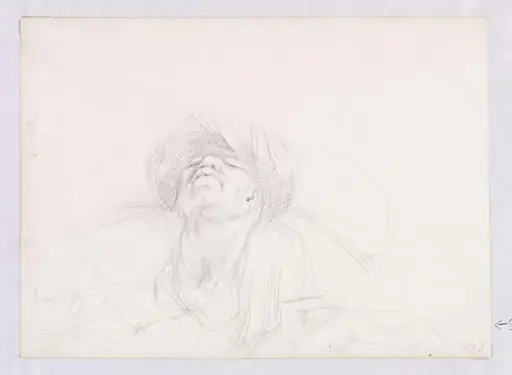 Male figure, probably North African
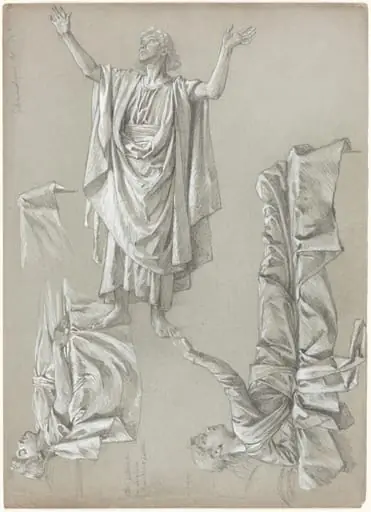 Studies for the Raising of the Daughter of Jairus
 Untitled
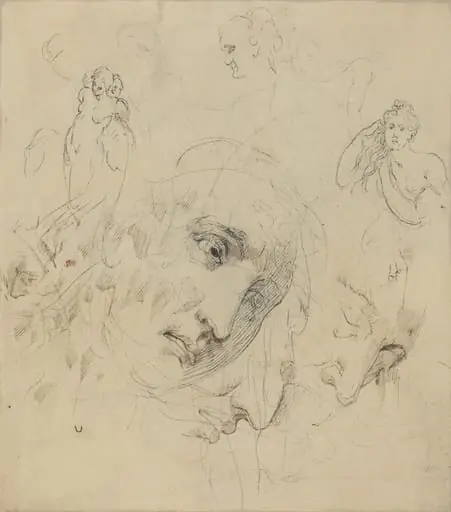 Studies with Central Female Face
![Studies of a Female Head [recto], by Perry, Enoch Wood, Jr.](https://artifactworldgallery.com/img/perry-enoch-wood-jr--studies-of-a-female-head-recto--da87fb5fc8e6c9bf-w320.webp) Studies of a Female Head [recto]
Studies of a Female Head [recto]