Artwork
Horse and Rider
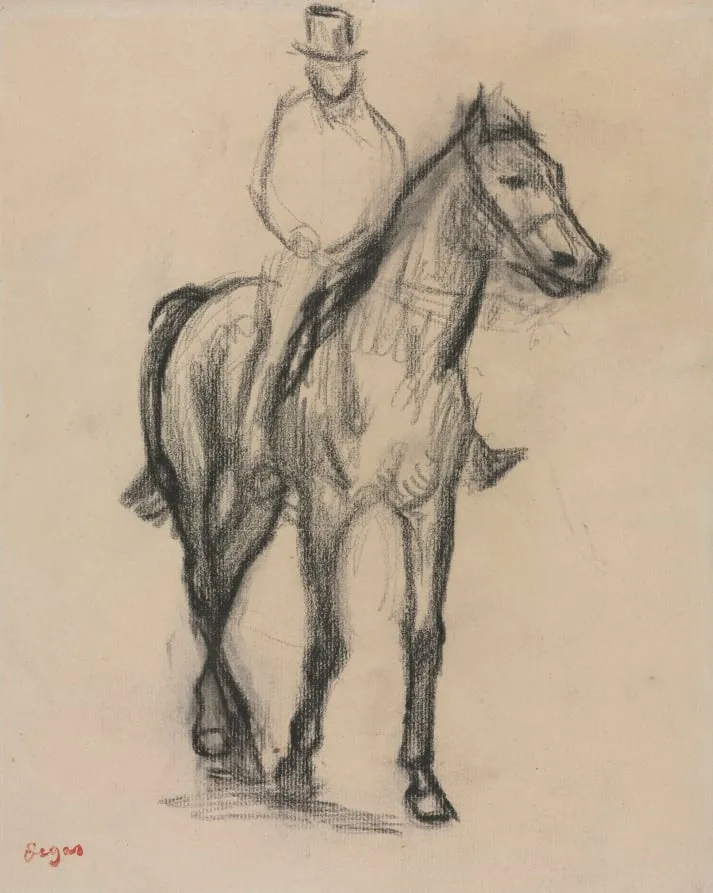
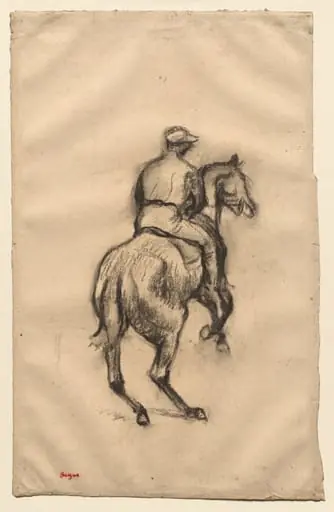
Horse and Rider is a drawing by the Impressionist artist Edgar Degas. It dates from 1890 and is held in the collection of the Cleveland Museum of Art.
About this work
Degas loved racing scenes but cared more about the horse’s power than the rider.
You see a racehorse mid-gallop with a top-hatted rider barely sketched in. The horse’s legs bend in impossible ways—Degas studied motion like a dancer. The rider’s face is a blur, almost an afterthought.
Degas loved racing scenes but cared more about the horse’s power than the rider. He sketched this from real horses, not just imagination. The background is simple, so the focus stays on the animal’s energy.
This feels like his ballet dancers—just a quick study of movement. Next, look up Edgar Degas (French, 1834–1917).
Overview
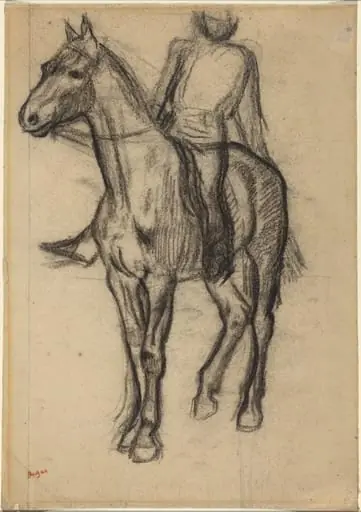
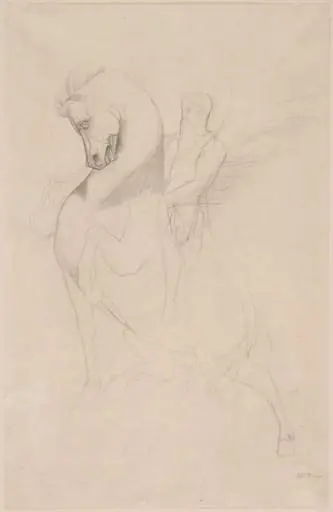
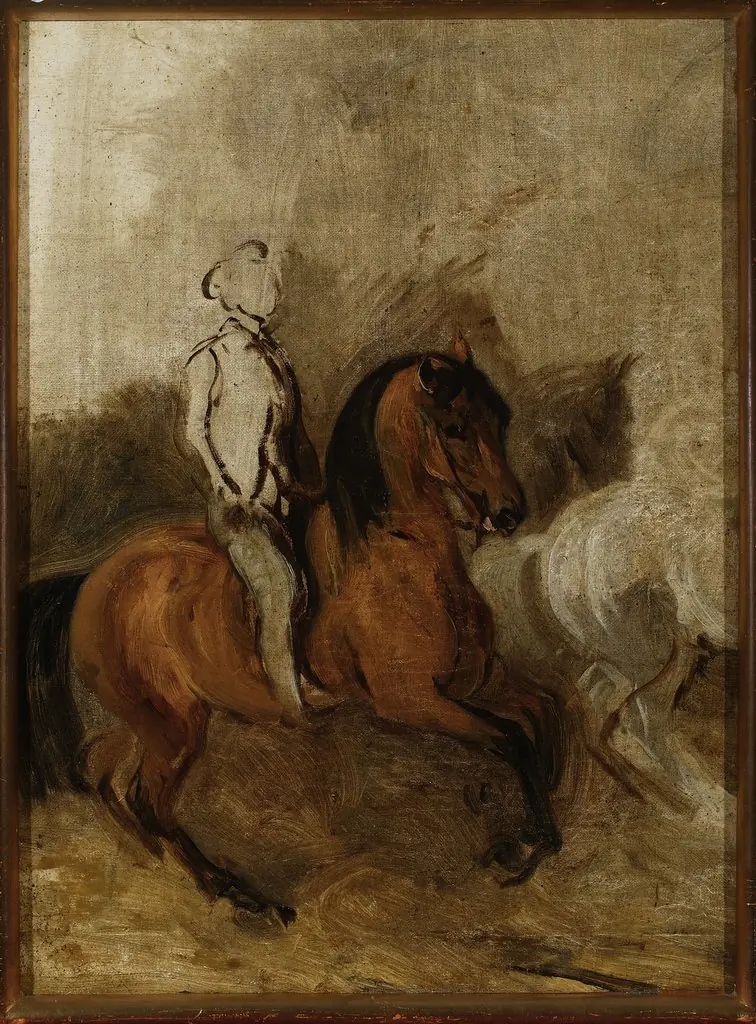
This pencil drawing by Edgar Degas captures a racehorse in mid-gallop, its limbs dynamically articulated in a sequence of motion. The rider, barely defined and top-hatted, appears as a faint silhouette, secondary to the animal’s physical presence. Degas rendered the scene with rapid, observational strokes, emphasizing the horse’s anatomy over narrative detail. The composition strips away context, focusing solely on movement and form.
Subject & Meaning
The subject reflects the steeplechase, a social event where amateur riders, often aristocrats, competed. Yet Degas shifts attention from the human participant to the horse’s kinetic energy. The rider’s indistinct form suggests detachment, underscoring the artist’s fascination with the animal as a vessel of power and motion. The work reorients the genre: not a portrait of leisure, but a study of biological force in action.
Technique & Style
Degas employed quick, layered pencil strokes to suggest motion rather than define it precisely. The horse’s legs are exaggerated in their articulation, echoing his studies of dancers in motion—bending, stretching, and overlapping in ways that defy static anatomy. The background is left sparse, heightening focus on the animal’s limbs. This method reveals his process: direct observation, revision, and emphasis on transient posture over idealized form.
History & Provenance
Created during Degas’s sustained engagement with horse racing in the 1870s and 1880s, this drawing stems from his frequent visits to racecourses near Paris. He made numerous sketches from life, often returning to the same subjects to refine his understanding of equine movement. This piece belongs to a larger body of works that document his transition from academic precision to expressive, experimental draftsmanship.
Context
In late 19th-century France, horse racing was both a social ritual and a subject of modern life. While other artists depicted the spectacle of crowds and fashion, Degas turned inward—to the mechanics of motion. His approach aligned with broader scientific interests in locomotion, paralleling Eadweard Muybridge’s photographic studies. The drawing reflects a shift from romanticized equestrian imagery to anatomical realism grounded in observation.
Legacy
This drawing exemplifies Degas’s enduring influence on modern figural studies. By prioritizing the horse’s motion over the rider’s identity, he expanded the possibilities of drawing as a tool for capturing transient physicality. His method—revising, layering, and simplifying—became a model for later artists exploring movement, from Futurists to contemporary animators, affirming the drawing’s role as a quiet revolution in visual perception.
Artist & collection
Artist
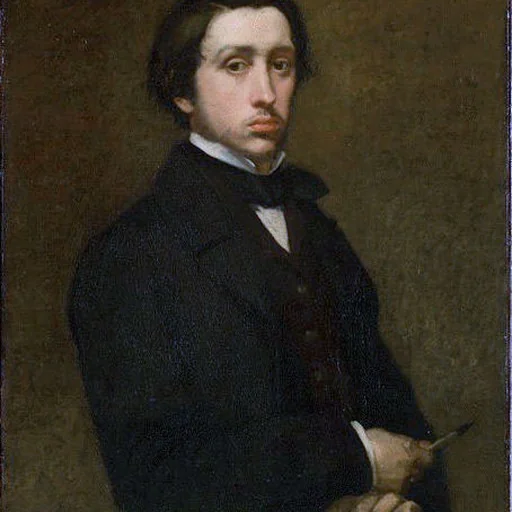
Born Hilaire-Germain-Edgar De Gas on 19 July 1834 in Paris, Edgar Degas came from an affluent banking family with aristocratic roots and spent his childhood among the cultivated circles of the French capital.