Artwork
Drawing of a horse
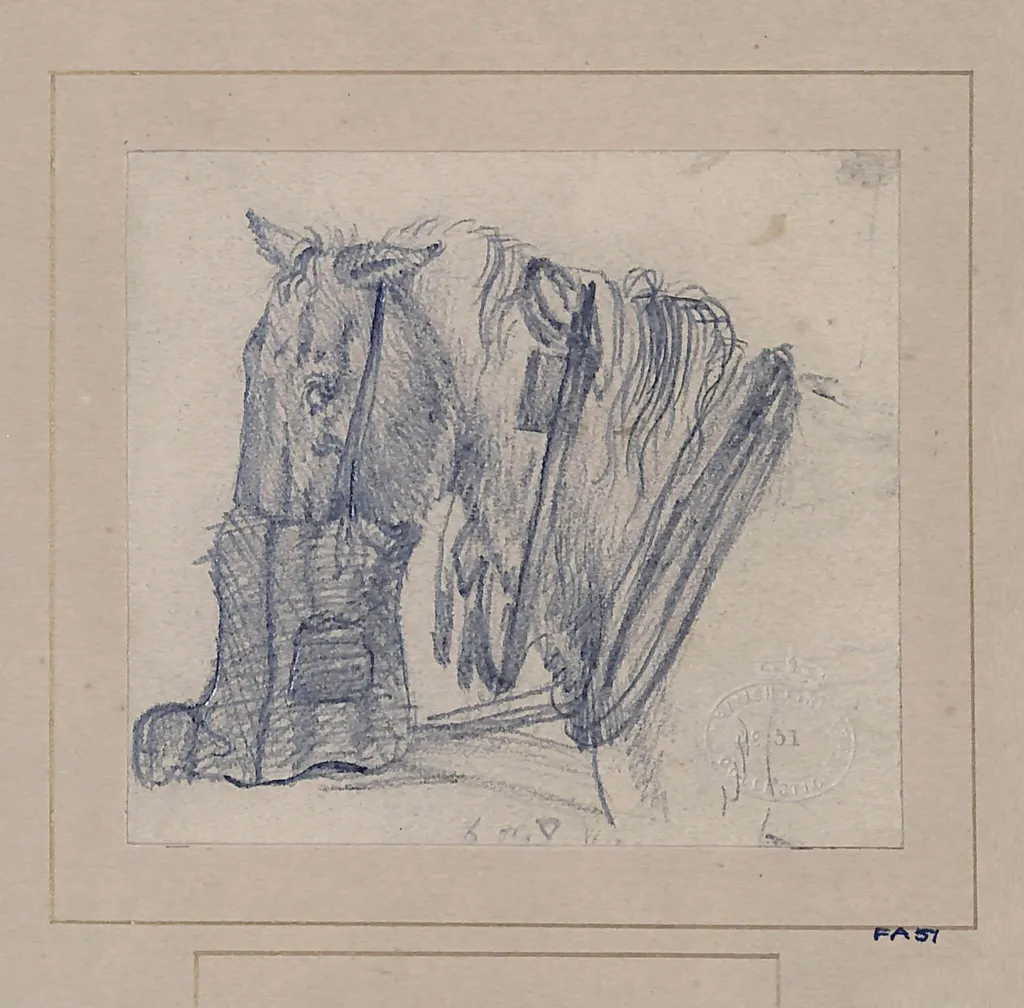
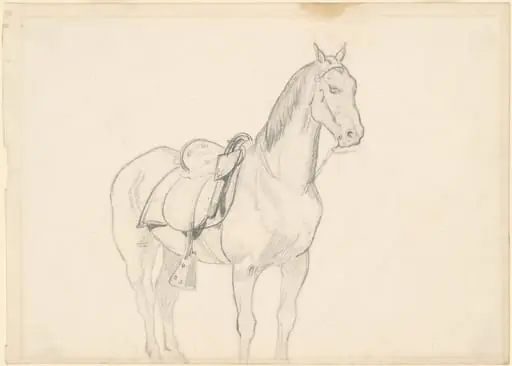
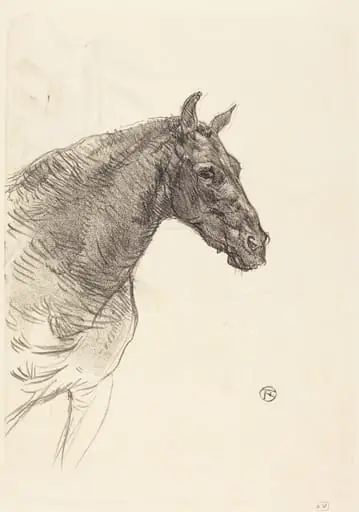
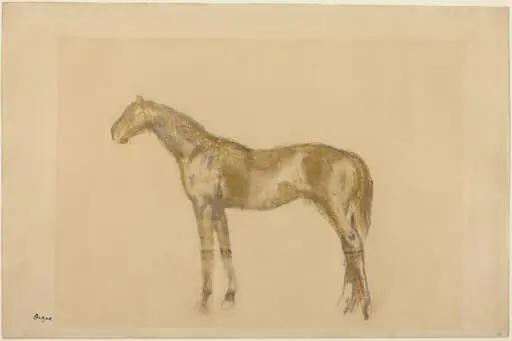
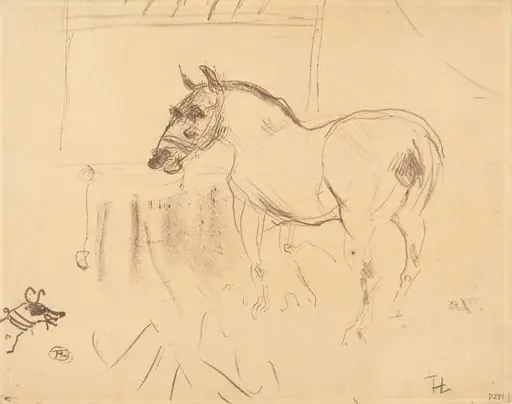
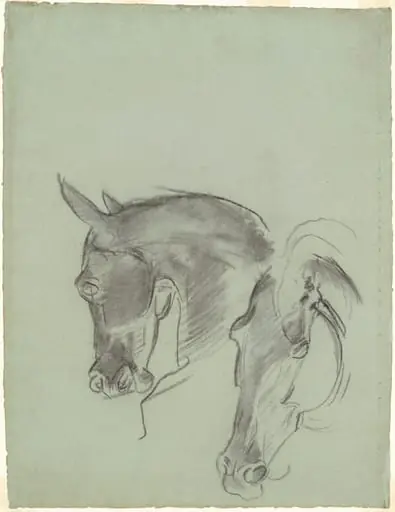
Drawing of a horse is a drawing by the Romanticist artist Edwin Landseer. It dates from 1812 and is held in the collection of the Victoria and Albert Museum.
About this work
Overview
Executed in soft gray tones, the work is one of several early sketches from the Sheepshanks collection, donated to the Victoria and Albert Museum.
This graphite drawing by Edwin Landseer portrays a horse feeding from a sack tied around its neck. Executed in soft gray tones, the work is one of several early sketches from the Sheepshanks collection, donated to the Victoria and Albert Museum. The composition emphasizes the animal’s physical presence through minimal, expressive lines rather than detailed rendering, reflecting the artist’s observational approach to livestock.
Subject & Meaning
The horse, shown in a moment of quiet nourishment, is depicted without human figures or contextual setting, focusing attention solely on its form and behavior. The suspended feed bag suggests domestic care, yet the animal’s posture conveys independence and strength. Landseer’s choice to isolate the horse implies an interest in its natural dignity, treating it as a subject worthy of study in its own right.
Technique & Style
Landseer employed swift, fluid pencil strokes to suggest volume and motion rather than define precise contours. Shadows are indicated with darker, layered marks, while lighter areas imply highlights and form. The legs and tail are barely outlined, conveying movement through implication. The mane flows in loose, rhythmic lines, capturing texture without overworking the surface, characteristic of a spontaneous study.
History & Provenance
The drawing originates from the Sheepshanks collection, a group of works donated to the Victoria and Albert Museum in the mid-19th century. These early sketches by Landseer were likely made during his formative years, before his more polished equestrian paintings gained public recognition. The mount bears annotations identifying the collection, confirming its institutional provenance and scholarly value.
Context
In the early 1800s, artists increasingly turned to direct observation of animals as scientific and aesthetic interest in natural history grew. Landseer, known for his detailed animal portraits, began with such quick studies to understand anatomy and behavior. This drawing reflects a broader trend among British artists to document livestock with both precision and empathy, moving beyond mere representation.
Legacy
Though modest in scale, this sketch exemplifies Landseer’s foundational approach to animal drawing—prioritizing observation over idealization. It remains a key example of how 19th-century artists used informal studies to inform larger works. Its preservation in a major museum underscores its role in documenting the evolution of British animal art and the artist’s developing technique.
Artist & collection

Artist
Sir Edwin Henry Landseer was an English painter and sculptor, well known for his paintings of animals – particularly horses, dogs, and stags. His best-known work is the lion sculptures at the base of Nelson's Column in Trafalgar Square.

![Studies of a Cow [verso], by Paul Gauguin](https://artifactworldgallery.com/img/paul-gauguin--studies-of-a-cow-verso--80694066ae3cfdb3-w320.webp)