Artwork
Horse and Rider
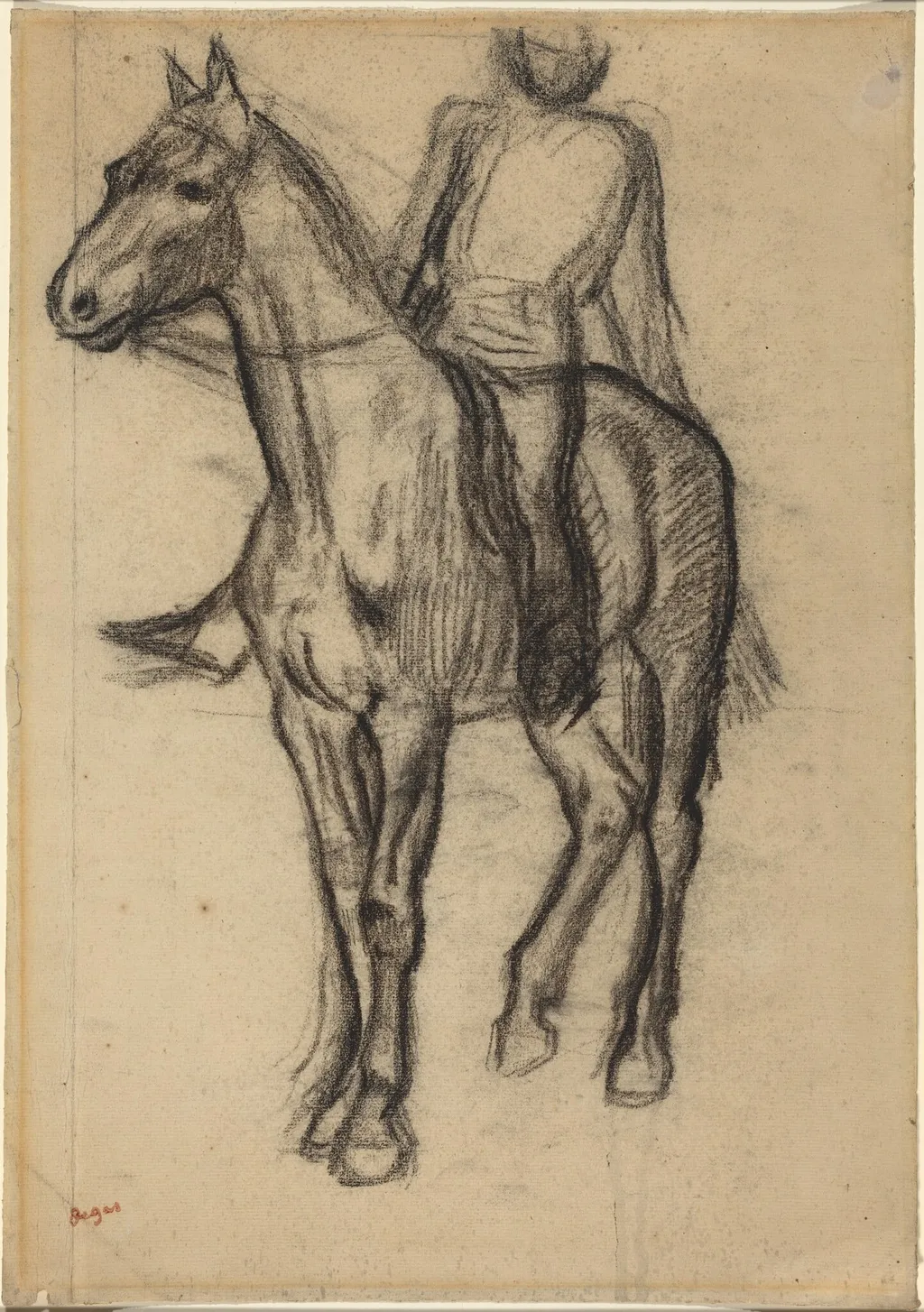
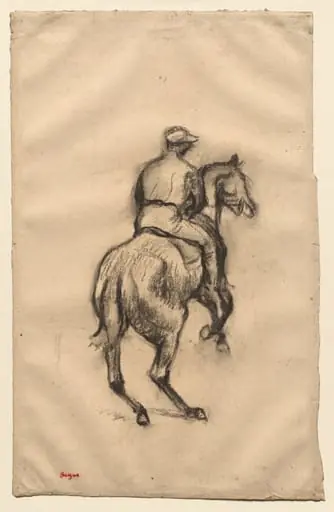
Horse and Rider is an oil drawing by the Impressionist artist Edgar Degas. It dates from 1878 and is held in the collection of the National Gallery of Art.
About this work
Overview
Horse and Rider is a drawing created by French artist Edgar Degas around 1878. Executed in oiled black chalk on cream laid paper, this work showcases Degas' technical proficiency in capturing dynamic figures.
Subject & Meaning
Depicting a horse and rider from behind, the drawing emphasizes the physical relationship between the two. The horse's expressive pose, with a slightly turned head and detailed musculature, contrasts with the rider's rigid, simplified form, highlighting an intriguing imbalance in their interaction.
Technique & Style
Characterized by quick, rough lines for the horse's anatomy and sparse, block-like rendering of the rider, the drawing demonstrates Degas' expressive use of oiled black chalk. The stark contrast between dark lines and the light paper underscores the subject's contours and movement.
History & Provenance
Created circa 1878, Horse and Rider aligns with Degas' period interest in racecourse themes and figure movement. While specific provenance details are not provided, the work reflects his broader artistic explorations during this time.
Context
Within Degas' oeuvre, Horse and Rider sits alongside other works focusing on everyday scenes and the capture of movement, though it contrasts with his more frequently used mediums of pastels, oils, and sculpture.
Own this work as a print
Artist & collection
Artist
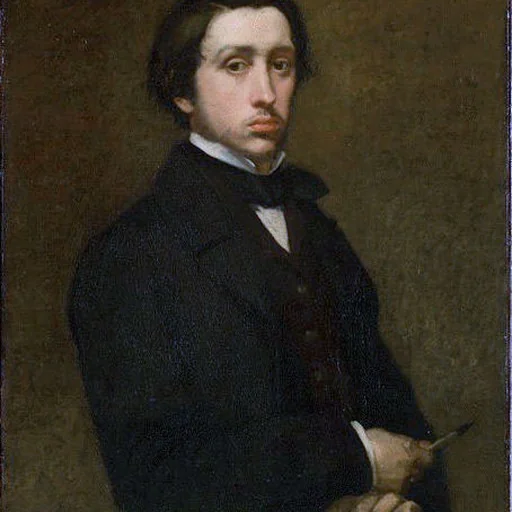
Born Hilaire-Germain-Edgar De Gas on 19 July 1834 in Paris, Edgar Degas came from an affluent banking family with aristocratic roots and spent his childhood among the cultivated circles of the French capital.

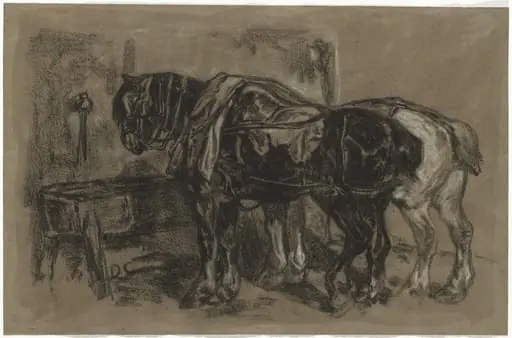 Two Draft Horses
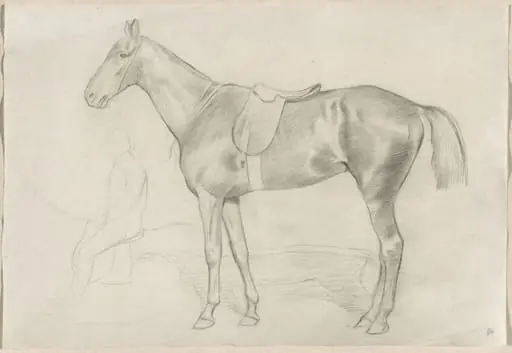 Saddled Horse with a Study of a Rider
 The Jockey
 Jockey
 Studies for "The Fall of Gog and Magog"
 Reiter II (Horseman II)
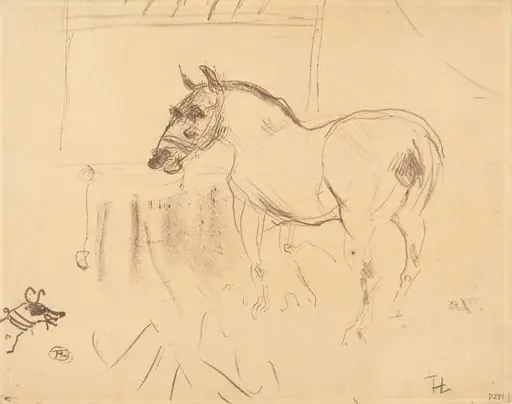 The Small Pony from Calmese (Le petit poney de Calmèse)
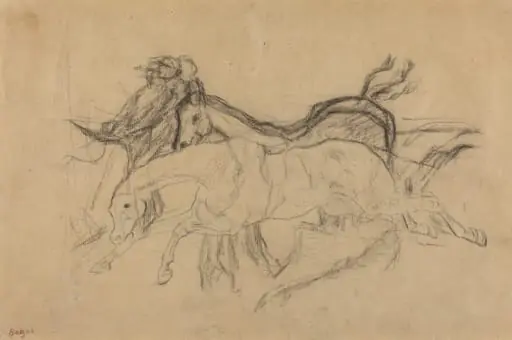 Racehorses (study for "Scene from the Steeplechase: The Fallen Jockey")
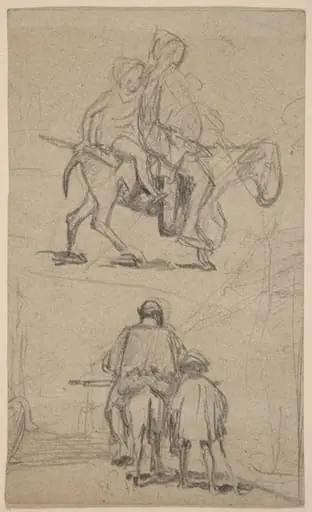 Father, Son, and Donkey
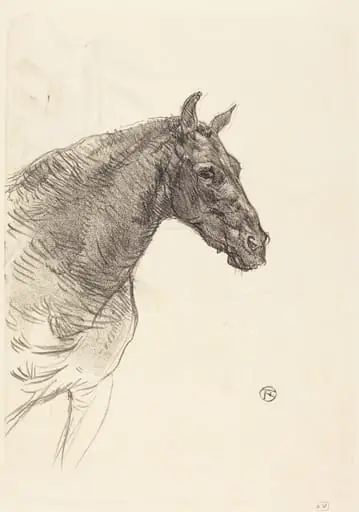 Old Horse (Le vieux cheval)