Artwork
Sheet of Studies and Sketches
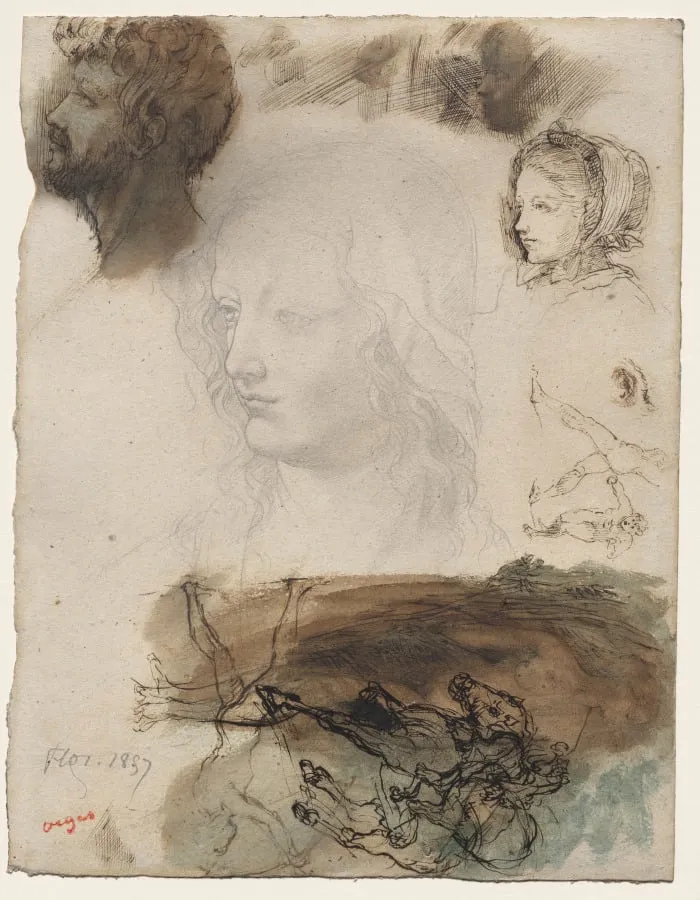
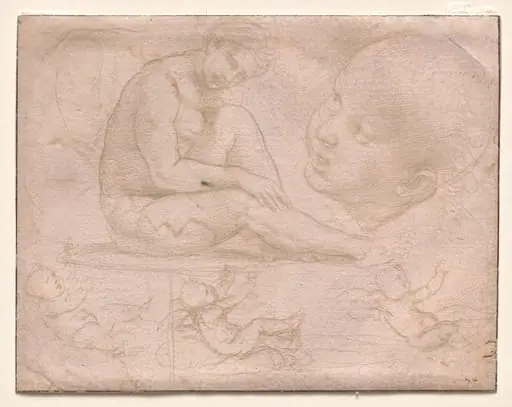
Sheet of Studies and Sketches is a drawing by the Impressionist artist Edgar Degas. It dates from 1858 and is held in the collection of the Cleveland Museum of Art. Created in July 1858 during Degas’s trip to Florence, this sheet gathers a range of observational sketches executed in pencil and ink.
About this work
You see a woman’s face copied from a Leonardo drawing at the Uffizi, plus a rough portrait of his cousin and quick studies of sculptures.
This sheet mixes quick sketches in pencil and ink. You see a woman’s face copied from a Leonardo drawing at the Uffizi, plus a rough portrait of his cousin and quick studies of sculptures. The lines aren’t polished—they look like a young artist testing ideas.
Degas made this in Florence in 1858 while copying old masters. Copying was how artists learned then. The mix of styles shows him pulling from many places at once.
It’s a simple sheet with big meaning. Look up The Cleveland Museum of Art to see it in person.
Overview
Created in July 1858 during Degas’s trip to Florence, this sheet gathers a range of observational sketches executed in pencil and ink. It reflects the common academic practice of studying old master works, but also captures personal moments and spontaneous responses to the city’s sculptural heritage. The page functions as both a learning exercise and a private visual journal.
Subject & Meaning
The central figure is a graphite rendering of a female head, copied from a drawing then believed to be by Leonardo da Vinci in the Uffizi. Surrounding it are quick studies of Florentine sculptures and a tentative portrait of Degas’s cousin Giulia Bellelli. Together, these elements reveal a young artist absorbing historical models while recording intimate, contemporary life.
Technique & Style
Lines vary from delicate, controlled contours to loose, rapid strokes. The copied Leonardo head is rendered with careful attention to form, while the sculptural studies and portrait of Bellelli are sketched with immediacy and minimal detail. The absence of polish suggests a focus on observation over finish, characteristic of an artist in active learning.
History & Provenance
Degas produced this sheet during a formative trip to Italy in 1858, part of his broader training through direct engagement with Renaissance art. It remained in his personal collection until his death, later entering the collection of the Cleveland Museum of Art. Its survival offers rare insight into his early artistic development outside formal academy settings.
Context
In mid-19th-century Europe, copying Old Master drawings was a standard method for training artists. Florence, rich in Renaissance art, offered direct access to works by Leonardo, Michelangelo, and others. Degas’s sheet exemplifies this tradition, yet its inclusion of personal subjects signals a shift toward individual expression within academic discipline.
Legacy
This sheet reveals Degas’s early commitment to observation and his ability to synthesize historical influences with personal experience. Though not a finished work, it documents the foundational habits that would shape his later focus on movement, portraiture, and the interplay between tradition and modernity.
Artist & collection
Artist
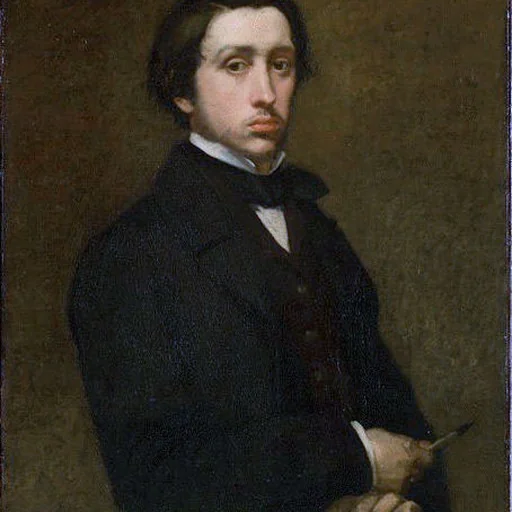
Born Hilaire-Germain-Edgar De Gas on 19 July 1834 in Paris, Edgar Degas came from an affluent banking family with aristocratic roots and spent his childhood among the cultivated circles of the French capital.

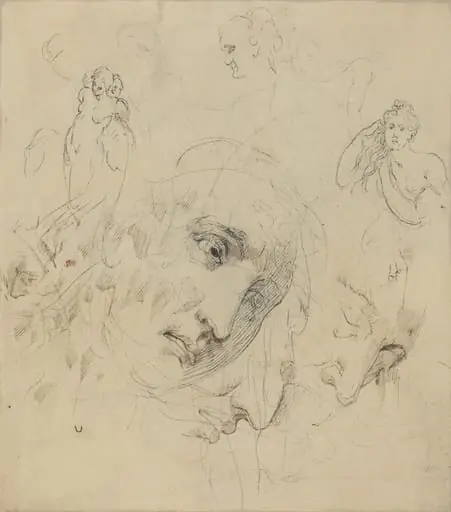 Studies with Central Female Face
![Sheet of Studies [recto], by Leonardo da Vinci](https://artifactworldgallery.com/img/leonardo-da-vinci--sheet-of-studies-recto--1bdf3f81c9affbae-w320.webp) Sheet of Studies [recto]
Sheet of Studies [recto]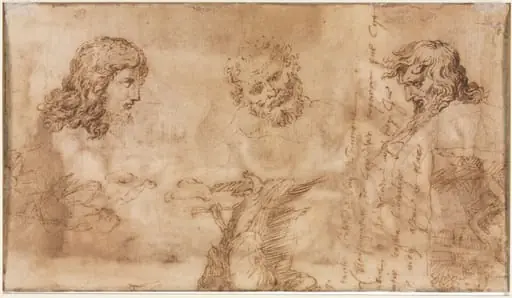 Three Heads and Other Sketches (verso)
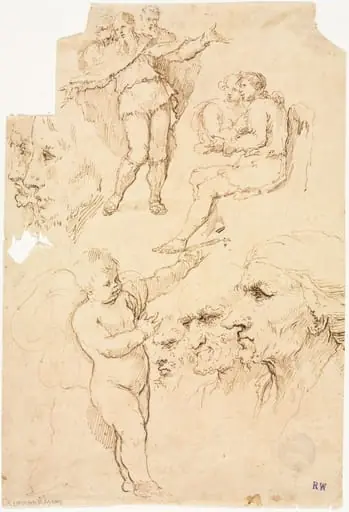 Sketches of Heads and Figures
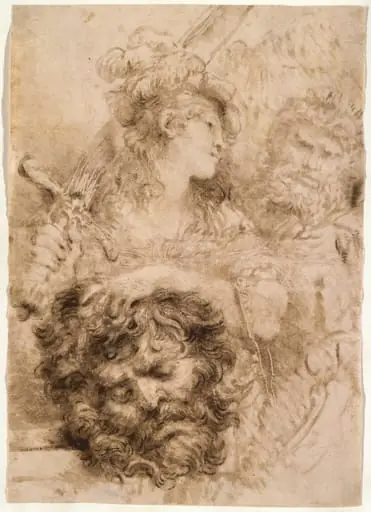 David with the Head of Goliath
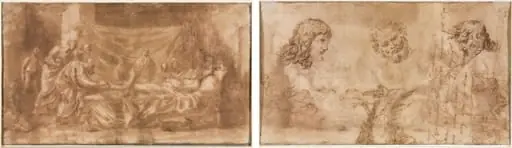 Extreme Unction (recto); Three Heads and Other Sketches (verso)
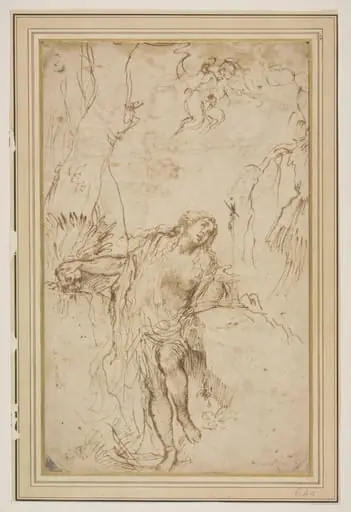 Untitled
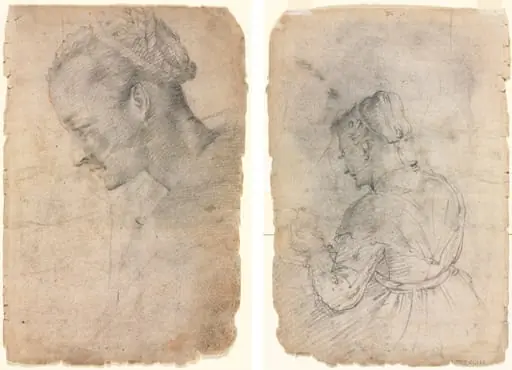 Profile of a Woman's Head (recto) A Kitchen Maid (verso)
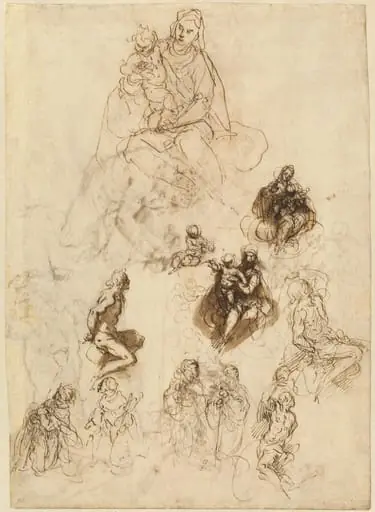 Studies of the Virgin and Child with Saints
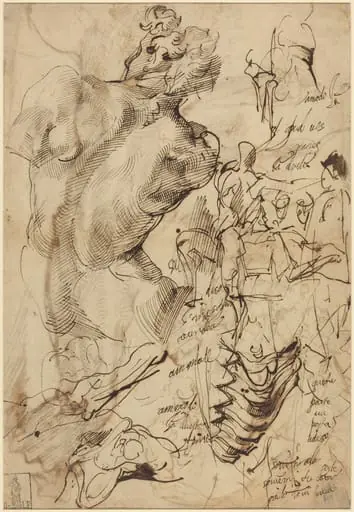 Studies of a Sculpture of a Male Nude, Vertebrae, and Gesturing Figures
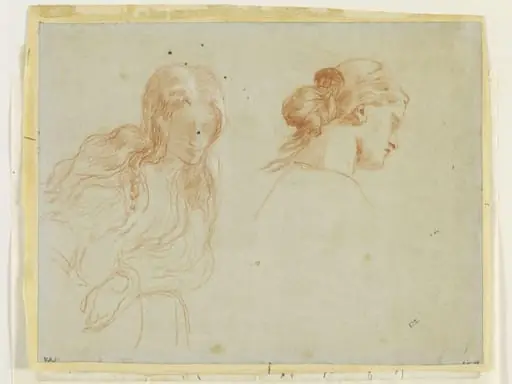 Untitled
 Studies of a Seated Female, Child's Head, and Three Studies of a Baby