Artwork
Extreme Unction (recto); Three Heads and Other Sketches (verso)
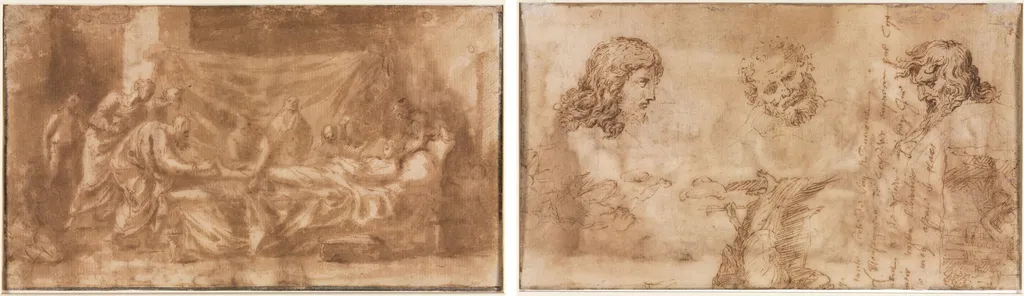
Extreme Unction (recto); Three Heads and Other Sketches (verso) is a drawing by the Baroque artist Nicolas Poussin. It dates from 1644 and is held in the collection of the Cleveland Museum of Art.
About this work
Overview
This double-sided drawing by Nicolas Poussin, dated 1644, features a solemn religious scene on the front and a series of rapid figure studies on the reverse.
This double-sided drawing by Nicolas Poussin, dated 1644, features a solemn religious scene on the front and a series of rapid figure studies on the reverse. Executed in a single medium on paper, it reflects the artist’s habit of using the back of preparatory sheets for informal sketches. The work is part of the Cleveland Museum of Art’s collection, preserved as a record of Poussin’s working process rather than a completed composition.
Subject & Meaning
The recto depicts a quiet moment of ritual care, likely the sacrament of Extreme Unction, as figures surround a recumbent individual in a dim interior. A child is held near the bedside, suggesting familial presence amid spiritual transition. The composition emphasizes stillness and reverence, with no overt drama, aligning with Poussin’s preference for restrained emotional expression in sacred subjects.
Technique & Style
Poussin employs subtle chiaroscuro to model forms with soft gradations of light and shadow, guiding the viewer’s attention to the central figure. The lines are deliberate yet fluid, suggesting careful observation rather than improvisation. On the verso, quick, gestural strokes capture head studies and a winged form, revealing his habit of rehearsing gestures and anatomical details outside formal commissions.
History & Provenance
The drawing entered the Cleveland Museum of Art’s collection through established acquisition channels, though its earlier ownership prior to the 20th century remains undocumented. Its survival as a two-sided sheet indicates it was preserved for its artistic value, not discarded after use. It reflects 17th-century practices where artists reused paper for studies, especially during periods of intense preparatory work.
Context
Created during Poussin’s mature Roman period, this drawing coincides with his deep engagement with classical themes and religious narratives. While his finished paintings often conveyed stoic order, these sketches reveal a more spontaneous side—studying expressions and drapery to refine his approach to human emotion and divine ritual within structured compositions.
Legacy
This drawing illustrates how Poussin’s intellectual approach to art extended beyond finished works into the private realm of study. Its dual nature—formal scene and informal sketch—offers insight into his method of building meaning through repeated observation. Such sheets remain vital to understanding the transition from idea to execution in early modern European drawing practices.
Artist & collection
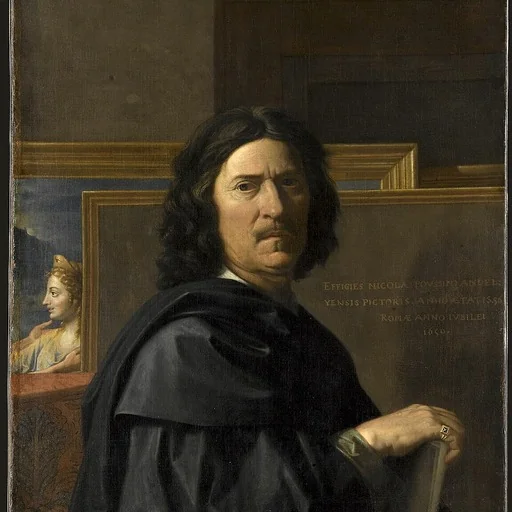
Artist
Nicolas Poussin (UK: , US: , French: ; June 1594 – 19 November 1665) was a leading painter of the classical French Baroque style, although he spent most of his working life in Rome.

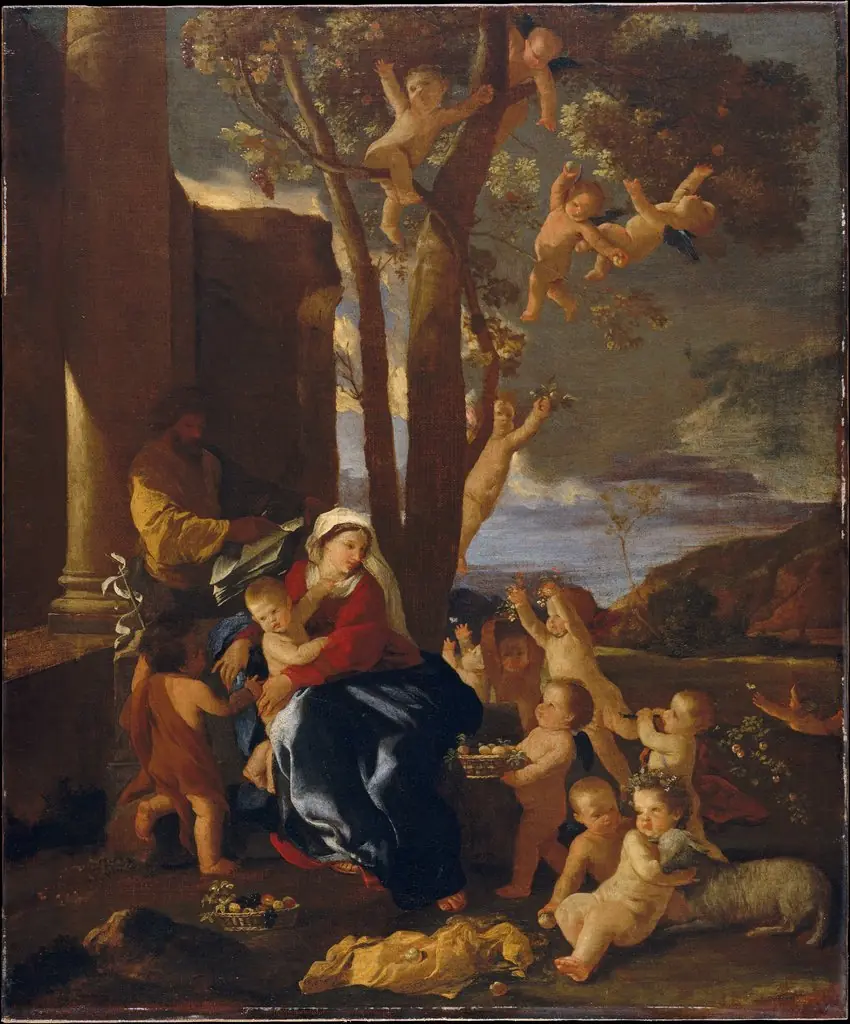
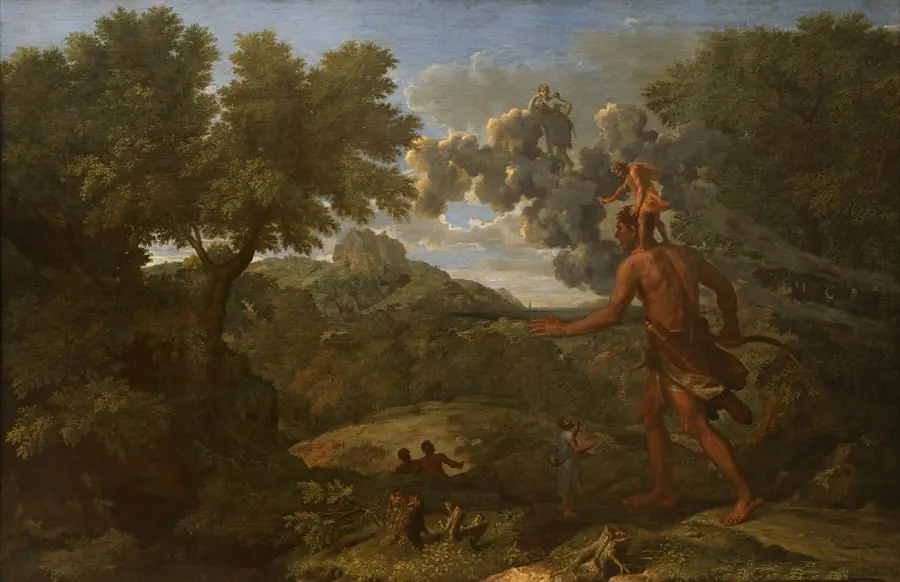
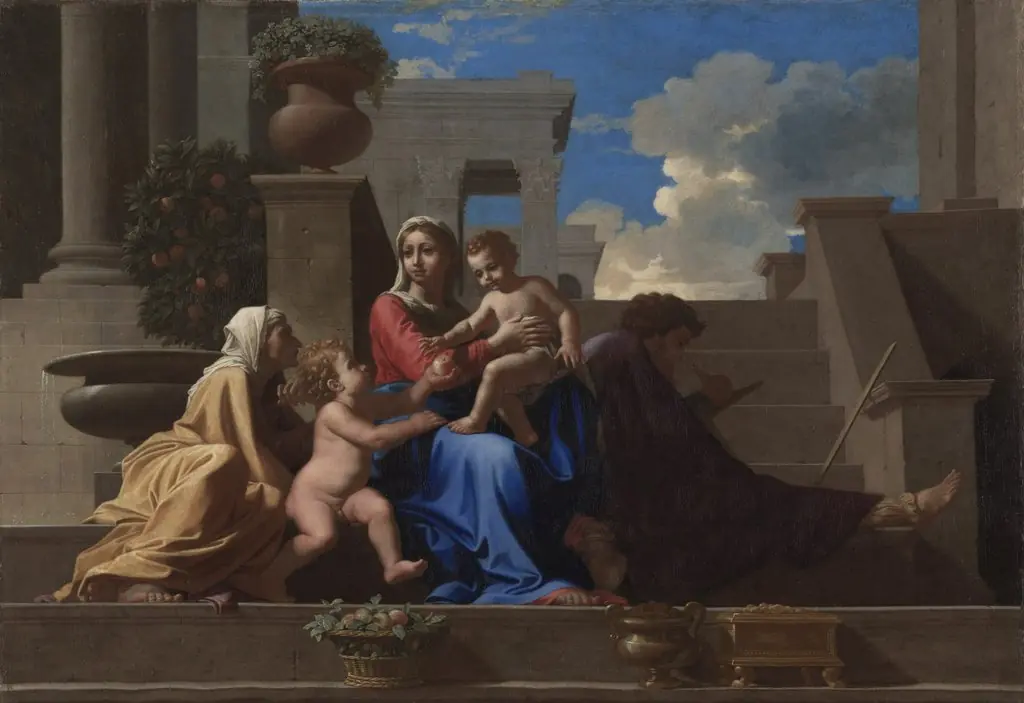
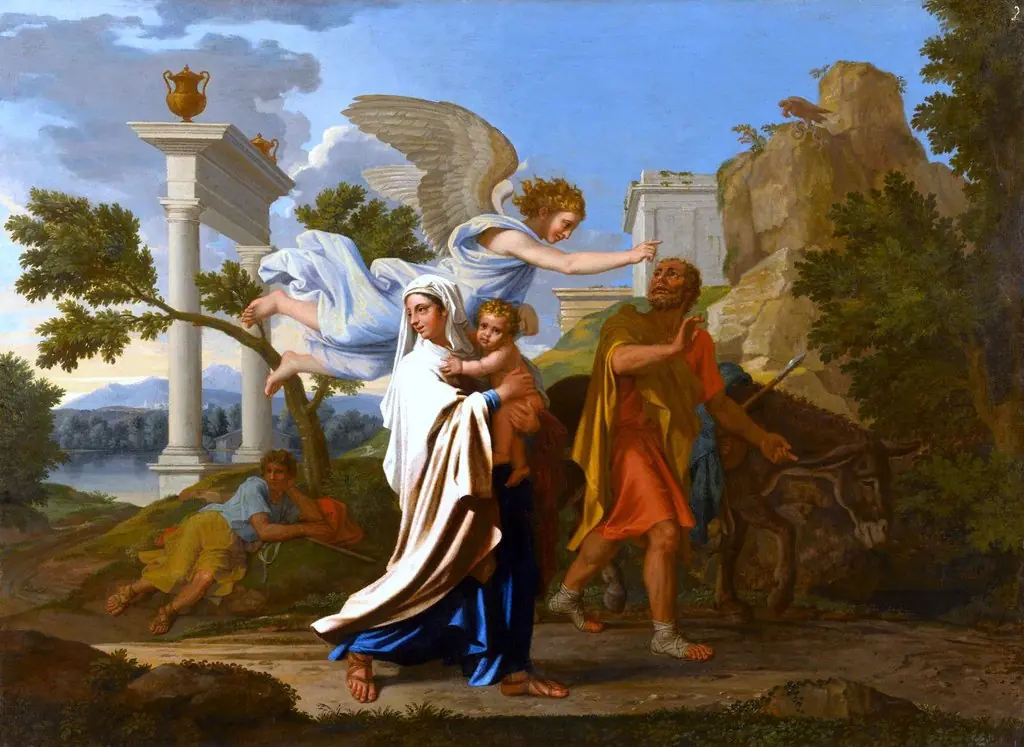
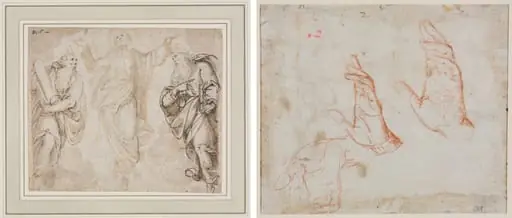 The Transfiguration (recto); Study of Hands (verso)
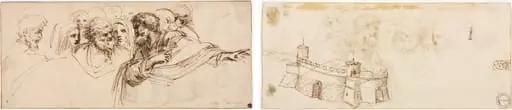 Study of Heads (recto); Crenelated Fortress (verso)
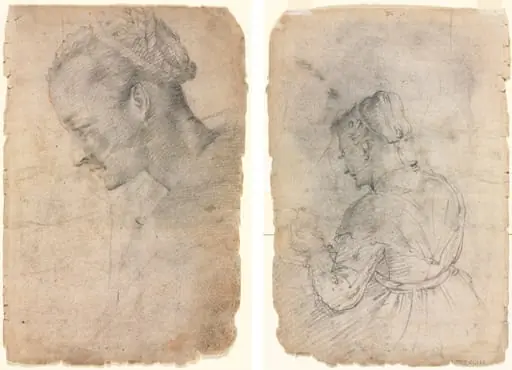 Profile of a Woman's Head (recto) A Kitchen Maid (verso)
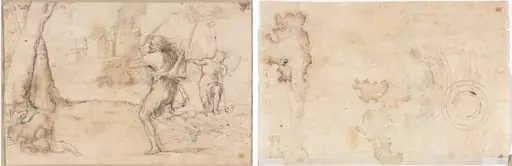 Romulus and Remus Found by Faustulus (recto) Concentric Circles (verso)
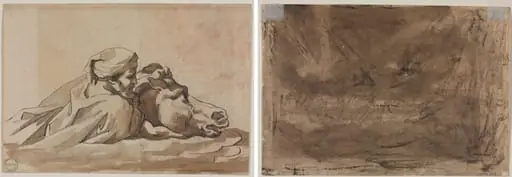 Man Clutching a Horse in Water, after Poussin's "Deluge" (recto); Compositional Study? (possibly for "Poussin's Deluge") (verso)
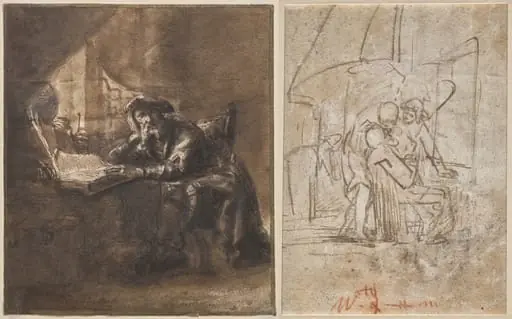 An Old Man Seated at a Table, His Head Resting on His Right Hand (recto); The Healing of Tobit (verso)
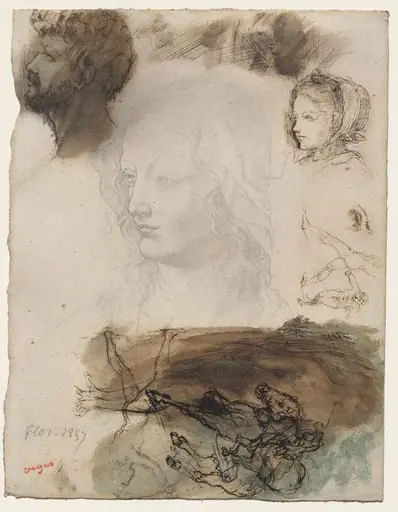 Sheet of Studies and Sketches