Artwork
St. Donat's Castle
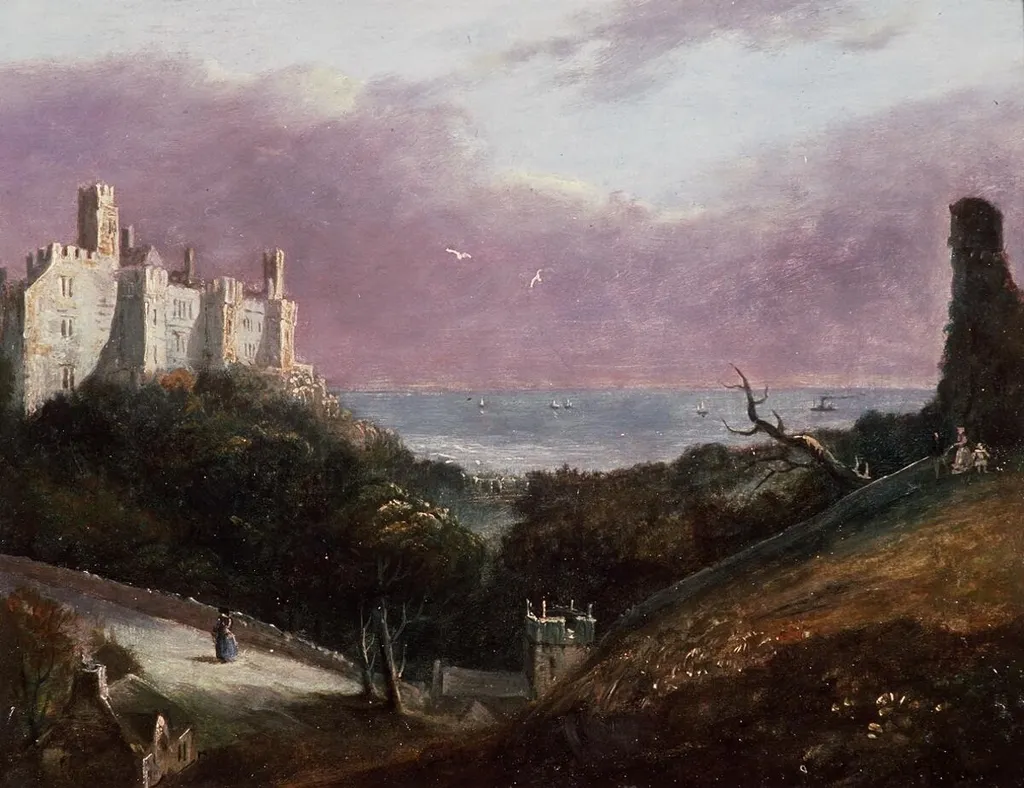
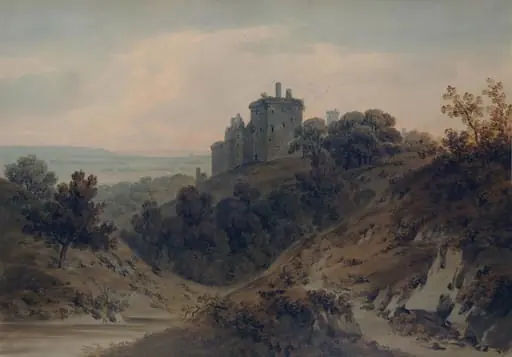
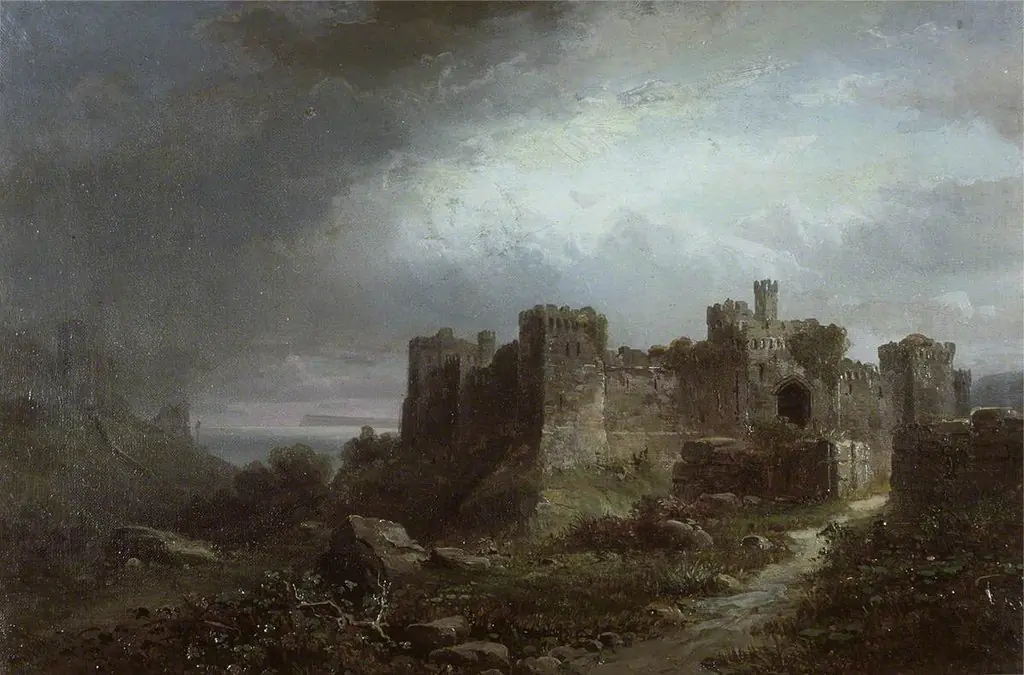
St. Donat's Castle is an oil painting by the British Romanticist artist Edmund John Niemann. It dates from 1850 and is held in the collection of the National Library of Wales.
About this work
Overview
Edmund John Niemann painted St. Donat's Castle circa 1850 using oil on canvas. A British artist active in the mid-19th century, Niemann focused on landscape subjects, often capturing rural and architectural scenes with careful attention to light and mood. This work belongs to a broader tradition of British landscape painting that emphasized natural beauty and historical presence.
Subject & Meaning
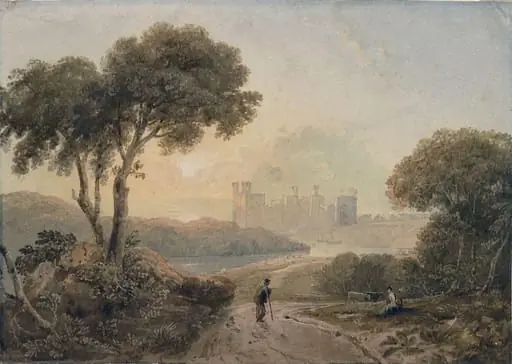
The painting presents St. Donat's Castle, a medieval structure in Wales, perched on a hill above water. The composition guides the viewer’s eye along a winding path from the foreground toward the fortress, suggesting a quiet journey through time and terrain. The scene conveys stillness rather than drama, reflecting a contemplative relationship between human history and the natural world.
Technique & Style
The pinkish-purple twilight hues and scattered clouds create a gentle luminosity, while the foreground foliage is rendered with loose, suggestive brushwork.
Niemann employed oil paint to build layered textures in the castle’s stonework and the soft transitions of the sky. The pinkish-purple twilight hues and scattered clouds create a gentle luminosity, while the foreground foliage is rendered with loose, suggestive brushwork. His approach balances precision in architecture with atmospheric looseness in nature, characteristic of Romantic-era landscape conventions.
History & Provenance
The painting entered the collection of the National Library of Wales, where it remains today. Though Niemann produced numerous works during his career, this piece is among the few that document specific Welsh landmarks. Its preservation reflects early institutional interest in regional heritage and the role of art in recording architectural history.
Context
Painted during a period of renewed interest in Britain’s medieval past, the work aligns with Romanticism’s fascination with ruins and antiquity. While industrialization reshaped the landscape, artists like Niemann turned to older sites as symbols of continuity. St. Donat’s, though not in ruin, evokes a sense of enduring presence amid changing times.
Legacy
Niemann’s depiction of St. Donat’s Castle contributes to a visual record of Welsh landmarks in the 19th century. Though not widely exhibited beyond regional collections, the painting offers insight into how contemporary viewers perceived historical architecture—not as monuments to power, but as quiet, integrated elements of the natural environment.
Artist & collection

Artist
Edmund John Niemann (1813 – 15 April 1876) was a prolific and highly successful British landscape artist working mostly in oils. Nine of his paintings are held in the Wolverhampton Art Gallery.