Artwork
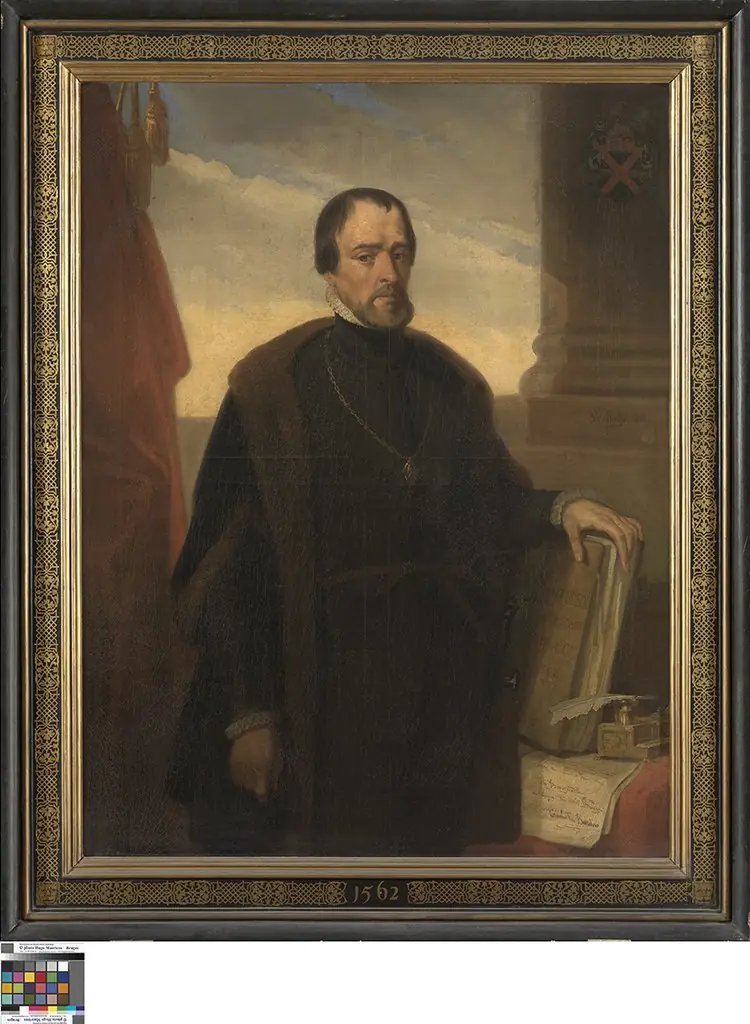
Portret van Nicolas Despars, burgemeester van Brugge
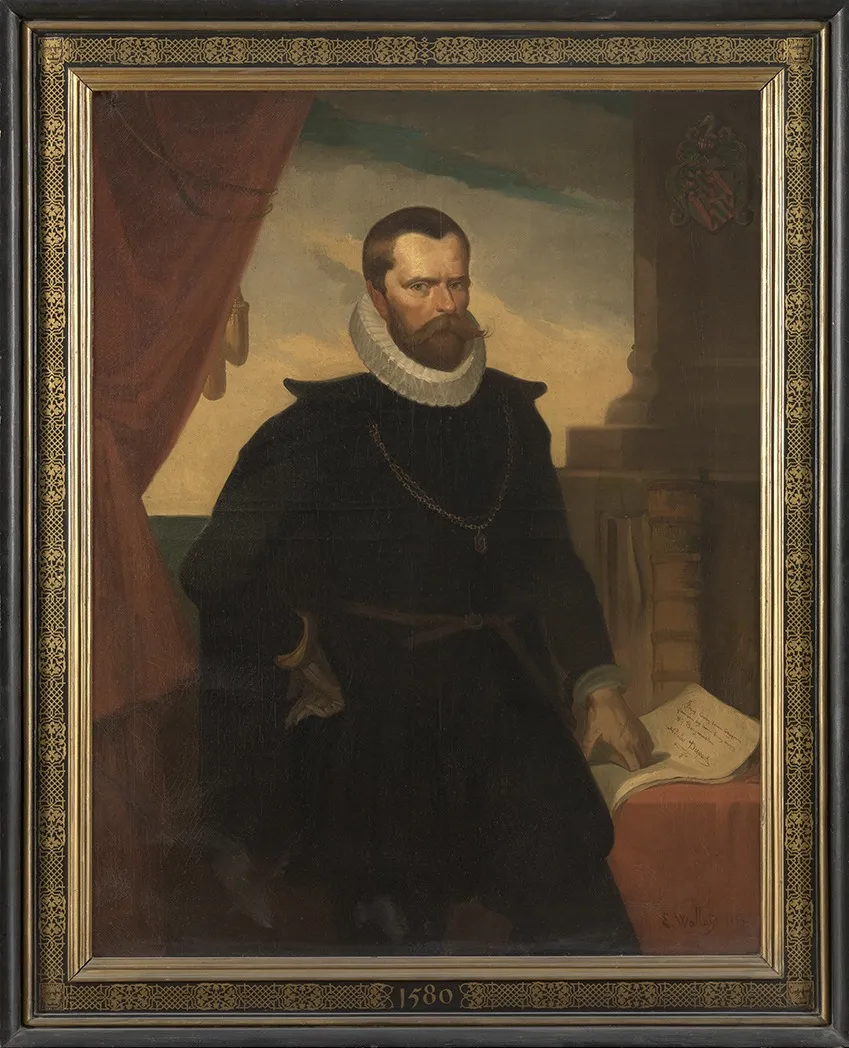
Portret van Nicolas Despars, burgemeester van Brugge is an oil painting by Eduard Wallays. It dates from 1839 and is held in the collection of the Groeningemuseum.
About this work
Overview
The painting is part of the Groeningemuseum’s collection, where it remains as a record of civic leadership in 19th-century Flanders.
Painted in 1839 by Eduard Wallays, this oil portrait captures Nicolas Despars, then mayor of Bruges. Wallays, trained in Belgium and Paris, completed the work during his studies in the French capital. The painting is part of the Groeningemuseum’s collection, where it remains as a record of civic leadership in 19th-century Flanders. Its composition reflects academic conventions of the period, emphasizing dignity and social standing.
Subject & Meaning
Nicolas Despars is portrayed in formal attire, his white ruff and gold chain signaling his official status. He holds a document, suggesting administrative duty, while a book on the table implies erudition. The coat of arms on the wall reinforces his civic role. The somber tones and direct gaze convey gravity, aligning the sitter with ideals of public service and intellectual authority common in municipal portraiture of the era.
Technique & Style
Wallays employs precise brushwork to render textures: the crispness of the ruff, the sheen of the chain, and the soft folds of the dark robe. The window behind him, framed by red curtains, introduces subtle light contrast, while the cloudy sky adds depth without distraction. The composition is balanced and restrained, avoiding theatricality. Details like the paper and book are rendered with quiet clarity, reinforcing the portrait’s solemn tone.
History & Provenance
Commissioned during Despars’s tenure as mayor, the portrait entered the Groeningemuseum’s holdings shortly after its completion. Wallays, then emerging as a key figure in Bruges’s art education, likely created it as both a civic commission and a demonstration of his academic training. The painting has remained in the museum’s collection since the 19th century, preserving its original context within Bruges’s cultural institutions.
Context
In the 1830s, Belgian cities like Bruges were reasserting civic identity after the Napoleonic era. Portraits of mayors served as symbols of renewed local governance. Wallays, influenced by French academic training, adapted these traditions with technical rigor. The inclusion of books and documents reflects a broader European trend of linking civic leadership with learning, distinguishing public figures through intellectual rather than purely heraldic attributes.
Legacy
The portrait stands as a representative example of mid-19th-century Belgian civic portraiture. While not widely exhibited beyond regional collections, it remains a valuable document of Bruges’s administrative history and the academic training of its artists. Wallays’s role as director of the Bruges Academy further anchors the work within the city’s institutional art culture, preserving its significance for local heritage.
Artist & collection
Artist
Eduard Wallays (2 July 1813 in Bruges – 28 January 1891 in Bruges) was a Belgian painter, graphic designer, and Director of the Bruges Academy of Fine Arts.

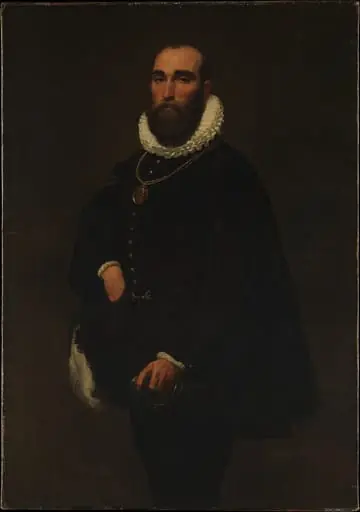 Worthington Whittredge
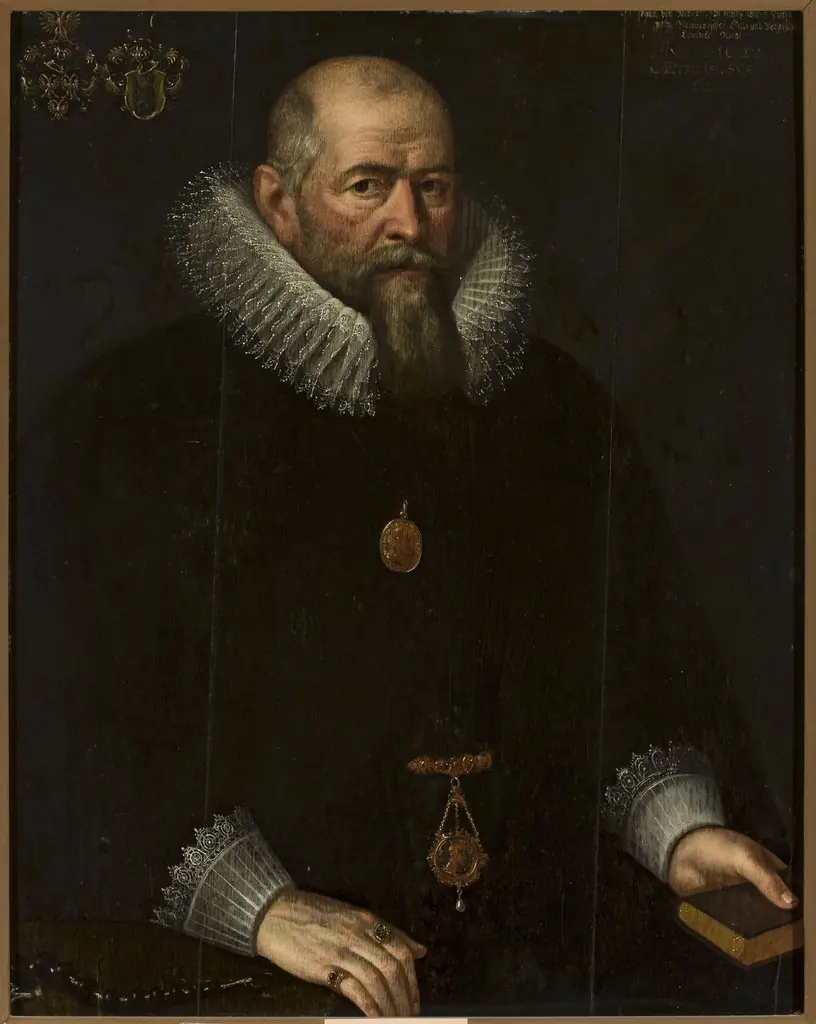 Portrait of Johan von Megen
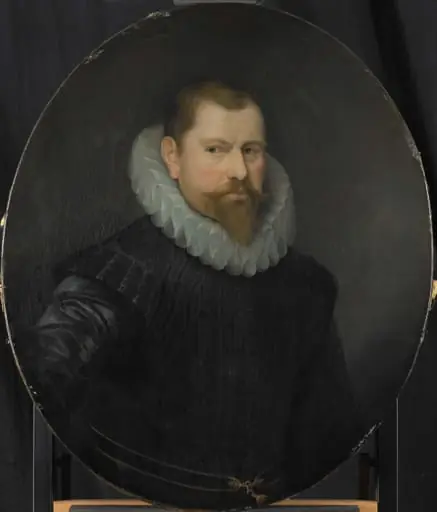 Portrait of Cornelis Matelieff the Younger, Director of the Rotterdam Chamber of the Dutch East India Company, elected 1602
 Portrait of Cornelis Matelieff the Younger, Director of the Rotterdam Chamber of the Dutch East India Company, elected 1602
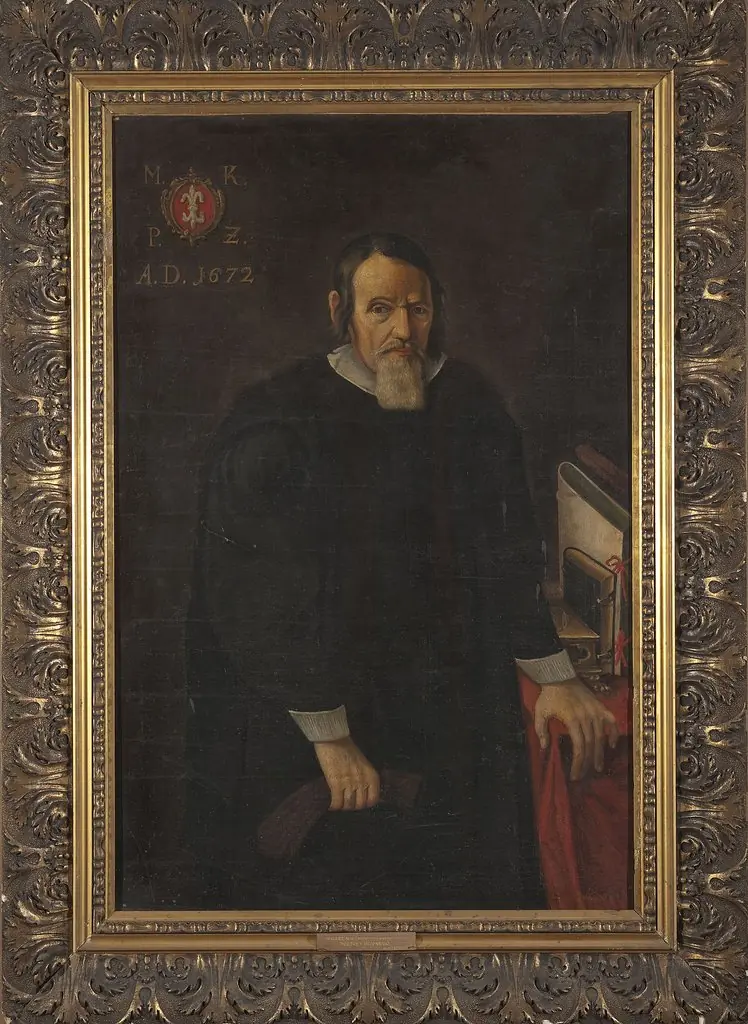 Portrait of a man – M.K., Gozdawa coat of arms
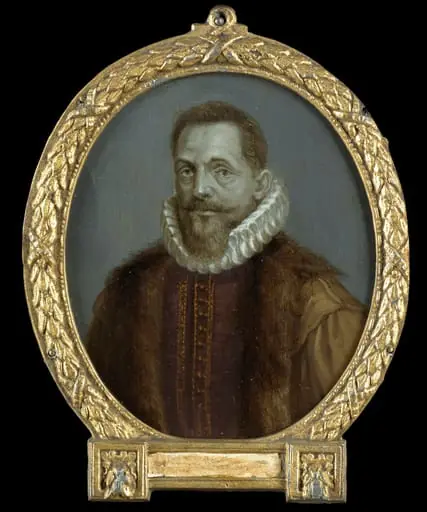 Portrait of Petrus Bertius, Professor at Leiden
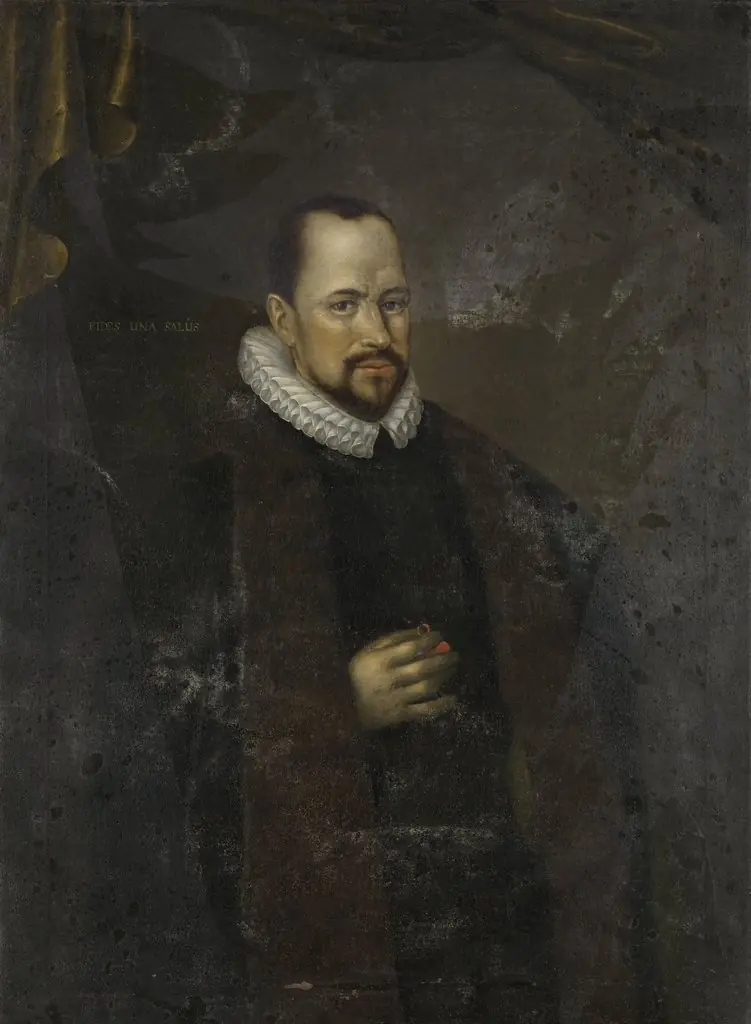 Steven van Dalen (gest 1586)
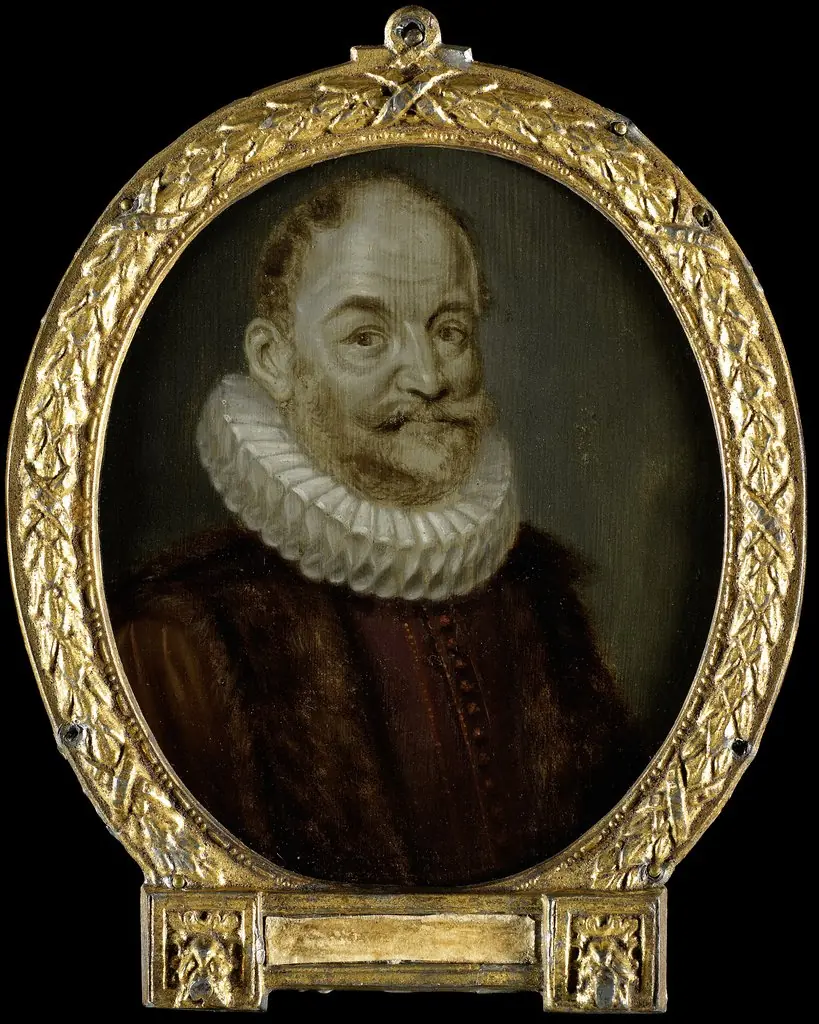 Portrait of Johannes Polyander à Kerckhoven, Professor of Theology in Leiden
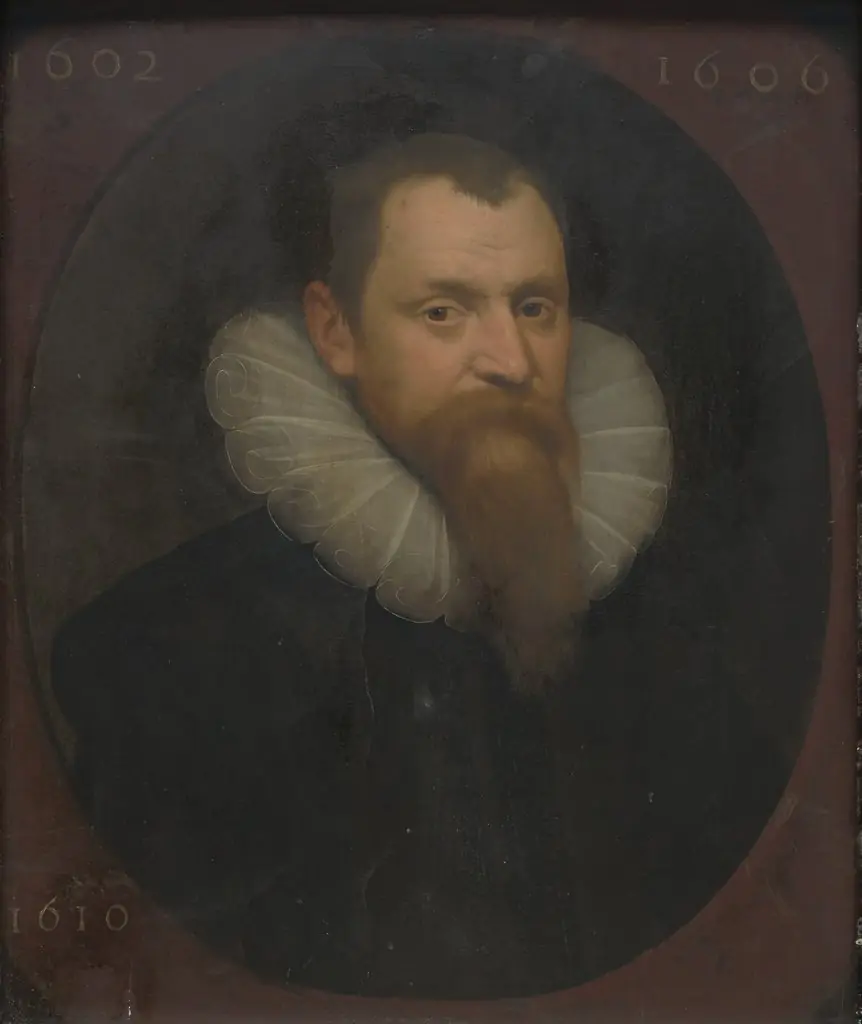 Portrait of a Man
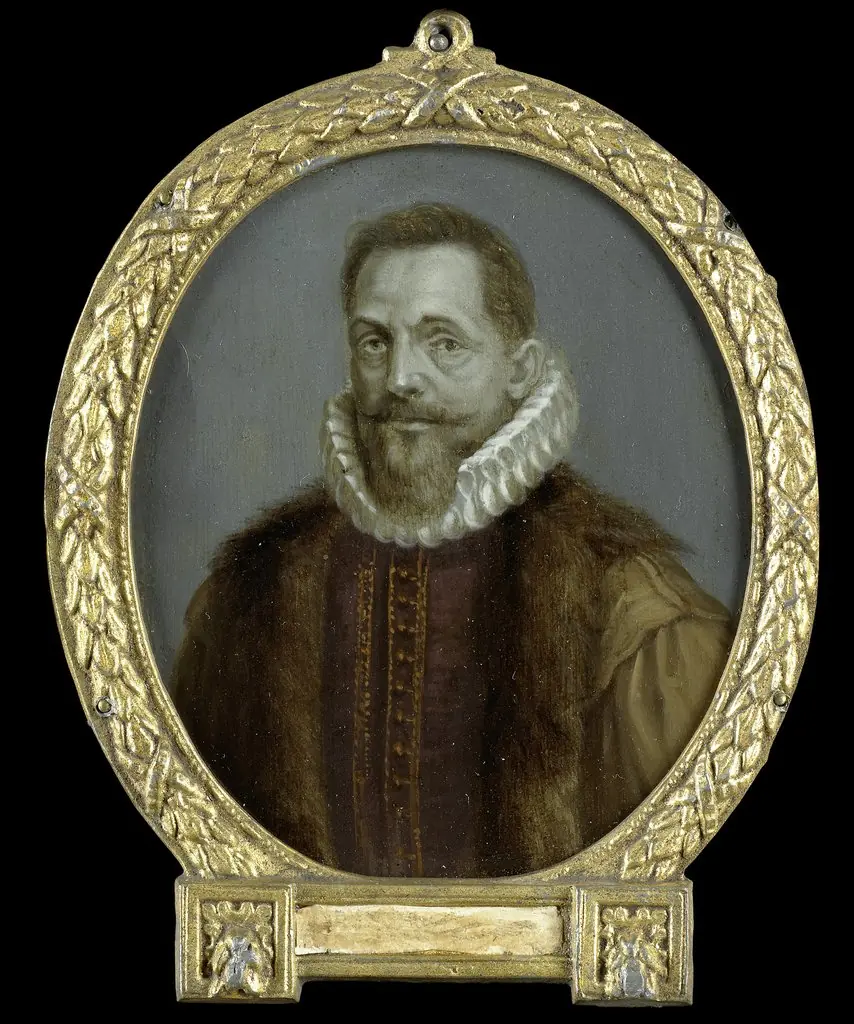 Portrait of Petrus Bertius, Professor at Leiden
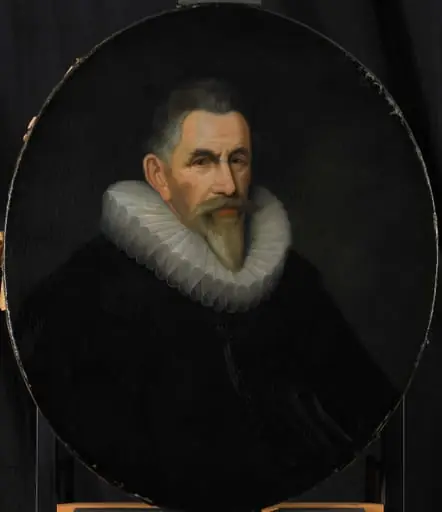 Portrait of Johan van der Veecque, Director of the Rotterdam Chamber of the Dutch East India Company, elected 1602
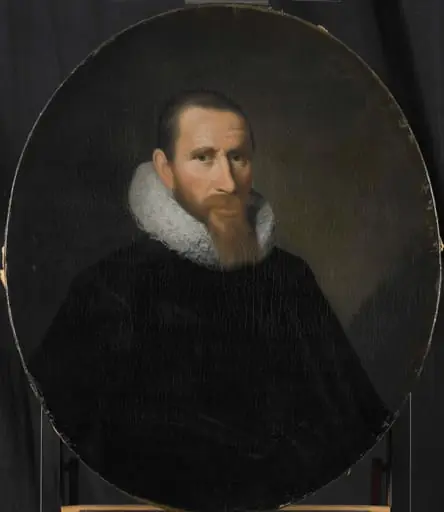 Portrait of Joost van Coulster, Director of the Rotterdam Chamber of the Dutch East India Company, elected 1630