Artwork
Filips de Goede bezoekt het atelier van Jan van Eyck
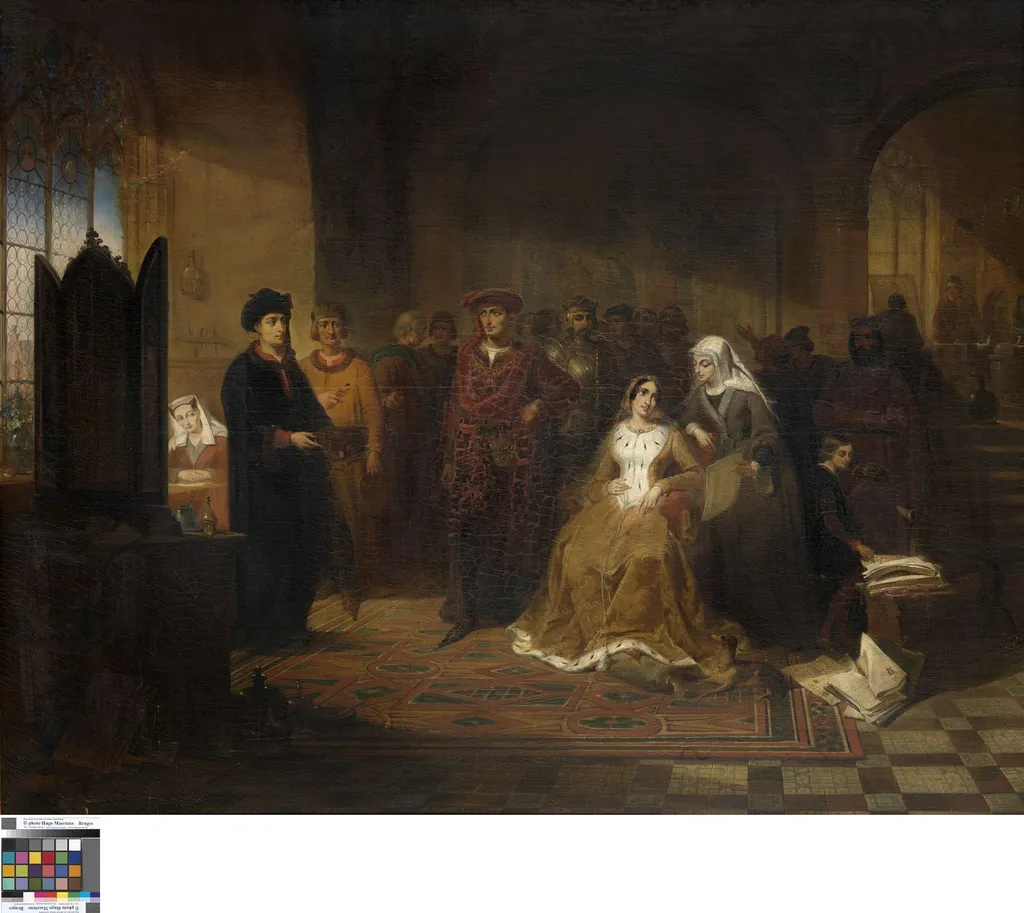
Filips de Goede bezoekt het atelier van Jan van Eyck is an oil painting by the Realist artist Eduard Wallays. It dates from 1850 and is held in the collection of the Groeningemuseum.
About this work
Overview
The painting resides in the Groeningemuseum, Bruges, where it reflects 19th-century interest in reconstructing regional artistic heritage.
Painted around 1850 by Eduard Wallays, this oil-on-canvas work portrays a fictionalized encounter between Philip the Good, Duke of Burgundy, and the painter Jan van Eyck. Wallays, a Bruges-born artist trained in Antwerp and Paris, executed the piece in a restrained Realist manner, emphasizing historical atmosphere over dramatic flair. The painting resides in the Groeningemuseum, Bruges, where it reflects 19th-century interest in reconstructing regional artistic heritage.
Subject & Meaning
The scene imagines a visit by Philip the Good to van Eyck’s studio, though no historical record confirms such an event. Wallays uses the moment to honor the prestige of Early Netherlandish art and its patrons. Figures are arranged to suggest reverence and intellectual exchange, with the duke observing the artist’s work while others engage with tools, manuscripts, and unfinished panels, reinforcing the studio as a space of cultural authority.
Technique & Style
Wallays employs muted tones and controlled lighting to evoke a quiet, interior atmosphere. A single window on the left casts soft, directional light across the room, illuminating faces and objects without theatricality. Figures are rendered with precise detail in costume and posture, reflecting Realist principles. The composition avoids grandeur, favoring intimacy and quiet observation, aligning with 19th-century academic ideals of historical accuracy over romanticized spectacle.
History & Provenance
Eduard Wallays, director of the Bruges Academy of Fine Arts, painted this work during a period of renewed interest in Flemish artistic identity. Created in the mid-19th century, it was acquired by the Groeningemuseum shortly after completion. Its preservation there reflects institutional efforts to anchor regional history through visual narrative, even when based on conjecture rather than documented fact.
Context
In the 1850s, Belgian nationalism and cultural revivalism spurred artists to depict scenes from the Low Countries’ medieval past. Wallays’ painting responds to this trend, positioning van Eyck as a national icon and Philip the Good as a patron of the arts. The studio setting, though imagined, aligns with contemporary scholarly efforts to reconstruct the working conditions of early Netherlandish painters, blending fact with idealized memory.
Legacy
Though not widely known outside regional circles, the painting remains a significant artifact of 19th-century historical imagination. It illustrates how later generations sought to connect with the legacy of Early Netherlandish art through staged, reverent scenes. Its presence in the Groeningemuseum continues to frame public perception of van Eyck’s studio as a sacred space of artistic creation.
Artist & collection
Artist
Eduard Wallays (2 July 1813 in Bruges – 28 January 1891 in Bruges) was a Belgian painter, graphic designer, and Director of the Bruges Academy of Fine Arts.

 Reposición de Colón
 Offering to the fatherland by the Widow of Jacob van Artevelde
 Felipe III de Francia moribundo bendiciendo a sus hijos
 John II receives the submission of Charles II of Navarre
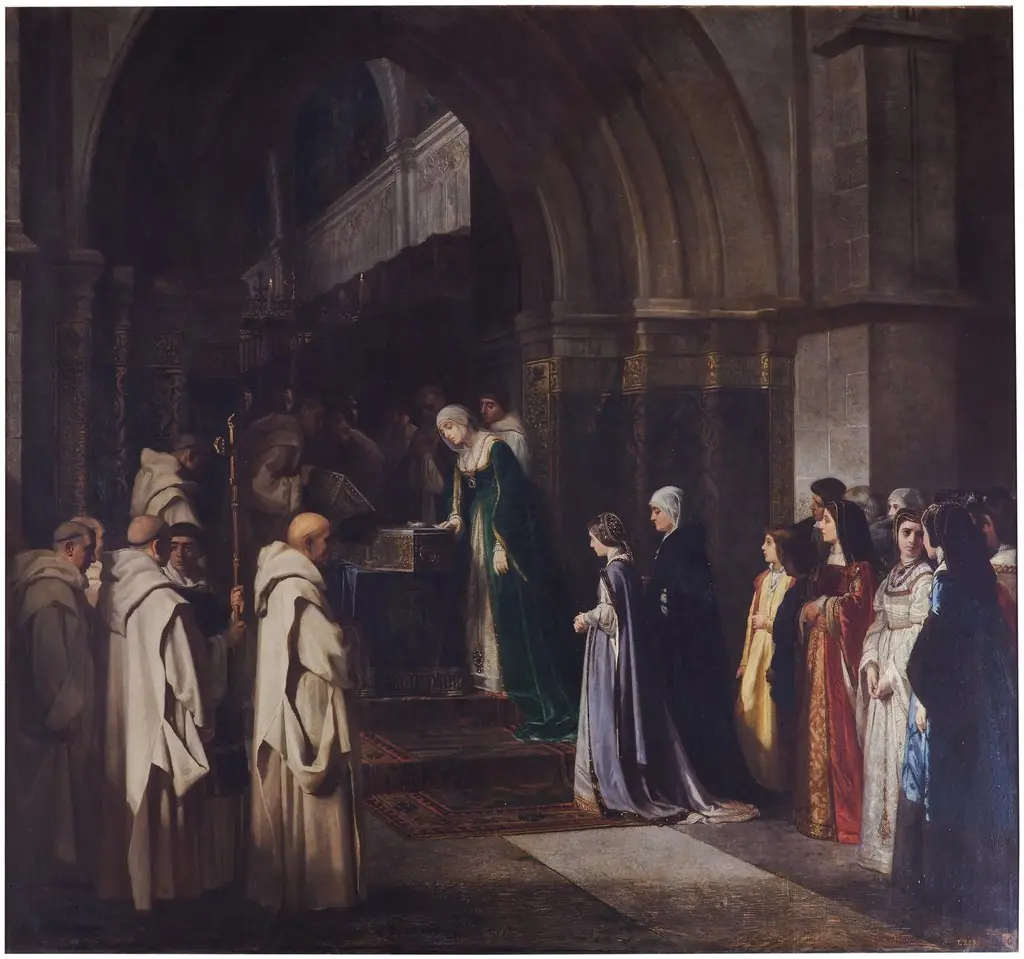 Doña Isabel la Católica en la cartuja de Miraflores
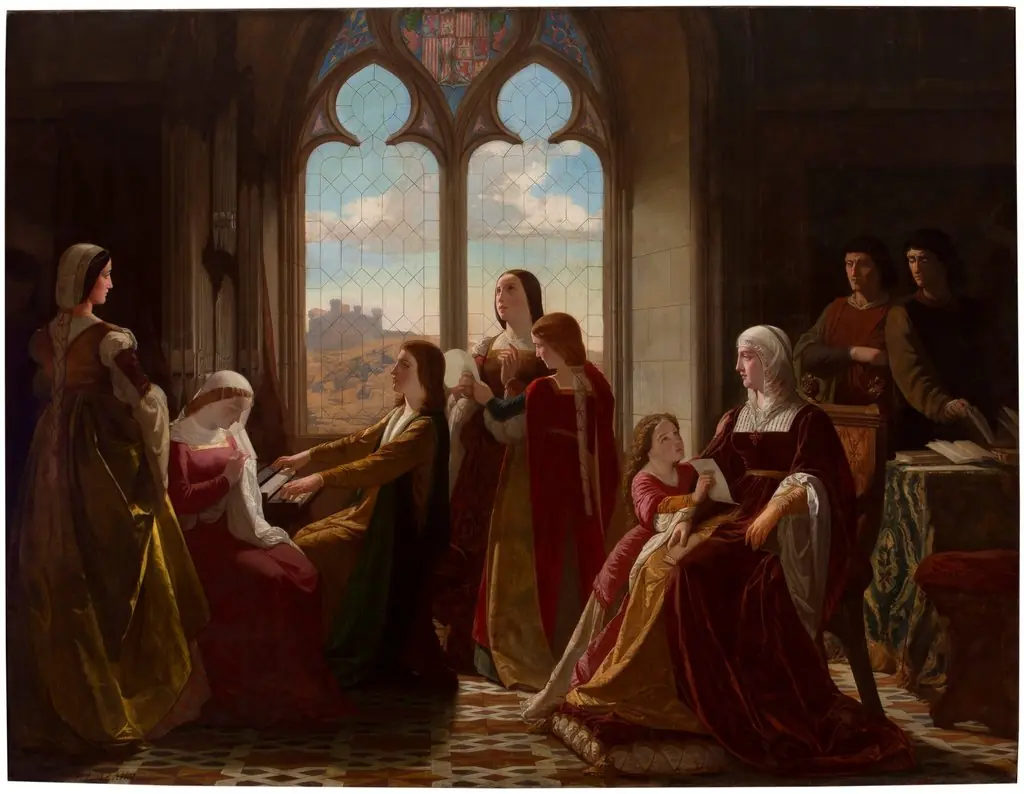 La reina Isabel la Católica presidiendo la educación de sus hijos
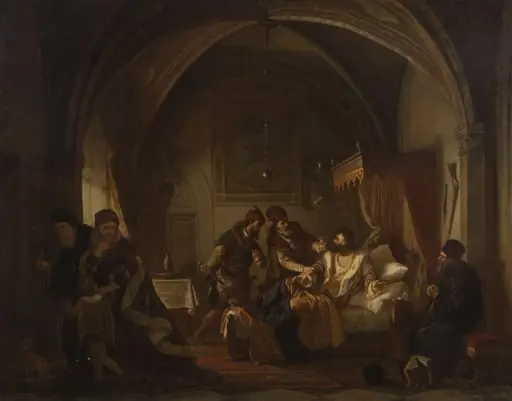 Moartea lui Alexandru Lăpușneanu
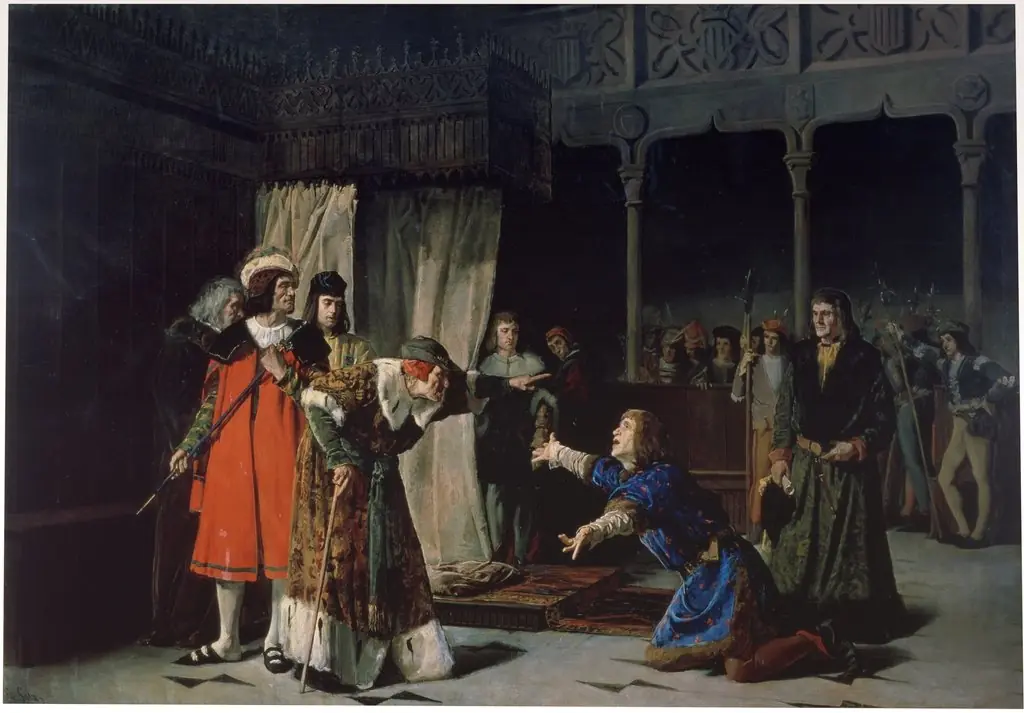 La prisión del príncipe de Viana
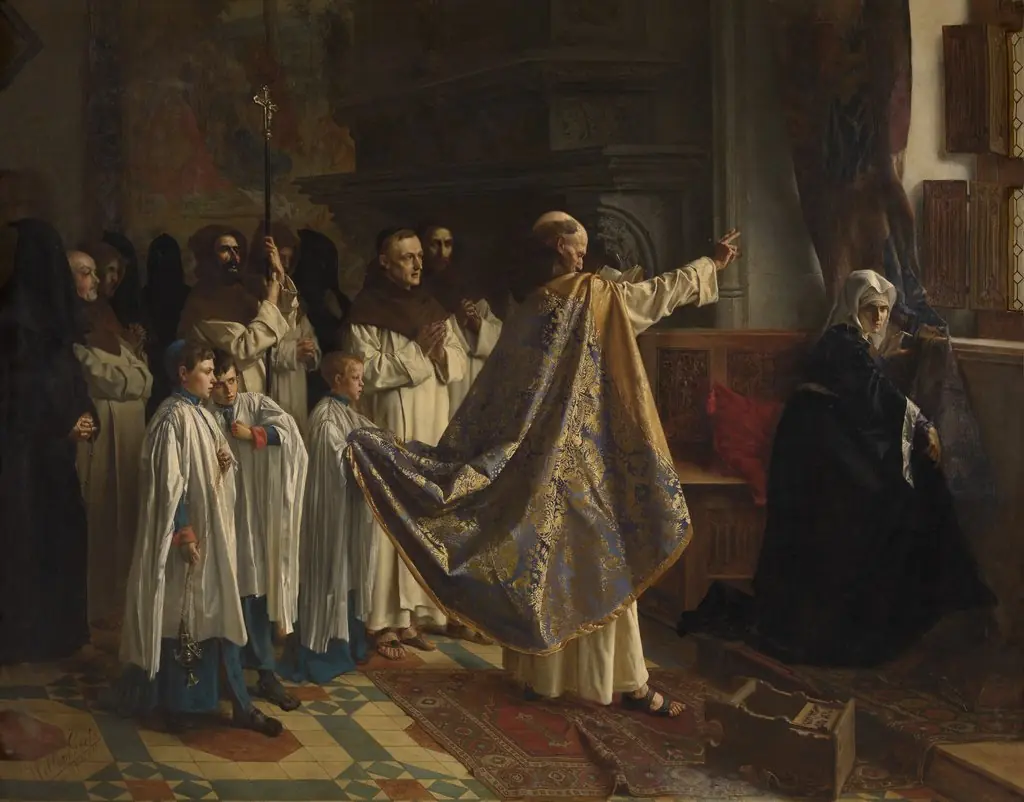 Exorcism of Joanna of Castile
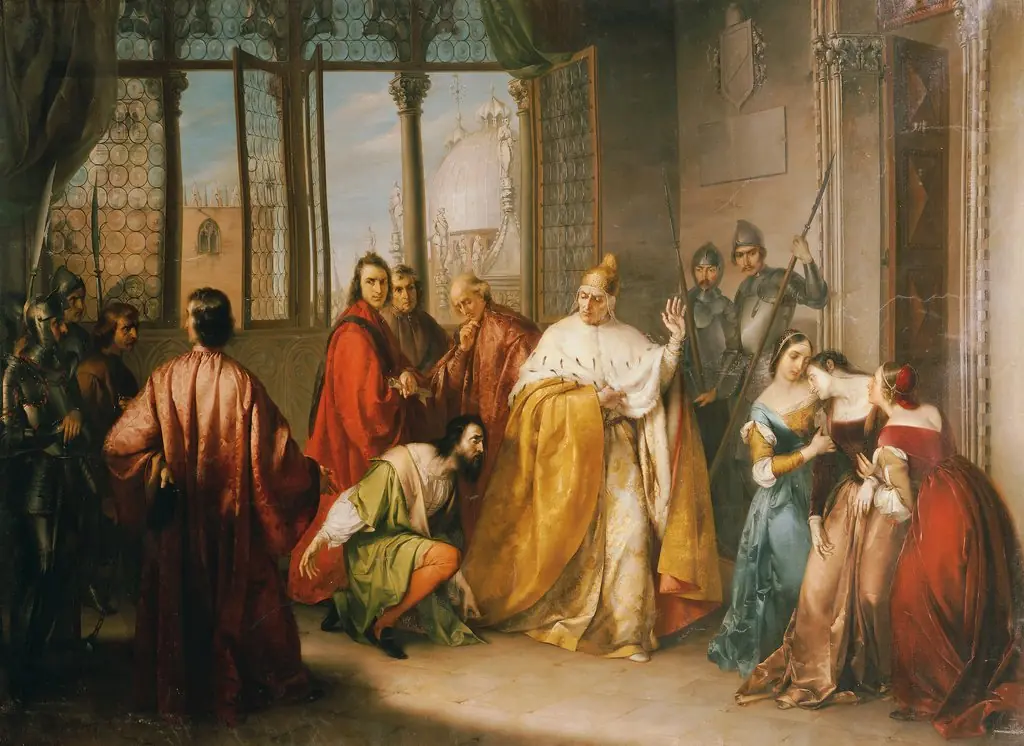 Der Doge Francesco Foscari schickt seinen Sohn Giacomo in die Verbannung ("I due Foscari")
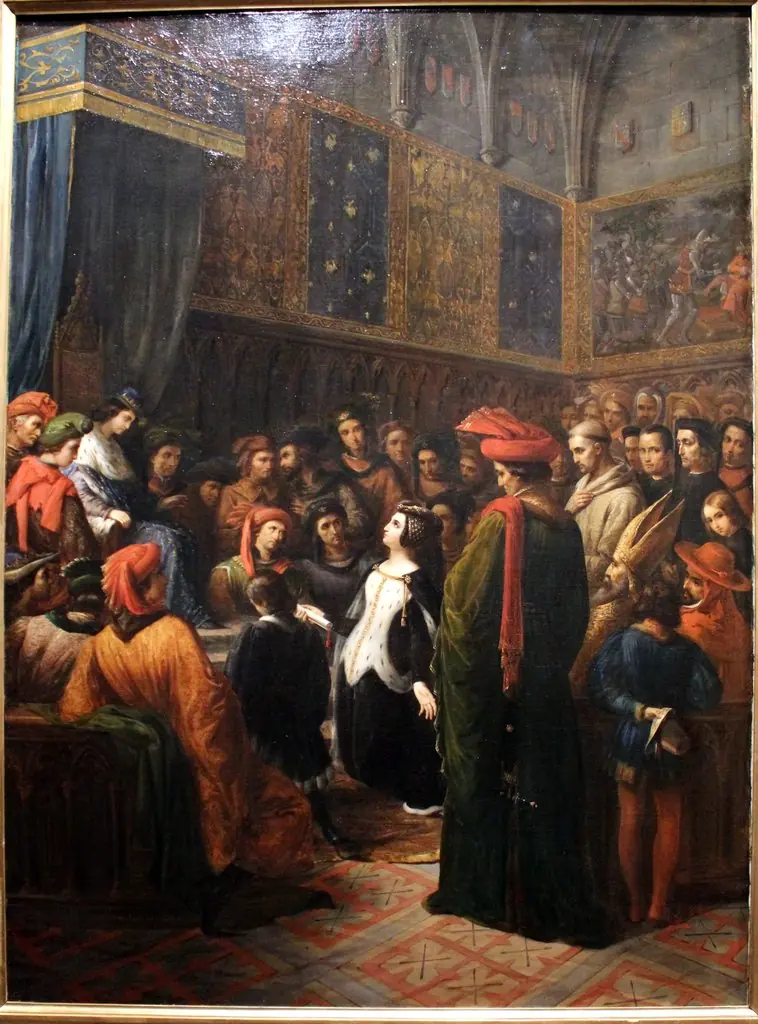 Valentine de Milan implore la justice du roi Charles VI pour l'assassinat du duc d'Orléans by Alexandre Colin