Artwork
Alma Mater
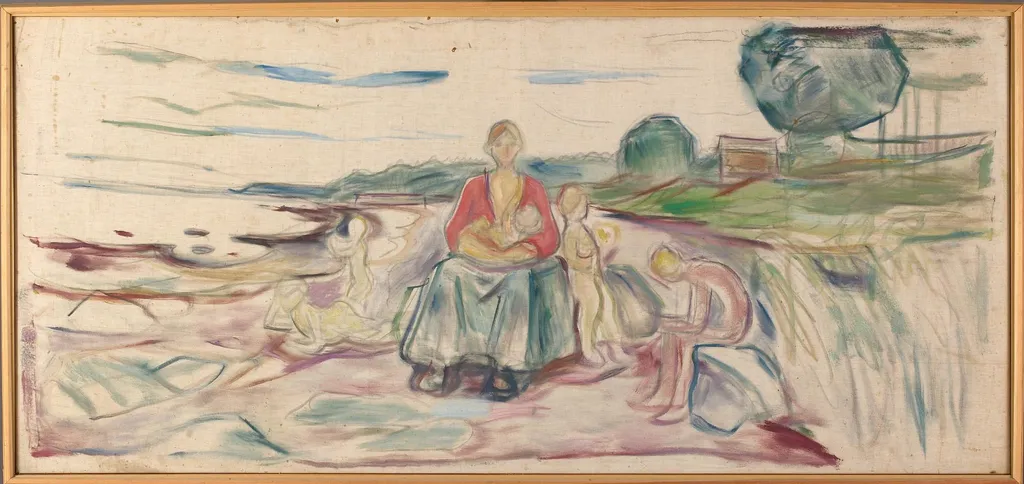
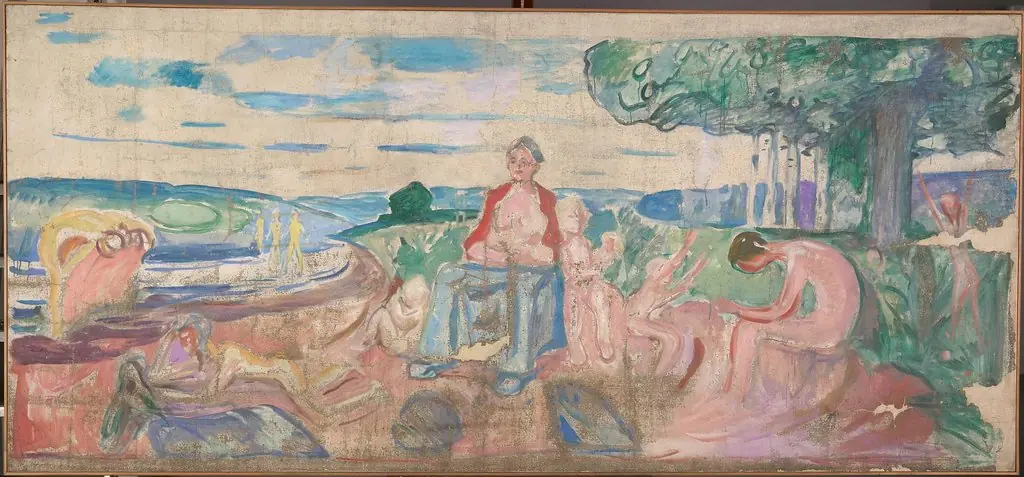
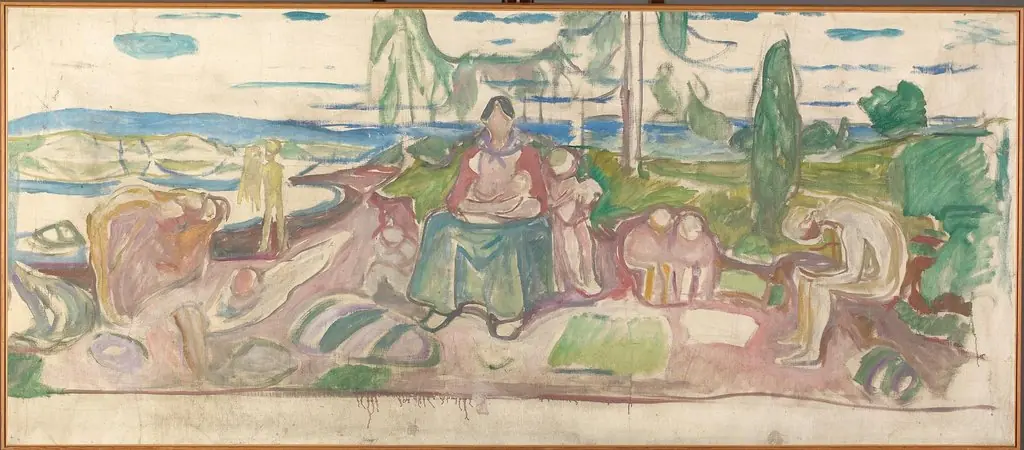
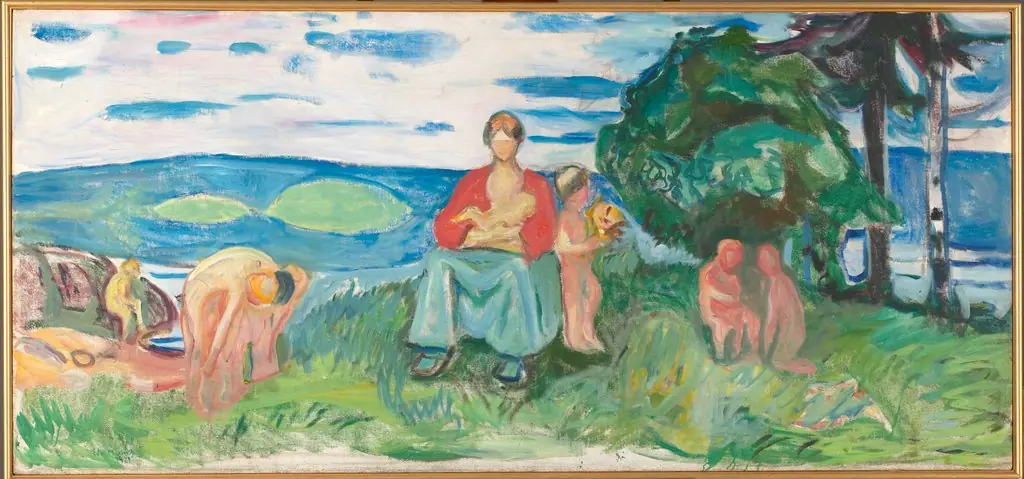
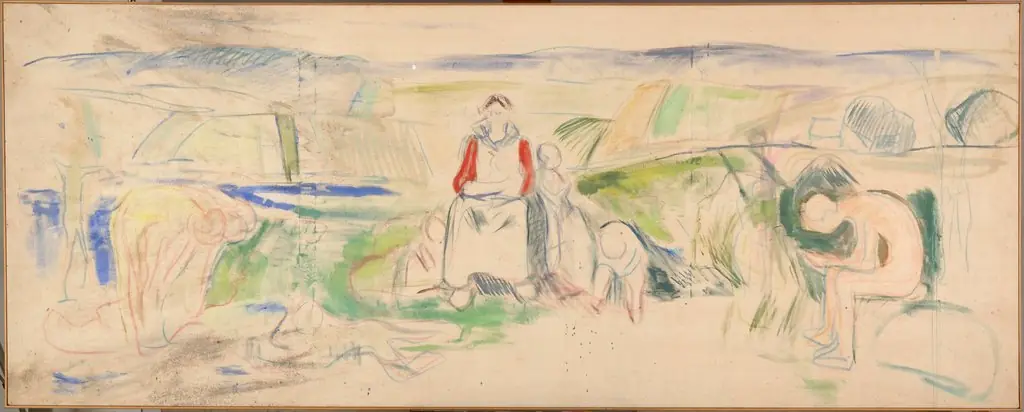
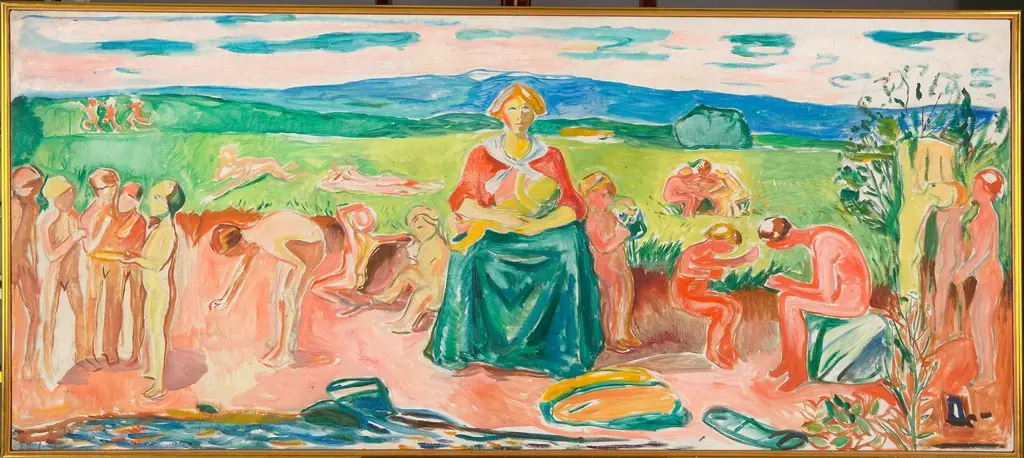
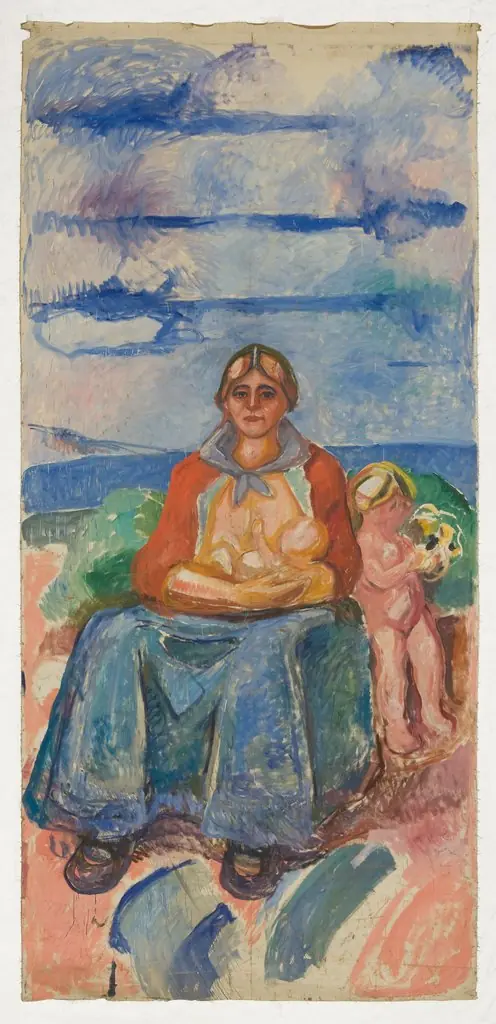
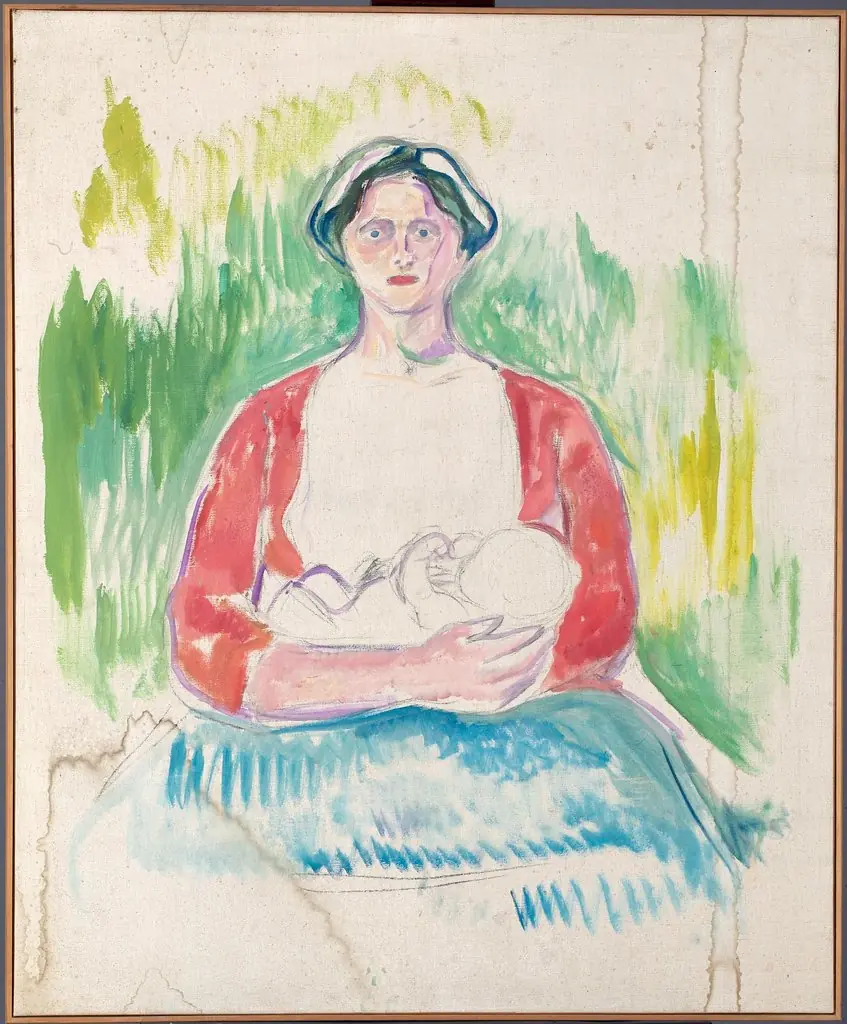
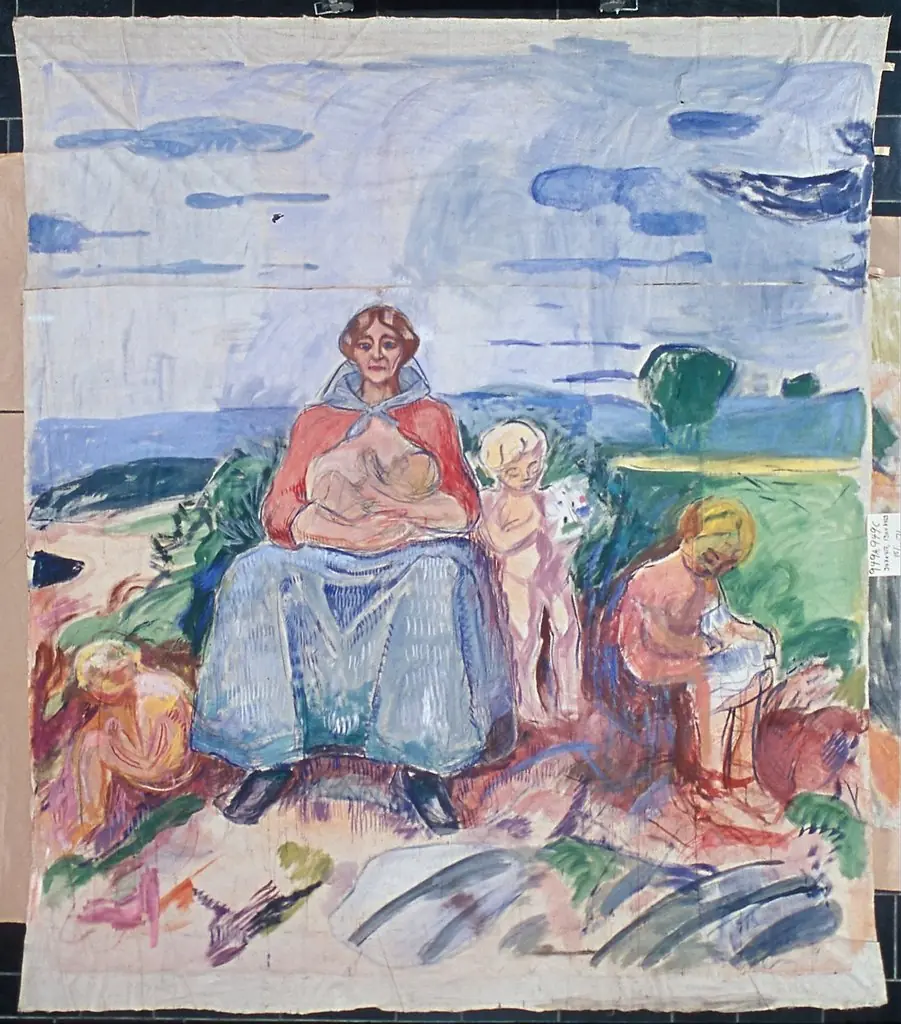
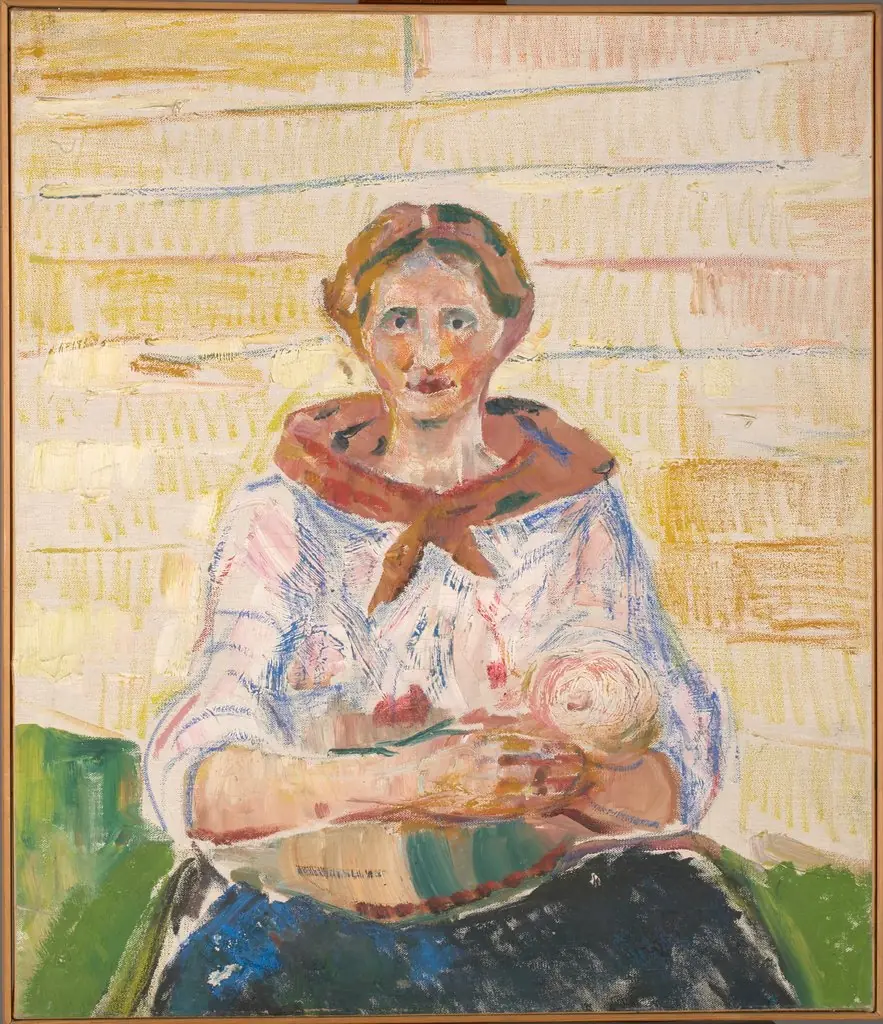
Alma Mater is a charcoal painting by the Post-Impressionist artist Edvard Munch. It dates from 1920 and is held in the collection of the Munch Museum.
About this work
Overview
Painted in 1920, *Alma Mater* is an oil on canvas work by Norwegian artist Edvard Munch. Created late in his career, it reflects his enduring focus on human vulnerability and emotional connection. The piece resides in the Munch Museum’s collection, where it stands as a quiet counterpoint to his more widely known expressions of anxiety and isolation.
Subject & Meaning
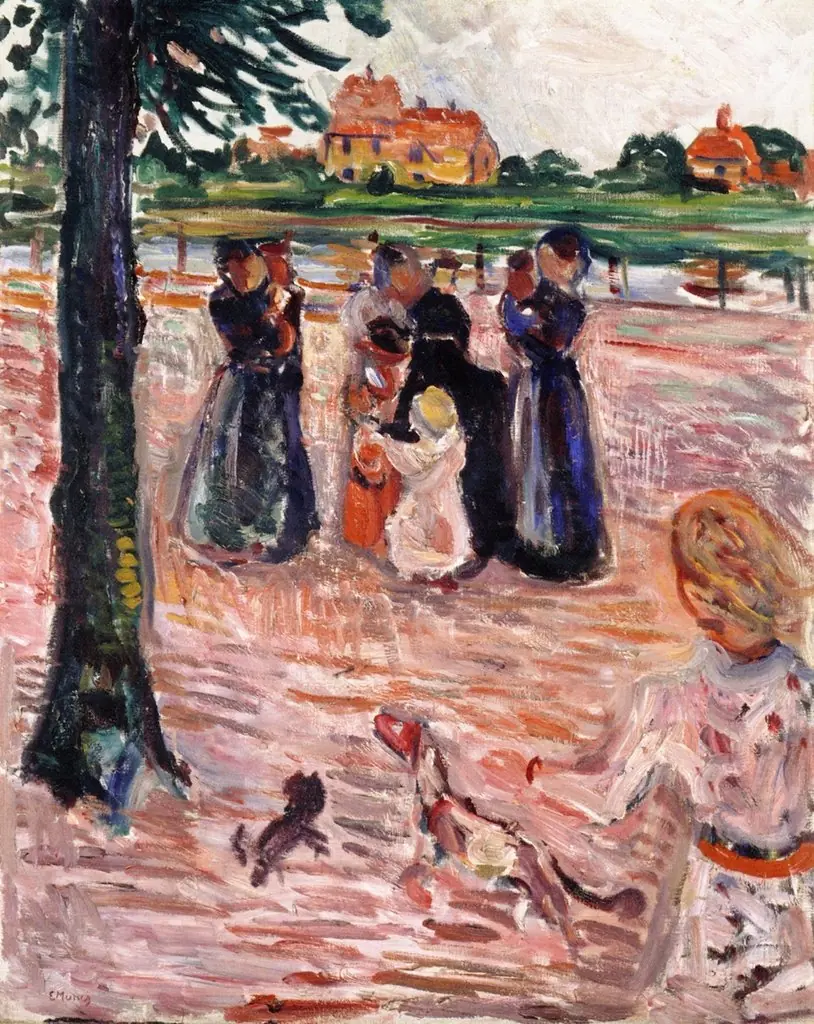
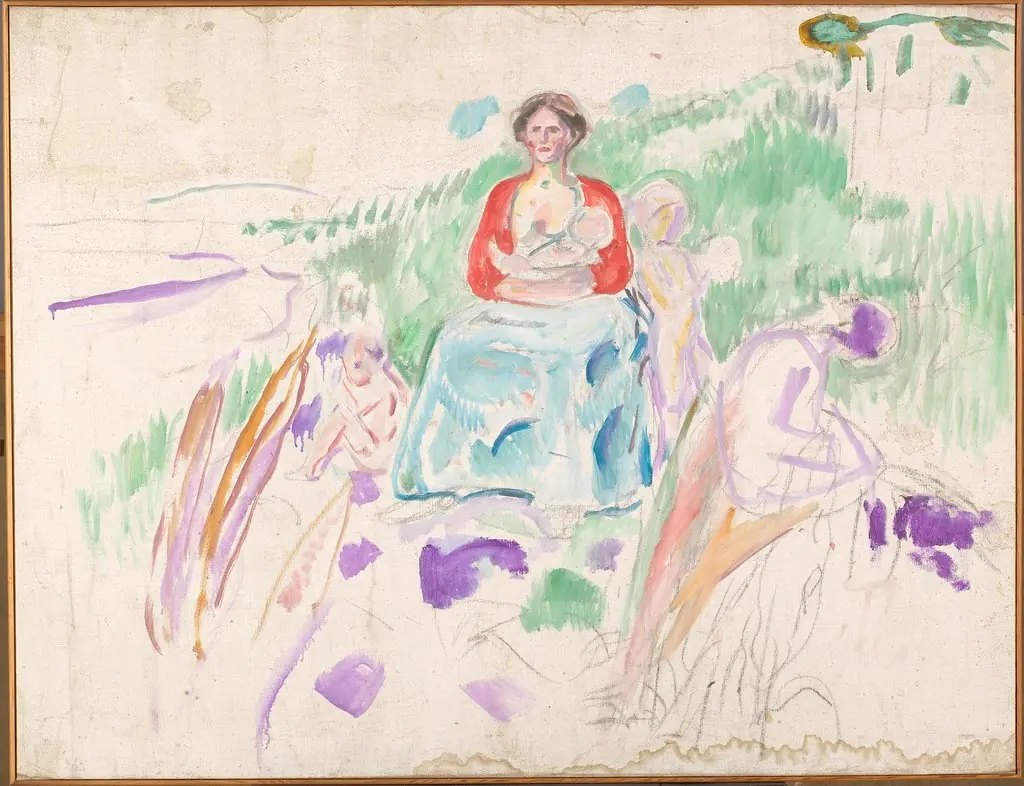
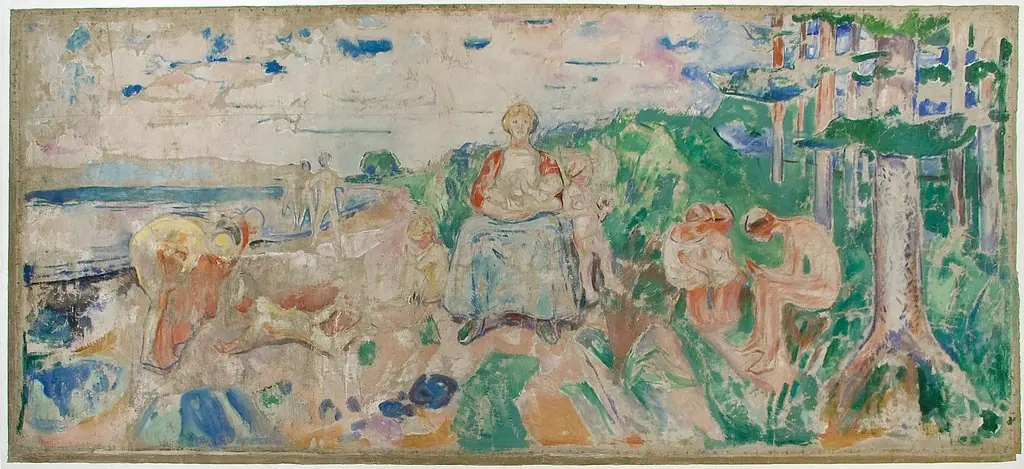
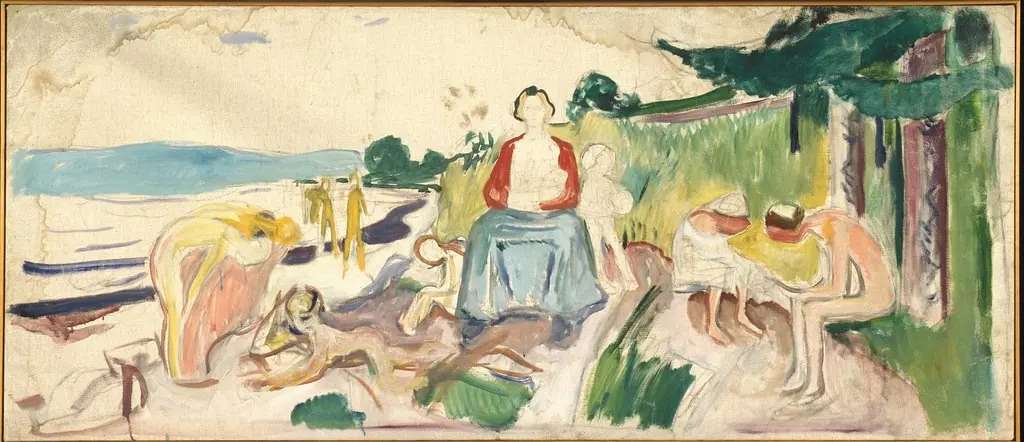
The painting depicts a woman seated on a rocky shore, breastfeeding one child while three others gather nearby, naked and unguarded. Her red jacket and blue skirt anchor her as a figure of nurture, set against the austere landscape. The scene evokes maternal care not as idealized myth, but as grounded, physical presence—suggesting nature, continuity, and quiet resilience.
Technique & Style
Munch employs loose, energetic brushwork and saturated hues to convey emotional texture rather than precise detail. The figures are rendered with simplified forms, their contours softened by bold strokes. Color contrasts—red against blue, flesh against gray sand—heighten the sense of intimacy, while the background’s sparse architecture grounds the scene in a tangible, unromanticized world.
History & Provenance
Completed in 1920, *Alma Mater* was among the works Munch retained for his personal collection before donating much of his oeuvre to the city of Oslo.
Completed in 1920, *Alma Mater* was among the works Munch retained for his personal collection before donating much of his oeuvre to the city of Oslo. It entered the Munch Museum’s holdings upon its founding in 1963, remaining a consistent part of its permanent display. The painting’s survival in the artist’s possession suggests its personal significance, though he rarely discussed its specific intent.
Context
In the early 20th century, Munch increasingly turned to themes of birth, growth, and domestic life, moving beyond his earlier preoccupations with death and alienation. *Alma Mater* aligns with this shift, reflecting a broader cultural interest in maternal symbolism during a period of post-war reconstruction and renewed focus on familial bonds.
Legacy
Though less frequently exhibited than *The Scream*, *Alma Mater* offers insight into Munch’s later emotional landscape. Its unadorned portrayal of motherhood challenges romanticized tropes, presenting care as elemental and unheroic. The work continues to inform interpretations of his late style, emphasizing psychological depth over dramatic spectacle.
Artist & collection

Artist
Edvard Munch ( MUUNK; Norwegian: ; 12 December 1863 – 23 January 1944) was a Norwegian painter.