Artwork
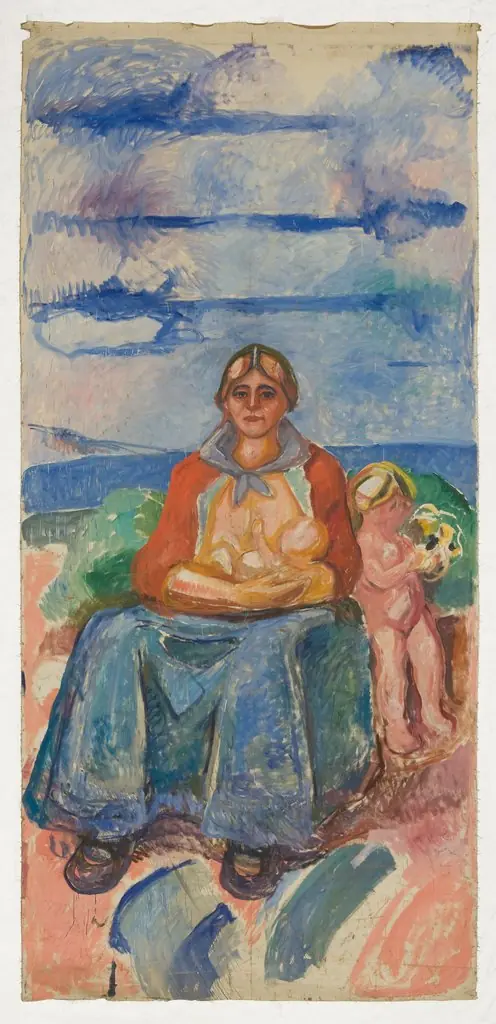
Alma Mater: Middle Part
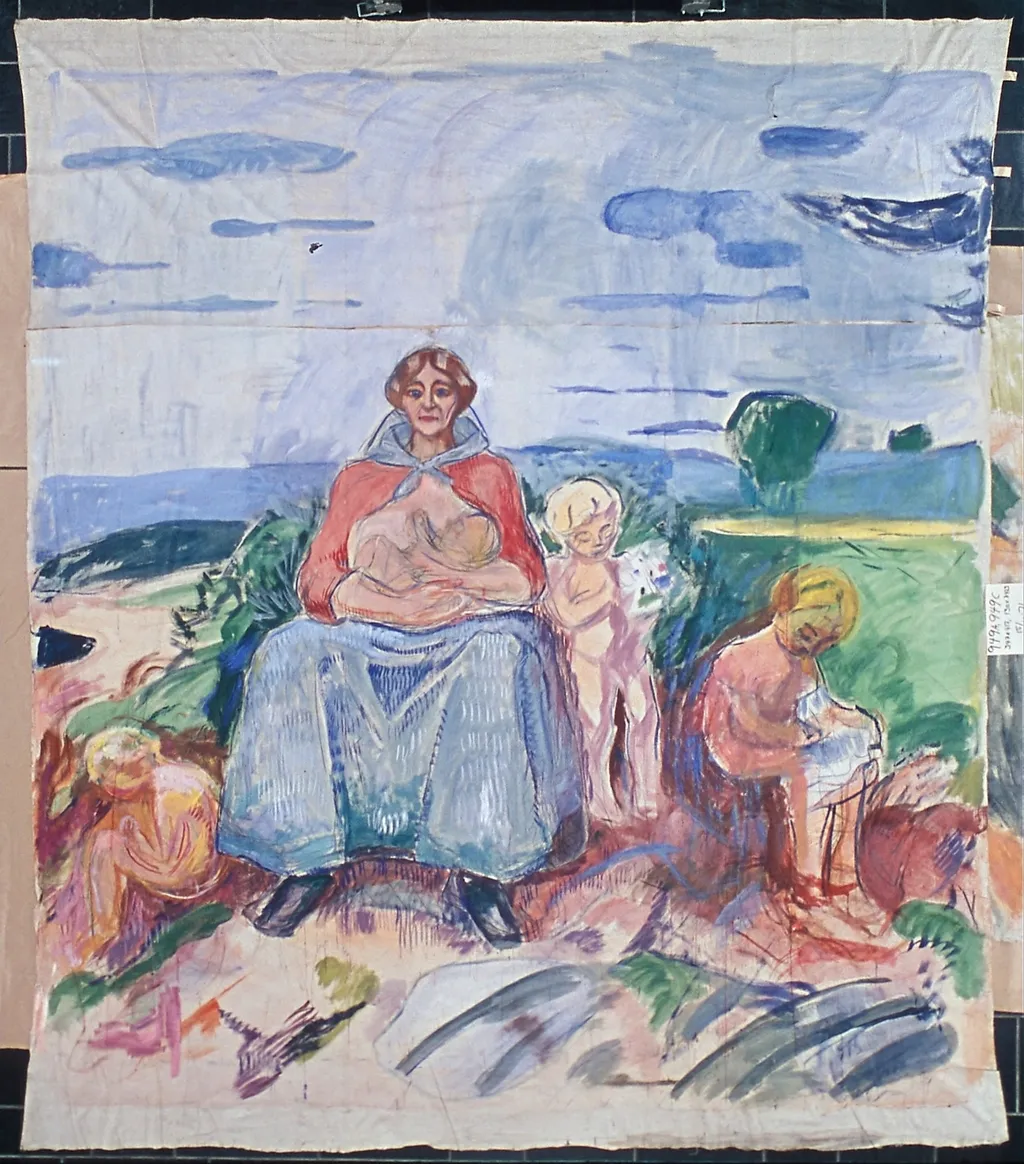
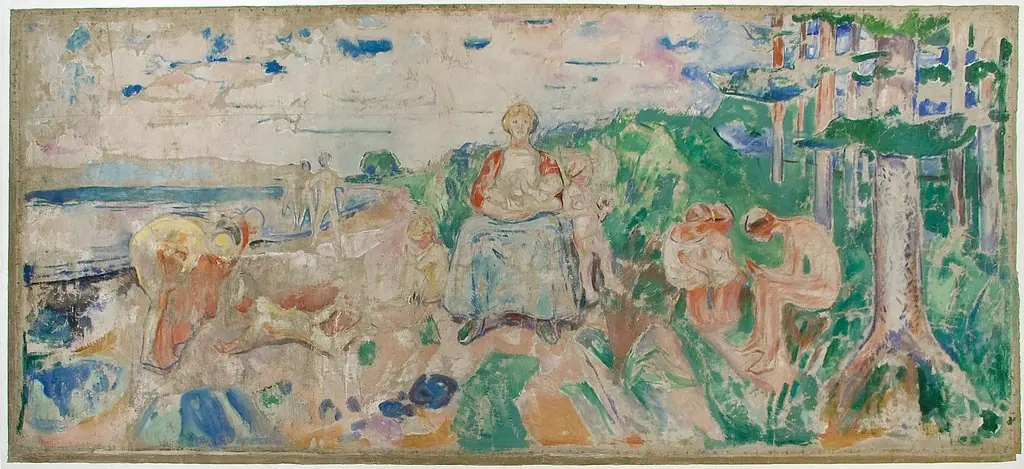
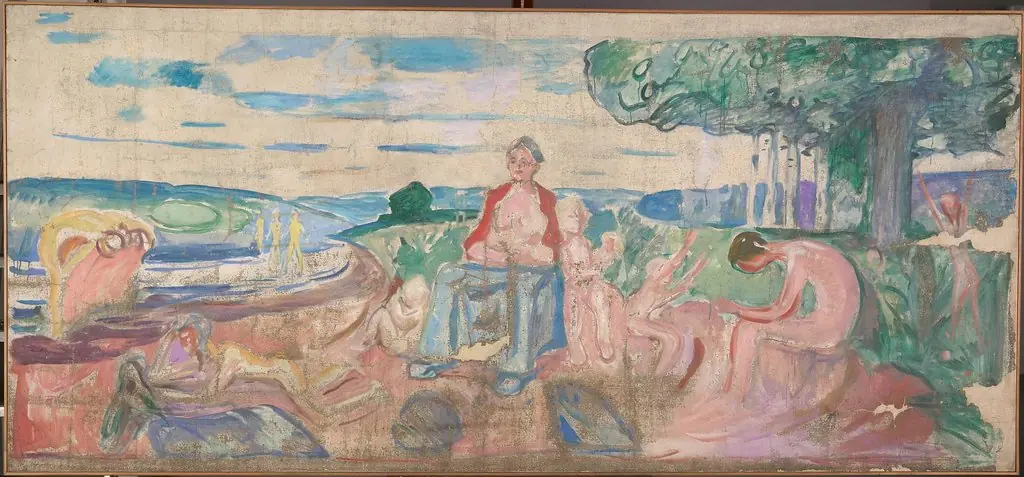
Alma Mater: Middle Part is a paint painting by the Post-Impressionist artist Edvard Munch. It dates from 1914 and is held in the collection of the Munch Museum.
About this work
Overview
It is part of the permanent collection at the Munch Museum in Oslo, where it remains a key example of his later figurative work.
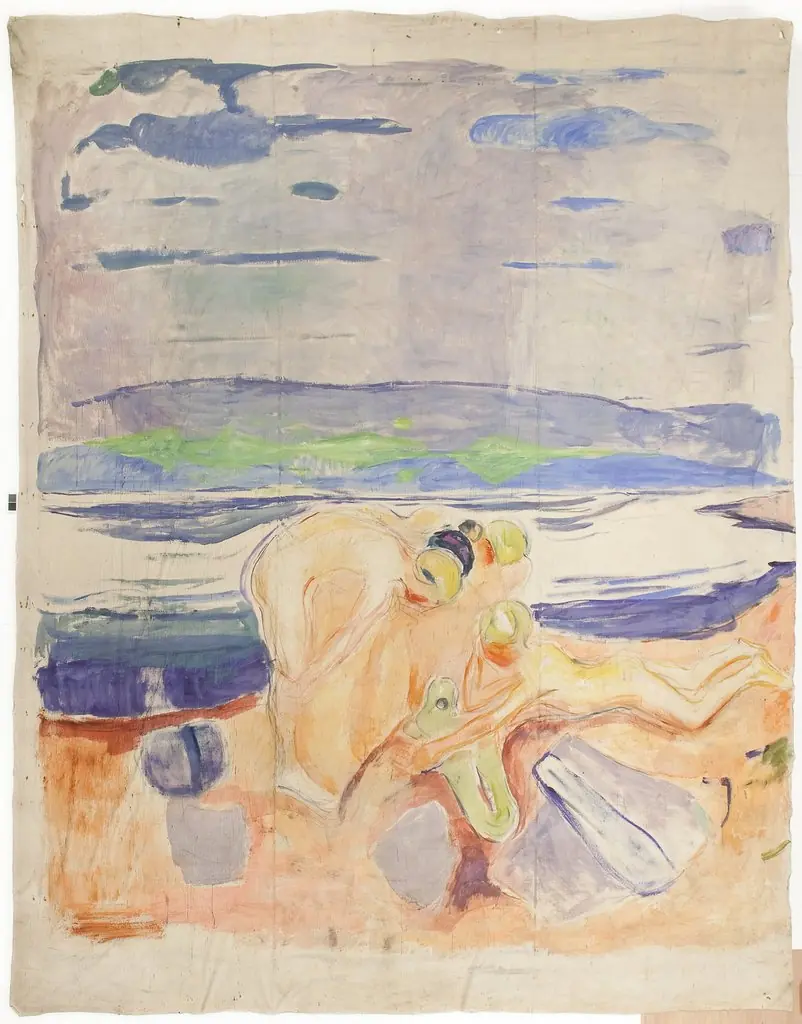
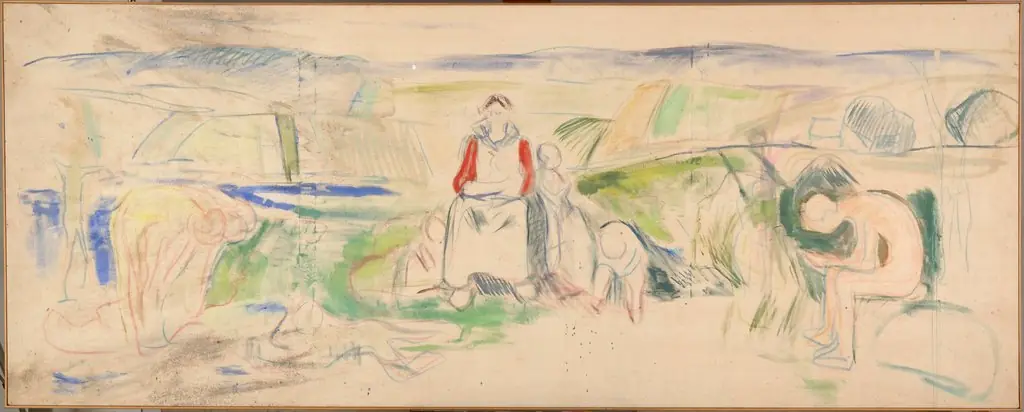
Created in 1914, *Alma Mater: Middle Part* is one of three panels in Edvard Munch’s series exploring maternal themes. Executed in casein paint, a water-soluble medium known for its matte finish and durability, the work reflects Munch’s continued interest in emotional states through simplified forms. It is part of the permanent collection at the Munch Museum in Oslo, where it remains a key example of his later figurative work.
Subject & Meaning
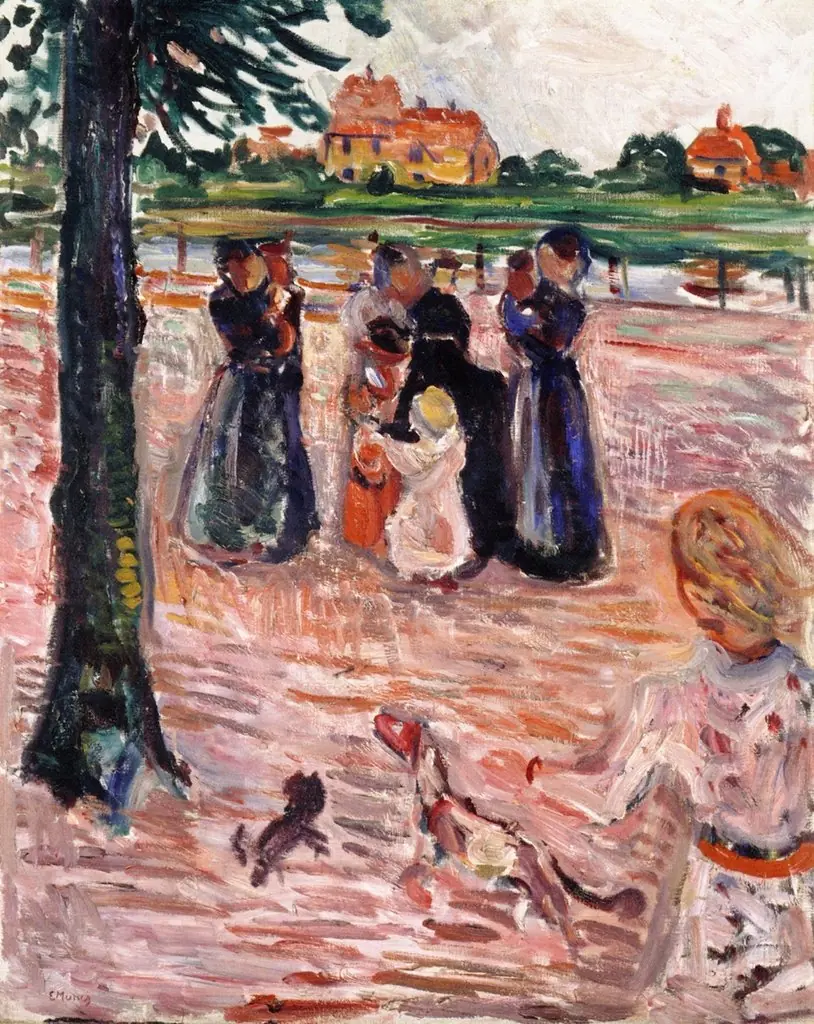
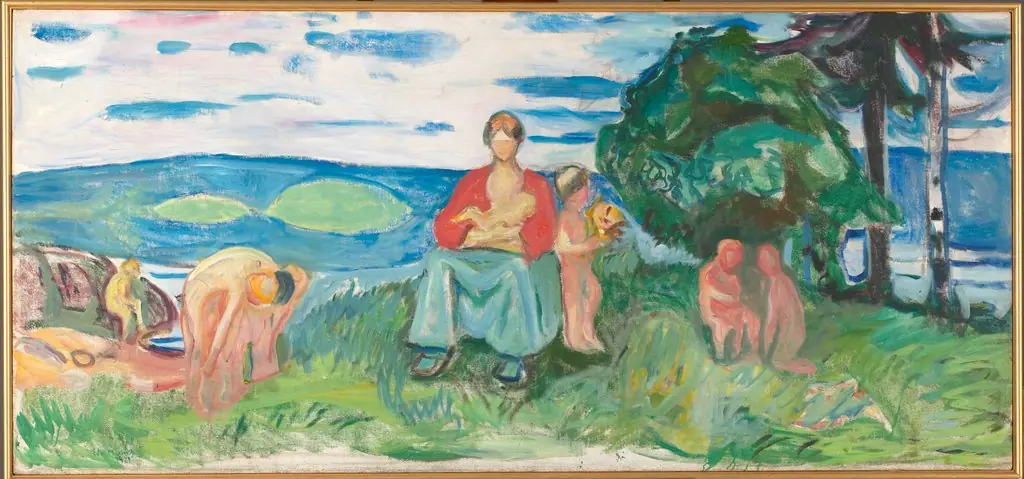
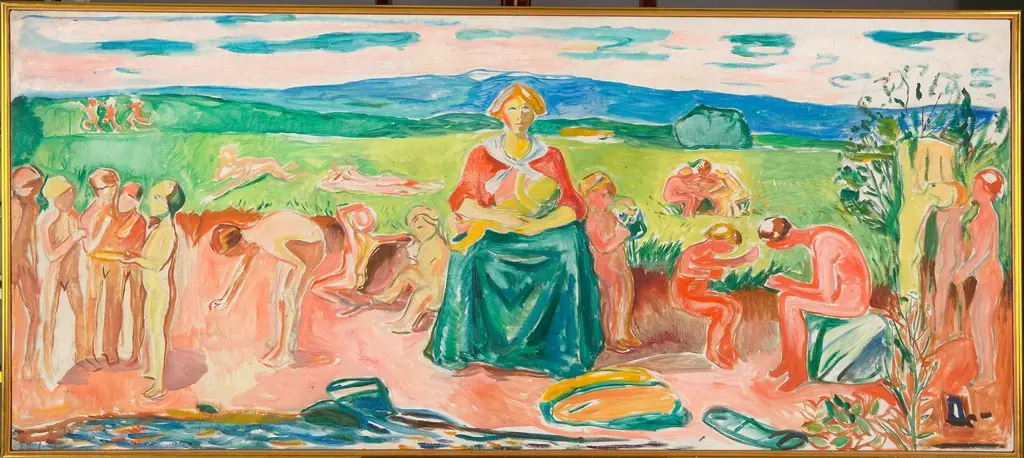
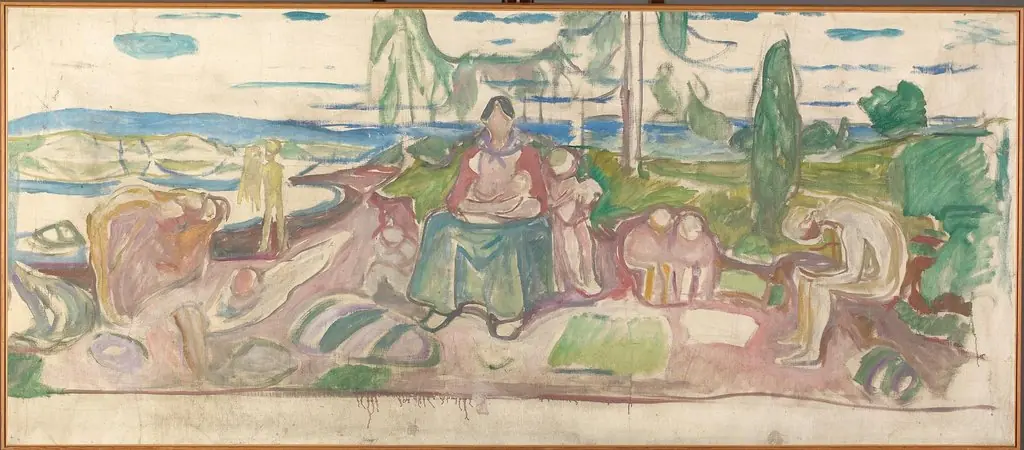
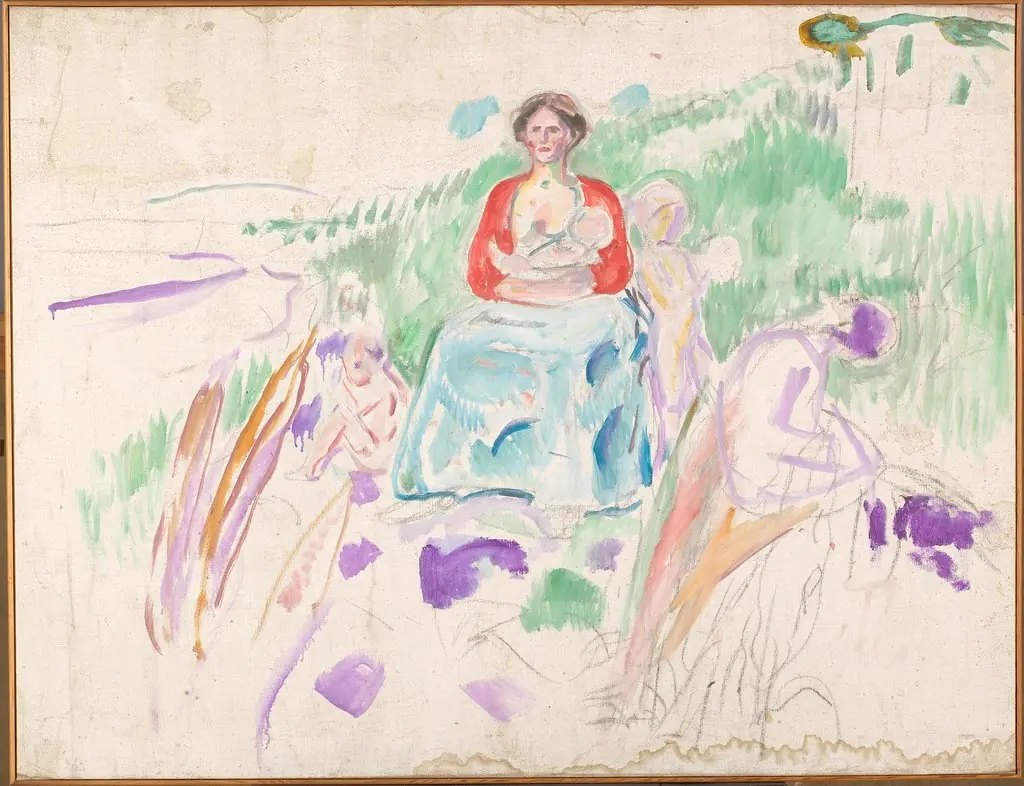
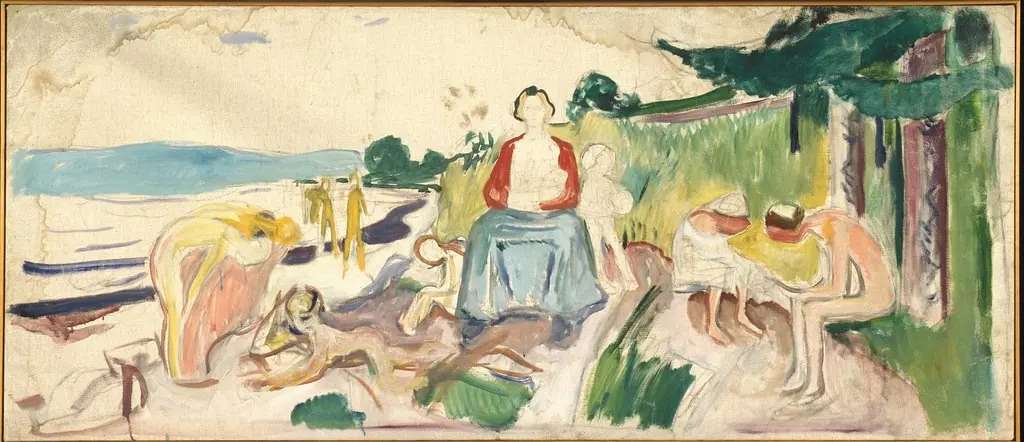
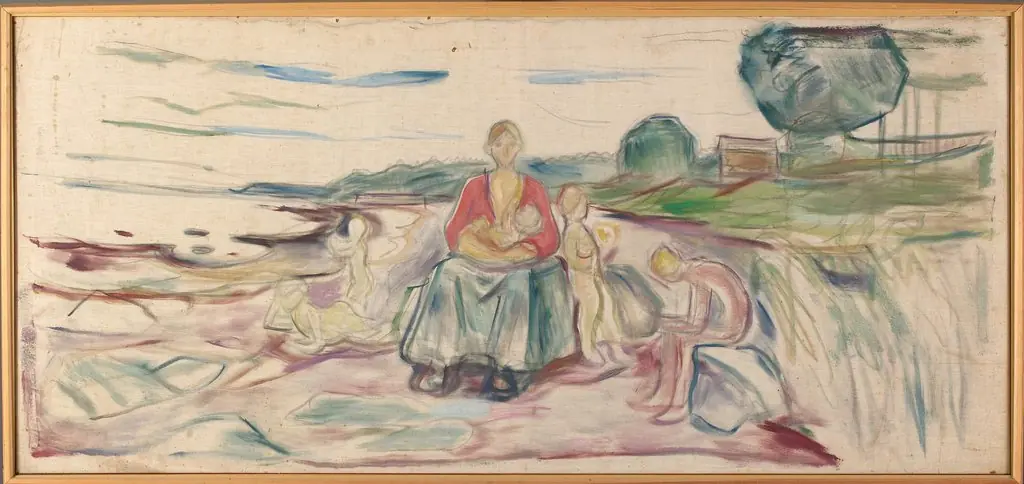
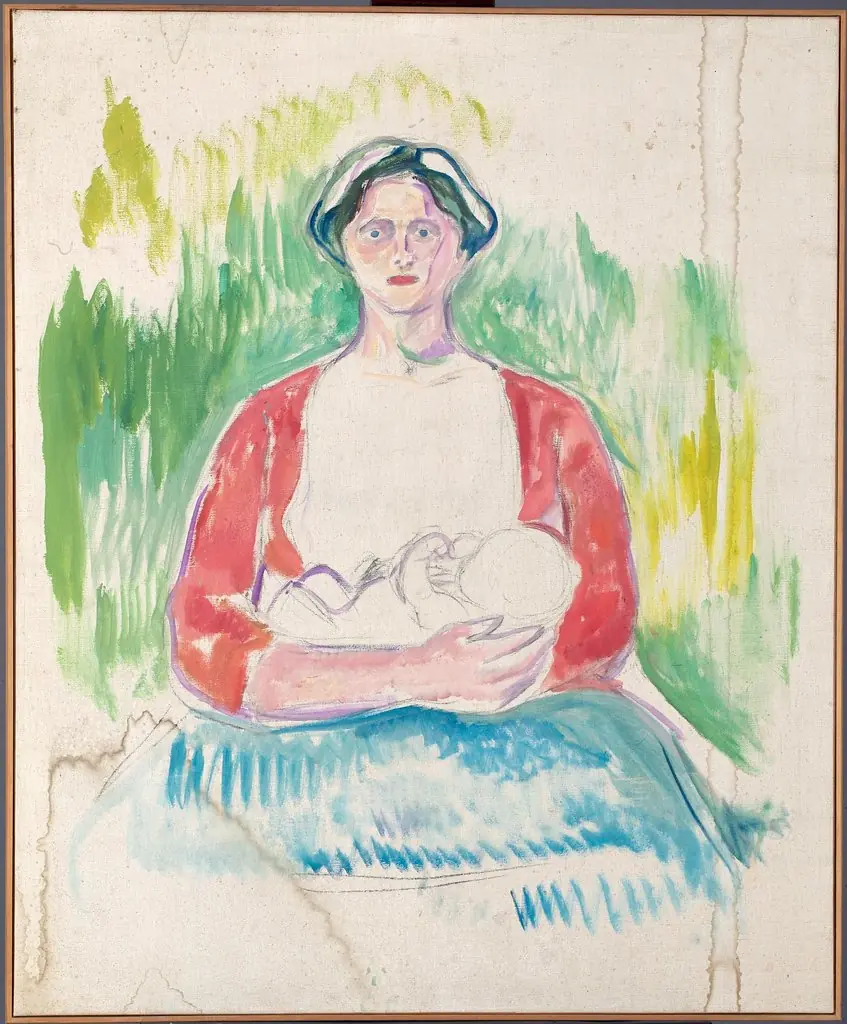
The painting portrays a woman seated in a natural setting, nursing an infant while two other children stand nearby. The figure, rendered with calm solidity, embodies nurturing and continuity. Munch avoids idealization; instead, he presents motherhood as a grounded, physical reality. The surrounding landscape does not distract but integrates the figure into a broader cycle of life, suggesting themes of sustenance and generational presence.
Technique & Style
Munch employed casein paint to achieve a flat, opaque surface with subtle texture, contrasting with the fluidity of his earlier oil works. Bold, unblended brushstrokes define forms, while saturated hues—red, blue, and green—create rhythmic contrasts without naturalistic depth. The composition is deliberately static, emphasizing symbolic weight over narrative detail, aligning with his move toward distilled, expressive imagery in his later years.
History & Provenance
Painted during Munch’s time in Ekely, his estate near Oslo, the work belongs to a triptych commissioned for a public building that was never realized. The panels remained in the artist’s possession until his death in 1944, after which they were transferred to the Munch Museum, established to preserve his legacy. The series has been exhibited intermittently since, often in contexts examining his thematic preoccupations.
Context
In the early 20th century, Munch increasingly turned to domestic and natural subjects after years of exploring anxiety and existential dread. *Alma Mater* reflects a shift toward themes of renewal and stability, possibly influenced by his own aging and reflections on legacy. Though still emotionally charged, the work avoids overt symbolism, grounding its power in quiet observation rather than psychological turmoil.
Legacy
The *Alma Mater* series stands as a rare sustained meditation on motherhood in Munch’s oeuvre. Unlike his more famous works, these panels are less frequently reproduced, yet they reveal his evolving approach to form and emotion. Their use of casein and restrained palette influenced later Norwegian artists seeking alternatives to traditional oil techniques, cementing their role in the development of modern Nordic painting.
Artist & collection
Artist
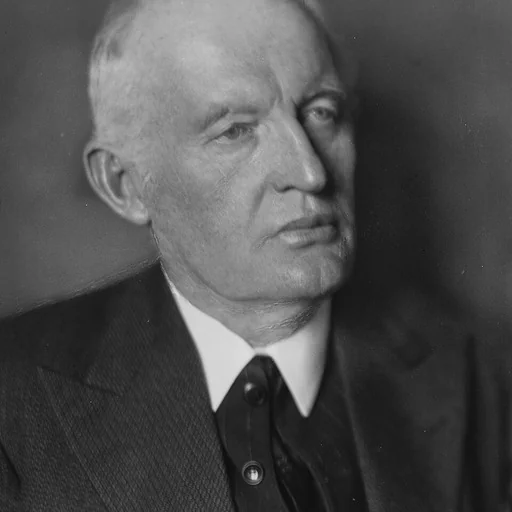
Edvard Munch ( MUUNK; Norwegian: ; 12 December 1863 – 23 January 1944) was a Norwegian painter.