Artwork
Bathers on Rocks
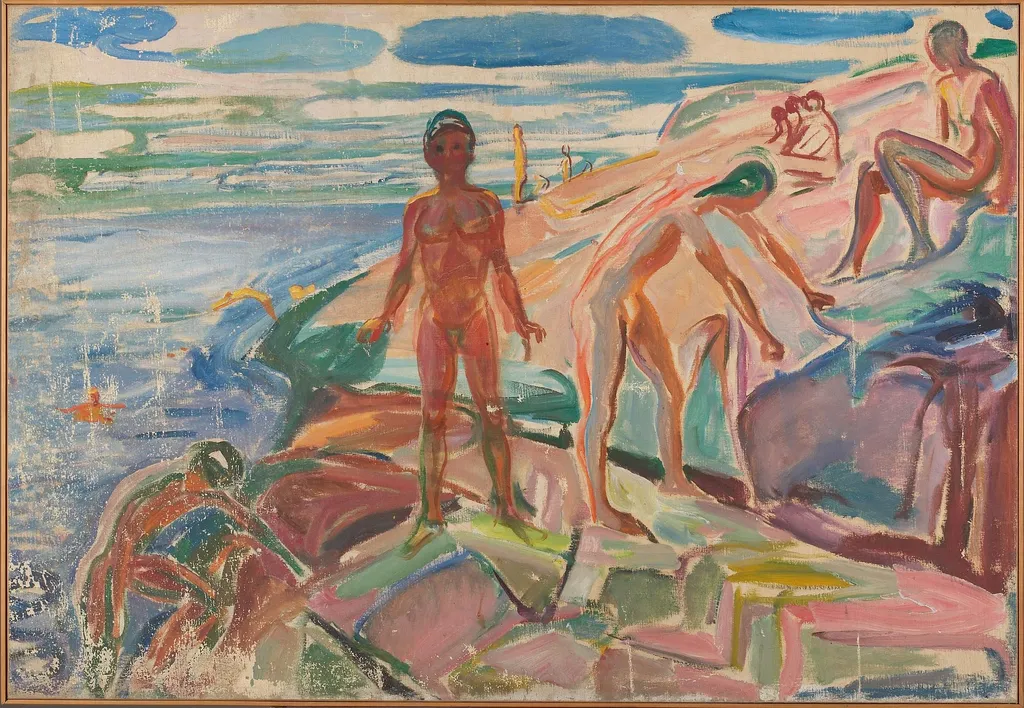
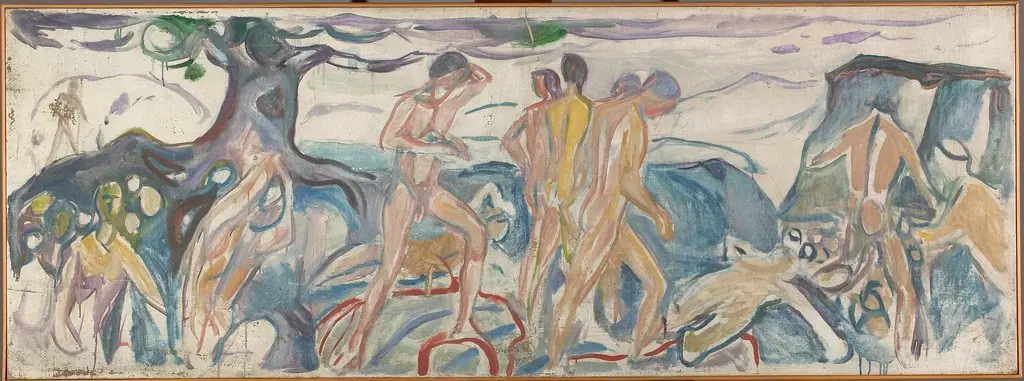
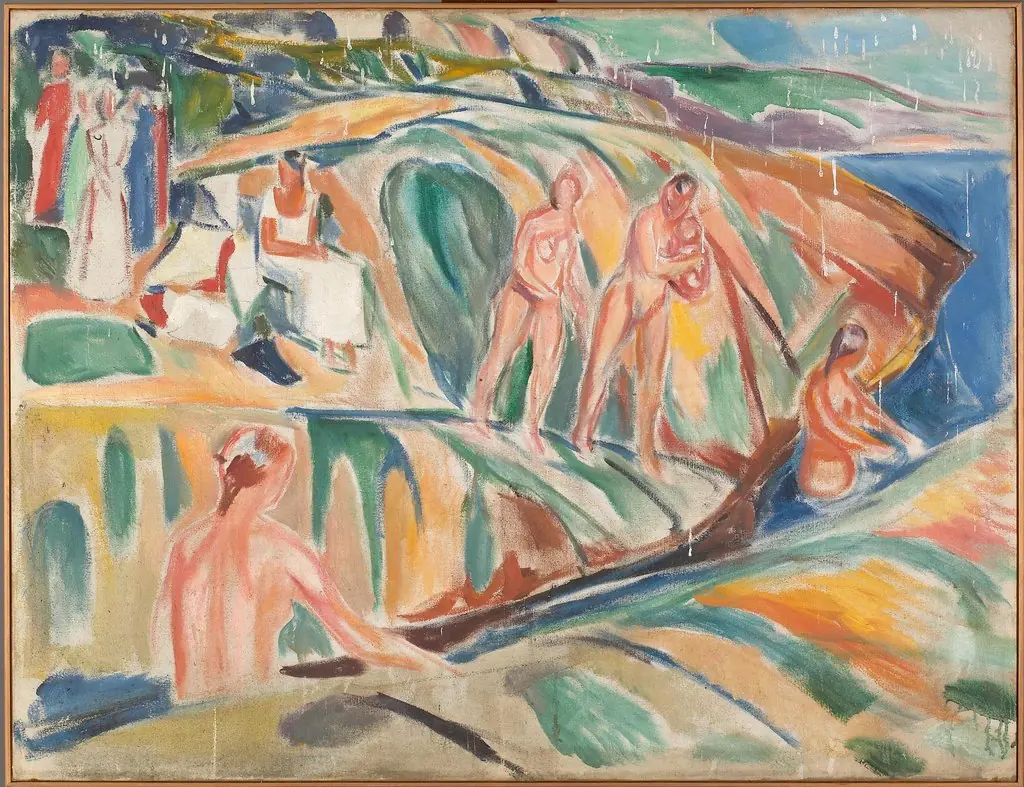
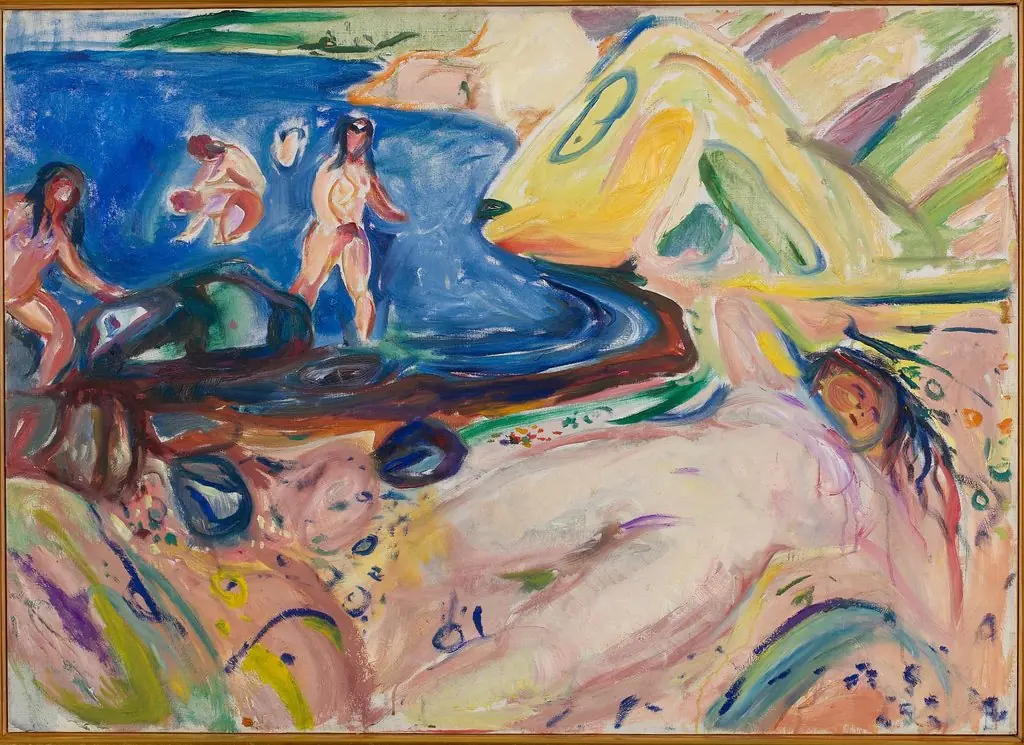
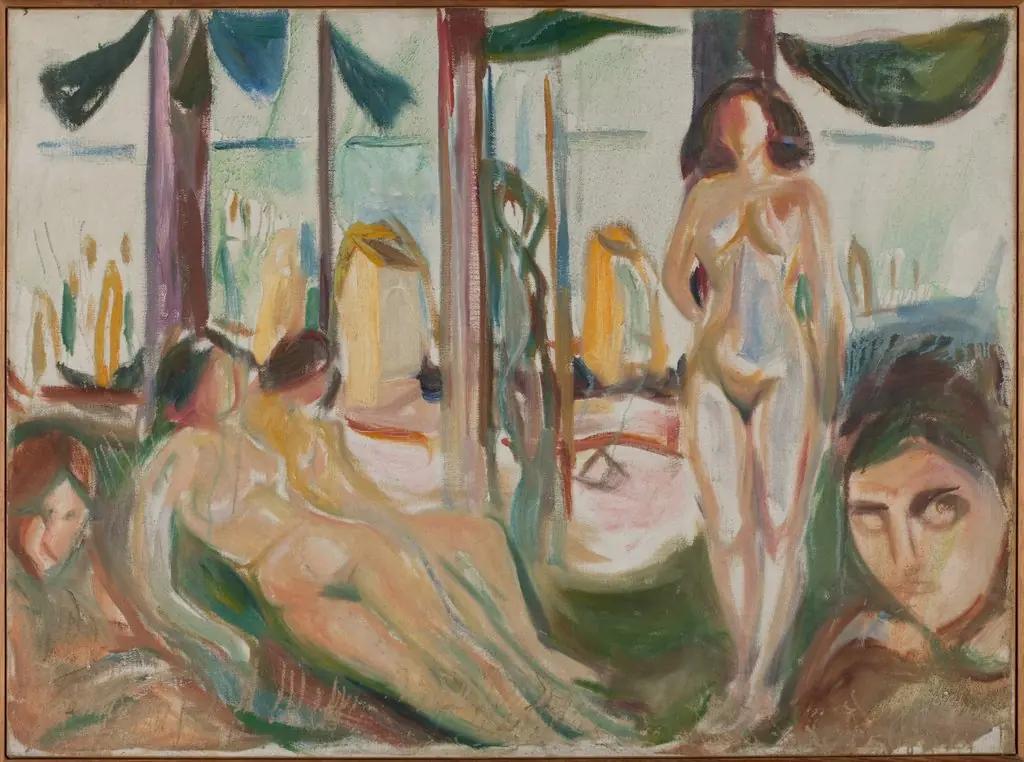
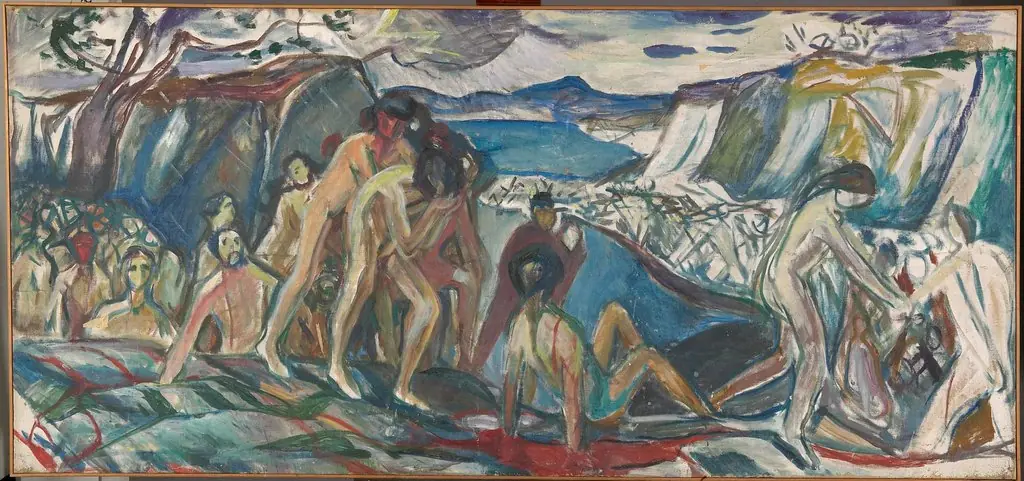
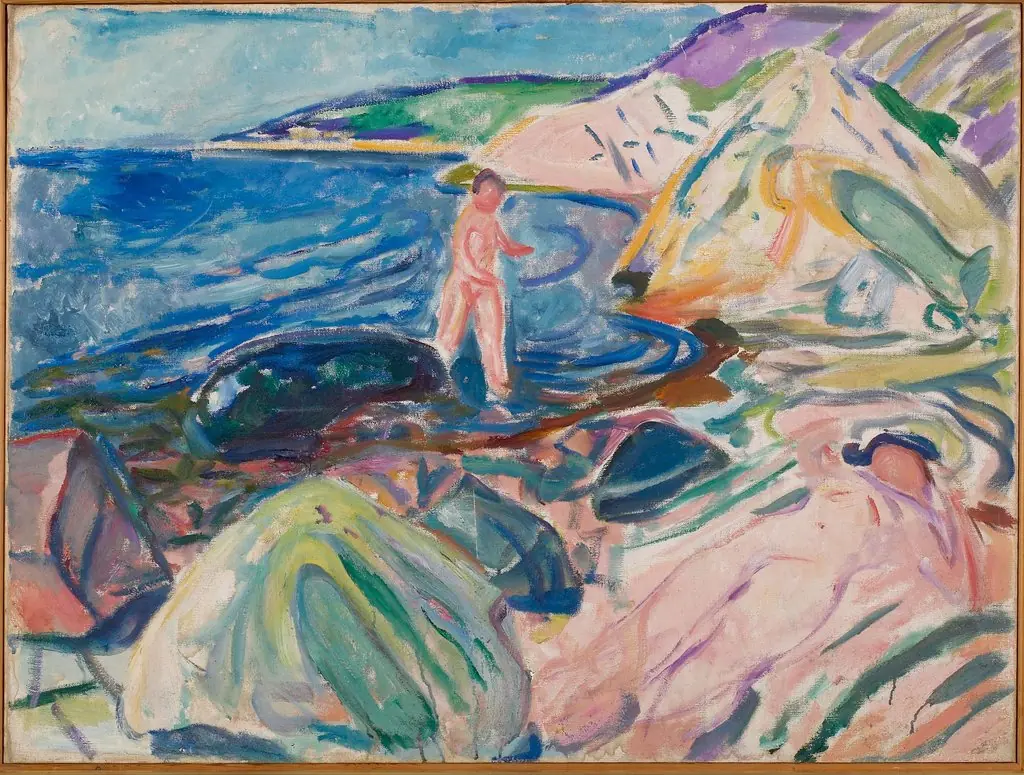
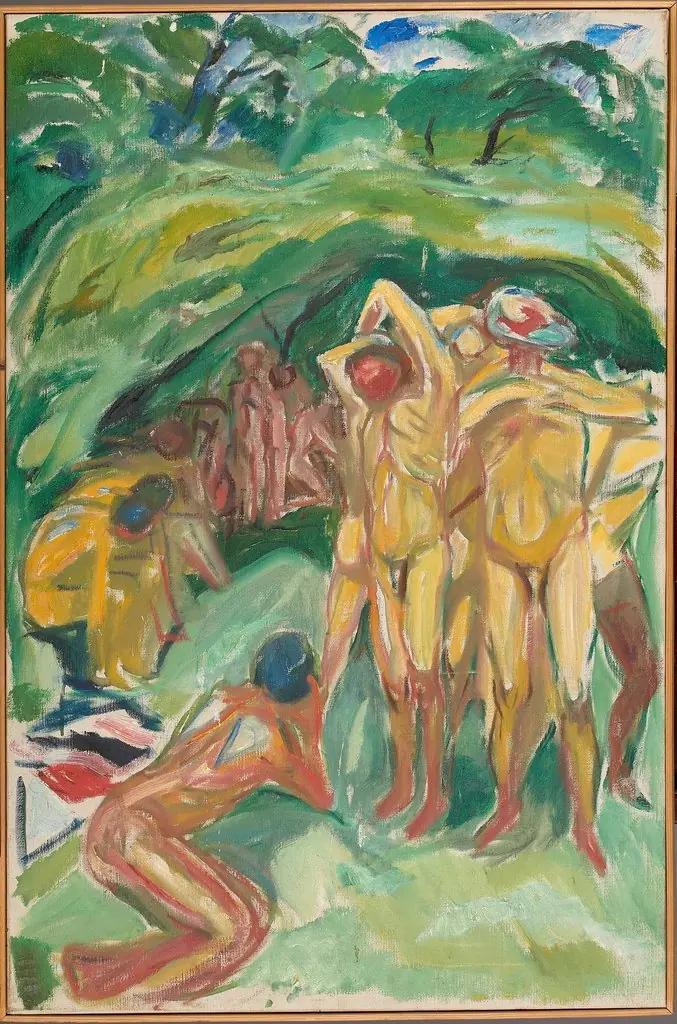
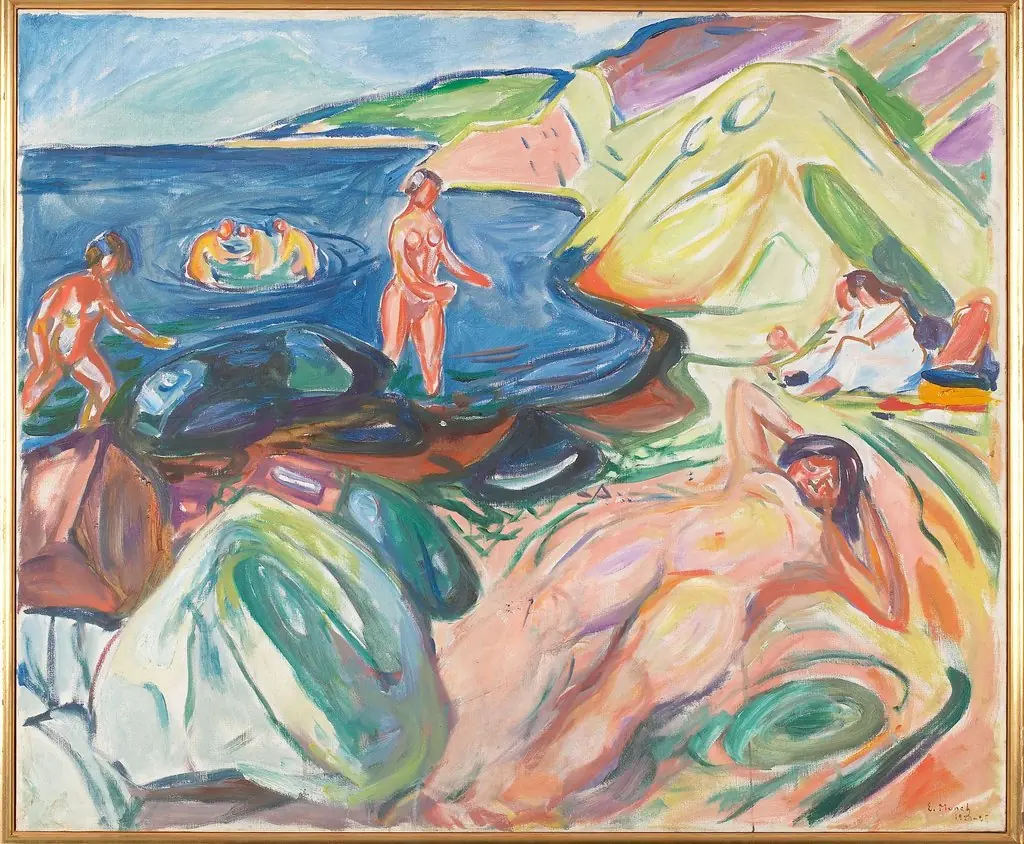
Bathers on Rocks is an oil painting by the Post-Impressionist artist Edvard Munch. It dates from 1915 and is held in the collection of the Munch Museum.
About this work
Overview
It depicts a quiet scene of nude figures on a rocky shoreline, engaging with the natural environment in still, contemplative poses.
Painted in 1915, *Bathers on Rocks* is an oil work by Norwegian artist Edvard Munch. It depicts a quiet scene of nude figures on a rocky shoreline, engaging with the natural environment in still, contemplative poses. The composition avoids dramatic action, favoring a subdued rhythm that aligns with Munch’s later interest in introspective themes. The painting resides in the Munch Museum, Oslo, as part of the artist’s personal collection preserved after his death.
Subject & Meaning
The figures—unposed and unidealized—appear absorbed in their own presence, neither interacting nor performing for the viewer. Their nudity suggests vulnerability and naturalness rather than eroticism. Set against the quiet sea and sky, the scene evokes solitude and introspection, reflecting Munch’s preoccupation with human existence in relation to nature and inner states. The absence of narrative implies a meditation on stillness rather than a story.
Technique & Style
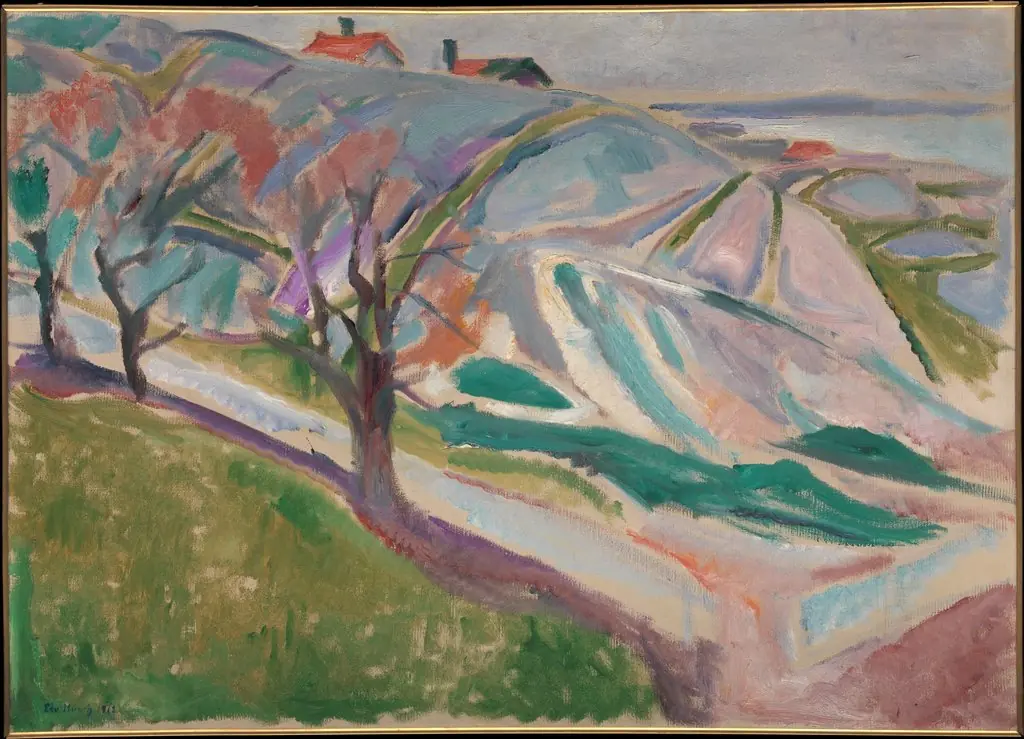
Munch employed soft, blended brushwork and a restrained palette of blues, greens, and pale pinks to create a hazy, atmospheric effect. Forms are simplified, with minimal detail in skin and rock surfaces, emphasizing mood over realism. The composition’s horizontal balance and flattened perspective reflect post-impressionist tendencies, though the emotional tone remains distinctively Munchian—calm yet tinged with existential quietude.
History & Provenance
Created during Munch’s later years, the painting was retained by the artist and later included in the core collection bequeathed to the city of Oslo. It entered the Munch Museum upon its founding in 1963, where it remains as part of a comprehensive archive of his work. Unlike his more famous pieces, this painting was not widely exhibited during his lifetime, suggesting personal significance over public ambition.
Context
In 1915, Munch was living in relative seclusion near Oslo, recovering from personal losses and psychological strain. His work from this period often turned toward nature and quietude, moving away from the intense anxiety of his earlier Symbolist phase. *Bathers on Rocks* reflects this shift, aligning with broader European trends toward lyrical realism and a renewed interest in the human form within natural settings.
Legacy
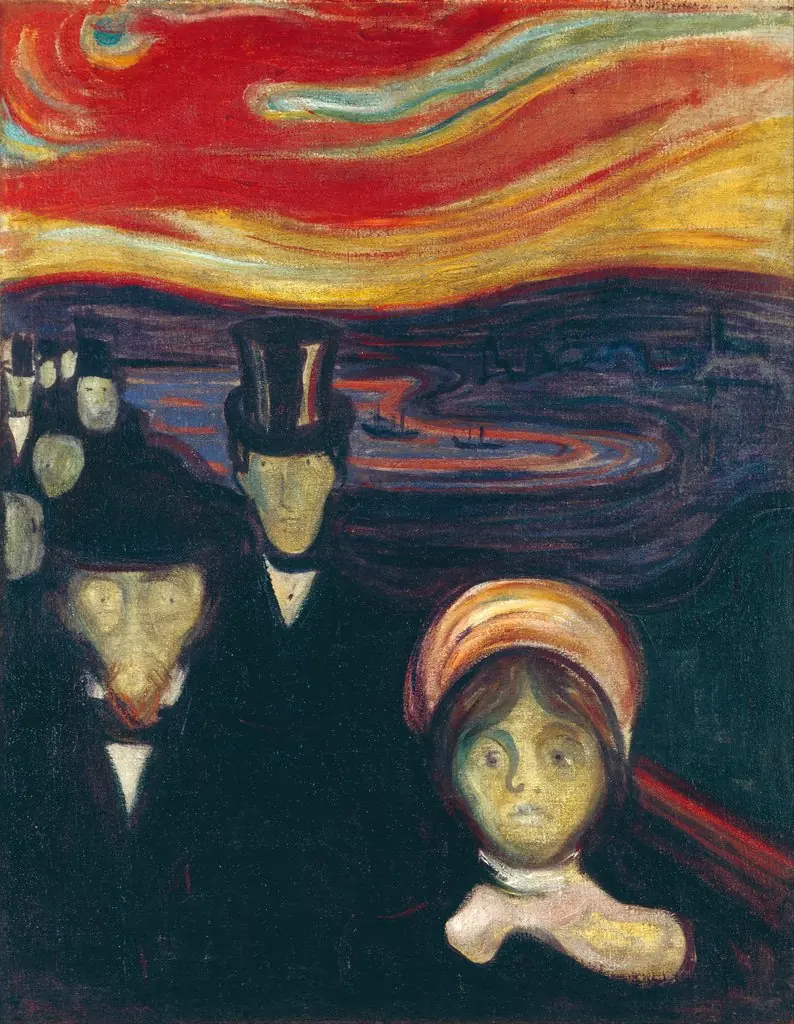
Though less known than *The Scream*, *Bathers on Rocks* exemplifies Munch’s evolving artistic language—less about psychological turmoil, more about serene observation. It contributes to understanding his late style, where emotional depth is conveyed through restraint. The painting continues to inform interpretations of his lifelong engagement with solitude, the body, and the natural world.
Artist & collection

Artist
Edvard Munch ( MUUNK; Norwegian: ; 12 December 1863 – 23 January 1944) was a Norwegian painter.