Artwork
Sunbathing
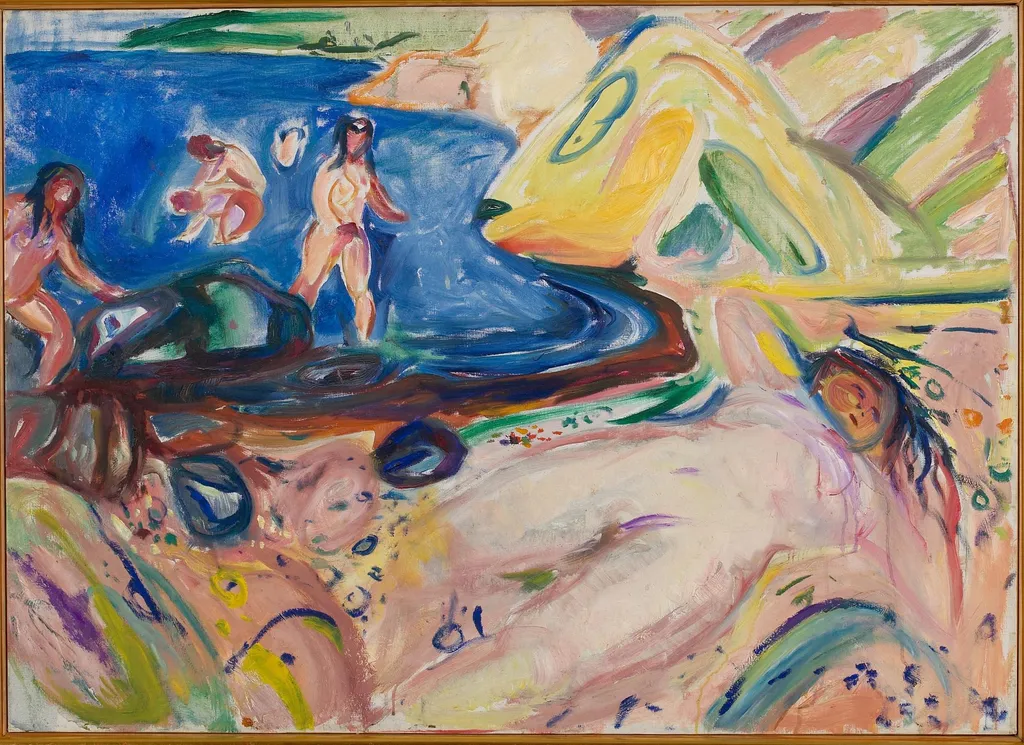
Sunbathing is an oil painting by the Post-Impressionist artist Edvard Munch. It dates from 1914 and is held in the collection of the Munch Museum.
About this work
Overview
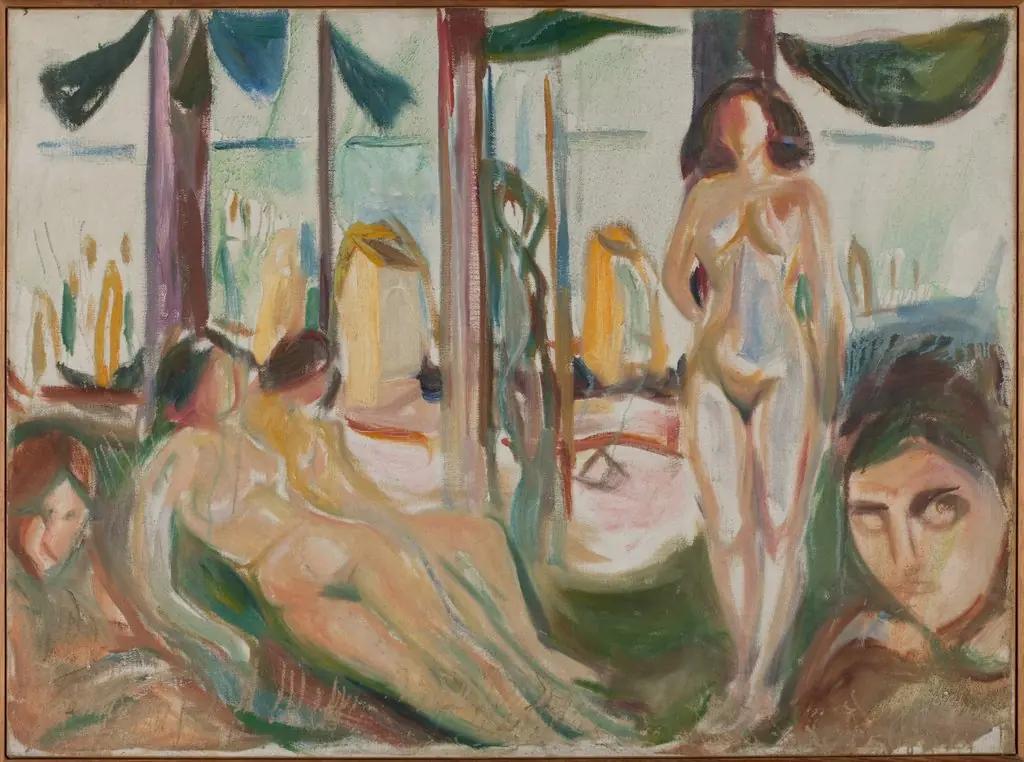
Sunbathing, a 1914 oil painting by Edvard Munch, captures a scene of four individuals by the water, notable for its expressive depiction of nudity and vibrant, dynamic natural surroundings.
Subject & Meaning
The painting features Ingeborg Kaurin and three companions in a state of relaxed nudity, conveying a sense of uninhibited freedom. Set in Hvitsten, the work may reflect Munch's exploration of human emotion and intimacy, characteristic of his emotionally charged oeuvre.
Technique & Style
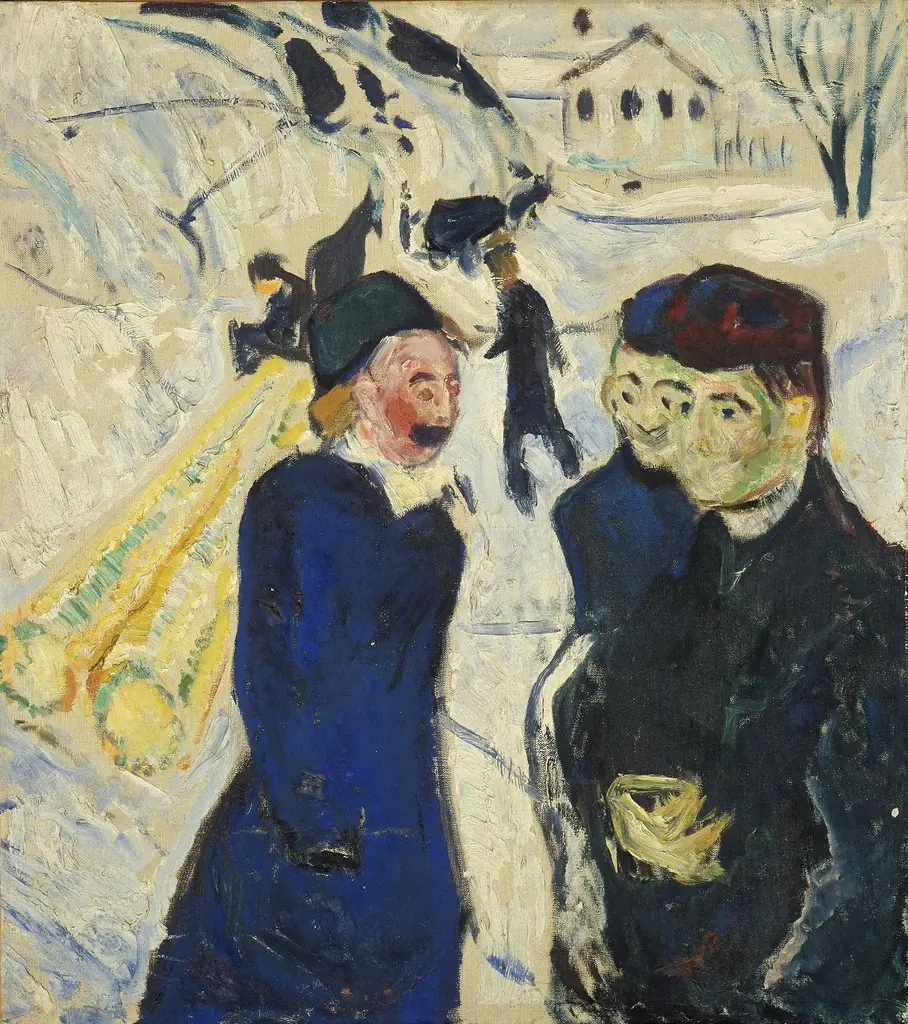
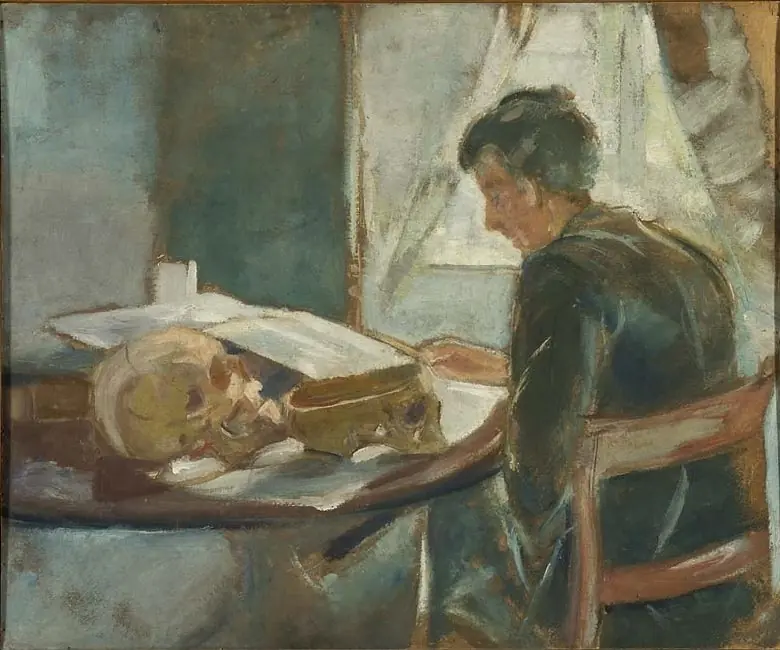
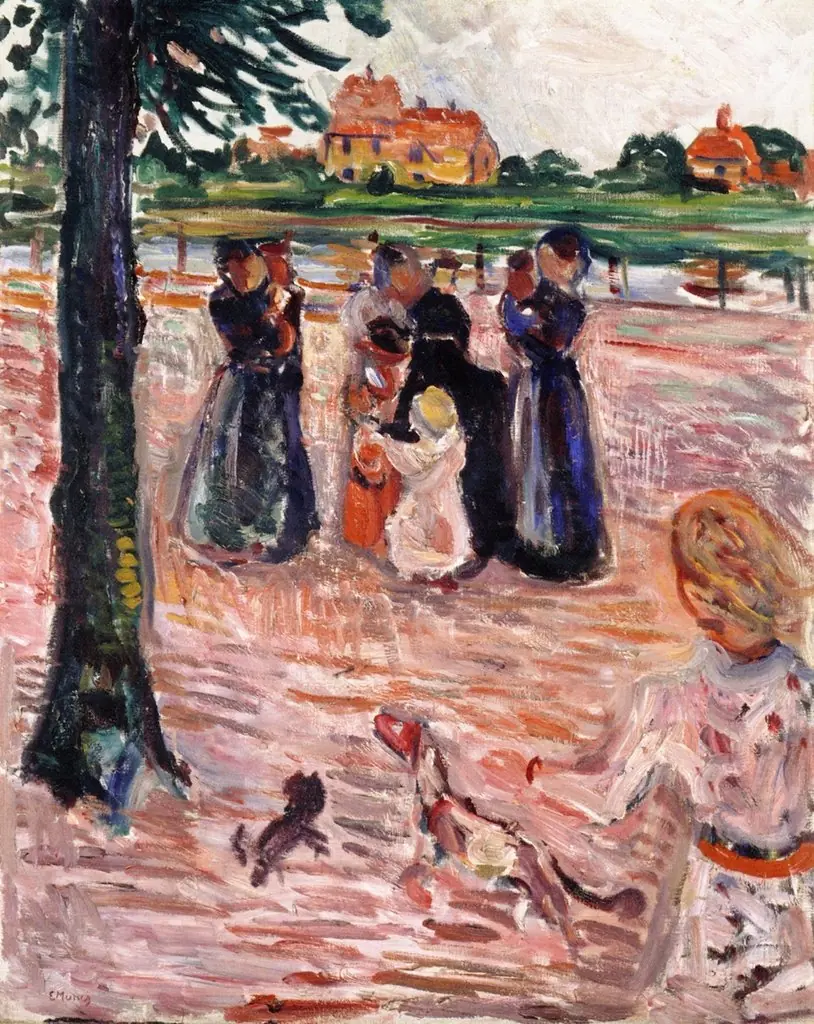
Executed in loose, expressive brushstrokes with thick, textured layers of paint (impasto), the painting's bold color palette (yellows, blues, pinks, greens, and browns) imbues the scene with energetic vitality, aligning with post-impressionist principles.
History & Provenance
Created during a period of Munch's life influenced by his artistic training in Kristiania and associations with nihilist circles, 'Sunbathing' is now part of the Munch Museum's collection.
Context
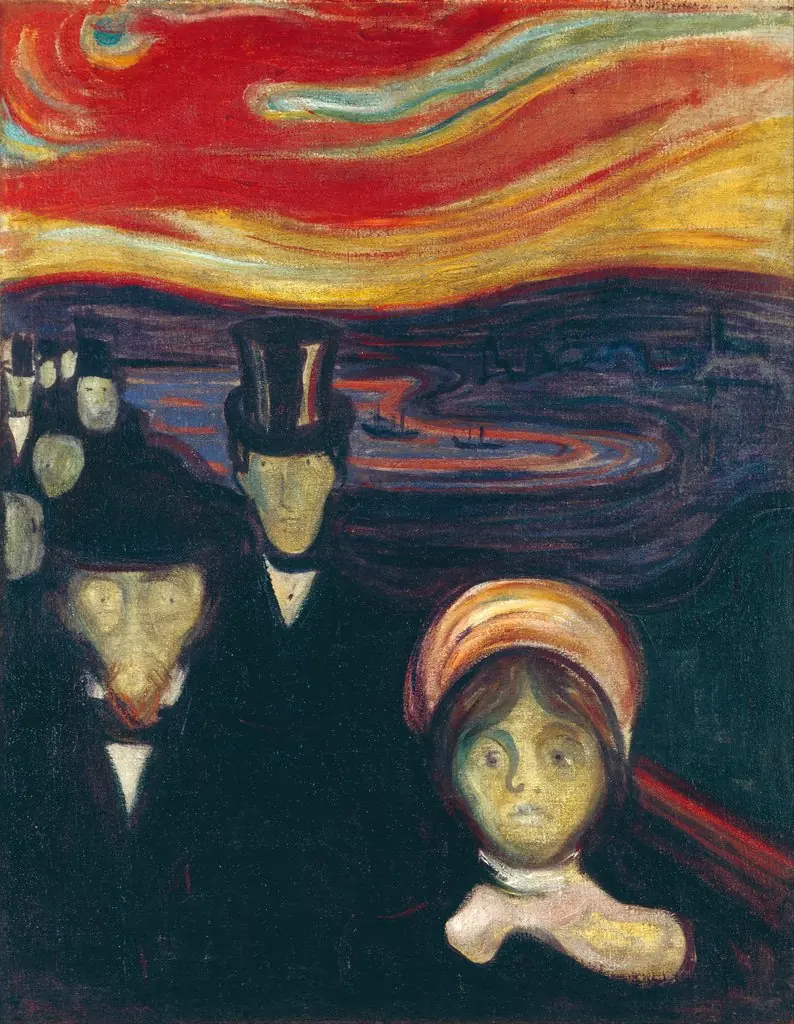
While Munch is famously known for works like 'The Scream', 'Sunbathing' represents a lesser-known aspect of his work, focusing on serene, communal moments rather than angst, yet still emphasizing emotional authenticity through its subjects and execution.
Legacy
As part of the post-impressionist movement, 'Sunbathing' contributes to the broader artistic shift towards expressive, psychologically nuanced painting, though its impact is more nuanced compared to Munch's more iconic works.
Artist & collection
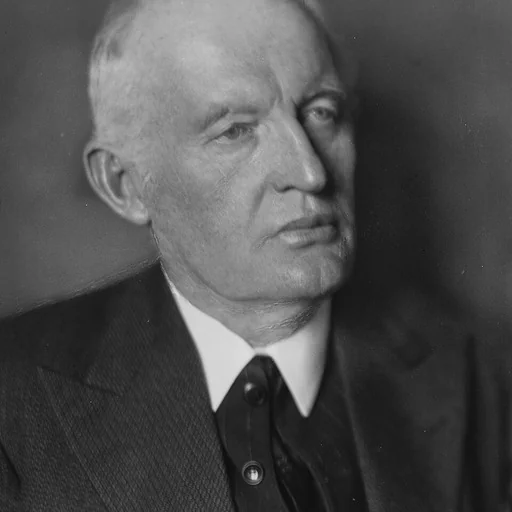
Artist
Edvard Munch ( MUUNK; Norwegian: ; 12 December 1863 – 23 January 1944) was a Norwegian painter.