Artwork
Brothel Scene
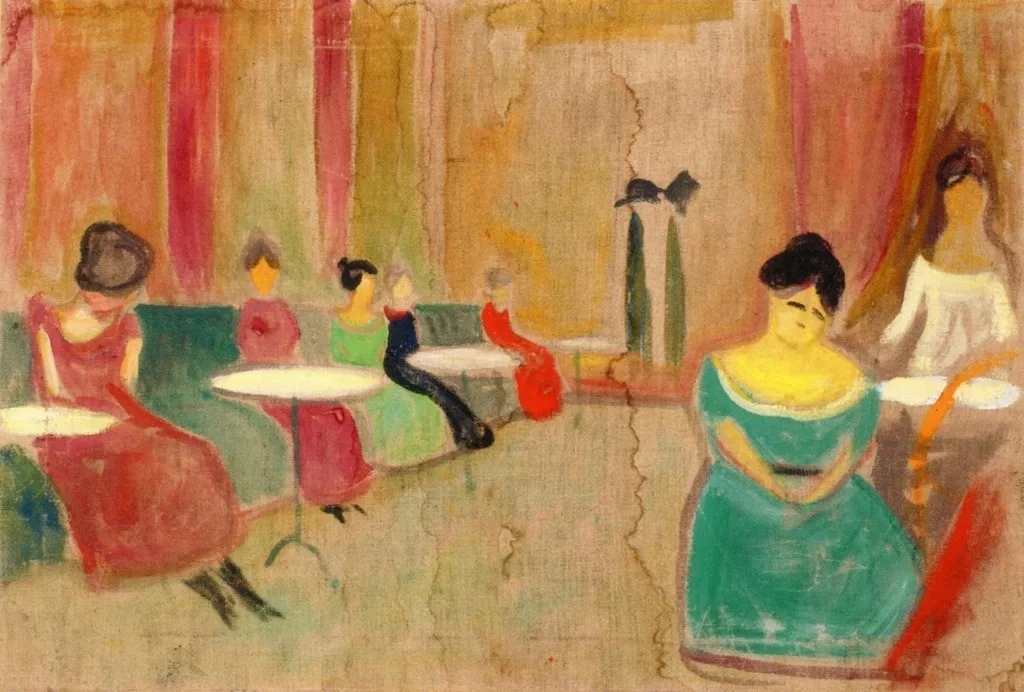
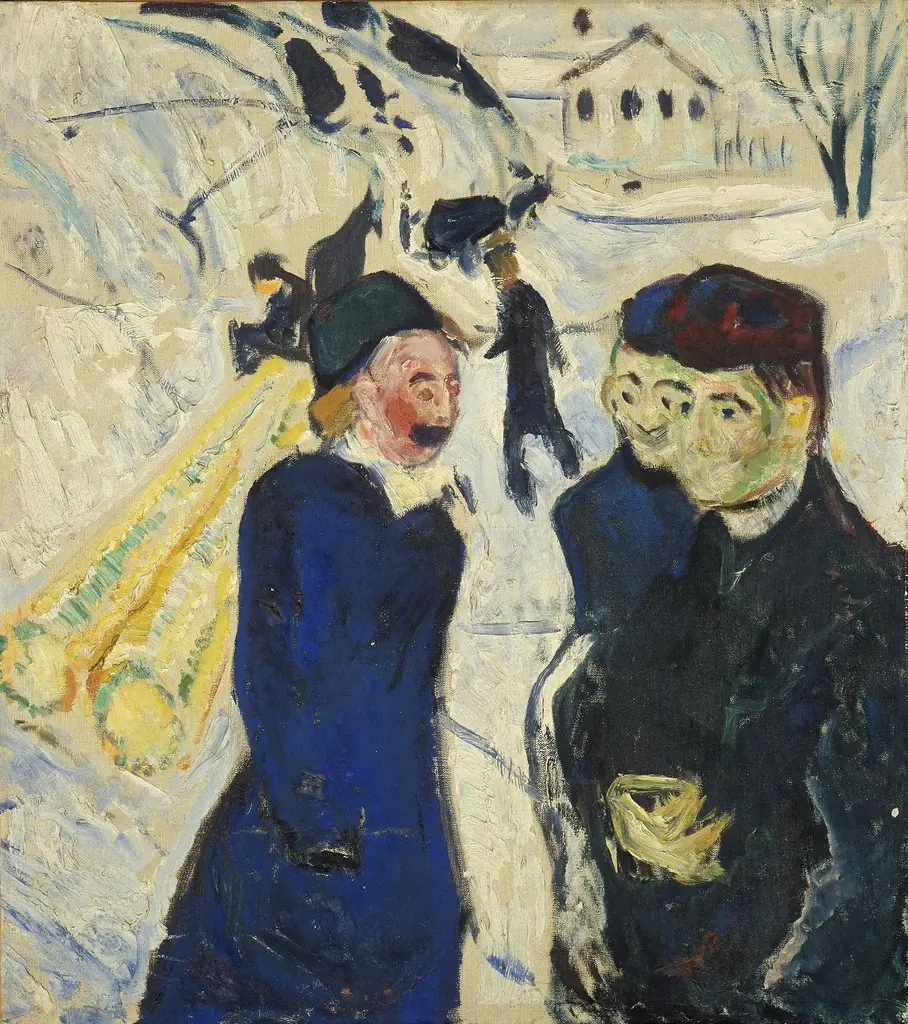
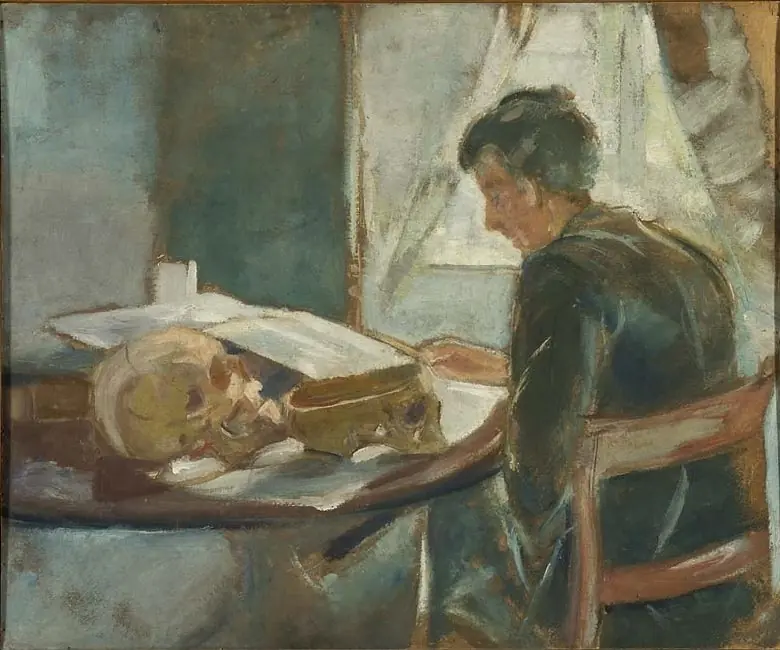
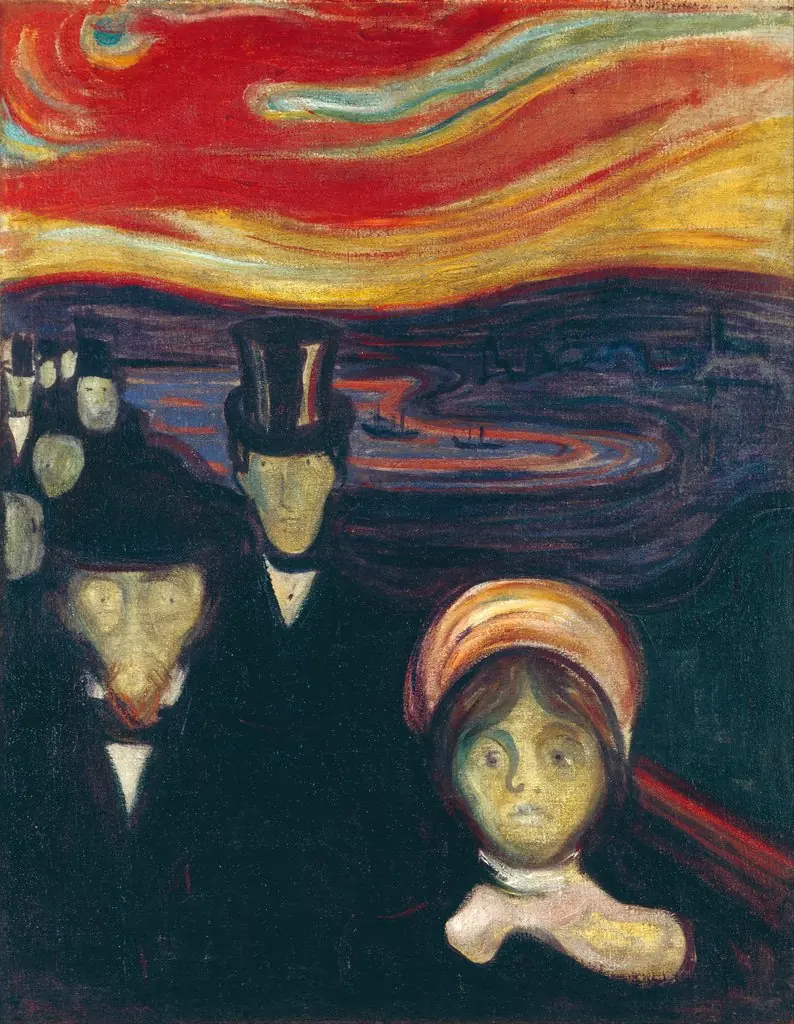
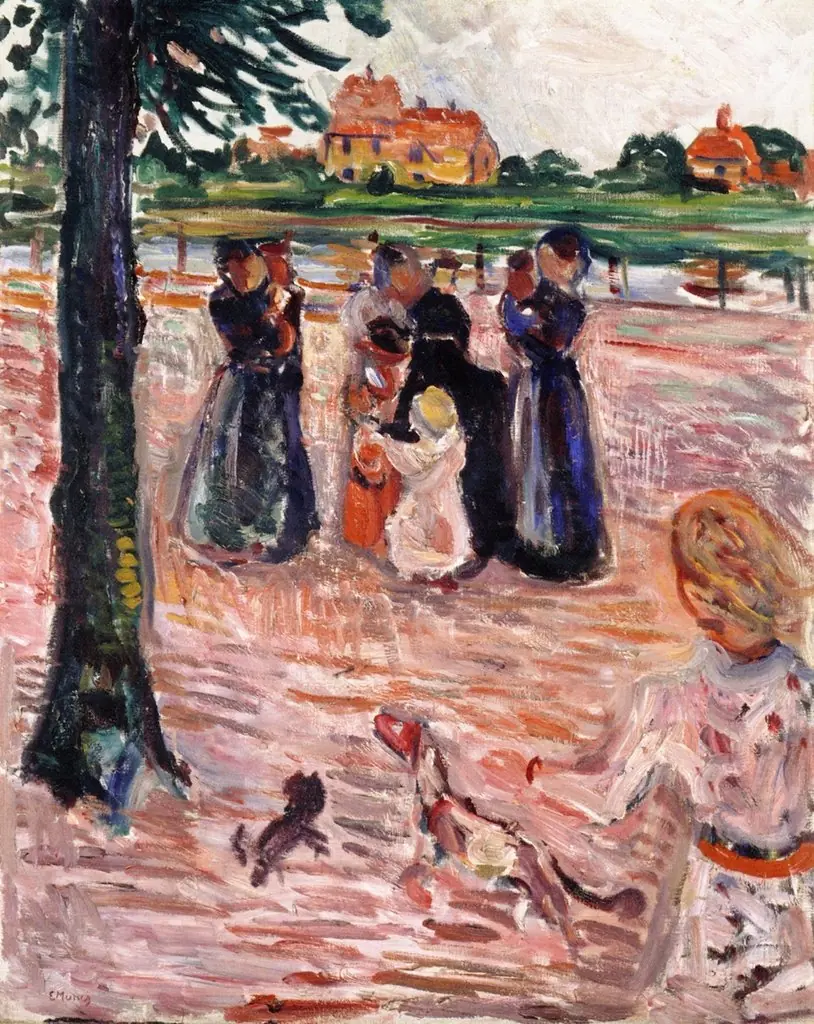
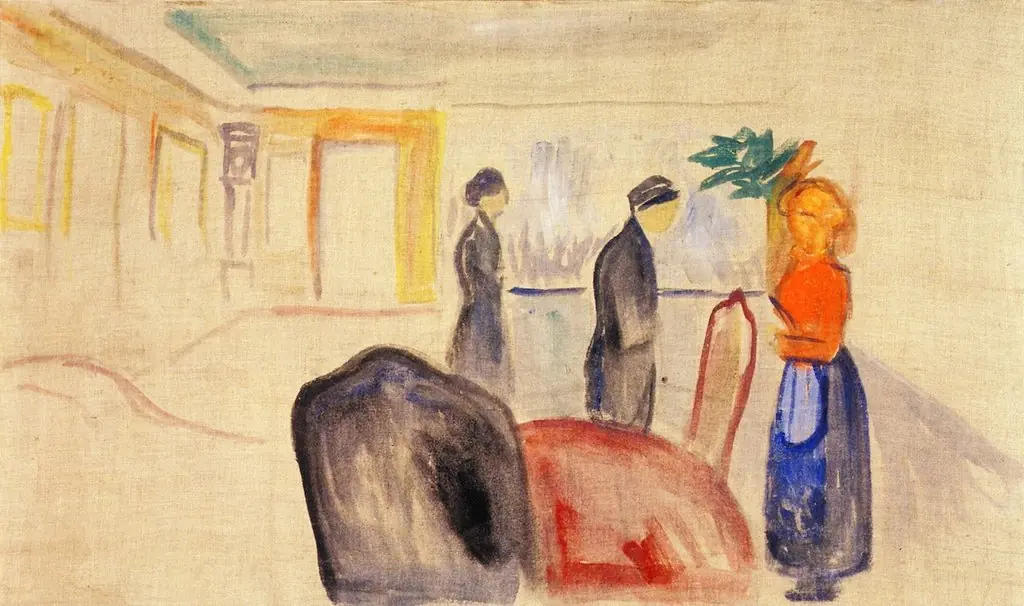
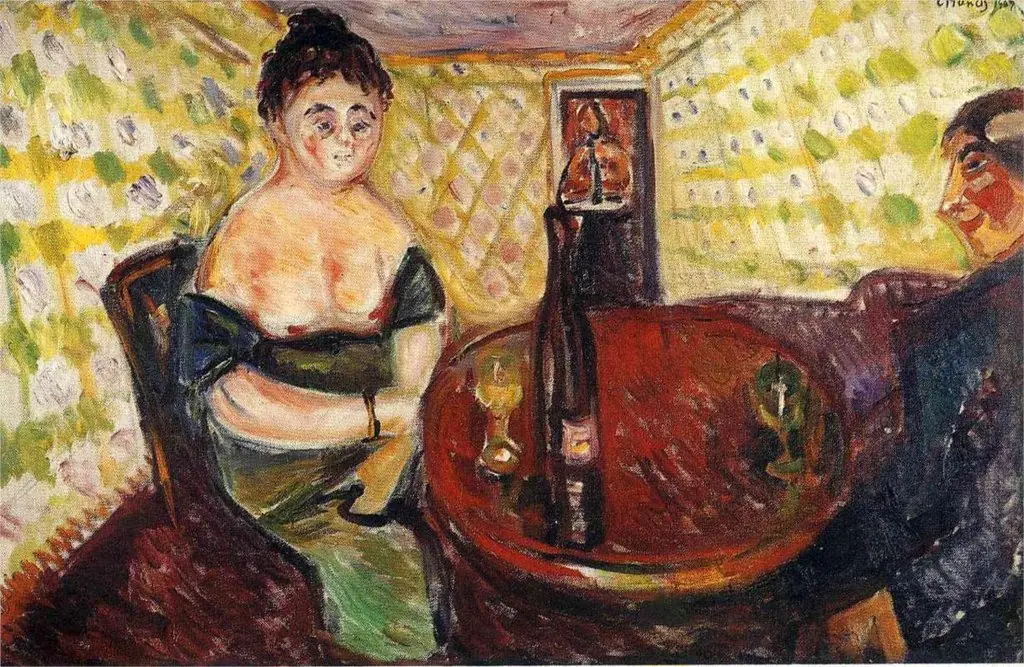
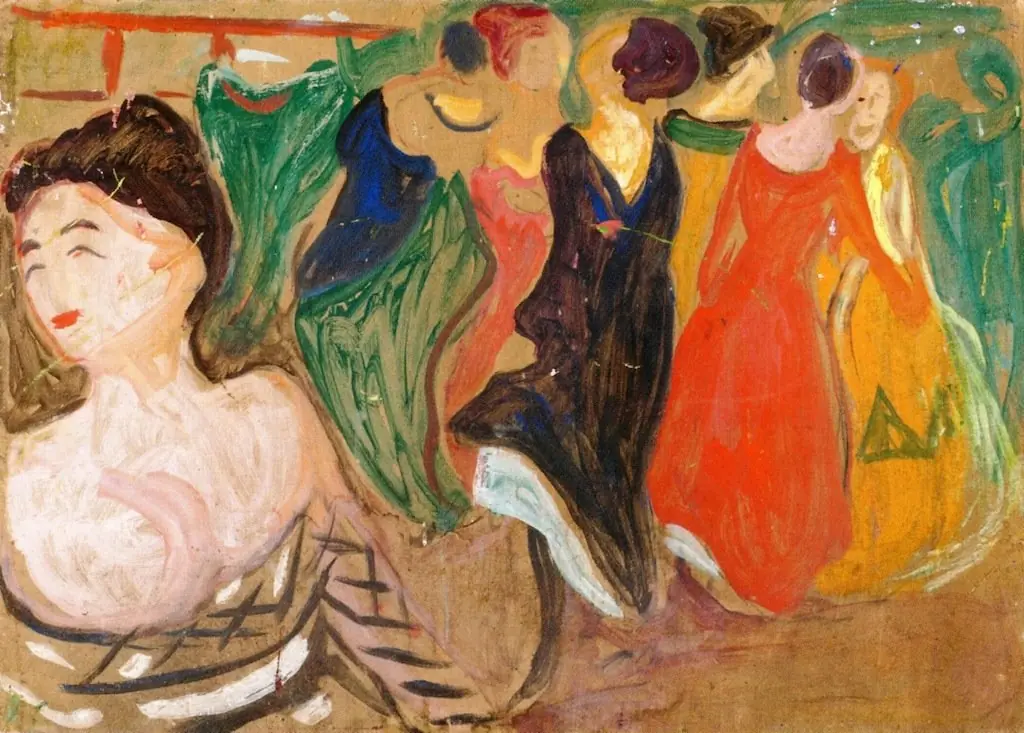
Brothel Scene is an oil painting by the Post-Impressionist artist Edvard Munch. It dates from 1899 and is held in the collection of the Munch Museum.
About this work
Overview
The piece is part of the permanent collection at the Munch Museum in Oslo, where it remains a key example of his psychological realism.
Painted in 1899, *Brothel Scene* is an oil on canvas work by Norwegian artist Edvard Munch. It belongs to a series in which he examined human vulnerability and social isolation. Unlike traditional genre paintings, it avoids dramatic narrative, instead focusing on quiet, unresolved interactions. The piece is part of the permanent collection at the Munch Museum in Oslo, where it remains a key example of his psychological realism.
Subject & Meaning
The painting portrays a group of women seated at tables in a modest interior, accompanied by men who loiter or converse at a distance. Their postures suggest emotional detachment rather than overt interaction. Munch does not depict vice or spectacle but rather a sense of weary coexistence. The scene reflects his interest in the psychological weight of human connection, particularly in marginalized social spaces.
Technique & Style
Munch used muted earth tones and diffused lighting to flatten spatial depth and soften forms. Brushwork is restrained, avoiding the expressive vigor of his earlier works like *The Scream*. The figures are rendered with minimal detail, emphasizing their anonymity. The composition is deliberately unbalanced, with figures clustered to one side, enhancing the feeling of unease and emotional distance.
History & Provenance
Created during a period of intense personal reflection, the painting was produced after Munch’s move to Berlin, where he engaged with Symbolist and Decadent circles. It remained in his personal collection until his death, after which it was transferred to the Munch Museum, established according to his wishes to preserve his entire artistic legacy.
Context
In late 19th-century Europe, brothels were common subjects in art, often treated with moralizing or sensationalist intent. Munch diverged from this by avoiding judgment or titillation. His approach aligned with broader Nordic interest in psychological realism and the inner lives of individuals, reflecting influences from literature and philosophy that emphasized alienation and existential solitude.
Legacy
Though less widely known than his more dramatic works, *Brothel Scene* exemplifies Munch’s consistent focus on emotional undercurrents in everyday settings. It influenced later artists interested in quiet, introspective realism and remains a touchstone in discussions of how modernism treated social spaces without overt narrative resolution.
Artist & collection
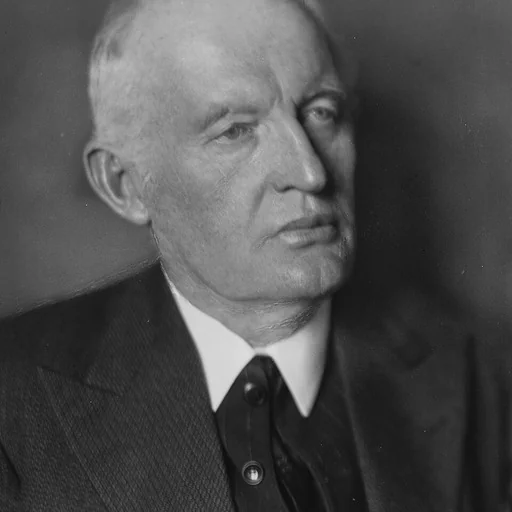
Artist
Edvard Munch ( MUUNK; Norwegian: ; 12 December 1863 – 23 January 1944) was a Norwegian painter.