Artwork
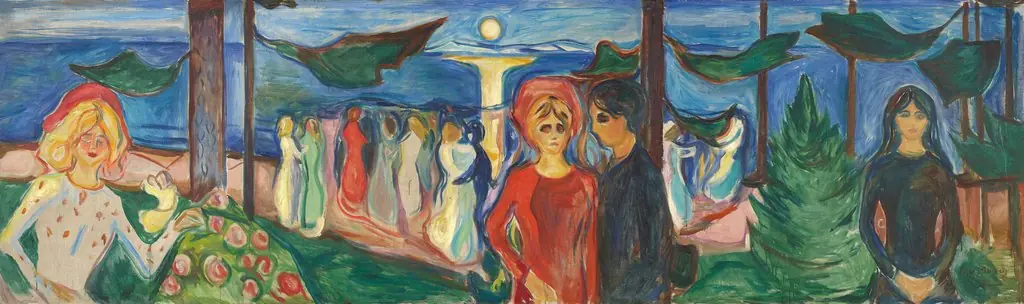
Dance on the Beach (The Linde Frieze)
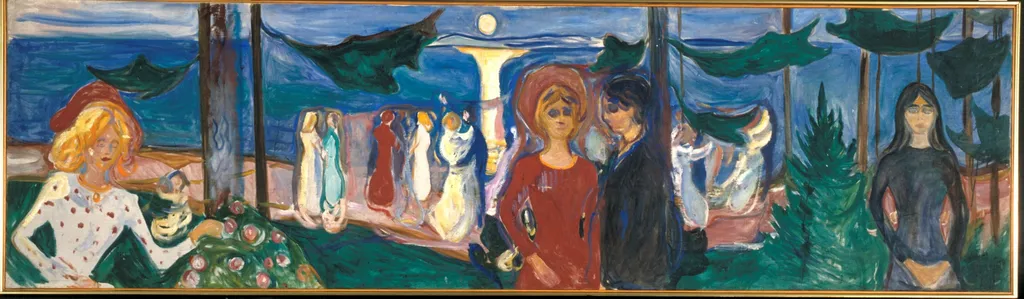
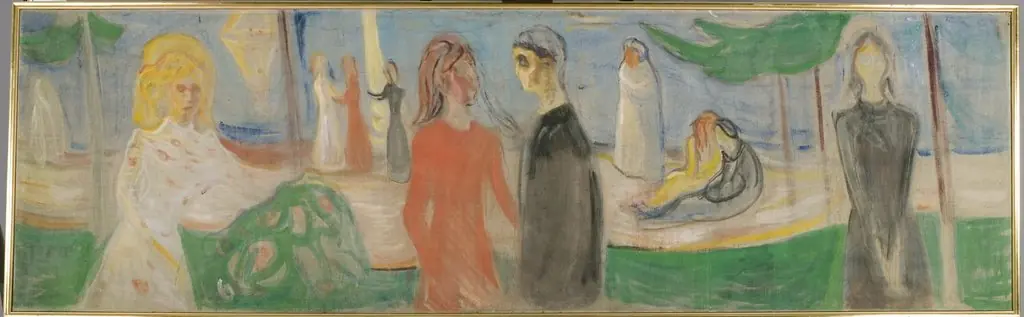
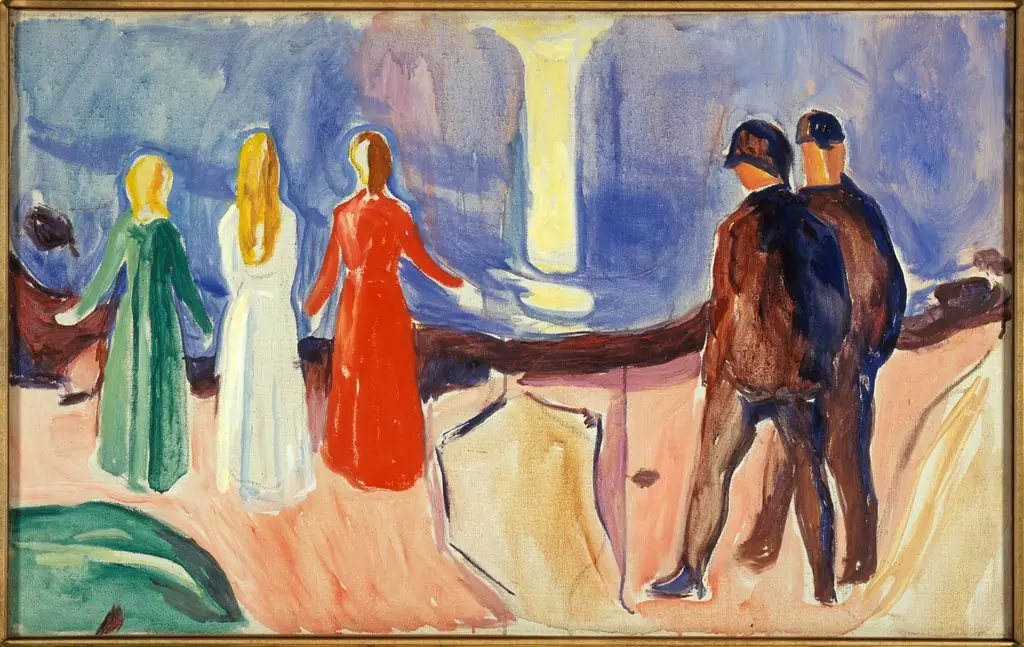
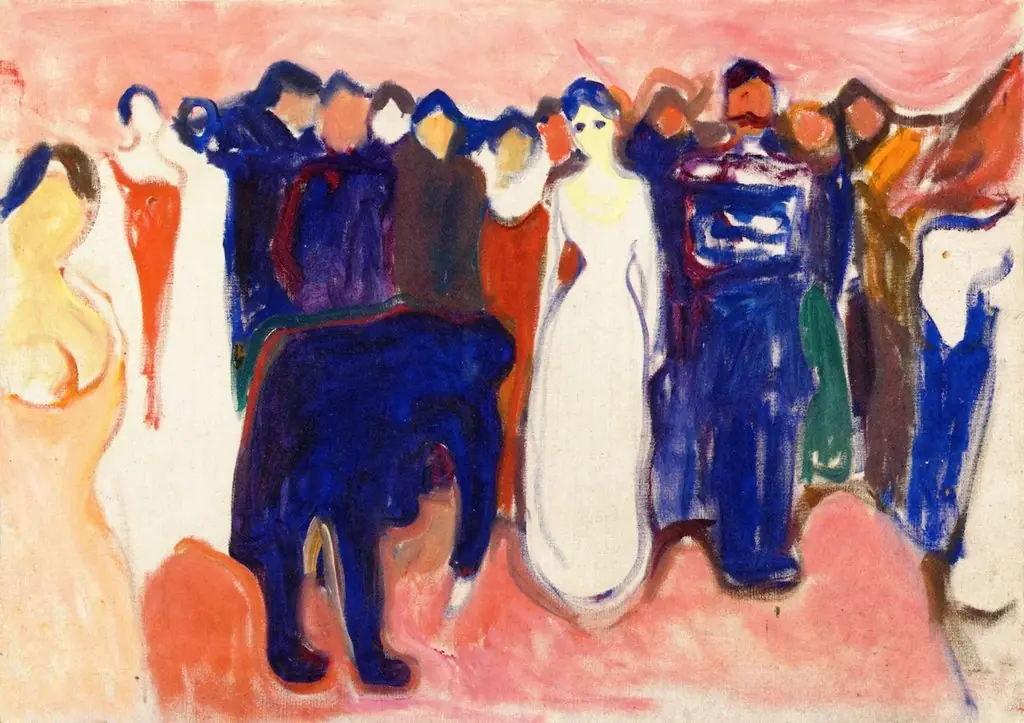
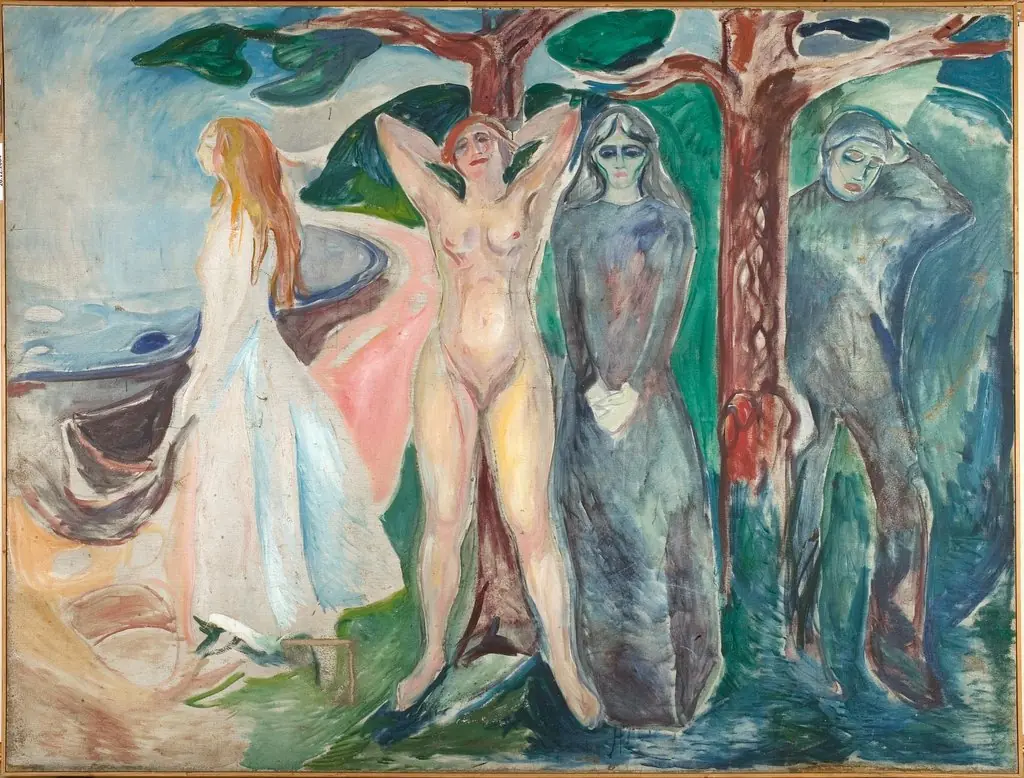
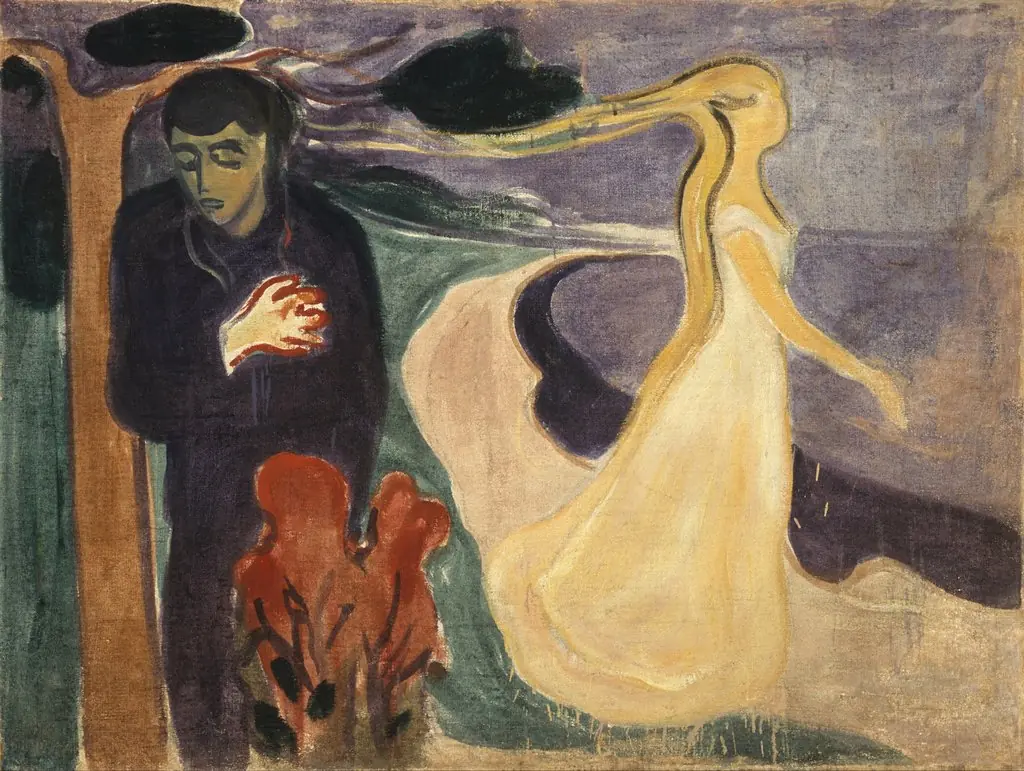
Dance on the Beach (The Linde Frieze) is an oil painting by the Post-Impressionist artist Edvard Munch. It dates from 1904 and is held in the collection of the Munch Museum.
About this work
Overview
It belongs to a series of compositions Munch developed during this period, reflecting his interest in human emotion and social rituals.
Painted in 1904 by Norwegian artist Edvard Munch, Dance on the Beach (The Linde Frieze) is an oil-on-canvas work that captures a group of figures dancing along a shoreline. It belongs to a series of compositions Munch developed during this period, reflecting his interest in human emotion and social rituals. The painting is now held in the Munch Museum in Oslo, where it remains part of a broader exploration of life, movement, and psychological atmosphere in his oeuvre.
Subject & Meaning
The scene depicts a group of individuals engaged in spontaneous dance on a beach, suggesting celebration, release, or communal ritual. The central figure—a woman in red with raised arms—acts as a focal point of energy and expression. Munch does not portray a specific event but rather an emotional state: the fleeting, unguarded joy of movement among strangers. The absence of narrative detail invites interpretation, aligning with his broader interest in inner experience over external realism.
Technique & Style
Munch employs loose, rhythmic brushwork and heightened color to convey motion and mood. The deep blue background contrasts with the lighter, warmer tones of the dancers’ garments, enhancing the sense of figures emerging from the sea air. His approach, rooted in Post-Impressionism, prioritizes emotional resonance over naturalistic detail. The flowing lines of clothing and the dynamic poses suggest movement through simplified forms, reflecting his move away from academic conventions toward expressive abstraction.
History & Provenance
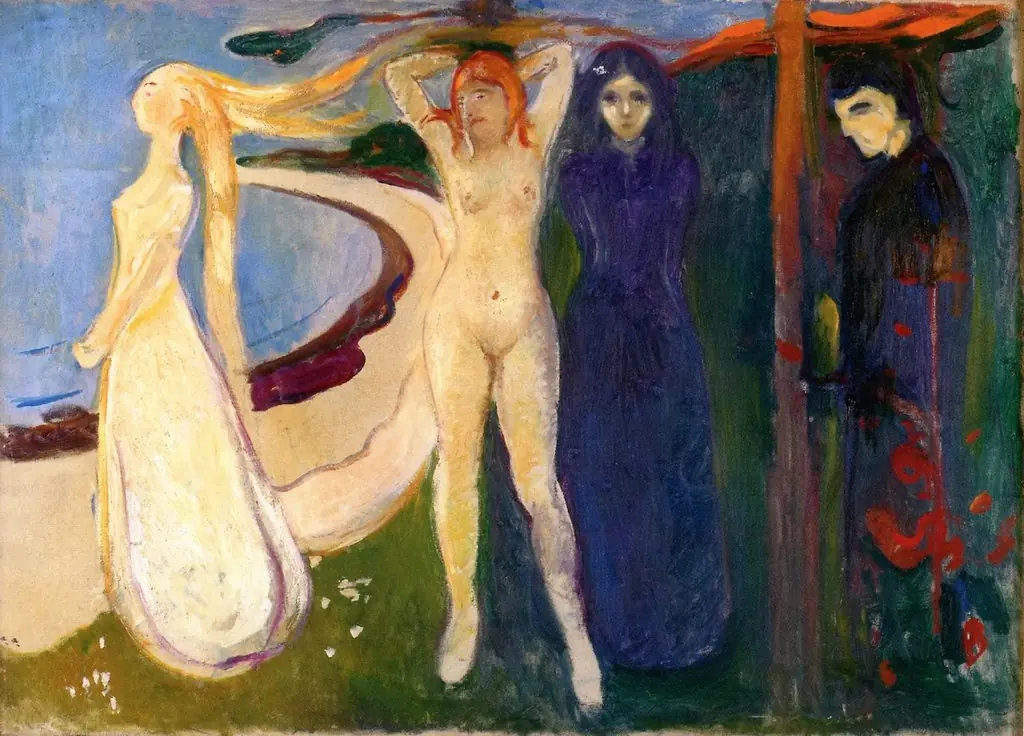
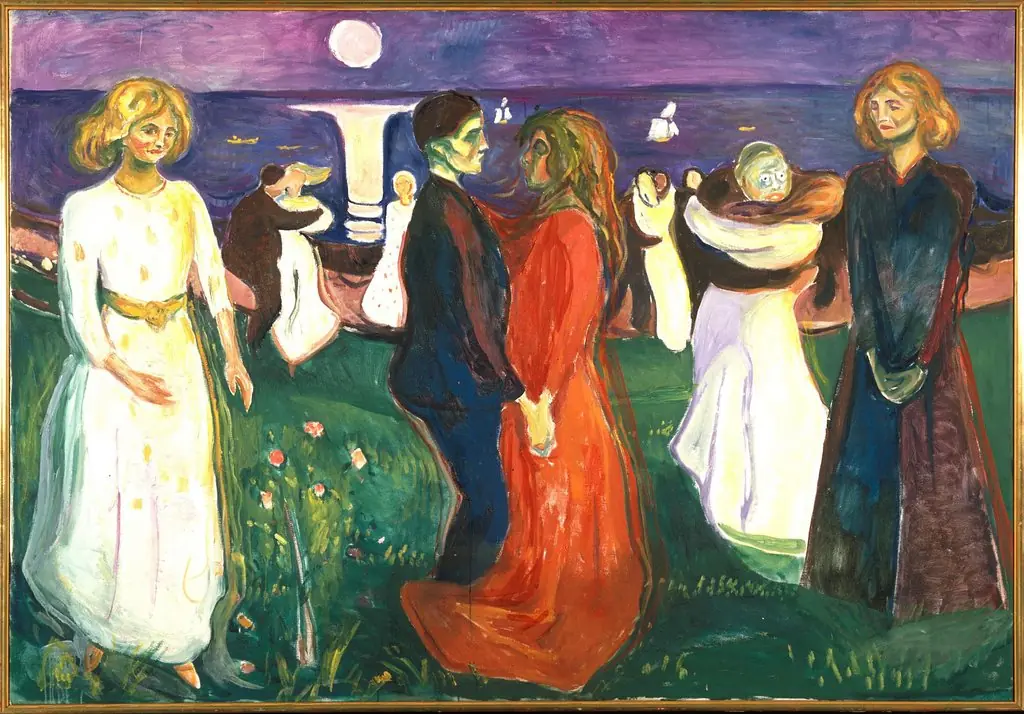
Created during Munch’s mature period, the painting was part of a larger thematic cycle known as The Linde Frieze, commissioned for a private residence in Kristiania. Though the original architectural context is lost, the work remained in Munch’s possession until his death. It entered the collection of the Munch Museum upon its founding in 1963, preserving its connection to the artist’s personal and artistic legacy.
Context
Munch’s engagement with themes of human interaction and emotional intensity was shaped by his exposure to Symbolist thought and his association with intellectuals like Hans Jæger, who emphasized raw psychological truth. In the early 1900s, he increasingly turned to scenes of public life—dancing, walking, mourning—as vehicles for exploring universal states. Dance on the Beach reflects this shift, situating personal feeling within a social setting without romanticizing it.
Legacy
The painting stands as a key example of Munch’s ability to transform everyday moments into emotionally charged compositions. While less widely known than The Scream, it illustrates his sustained interest in movement and collective experience. Its inclusion in the Munch Museum’s core collection ensures its role in understanding the evolution of modern Nordic art and the artist’s departure from narrative toward psychological expression.
Artist & collection

Artist
Edvard Munch ( MUUNK; Norwegian: ; 12 December 1863 – 23 January 1944) was a Norwegian painter.