Artwork
The Dance of Life
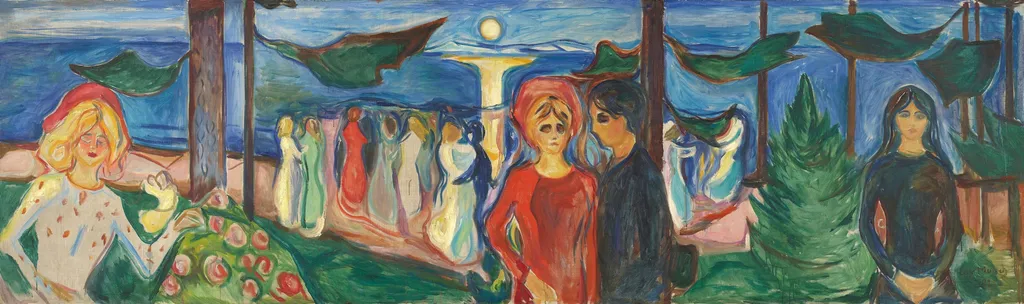
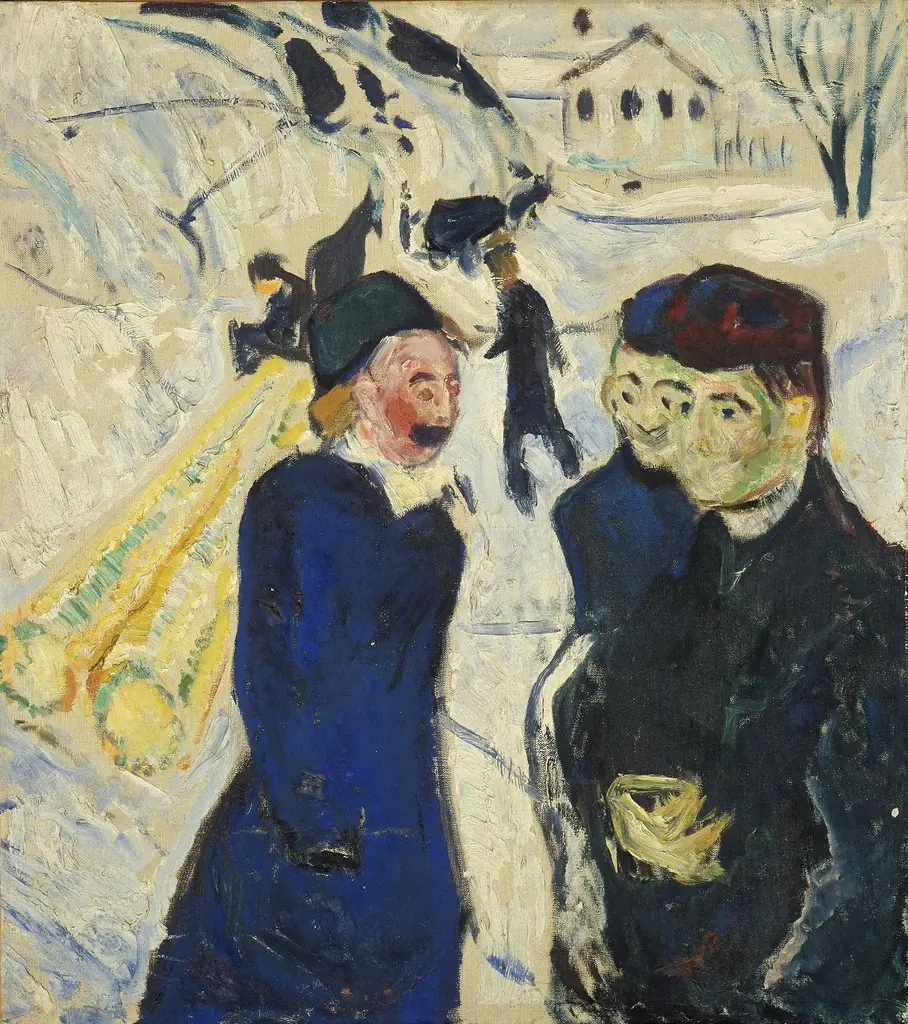
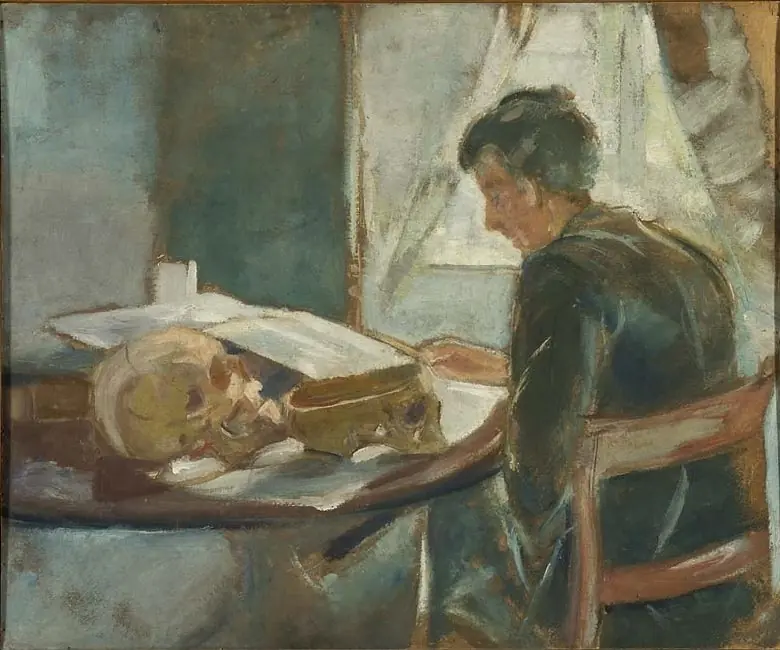
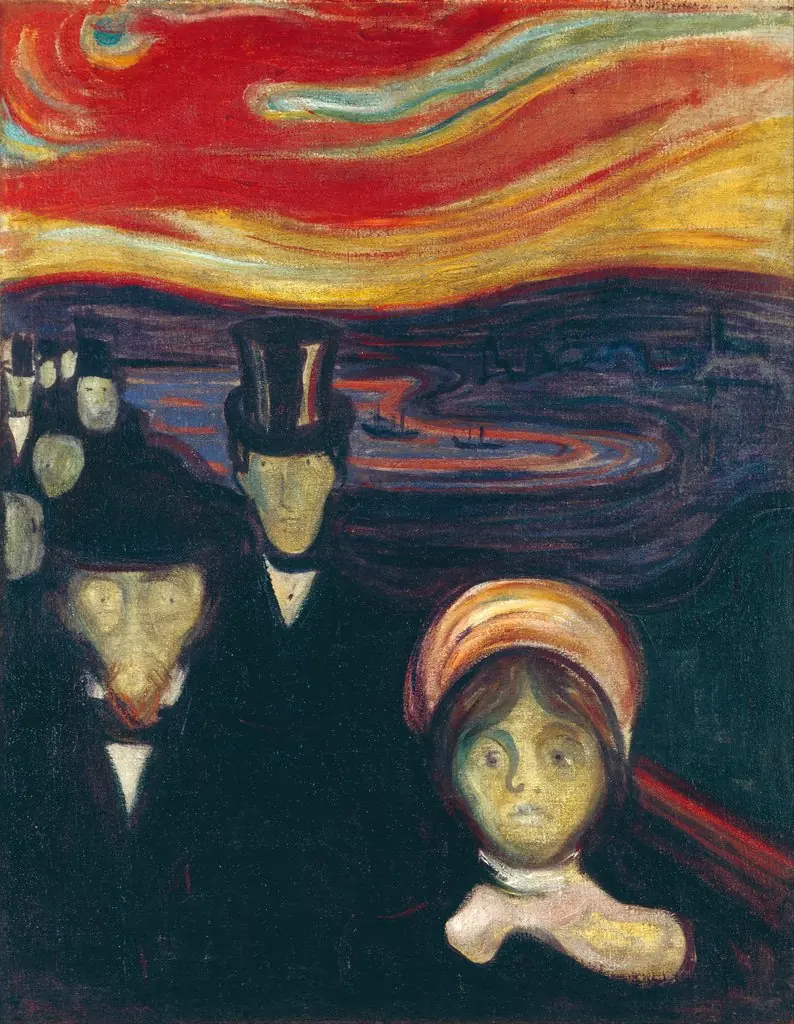
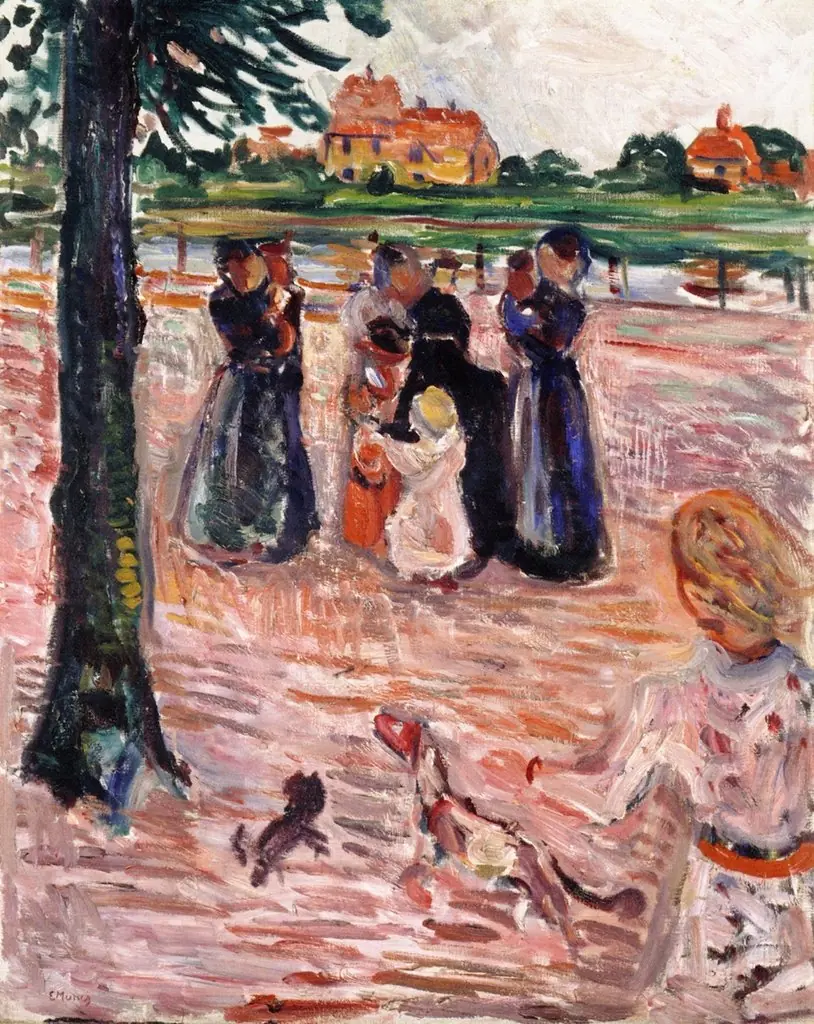
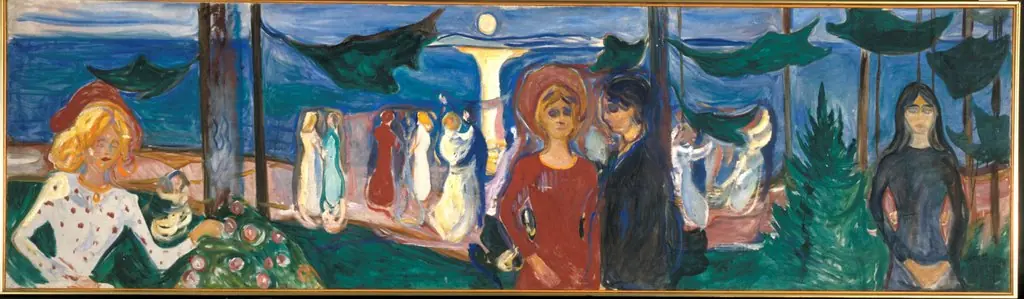
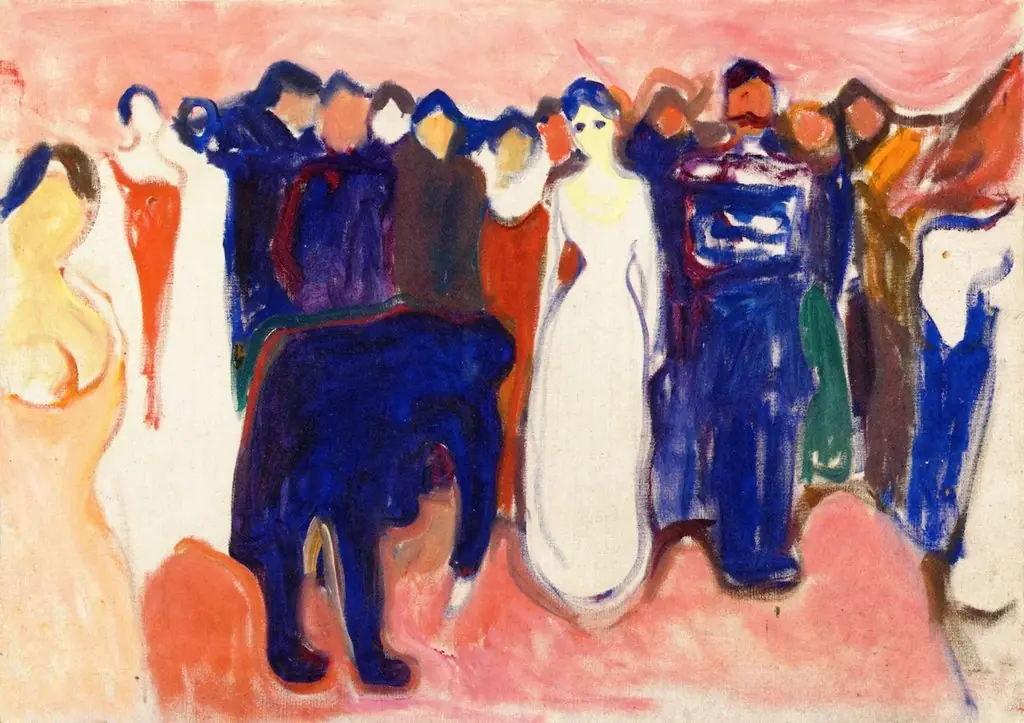
The Dance of Life is an oil painting by the Post-Impressionist artist Edvard Munch. It dates from 1921 and is held in the collection of the Stenersen Museum.
About this work
Overview
Painted in 1921, *The Dance of Life* is an oil on canvas work by Norwegian artist Edvard Munch.
Painted in 1921, *The Dance of Life* is an oil on canvas work by Norwegian artist Edvard Munch. It reflects his lifelong engagement with themes of human emotion and existential experience. Though often associated with Symbolism and Expressionism, Munch’s approach here diverges from his earlier, more somber works, embracing a more vibrant, rhythmic composition. The painting resides in the Munch Museum in Oslo, where much of his oeuvre is preserved.
Subject & Meaning
The painting depicts a group of figures arranged in a loose, circular dance along a shoreline. A central woman in red stands apart, possibly symbolizing vitality or transition. The figures, rendered with varied postures, suggest stages of life—youth, maturity, and solitude. Munch, influenced by personal grief and philosophical ideas, framed the dance as a metaphor for the cyclical nature of human existence, not as celebration but as an inevitable, almost ritualistic passage.
Technique & Style
Munch employed loose, fluid brushwork and heightened color contrasts to convey emotional momentum. The red dress of the central figure draws immediate attention against cooler blues and greens of the landscape. Forms are simplified, contours blurred, and perspective flattened, prioritizing psychological resonance over naturalism. The composition’s rhythmic flow mirrors the motion of dance, with swirling lines guiding the viewer’s eye across the canvas in a continuous, almost musical arc.
History & Provenance
Created during Munch’s later years, *The Dance of Life* was painted after decades of personal and artistic evolution. He had studied at the Royal School of Art and Design in Kristiania (now Oslo) and was deeply shaped by the existential writings of Hans Jæger. The painting entered the collection of the Munch Museum upon its founding, which holds the largest assemblage of his works, ensuring its preservation as a key part of his late-period output.
Context
In the early 20th century, European artists increasingly turned inward, exploring inner states over external realism. Munch’s work aligned with this shift, though he remained distinct in his focus on universal human conditions. *The Dance of Life* emerged amid broader cultural interest in symbolism and the subconscious, yet it resists easy categorization—neither purely decorative nor overtly nihilistic, it occupies a quiet middle ground between despair and acceptance.
Legacy
Though less widely known than *The Scream*, *The Dance of Life* remains a significant example of Munch’s mature style. It illustrates his enduring interest in human relationships and emotional rhythm, influencing later Expressionist painters who sought to convey inner life through color and form. The painting continues to be studied for its nuanced treatment of movement, isolation, and the passage of time within a single, unified composition.
Artist & collection
Artist
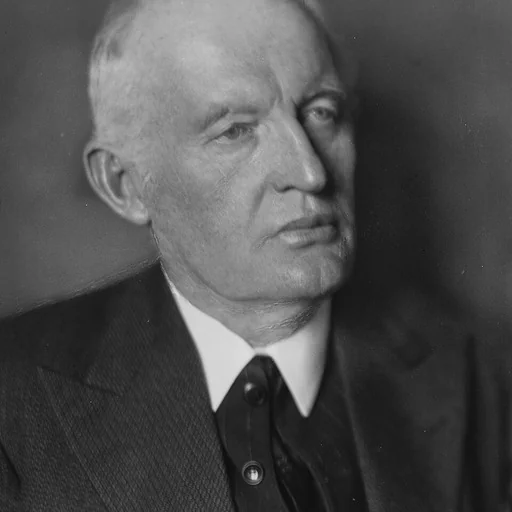
Edvard Munch ( MUUNK; Norwegian: ; 12 December 1863 – 23 January 1944) was a Norwegian painter.