Artwork
Desire
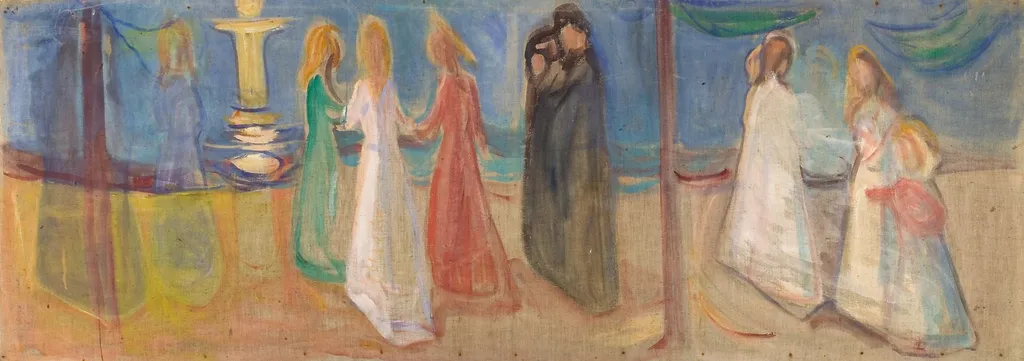
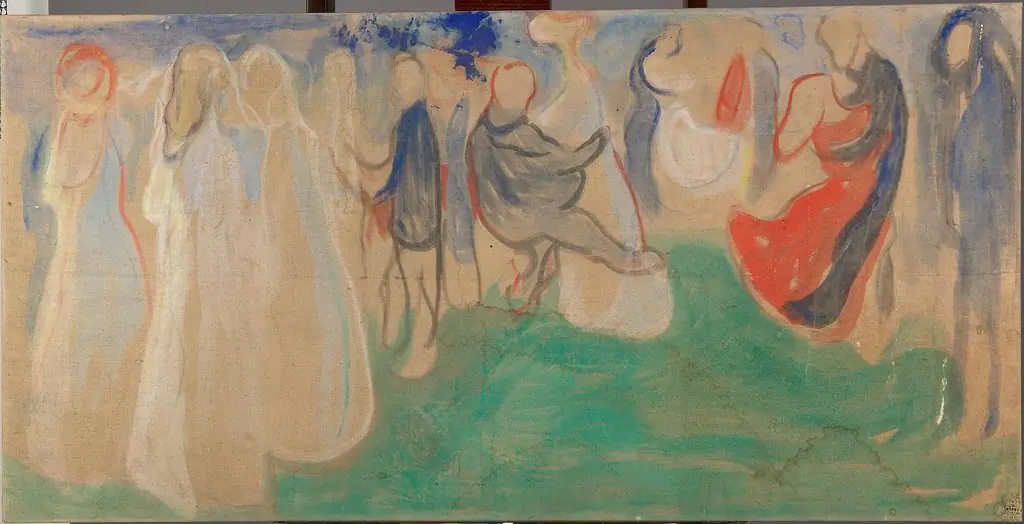
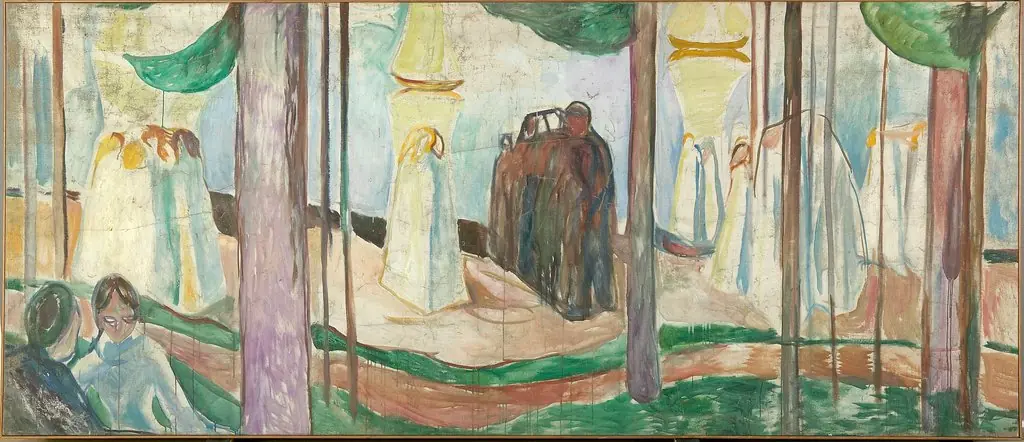
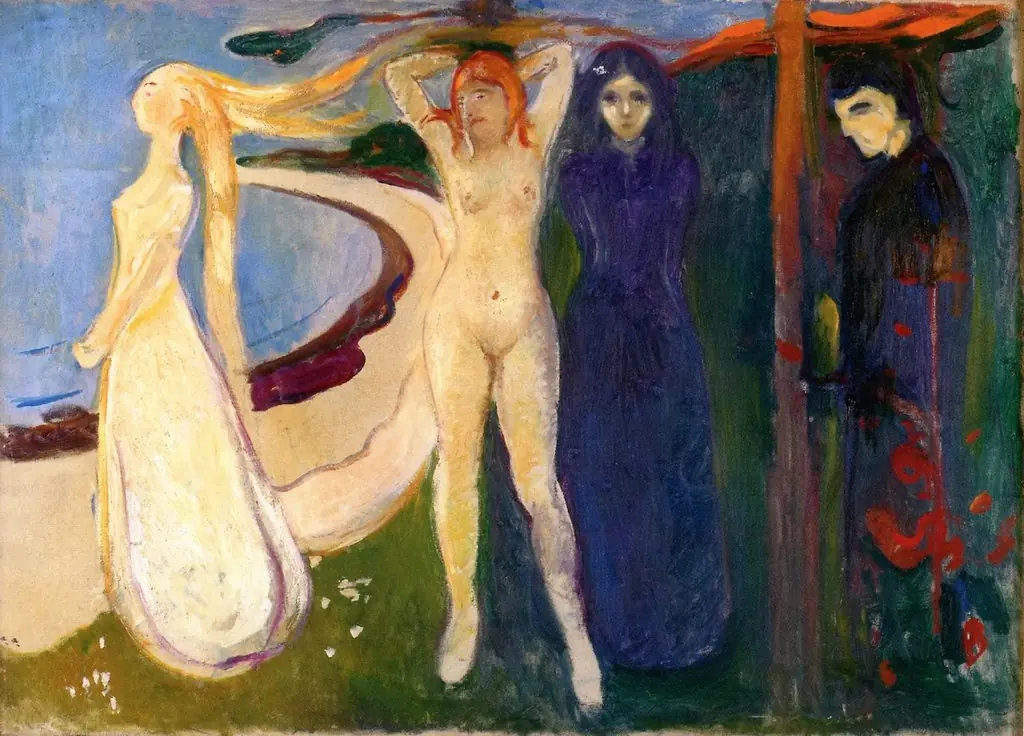
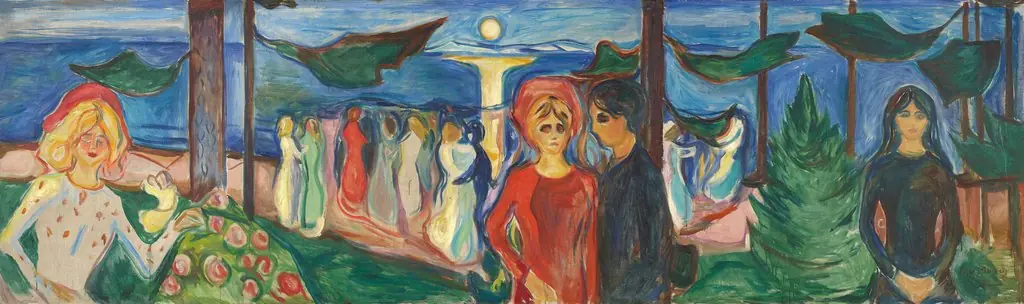
Desire is a tempera painting by the Post-Impressionist artist Edvard Munch. It dates from 1906 and is held in the collection of the Munch Museum.
About this work
Overview
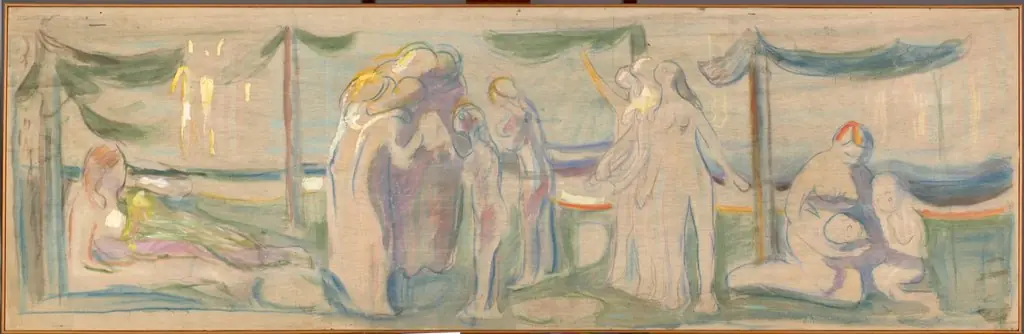
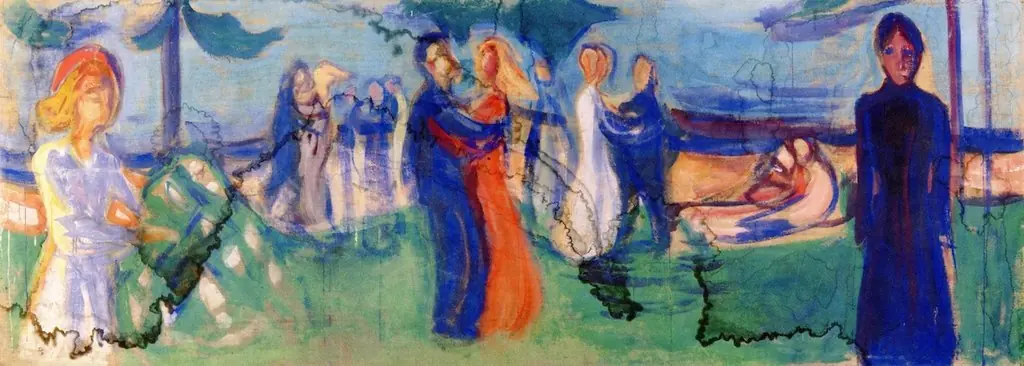
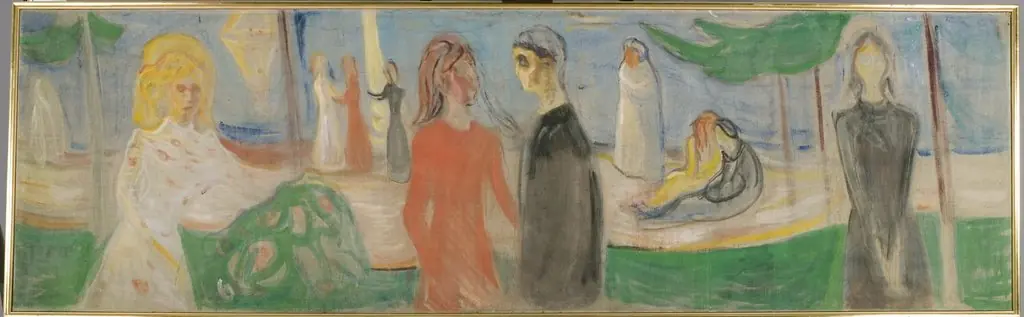
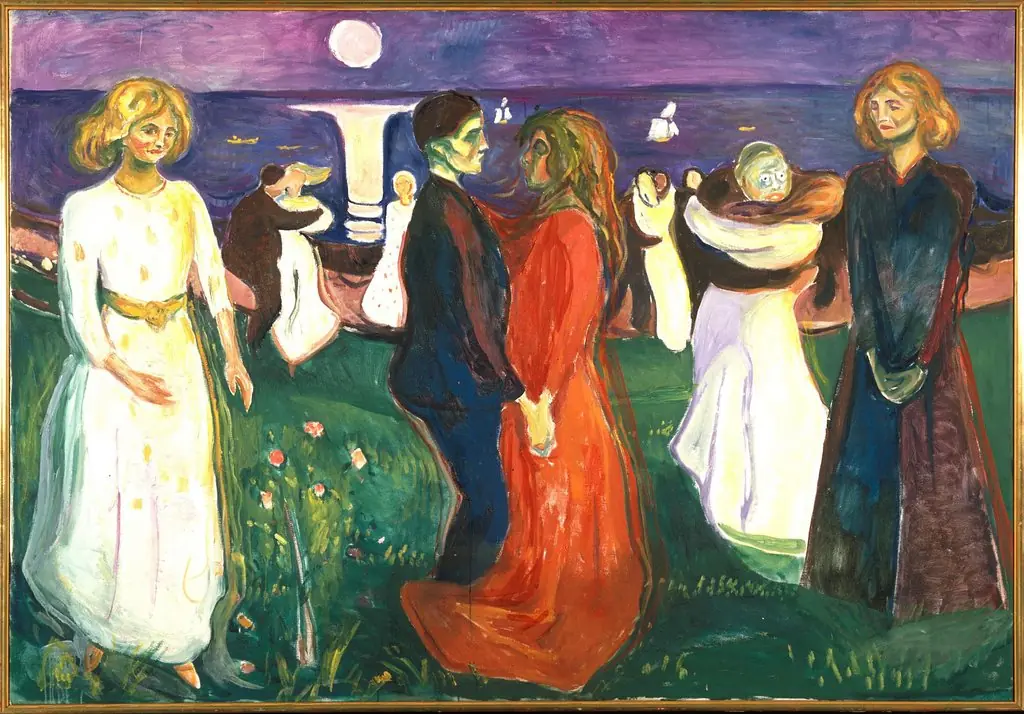
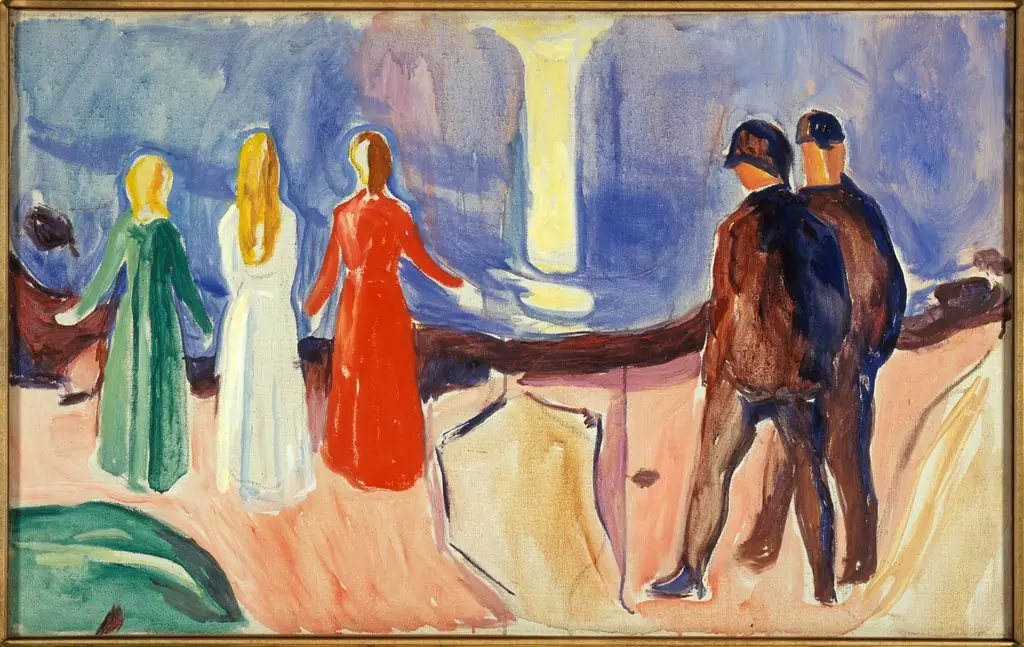
Created in 1906, *Desire* is a tempera painting by Norwegian artist Edvard Munch. The work belongs to the collection of the Munch Museum in Oslo. It depicts a group of robed figures arranged within an interior space defined by a blue wall and a yellow floor, rendered in muted, soft tones.
Subject & Meaning
The composition presents several individuals, some holding bowls, gathered in a quiet, almost static pose. Facial features and hands are deliberately left indistinct, suggesting an emphasis on collective presence rather than personal identity, and inviting contemplation of shared longing or yearning.
Technique & Style
Munch employed tempera to achieve a delicate, luminous surface, allowing subtle gradations of color that soften the forms. The palette of gentle hues and the lack of sharp detail align with his post‑Impressionist interest in conveying psychological states through atmospheric effects.
History & Provenance
After its completion, the painting entered the holdings of the Munch Museum, where it remains on display. Its acquisition reflects the museum’s focus on preserving the breadth of Munch’s oeuvre, including works from his early 20th‑century period.
Context
*Desire* was produced during a phase when Munch, influenced by his studies at Oslo’s Royal School of Art and Design and his association with radical thinker Hans Jæger, explored themes of emotion and existential angst. The work exemplifies his shift toward expressing inner experience over external realism.
Artist & collection
Artist
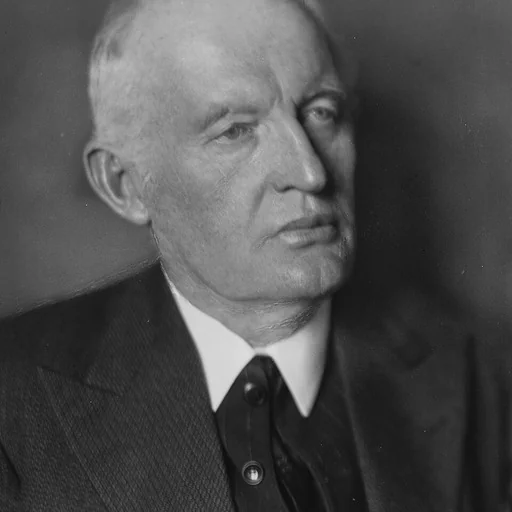
Edvard Munch ( MUUNK; Norwegian: ; 12 December 1863 – 23 January 1944) was a Norwegian painter.