Artwork
Elm Forest in Autumn
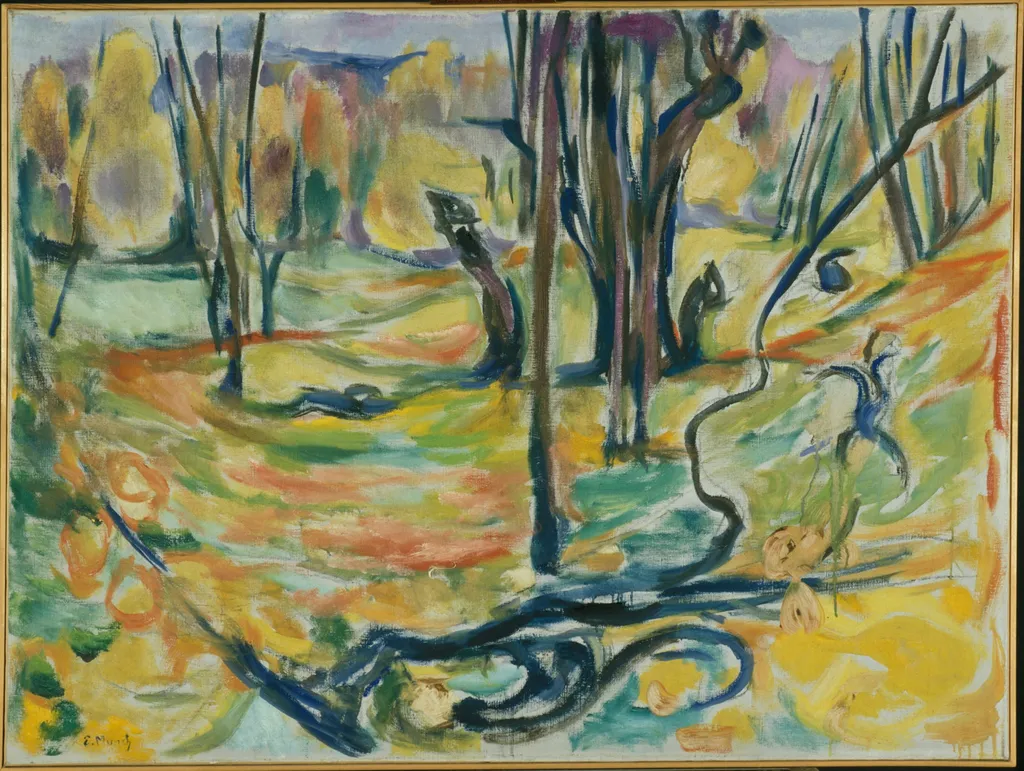
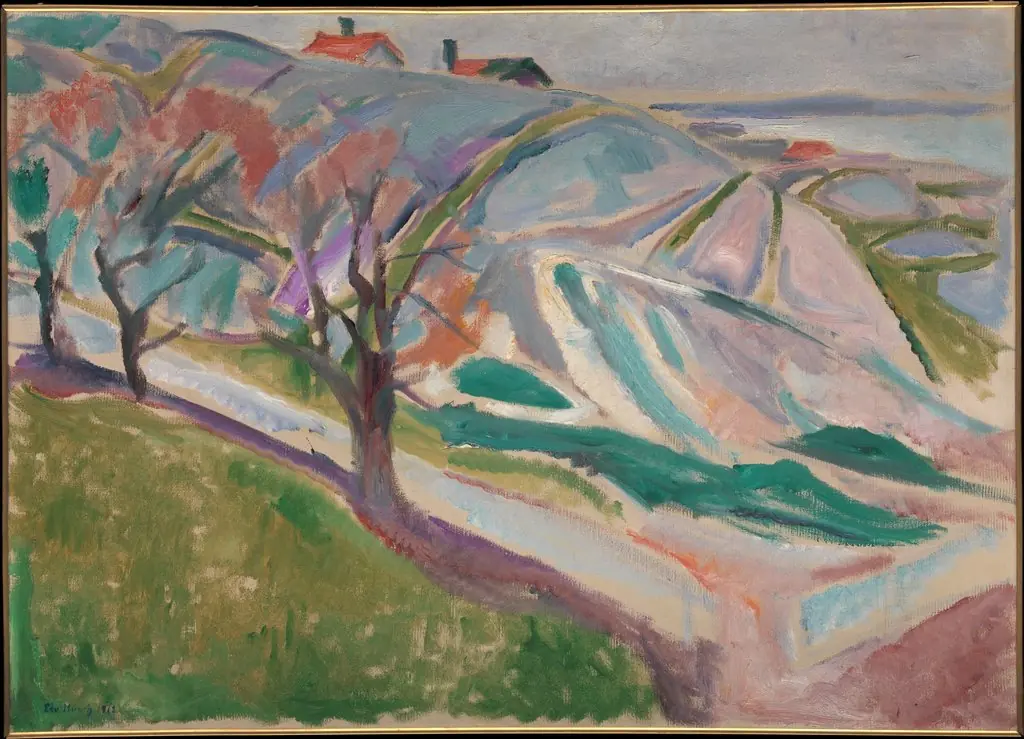
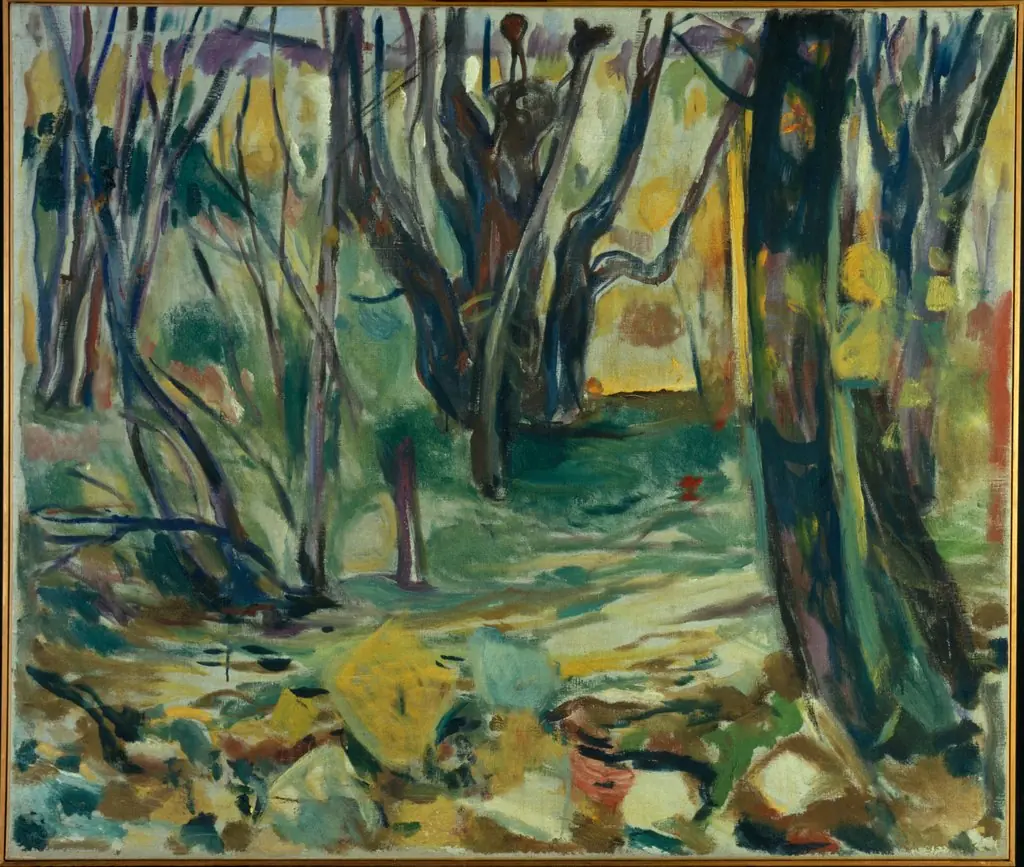
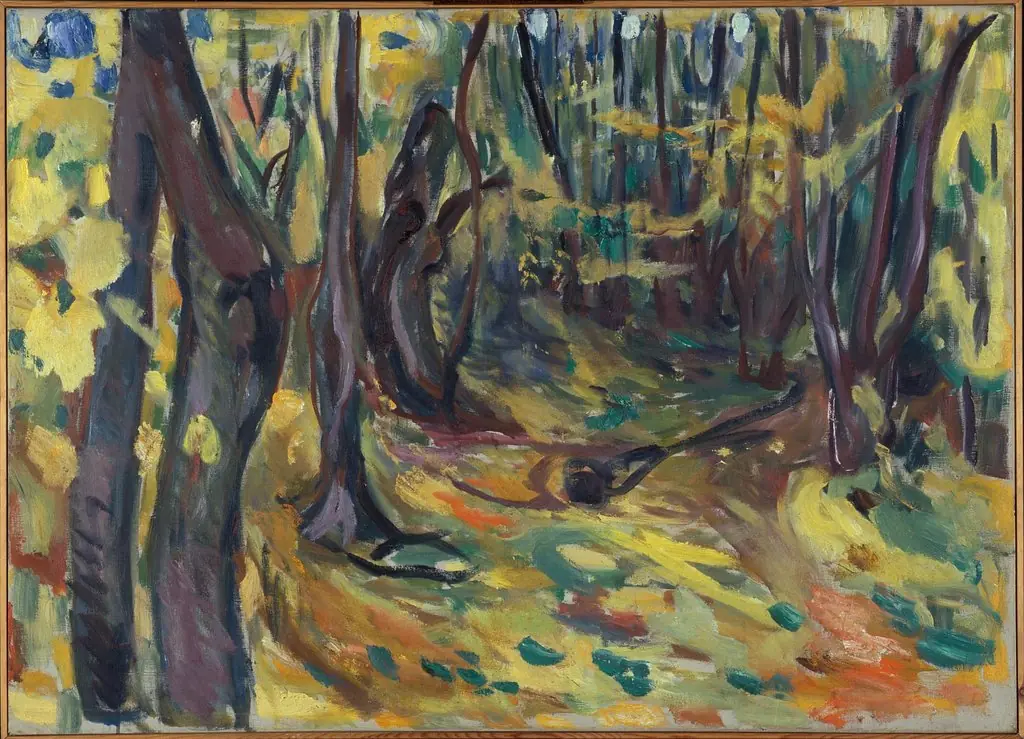
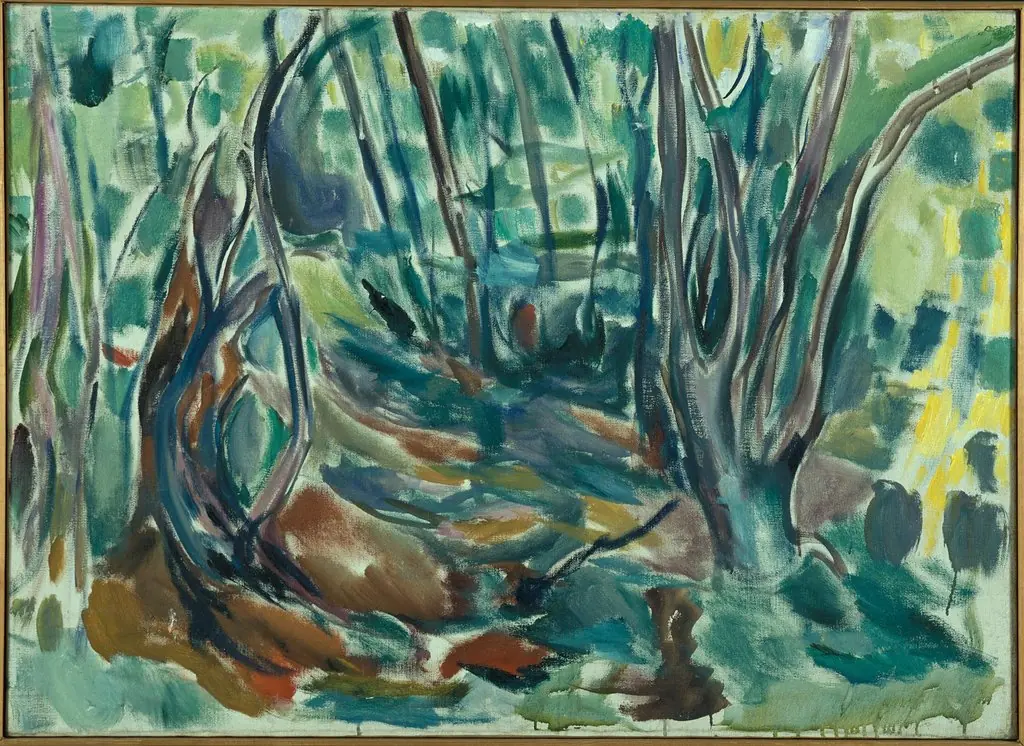
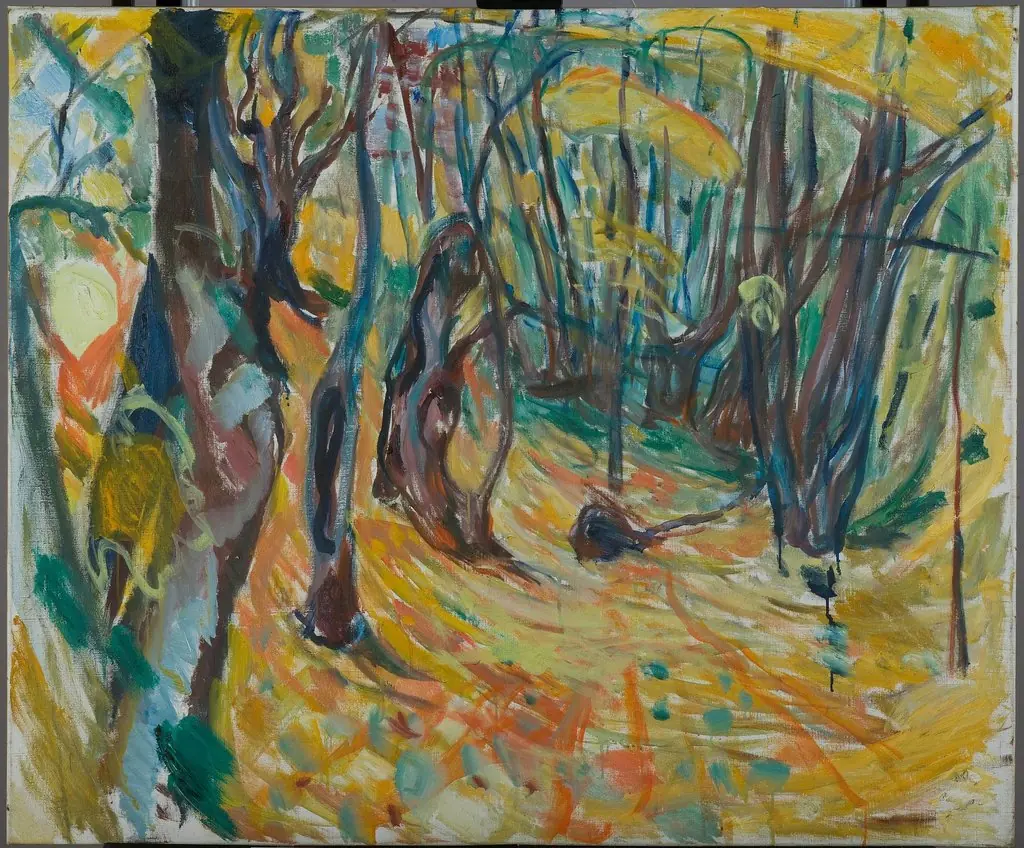
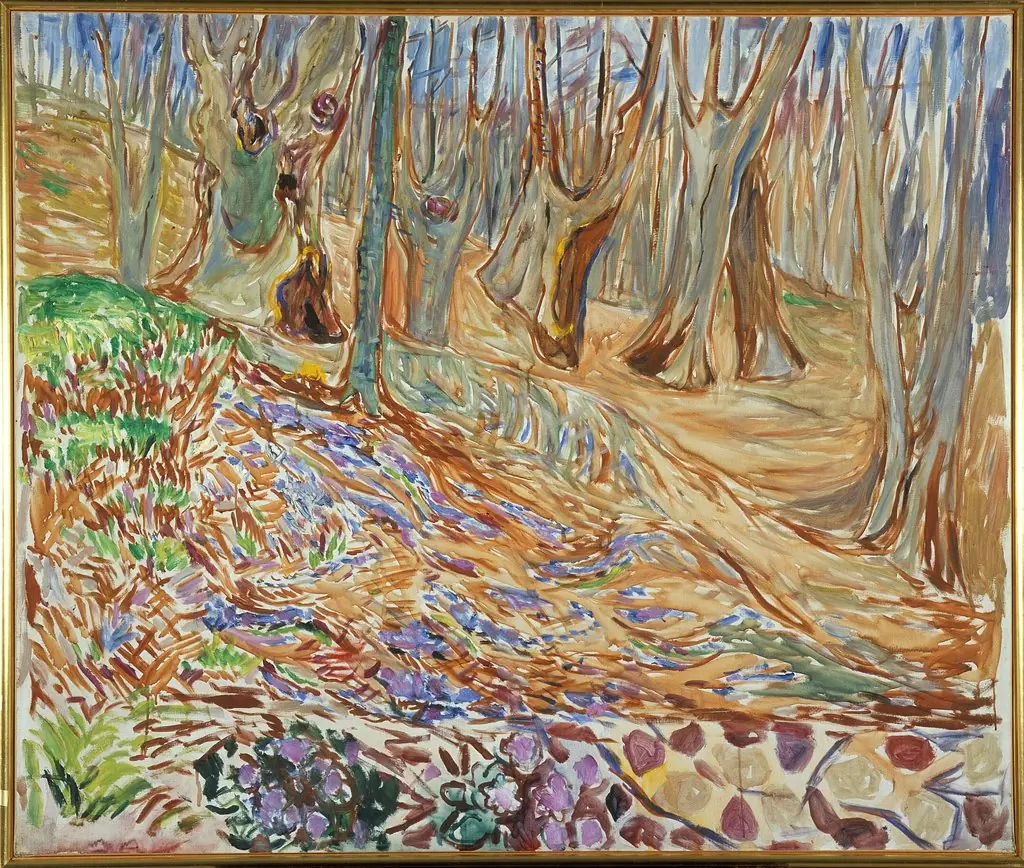
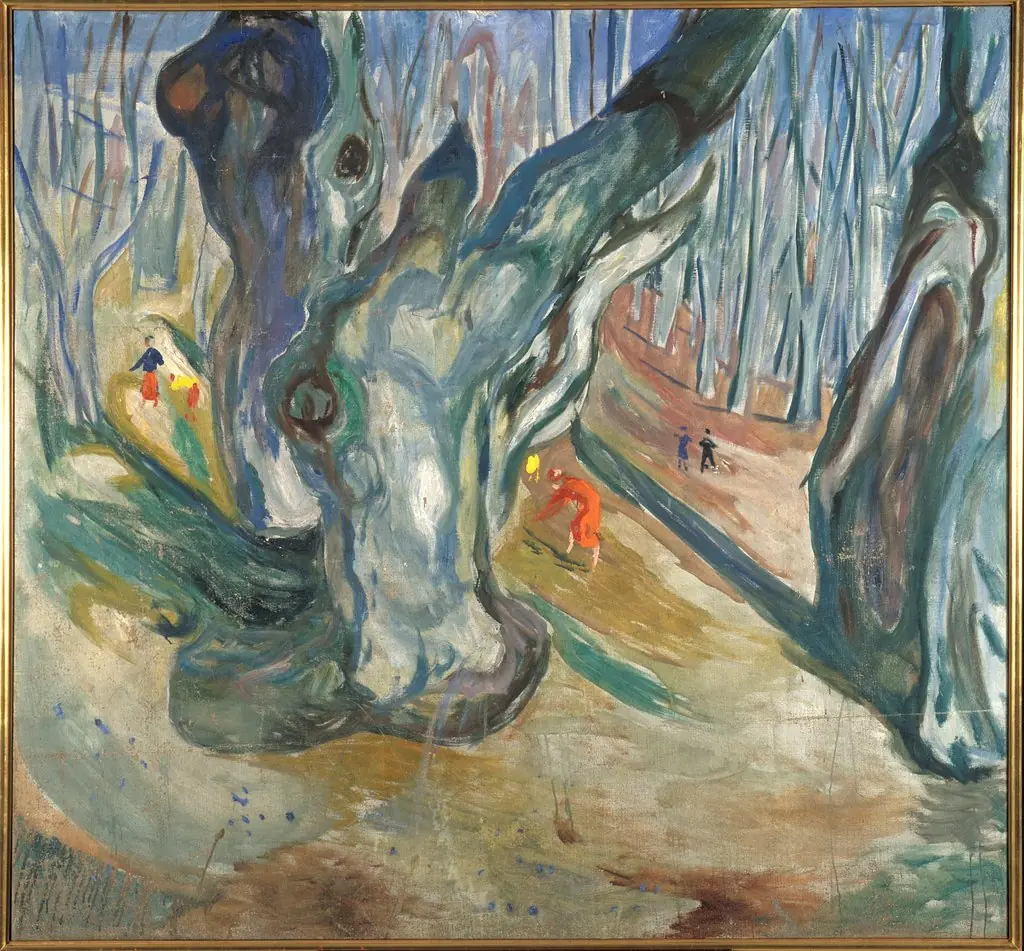
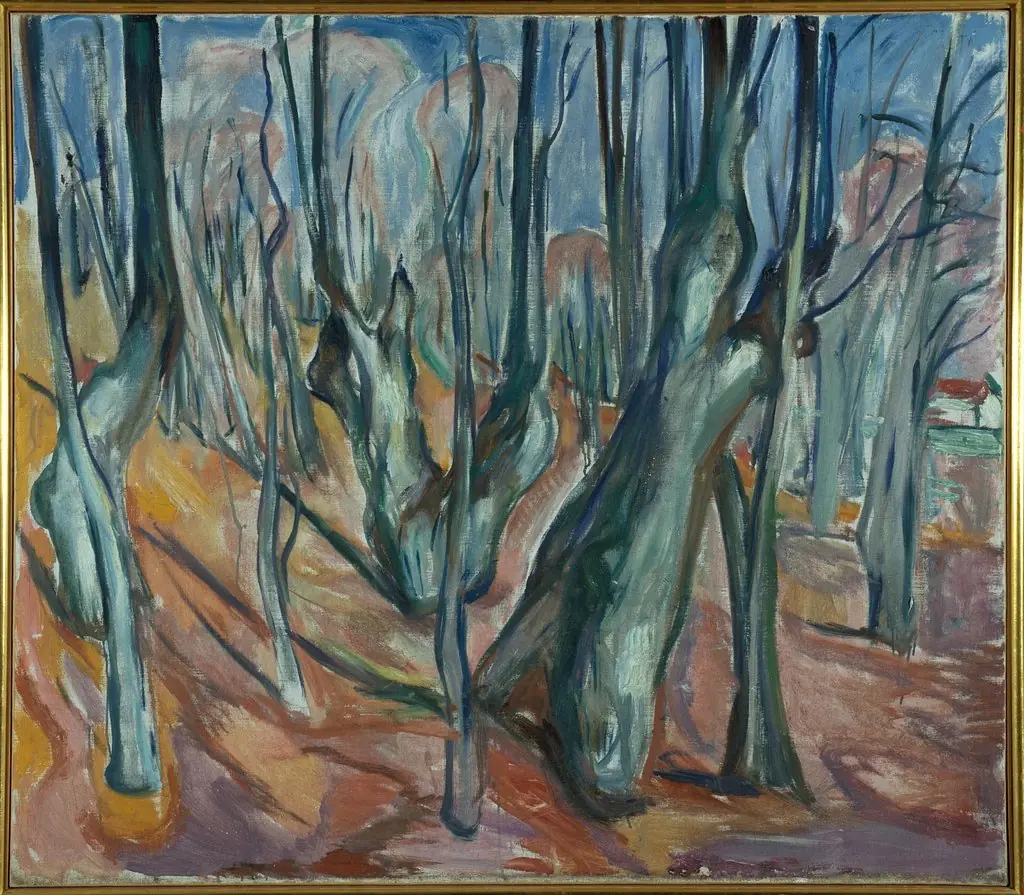
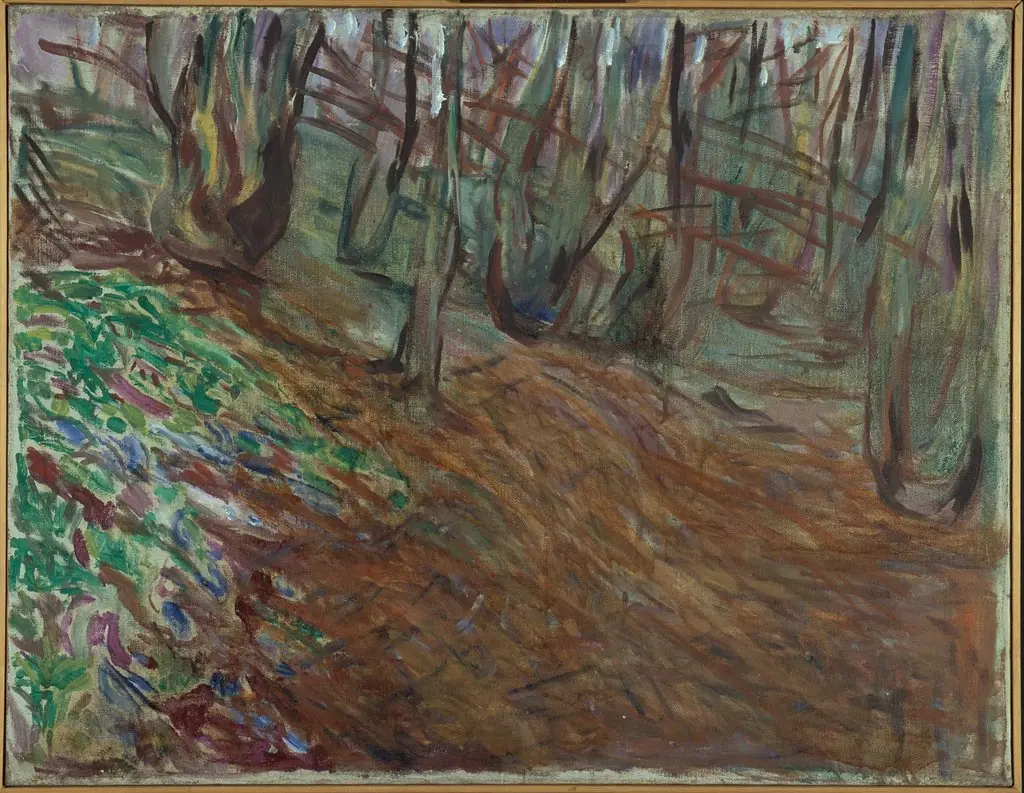
Elm Forest in Autumn is an oil painting by the Post-Impressionist artist Edvard Munch. It dates from 1919 and is held in the collection of the Munch Museum.
About this work
Overview
The painting resides in the Munch Museum in Oslo, where it is part of a broader collection documenting his evolving relationship with the natural world.
Painted in 1919, *Elm Forest in Autumn* is an oil-on-canvas landscape by Norwegian artist Edvard Munch. Though less known than his psychological portraits, this work reflects his sustained engagement with nature. It belongs to his later period, when his style softened into more contemplative, atmospheric compositions. The painting resides in the Munch Museum in Oslo, where it is part of a broader collection documenting his evolving relationship with the natural world.
Subject & Meaning
The scene captures a quiet autumnal woodland, with bare branches and fallen leaves suggesting seasonal transition. No human figures appear, and the absence of narrative invites a meditative response. The stillness of the clearing, framed by towering trunks, conveys a sense of quiet endurance rather than decay. Munch’s focus on the forest’s quiet rhythm suggests an interest in nature’s cycles, not as metaphor, but as lived experience.
Technique & Style
Munch applied oil paint with deliberate, textured strokes, emphasizing the gnarled forms of tree trunks and the loose scatter of foliage. Color is subdued—ochres, muted oranges, and olive greens dominate, accented by faint blues and purples in shadows. The brushwork avoids sharp definition, instead blending tones to suggest depth and atmosphere. Compositionally, the trees recede diagonally, guiding the eye into the distance without focal dominance.
History & Provenance
Created during Munch’s later years in Norway, the painting was likely made at his estate in Ekely, where he spent increasing time observing the surrounding woods. It remained in his personal collection until his death in 1944, after which it was transferred to the Munch Museum, established to preserve his legacy. Its provenance is well-documented, with no known public exhibitions prior to its inclusion in the museum’s permanent holdings.
Context
In 1919, Munch was distancing himself from the intense emotionalism of his earlier works, turning toward quieter, more observational subjects. This shift coincided with his growing interest in Norwegian landscapes and rural life. While European modernism was embracing abstraction, Munch retained figuration but simplified forms, aligning his late style with a broader Nordic tradition of lyrical realism.
Legacy
*Elm Forest in Autumn* exemplifies Munch’s late artistic direction: introspective, restrained, and rooted in place. Though not widely reproduced, it holds significance within his oeuvre as evidence of his enduring connection to nature. The painting contributes to understanding how his visual language evolved beyond psychological intensity toward a more serene, elemental expression of the natural world.
Artist & collection
Artist
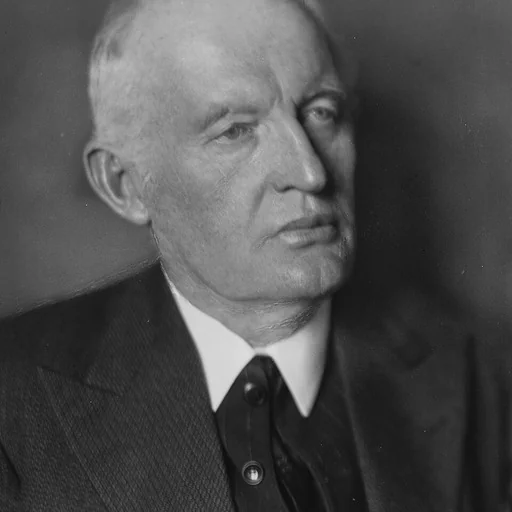
Edvard Munch ( MUUNK; Norwegian: ; 12 December 1863 – 23 January 1944) was a Norwegian painter.