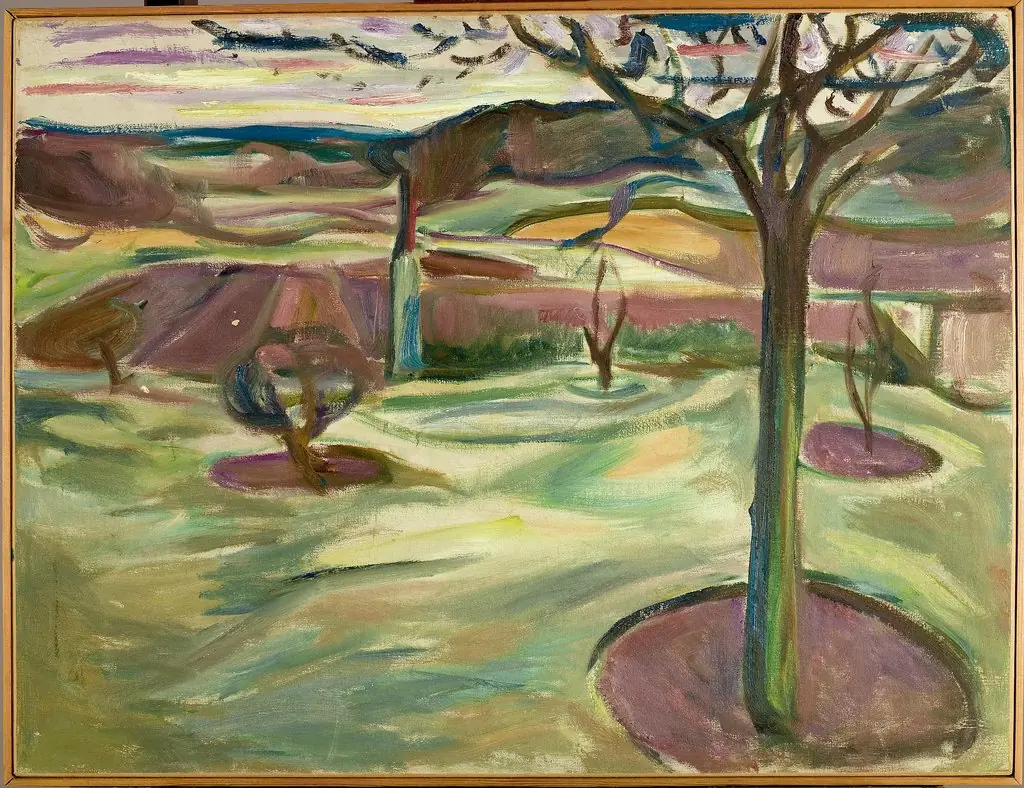
Artwork
Elm Forest in Spring
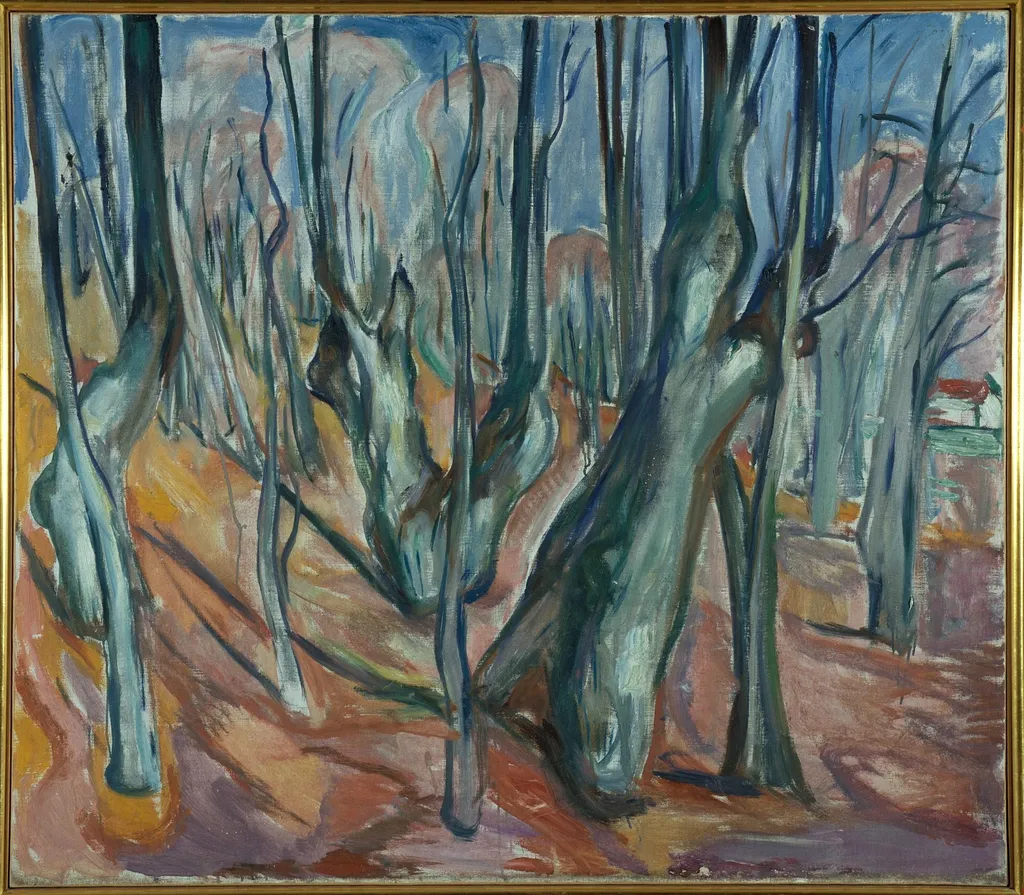
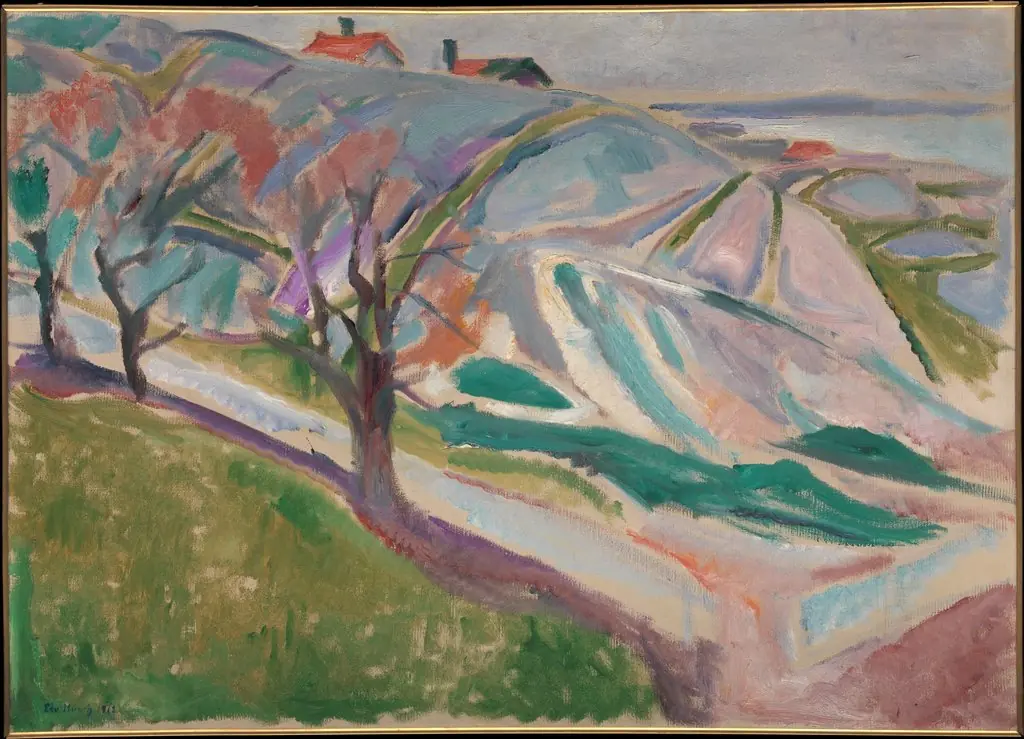
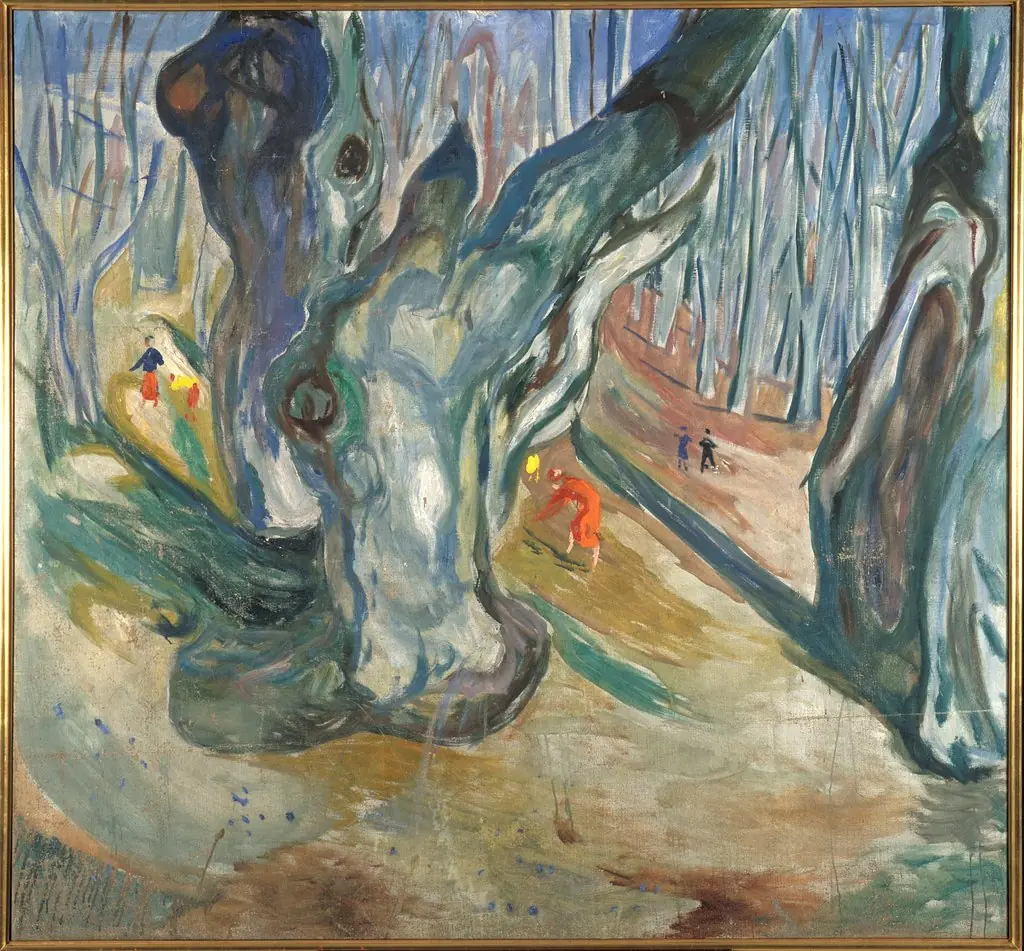
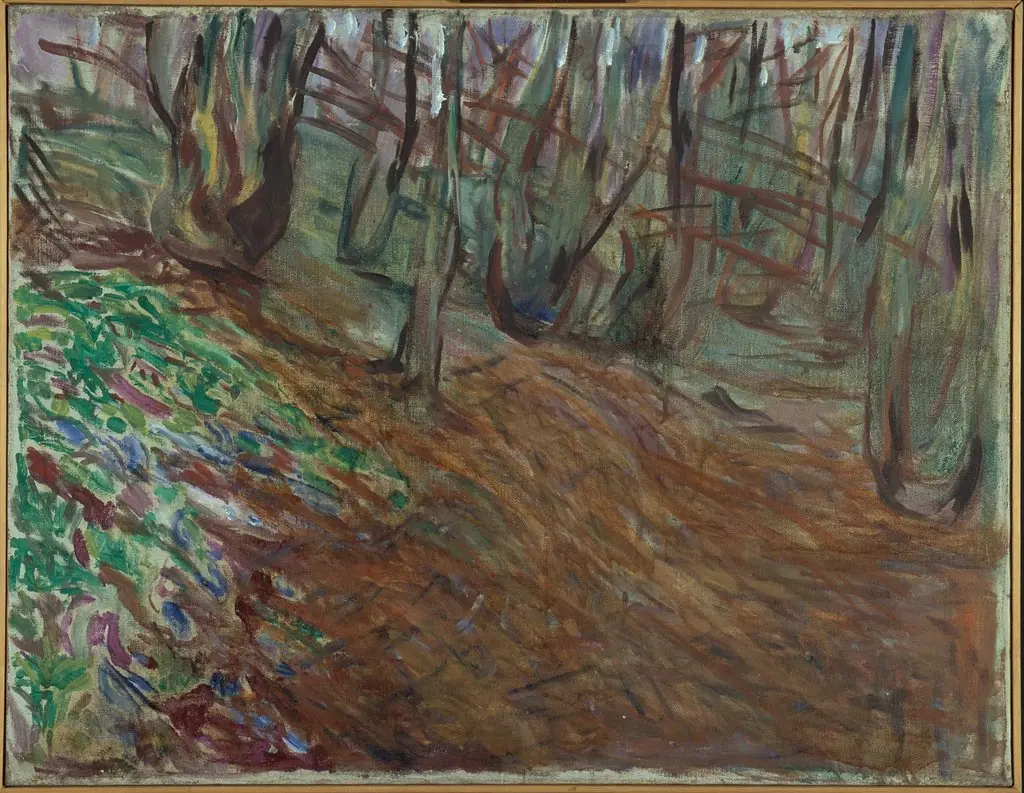
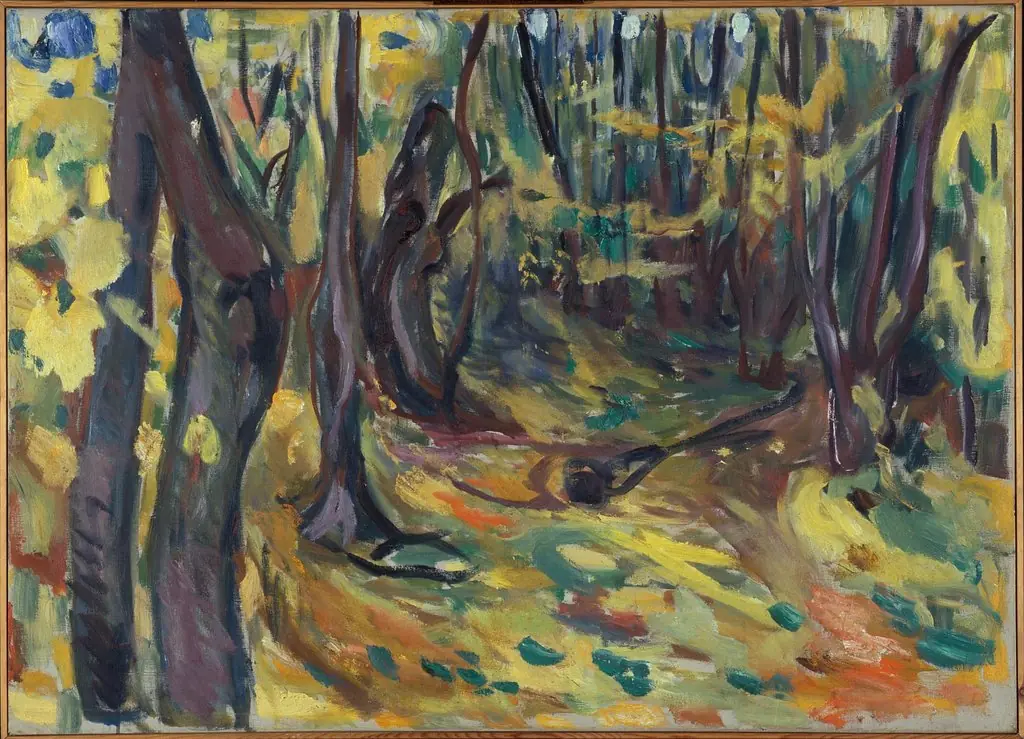
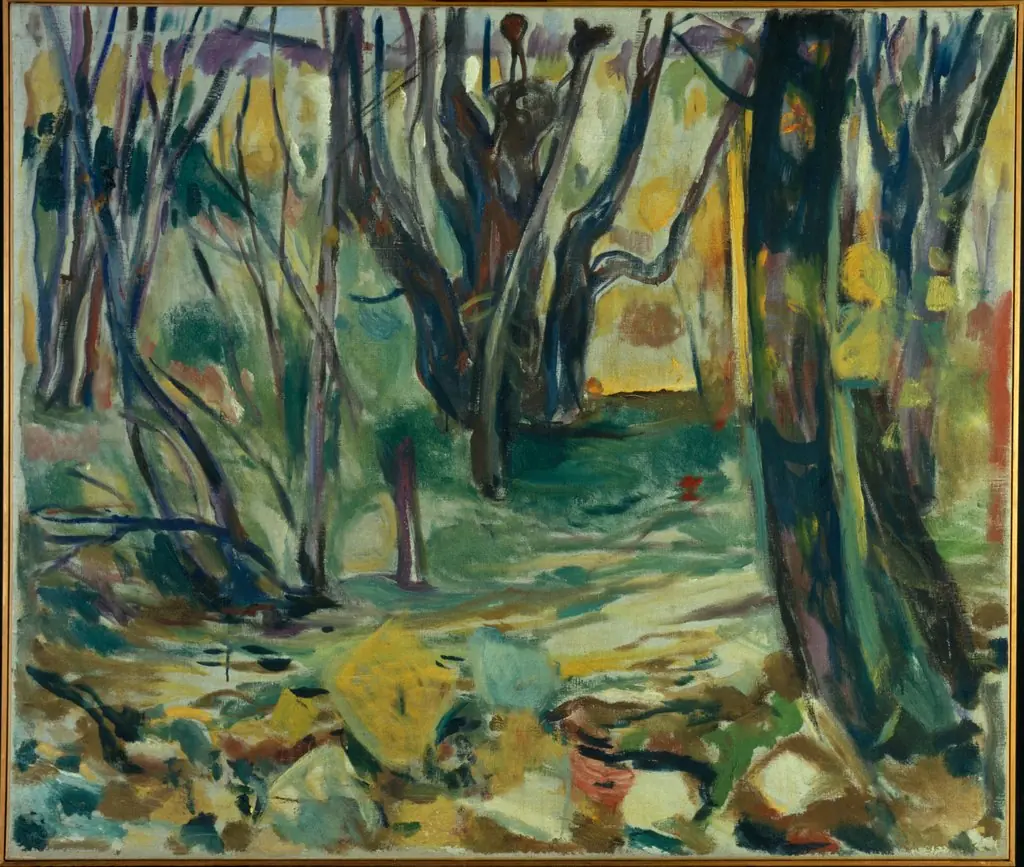
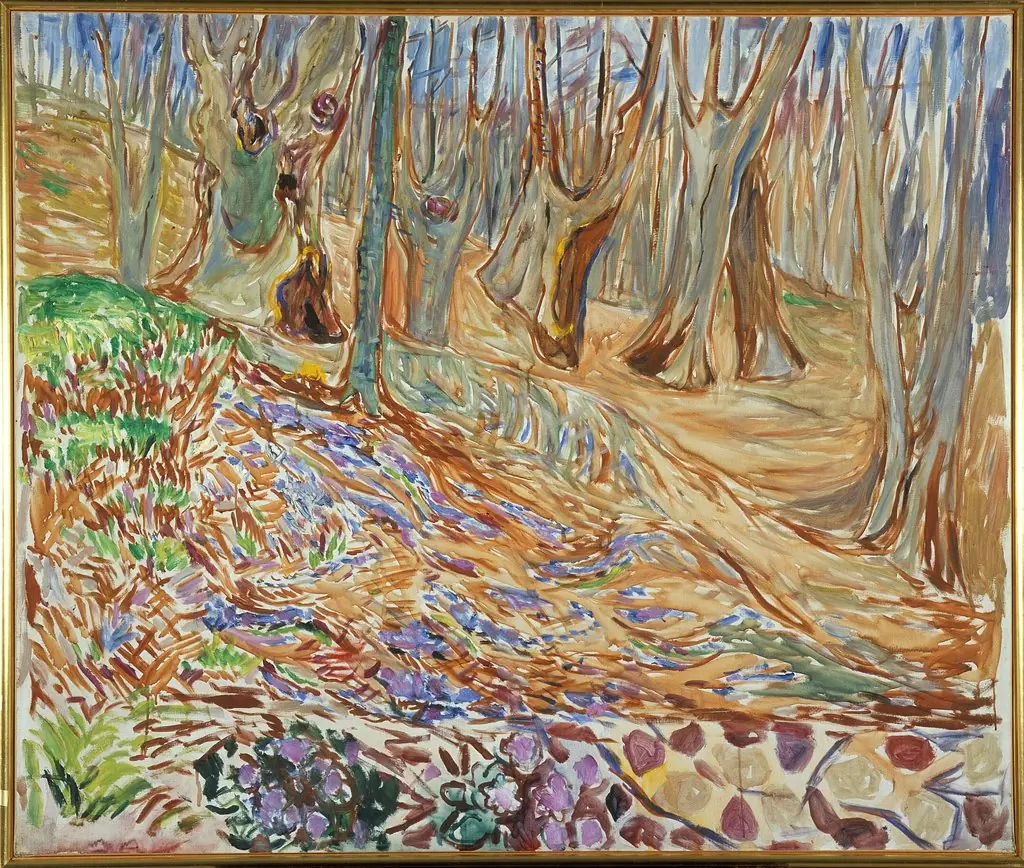
Elm Forest in Spring is an oil painting by the Post-Impressionist artist Edvard Munch. It dates from 1923 and is held in the collection of the Munch Museum.
About this work
Overview
Unlike his more famous psychological portraits, this work turns inward to nature, capturing a quiet woodland scene in early spring.
Painted in 1923, *Elm Forest in Spring* is an oil-on-canvas landscape by Norwegian artist Edvard Munch. Unlike his more famous psychological portraits, this work turns inward to nature, capturing a quiet woodland scene in early spring. It reflects Munch’s sustained interest in natural environments as vessels for mood, executed with restrained color and deliberate brushwork that avoids dramatic intensity.
Subject & Meaning
The painting presents a grove of elm trees in early bloom, their bare branches subtly tinged with nascent green. No figures or human activity interrupt the scene; the focus remains on the trees’ quiet presence. The stillness suggests contemplation rather than celebration, aligning with Munch’s view of nature as a reflective space where emotion lingers in atmosphere rather than action.
Technique & Style
Munch employed soft, layered brushstrokes to build texture in the trunks and foliage, using muted browns, grays, and pale greens. The background sky is rendered in a hazy blue, gently receding to create depth. Light is diffused, not sharply defined, enhancing the sense of early spring’s delicate transition. The composition avoids perspective tricks, favoring a flattened, intimate spatial arrangement.
History & Provenance
The painting has remained in the collection of the Munch Museum in Oslo since its acquisition, part of a broader archive of the artist’s later works. It was painted during a period when Munch increasingly turned to landscapes after years of intense psychological themes. Its preservation reflects its significance as a quiet counterpoint to his more turbulent imagery.
Context
Created in the final decades of Munch’s career, *Elm Forest in Spring* emerges alongside other late landscapes where nature replaces human drama as the primary subject. This shift coincided with his retreat from urban life and a renewed focus on his estate in Ekely. The work aligns with broader European trends of the 1920s, where artists sought solace in natural forms after the trauma of war.
Legacy
Though less discussed than his symbolic figures, this painting exemplifies Munch’s enduring engagement with the emotional potential of the natural world. Its understated tone influenced later Scandinavian artists interested in quiet, introspective landscapes. The work stands as a testament to his belief that even in stillness, nature carries the weight of inner experience.
Artist & collection
Artist
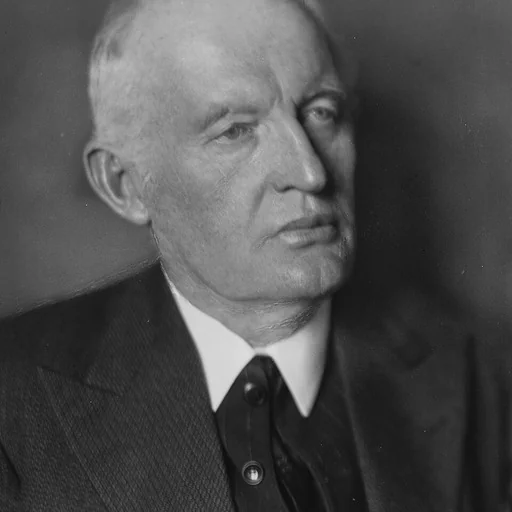
Edvard Munch ( MUUNK; Norwegian: ; 12 December 1863 – 23 January 1944) was a Norwegian painter.