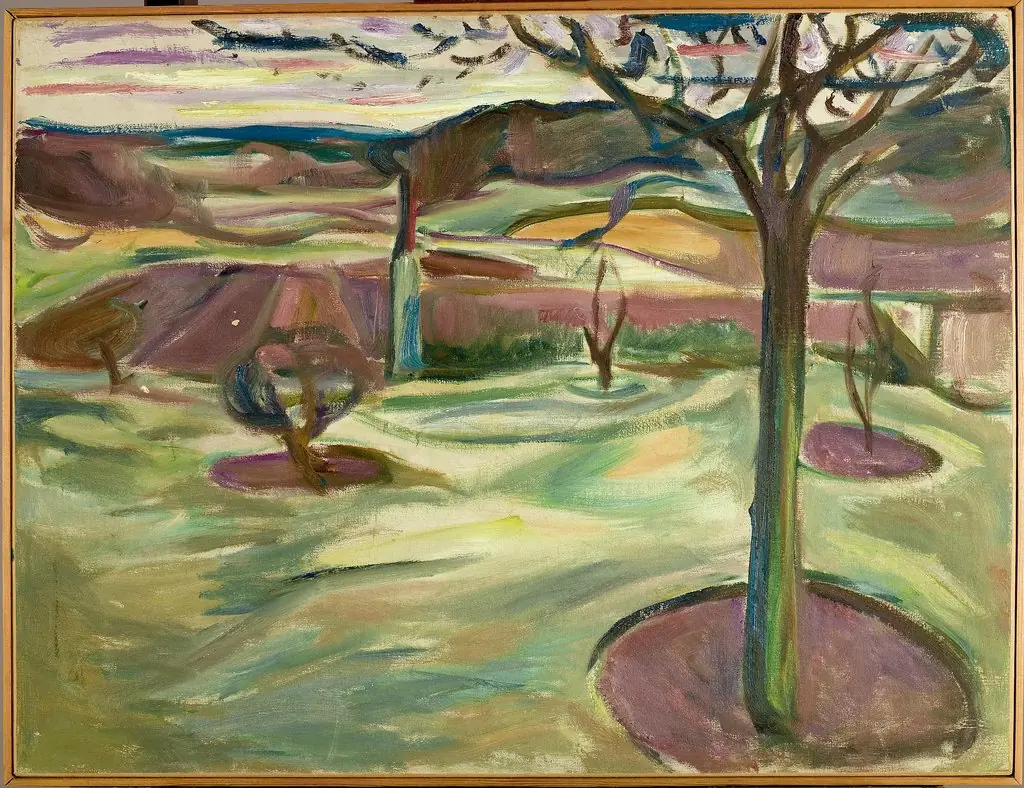
Artwork
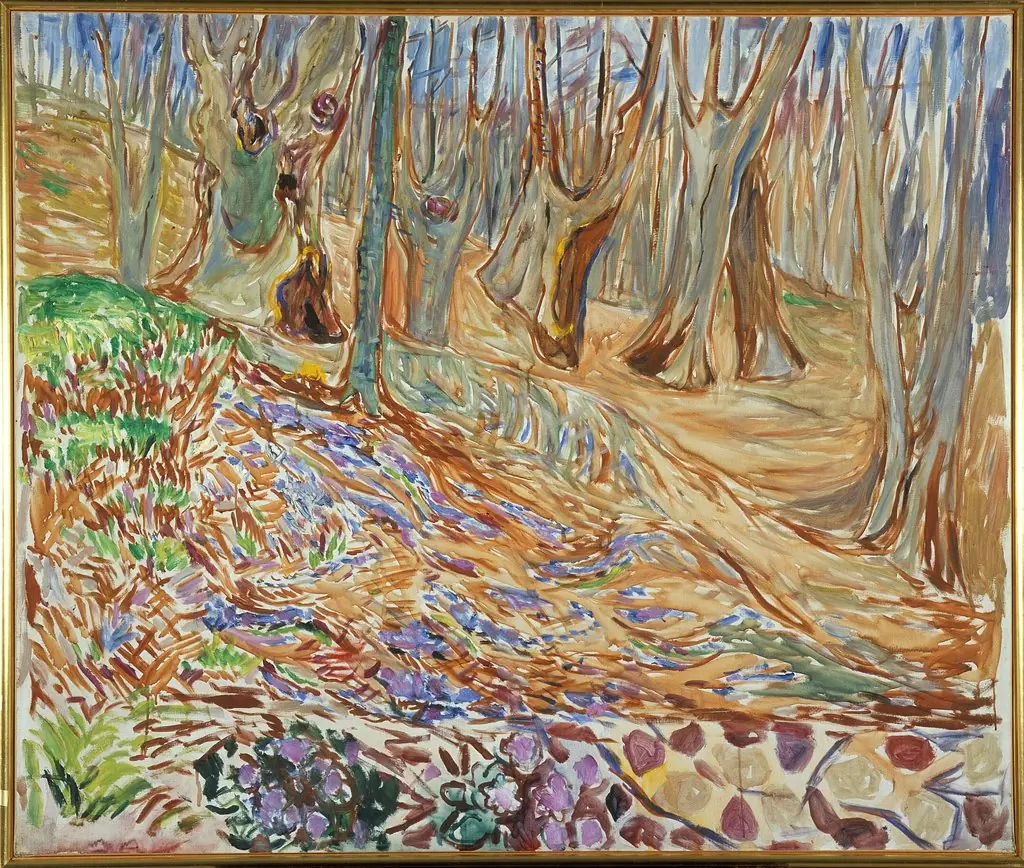
Elm Forest in Spring
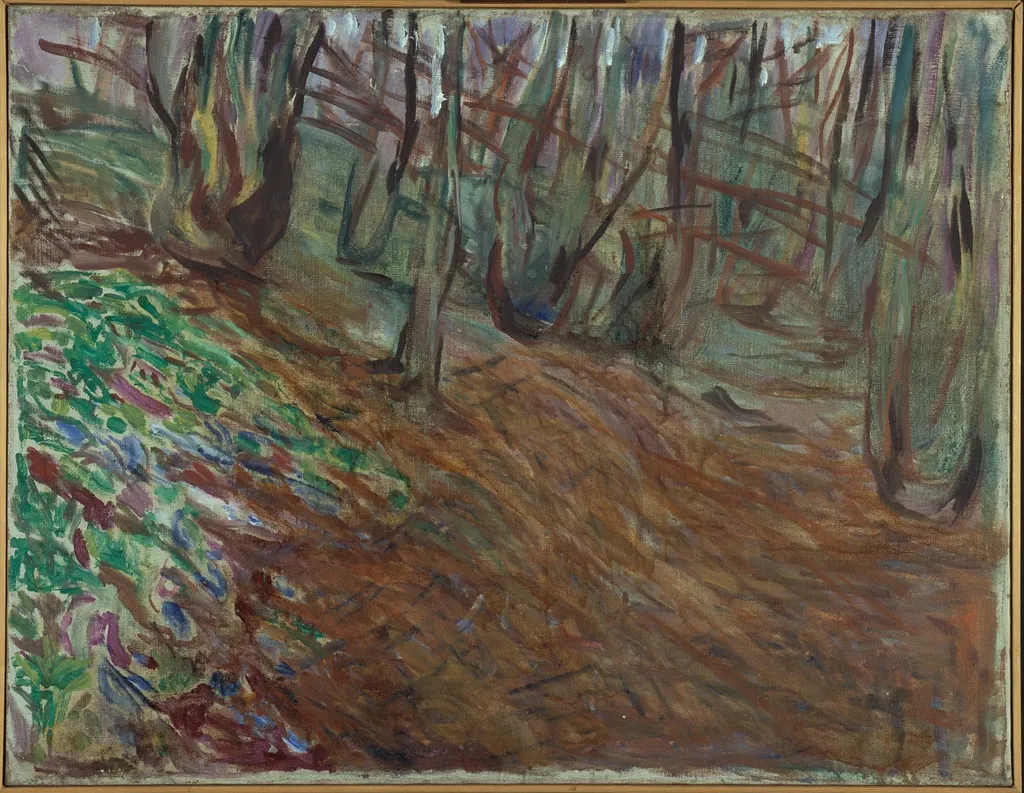
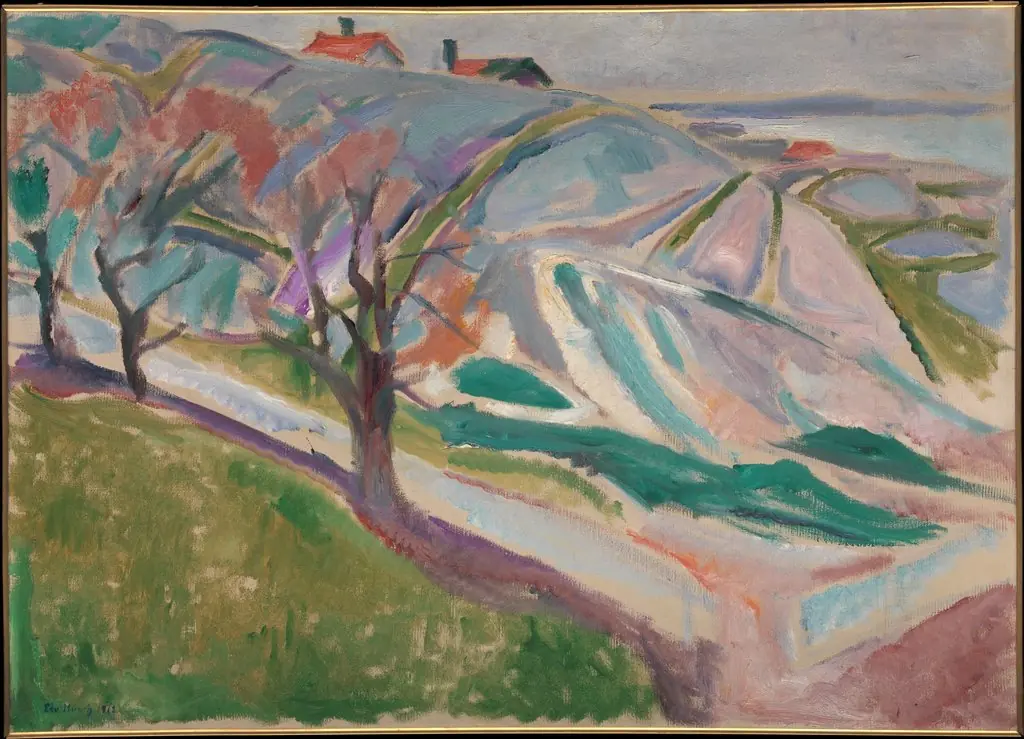
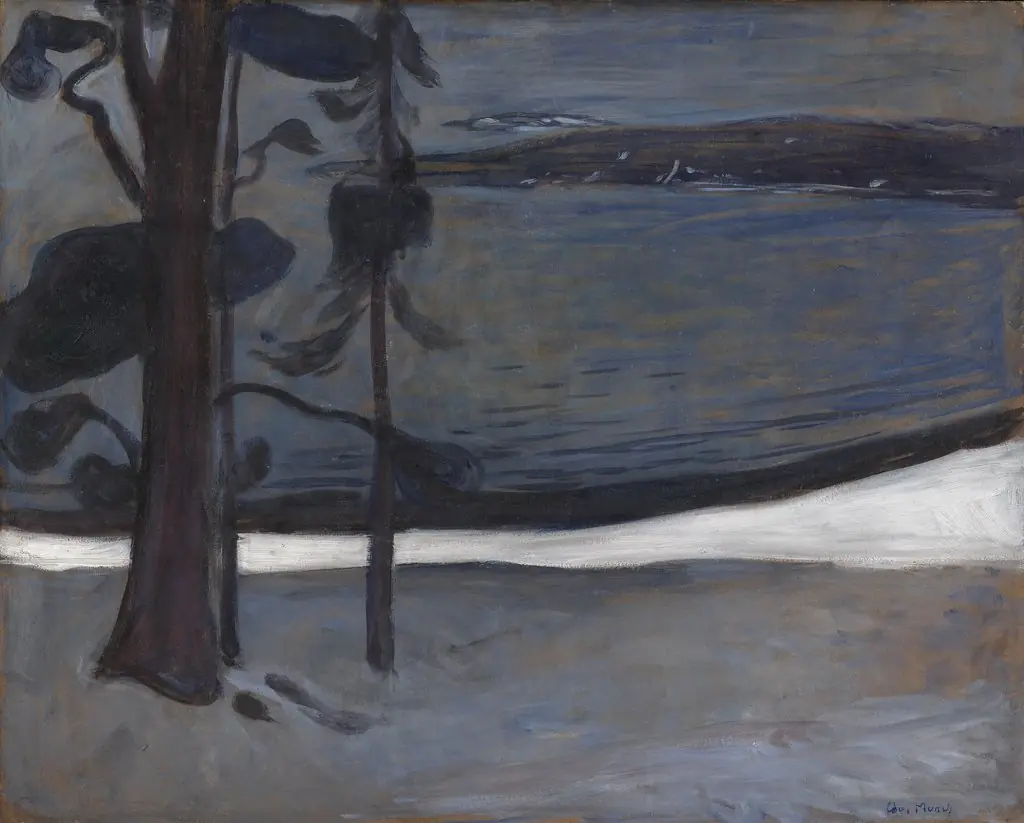
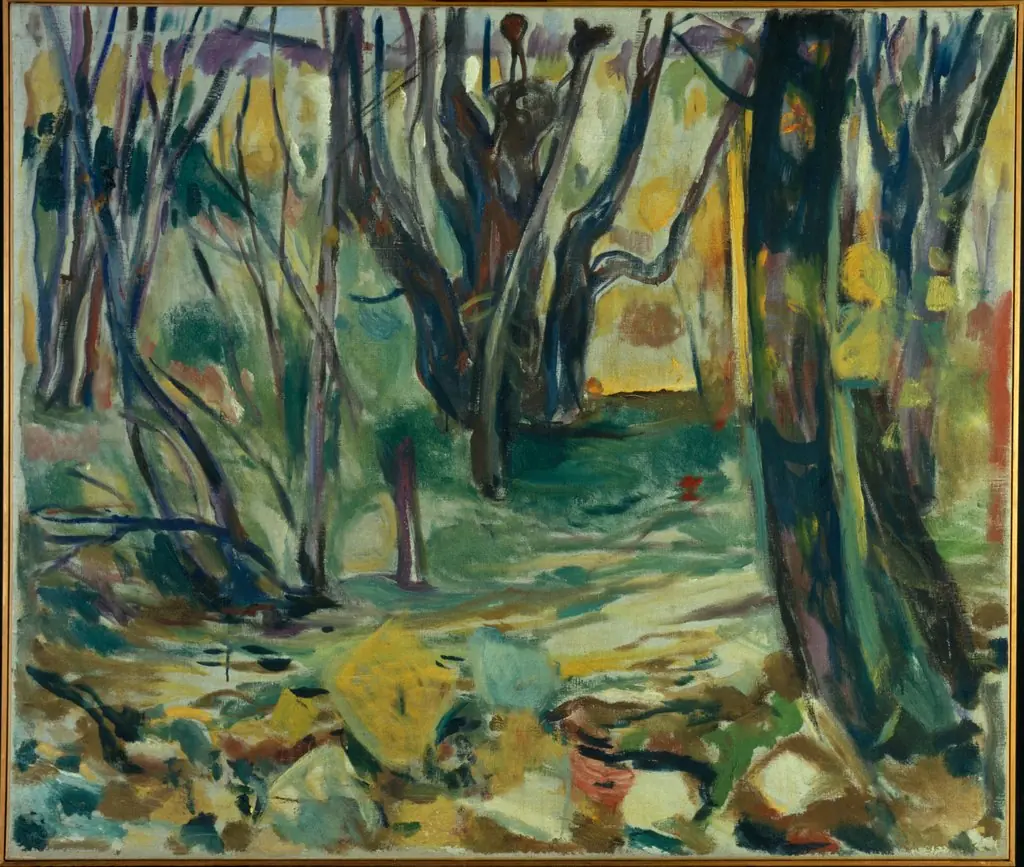
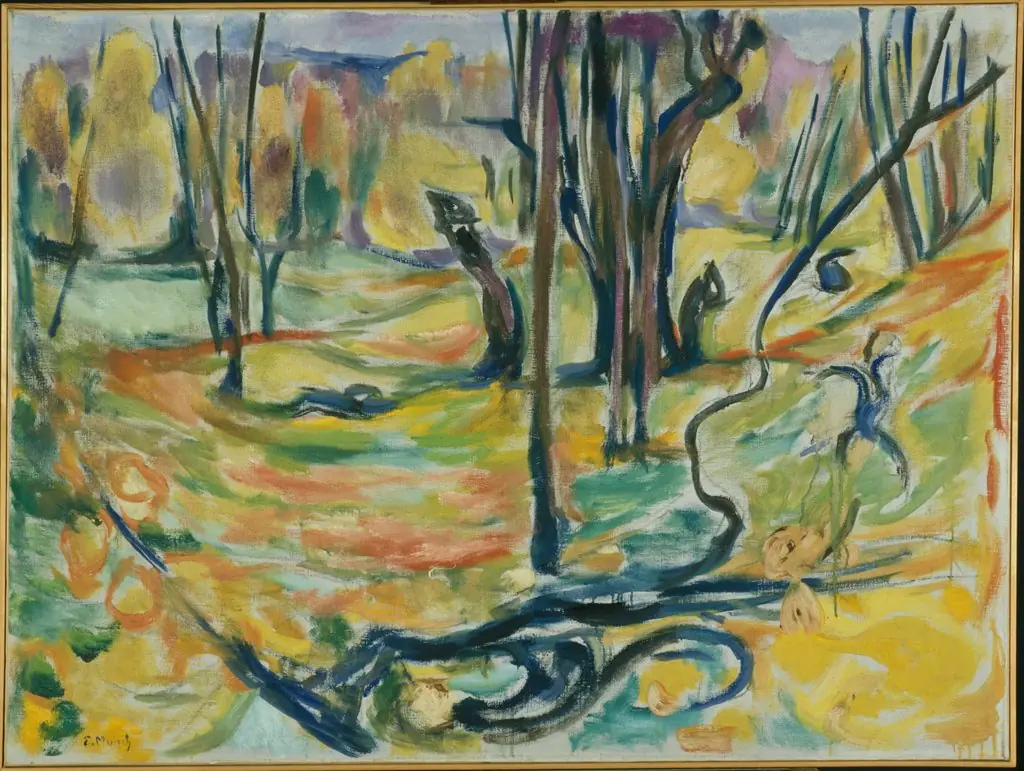
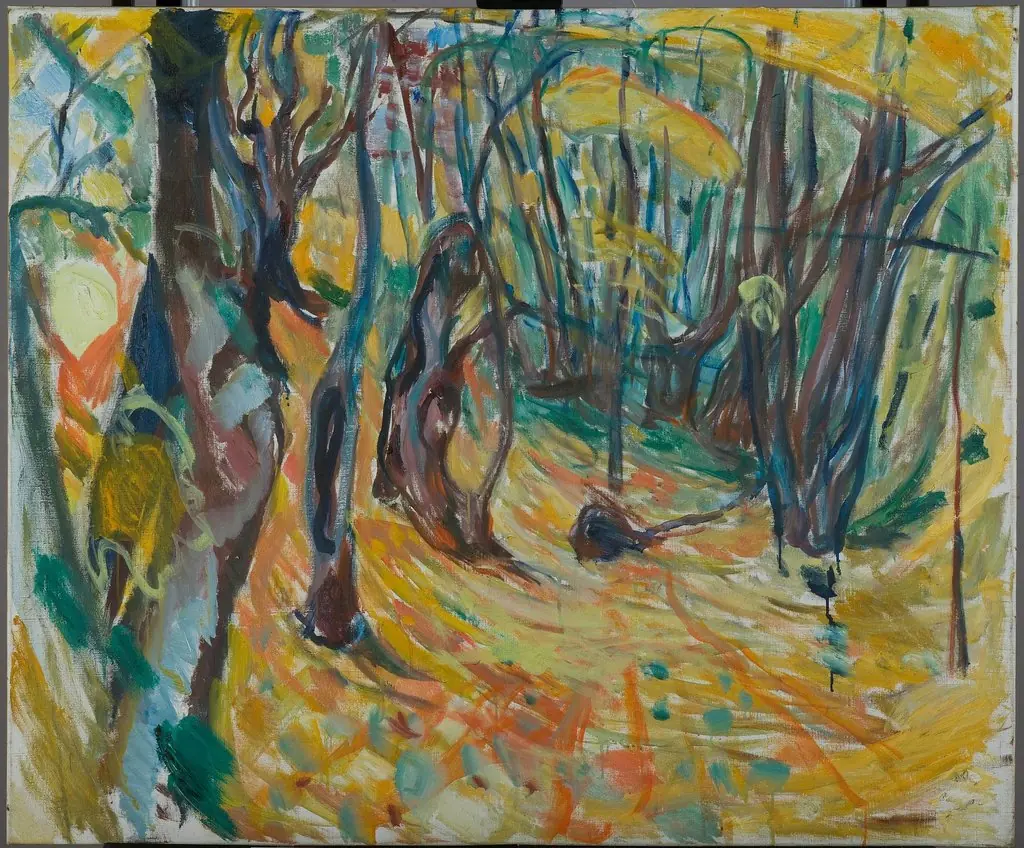
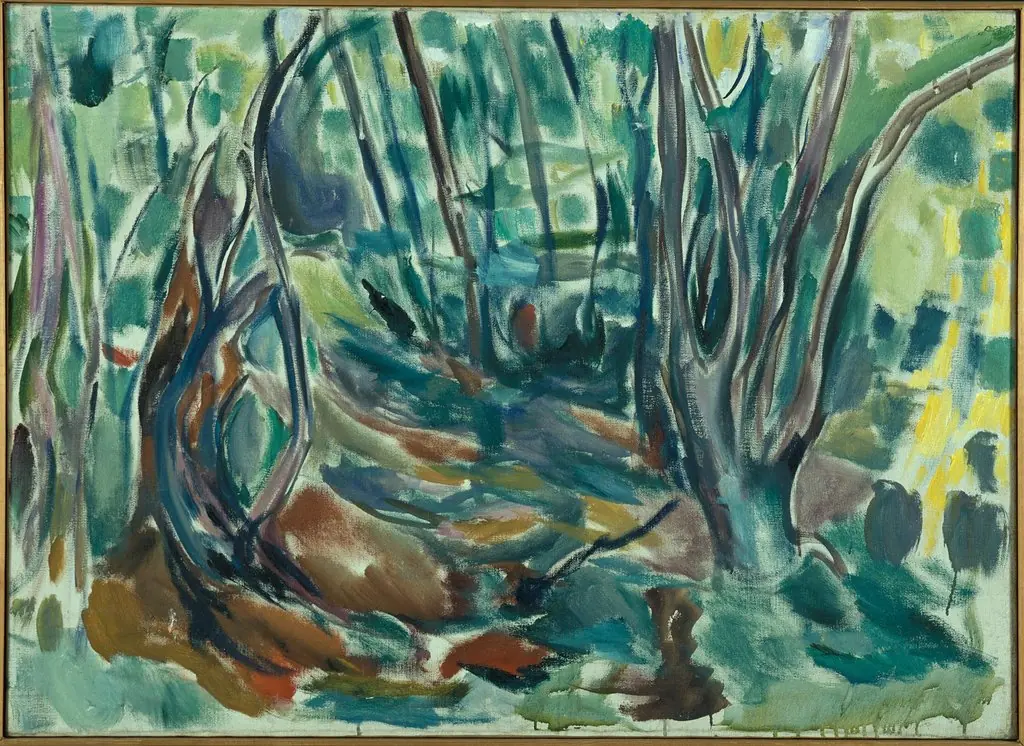
Elm Forest in Spring is an oil painting by the Post-Impressionist artist Edvard Munch. It dates from 1923 and is held in the collection of the Munch Museum.
About this work
Overview
It reflects Munch’s sustained interest in how nature mirrors inner states, a theme that persisted throughout his career beyond the symbolic dramas of his youth.
Painted in 1923, *Elm Forest in Spring* is an oil-on-canvas landscape by Norwegian artist Edvard Munch. Unlike his more famous psychological portraits, this work turns inward to the natural world, capturing a seasonal transition with quiet intensity. It reflects Munch’s sustained interest in how nature mirrors inner states, a theme that persisted throughout his career beyond the symbolic dramas of his youth.
Subject & Meaning
The painting portrays an elm grove in early spring, where bare trunks rise above a dense undergrowth of blooming flowers. The contrast between the lingering winter skeletons of the trees and the explosive life below suggests renewal, but without sentimentality. Munch avoids idealization; the scene feels neither pastoral nor serene, but charged with the quiet tension of regeneration emerging from decay.
Technique & Style
Munch employs thick, directional brushwork to build texture in the foreground flora, using saturated hues of pink, purple, and yellow against a subdued green and gray backdrop. The trees are rendered with loose, almost skeletal strokes, emphasizing their structural presence. This blend of expressive brushwork and restrained color aligns with his post-Impressionist tendencies, prioritizing emotional resonance over optical realism.
History & Provenance
Created during Munch’s later years, the painting remained in his personal collection until his death in 1944. It was subsequently transferred to the Munch Museum in Oslo, established to house his legacy. The work’s preservation within this institution underscores its significance as part of his broader exploration of nature, distinct from but connected to his earlier, more overtly anxious compositions.
Context
Munch painted this during a period of relative stability, decades after the emotional upheavals of his youth in Kristiania. While his earlier works often reflected personal trauma, this landscape reveals a more contemplative engagement with the cycles of life. His surroundings in the Norwegian countryside, where he spent increasing time, provided a quiet counterpoint to the urban anxieties that once dominated his imagery.
Legacy
Though less widely known than *The Scream*, *Elm Forest in Spring* exemplifies Munch’s enduring fascination with nature as a vessel for psychological depth. It contributes to a body of late works that reframe his artistic identity beyond expressionist shock, revealing a nuanced, mature sensitivity to seasonal change and quiet endurance in the natural world.
Artist & collection
Artist
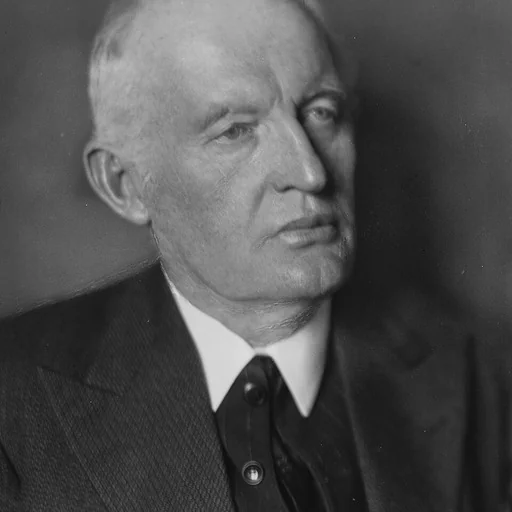
Edvard Munch ( MUUNK; Norwegian: ; 12 December 1863 – 23 January 1944) was a Norwegian painter.