Artwork
Melancholy. Weeping Woman on the Beach
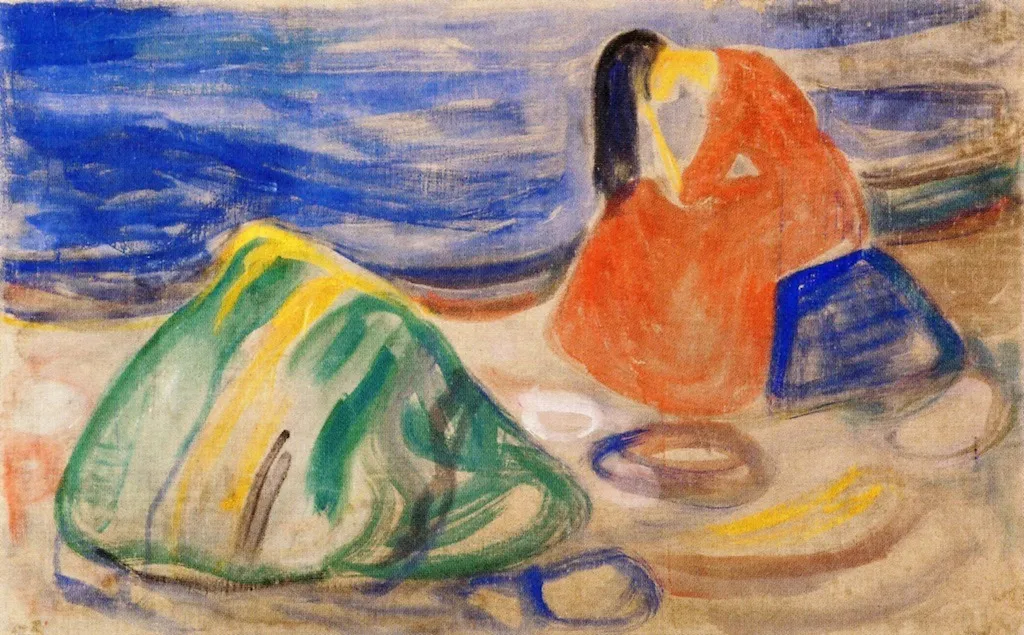
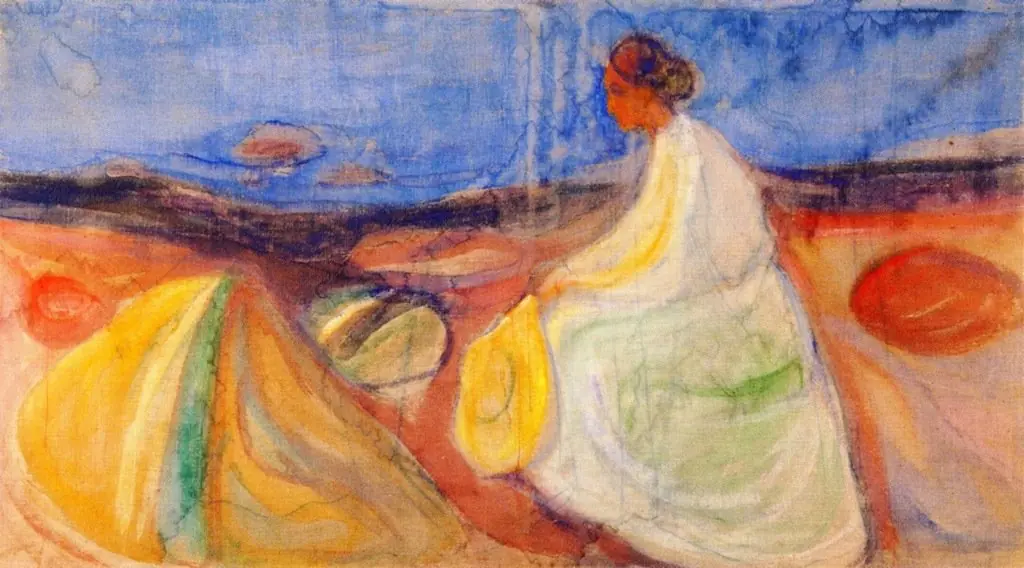
Melancholy. Weeping Woman on the Beach is a tempera painting by the Post-Impressionist artist Edvard Munch. It dates from 1906 and is held in the collection of the Munch Museum. Created in 1906, *Melancholy.
About this work
Overview
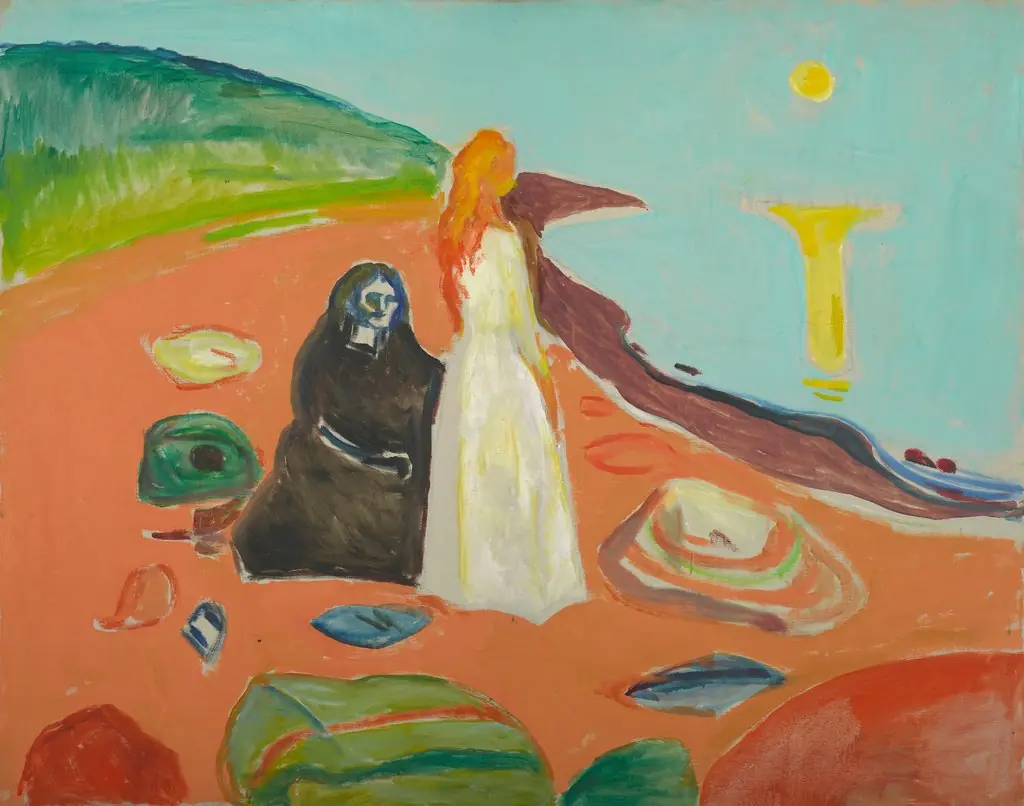
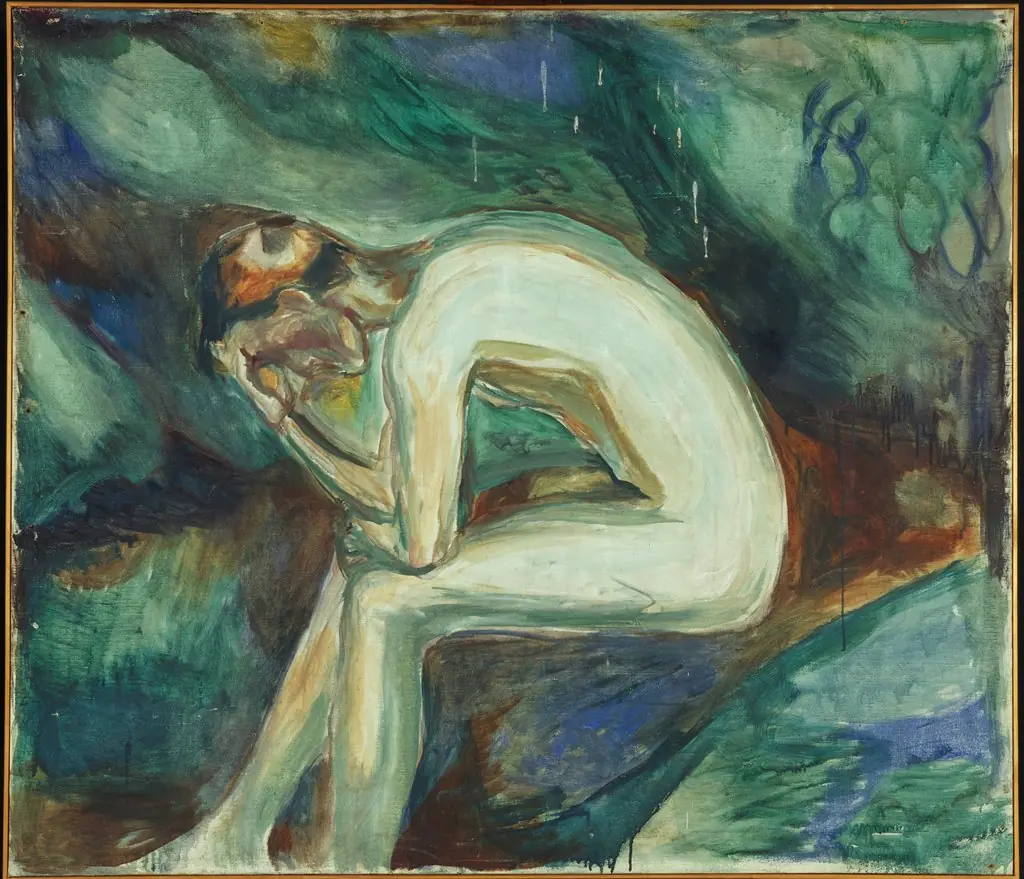
Created in 1906, *Melancholy. Weeping Woman on the Beach* is a tempera painting by Norwegian artist Edvard Munch. The work portrays a solitary female figure seated on a shoreline, her head cradled in her hands, suggesting an intense moment of sorrow. The composition is dominated by stark blues of sea and sky contrasted with the vivid orange of the woman's dress.
Subject & Meaning
The central figure, a woman in a bright orange garment, appears to be weeping, her posture conveying profound grief. A green object—perhaps a bag or discarded clothing—lies nearby, hinting at a narrative of loss or abandonment. The stark coastal setting amplifies the sense of isolation, inviting viewers to contemplate personal melancholy against an indifferent natural backdrop.
Technique & Style
Munch employed tempera, a fast‑drying medium that yields flat, matte surfaces, allowing him to layer bold, unmodulated colors. The brushwork is expressive, with visible strokes that heighten emotional tension. The palette—dominant blues, a striking orange dress, and a muted green accent—reflects his post‑impressionist approach, prioritizing psychological resonance over realistic representation.
History & Provenance
The painting entered the collection of the Munch Museum in Oslo, where it remains on display. It was produced during a prolific period for Munch, when he was exploring themes of anxiety, death, and existential despair, and it has been catalogued among his works that address the human condition through symbolic landscapes.
Context
Munch’s early life was marked by frequent illness and the deaths of close family members, experiences that informed his preoccupation with emotional suffering.
Munch’s early life was marked by frequent illness and the deaths of close family members, experiences that informed his preoccupation with emotional suffering. In the early 1900s he was associated with nihilist circles in Kristiania (now Oslo), a milieu that encouraged confronting inner turmoil. This painting reflects those influences, translating personal anguish into a universal visual language.
Artist & collection
Artist
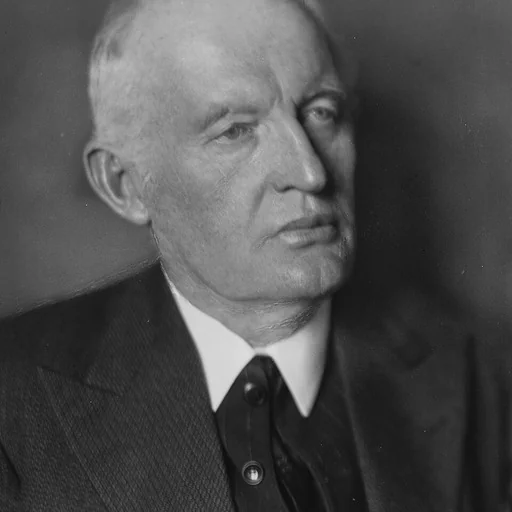
Edvard Munch ( MUUNK; Norwegian: ; 12 December 1863 – 23 January 1944) was a Norwegian painter.