Artwork
Naked Figures
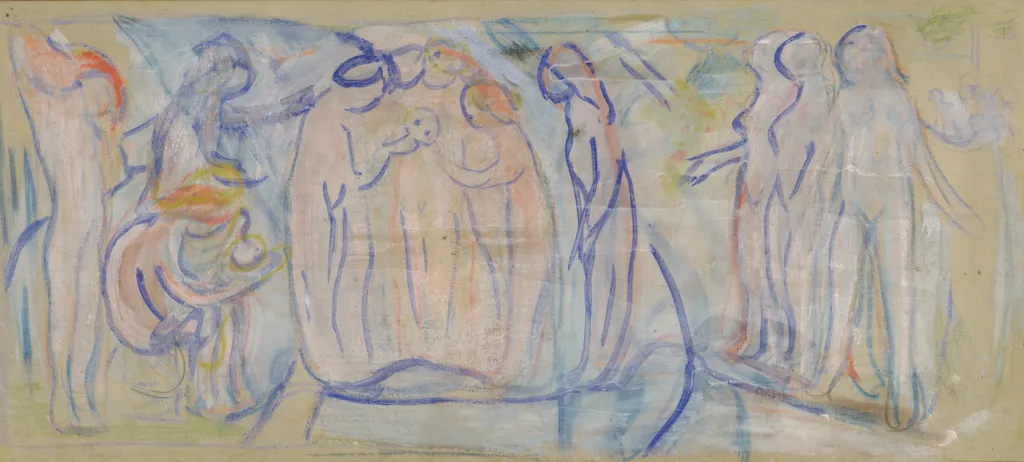
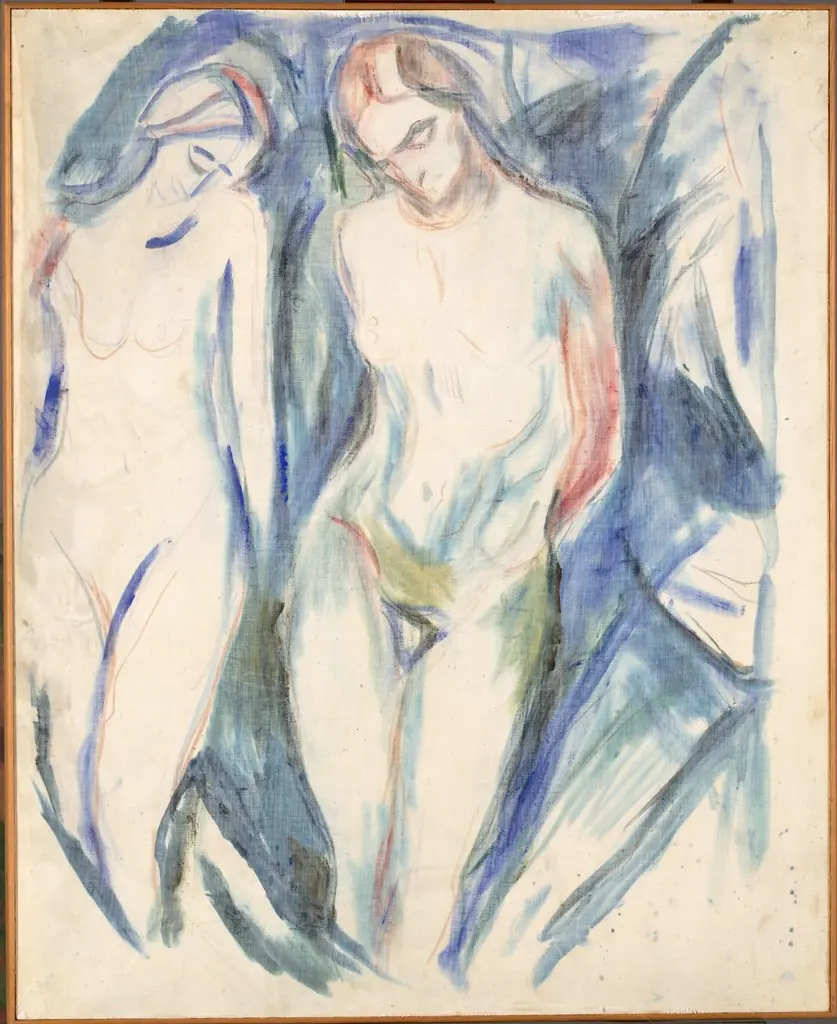
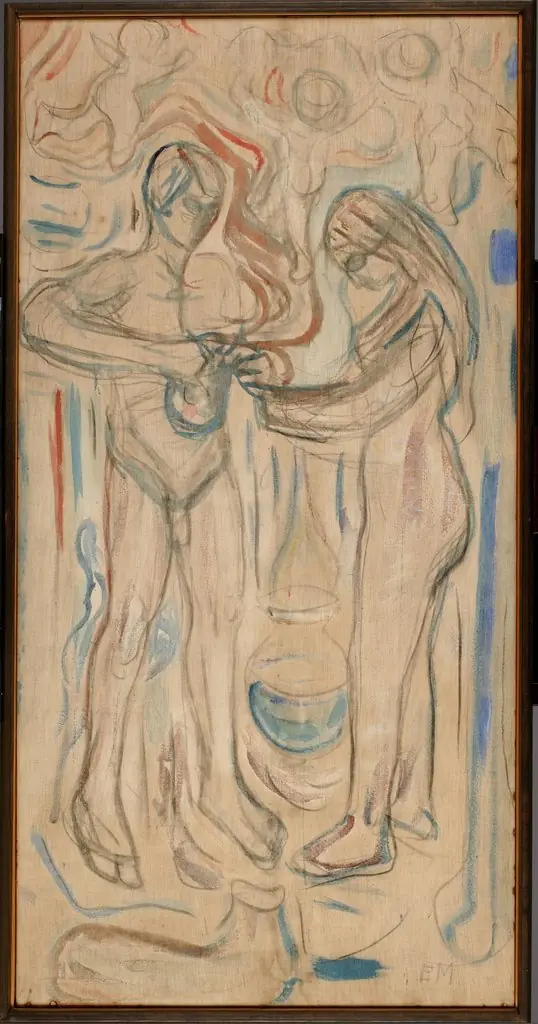
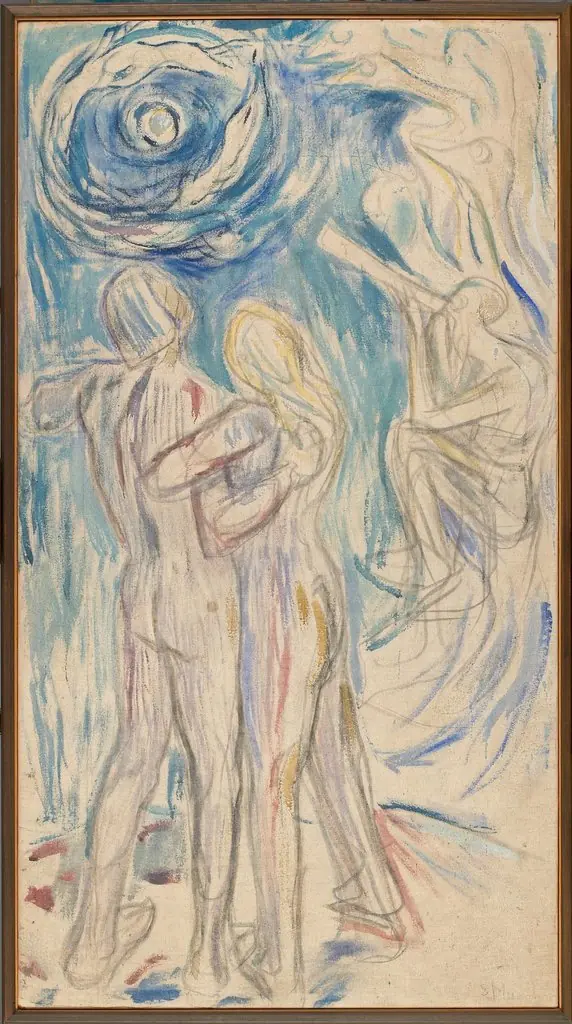
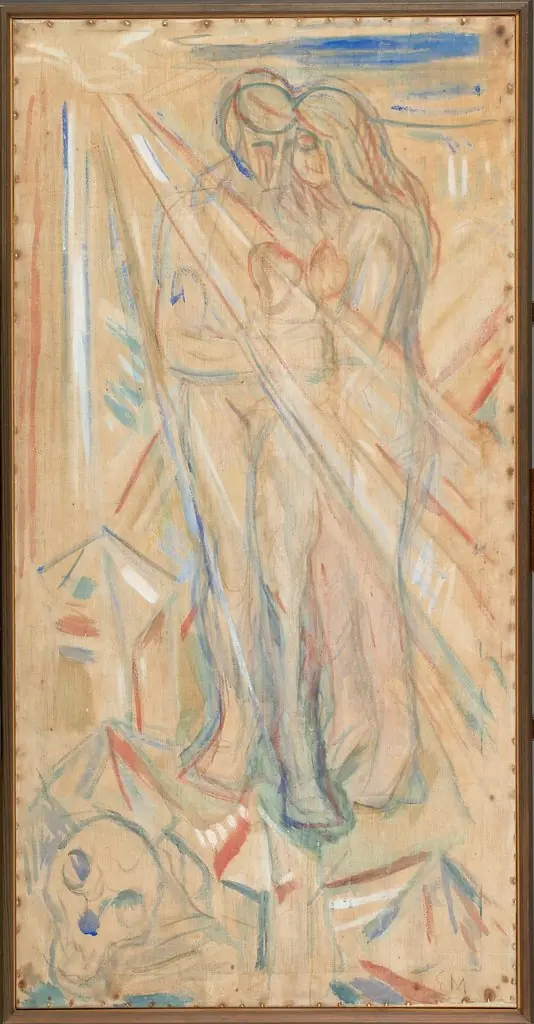
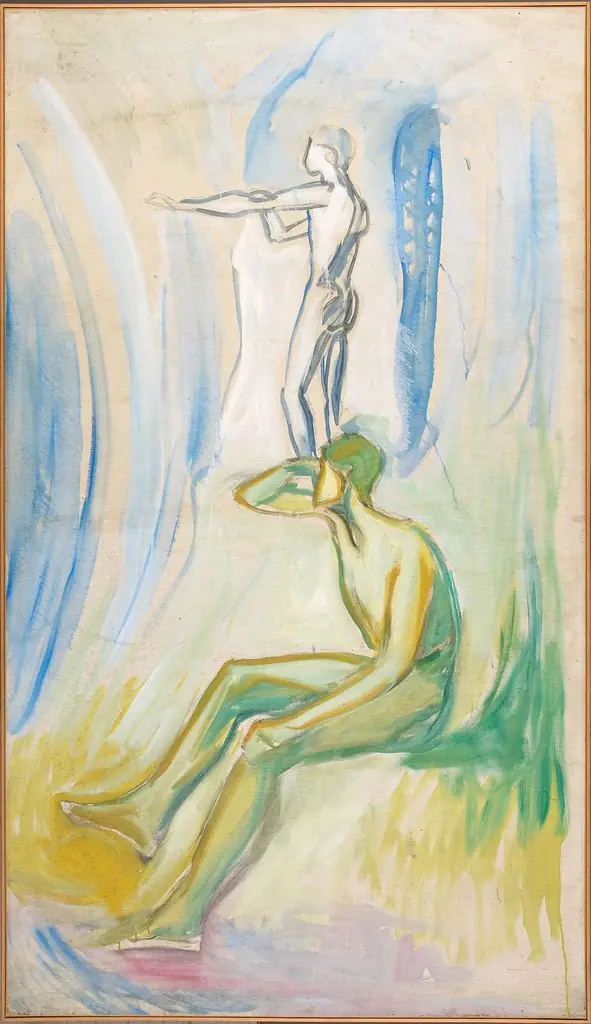
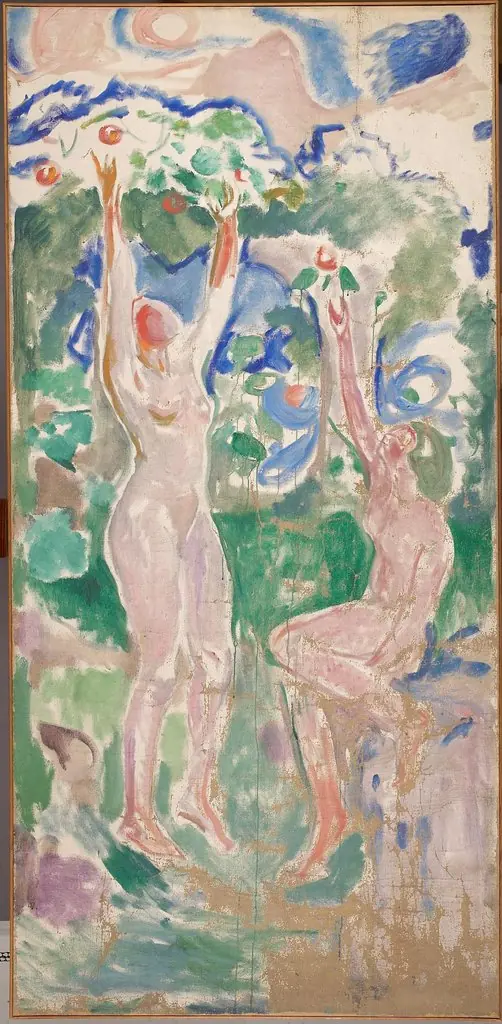
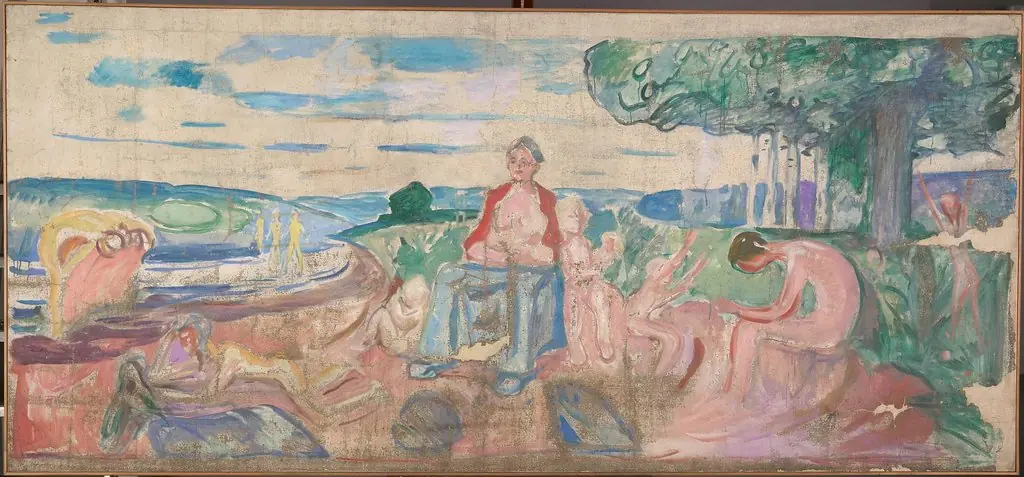
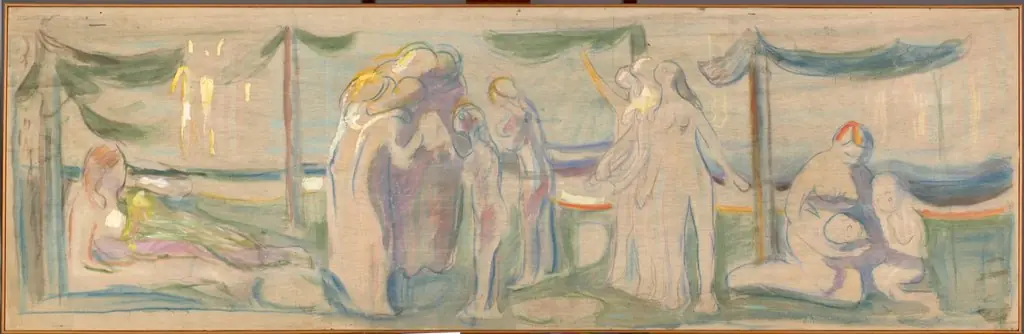
Naked Figures is a tempera painting by the Post-Impressionist artist Edvard Munch. It dates from 1920 and is held in the collection of the Munch Museum.
About this work
Overview
It belongs to a series of works from his later years that continue his lifelong engagement with human vulnerability and emotional presence.
Created in 1920, *Naked Figures* is a drawing in wax crayon by Norwegian artist Edvard Munch. It belongs to a series of works from his later years that continue his lifelong engagement with human vulnerability and emotional presence. Executed with direct, unrefined marks, the piece reflects Munch’s shift toward simplified forms and expressive line over detailed realism, aligning with his interest in inner experience over external appearance.
Subject & Meaning
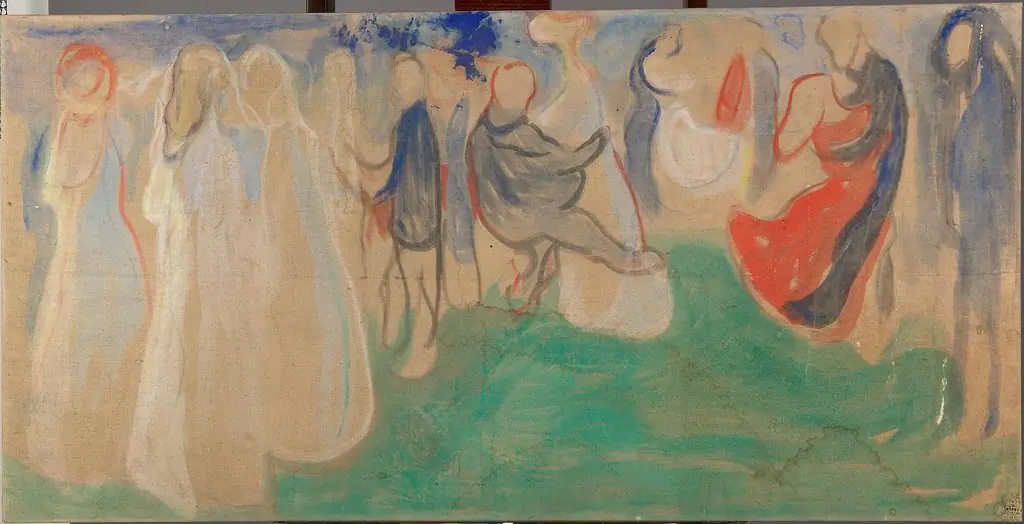
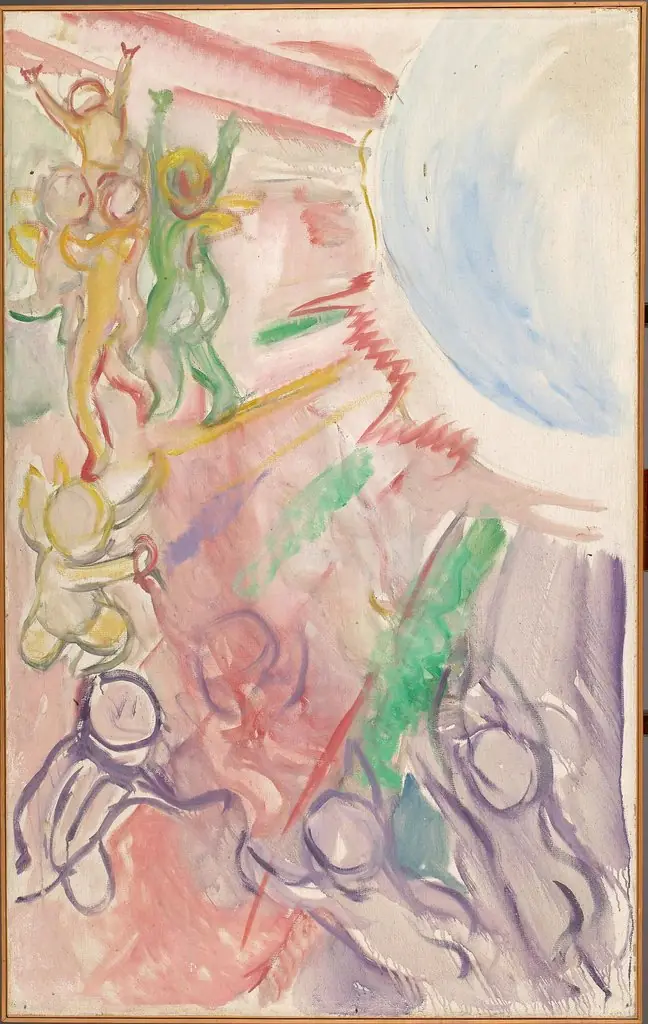
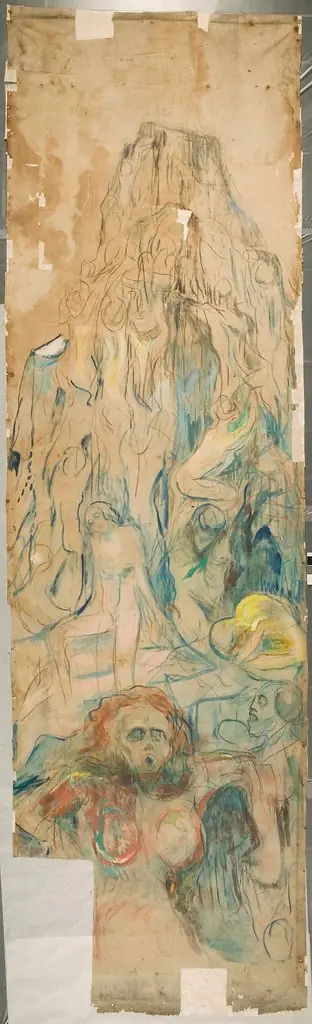
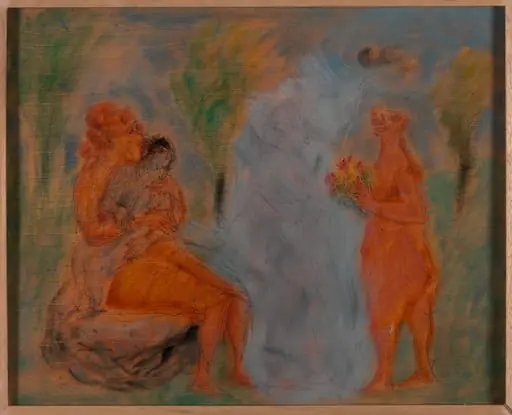
The composition shows a loose grouping of nude figures, predominantly women, arranged in a circular formation. Their bodies are rendered with minimal detail, emphasizing posture and gesture over individual identity. Faces are blurred or absent, suggesting anonymity and universality. The scene evokes a sense of shared humanity, possibly reflecting themes of intimacy, isolation, or collective existence—recurring concerns in Munch’s work rooted in personal grief and existential inquiry.
Technique & Style
Munch employed wax crayon to achieve bold, fluid lines and flat areas of color—primarily blue, with accents of orange and yellow. The forms are reduced to essential shapes, avoiding modeling or shading. While the work shares a tactile intensity with impasto, it achieves texture through the physical resistance of the crayon on paper rather than layered paint. This approach reflects his move toward expressive abstraction, prioritizing emotional resonance over naturalistic representation.
History & Provenance
The drawing was produced during Munch’s mature period, after decades of exploring psychological themes through painting and printmaking. It entered the collection of the Munch Museum in Oslo, established to preserve the artist’s legacy. The work remains part of the museum’s core holdings, representing his continued experimentation with medium and form in his later years, well beyond his early Symbolist fame.
Context
Munch’s artistic development was shaped by personal trauma, exposure to European modernism, and intellectual circles in Oslo that included nihilist thinkers like Hans Jæger. By 1920, he had moved beyond the overt symbolism of *The Scream*, focusing instead on quieter, more intimate explorations of the human condition. *Naked Figures* reflects this evolution—less about dread, more about presence, rendered with the immediacy of a sketch but the weight of a statement.
Legacy
The work contributes to Munch’s broader legacy as an artist who consistently prioritized emotional truth over aesthetic polish. Its raw, unembellished style influenced later generations interested in expressive figuration and the potential of non-traditional media. Though not widely exhibited as a standalone piece, *Naked Figures* remains a quiet testament to his enduring focus on the body as a vessel for psychological experience.
Own this work as a print
Artist & collection
Artist
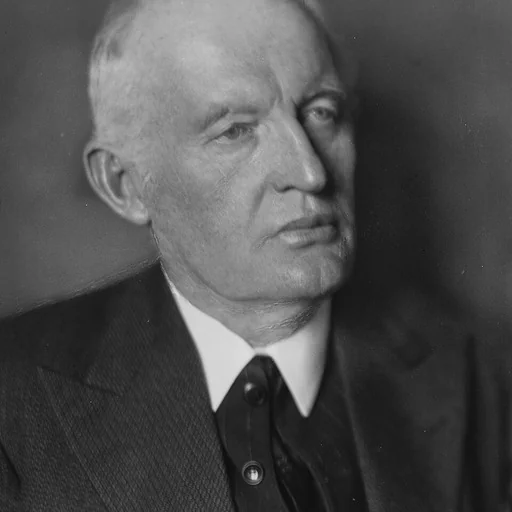
Edvard Munch ( MUUNK; Norwegian: ; 12 December 1863 – 23 January 1944) was a Norwegian painter.