Artwork
Bathing Women on Rocks
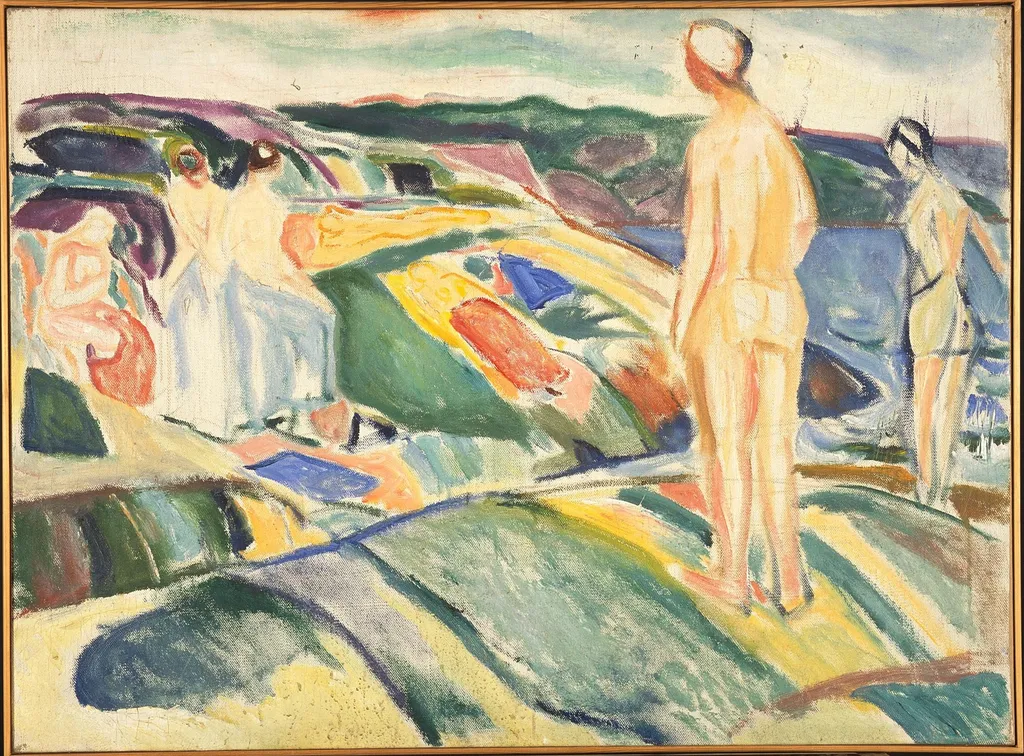
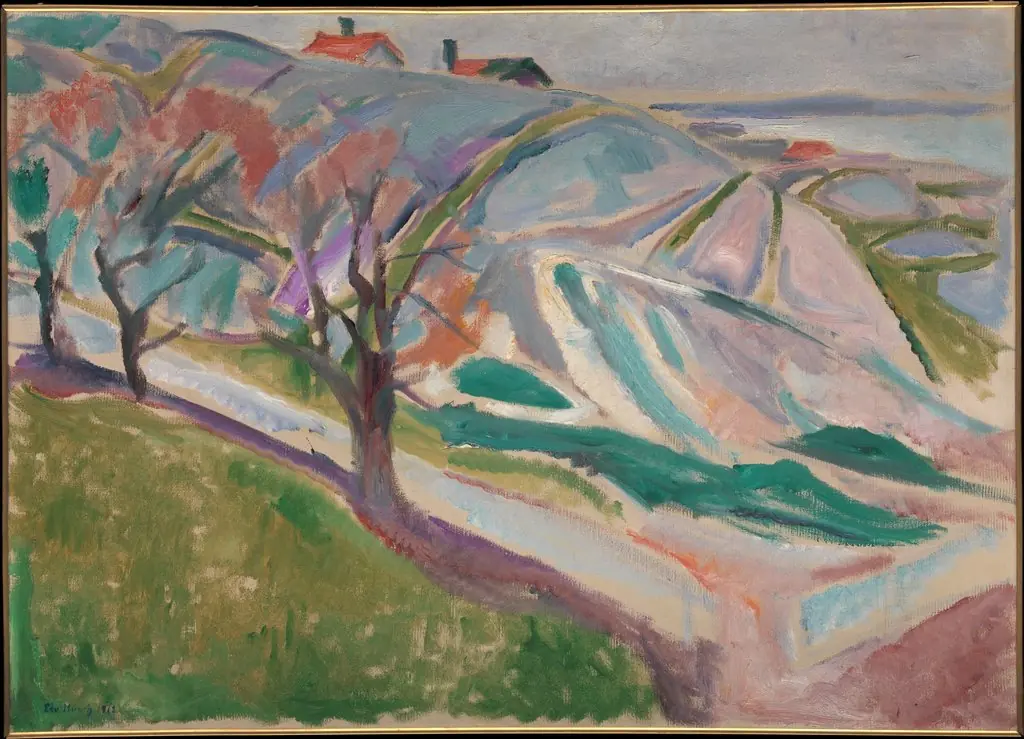
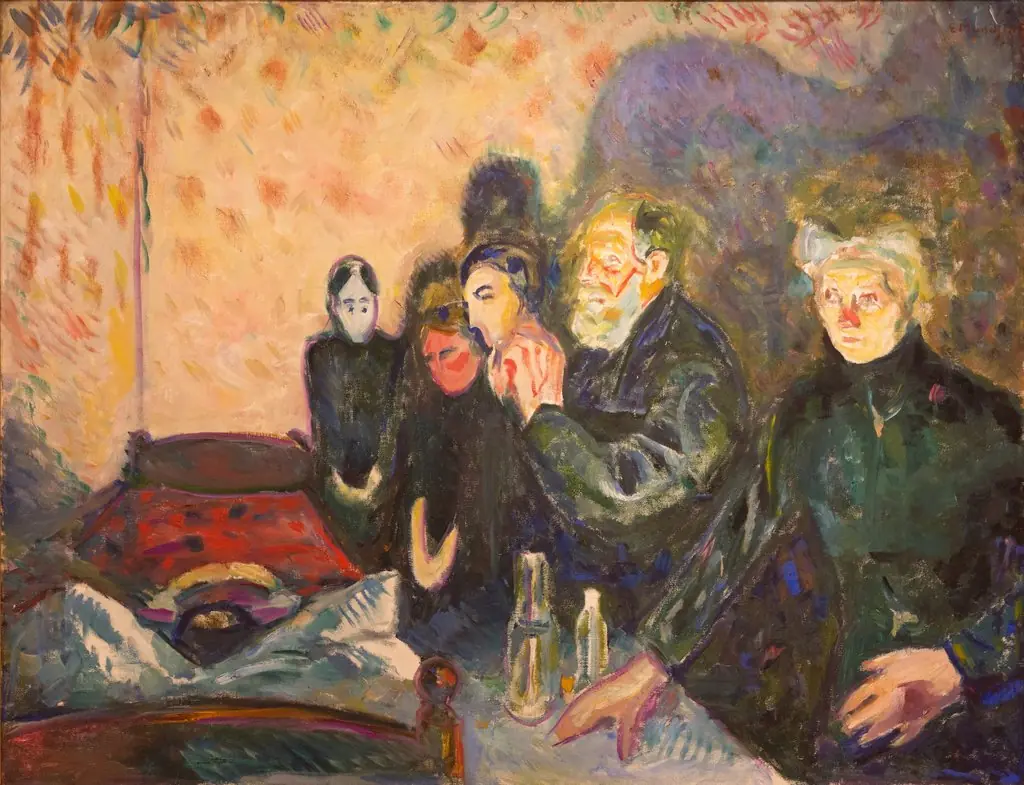
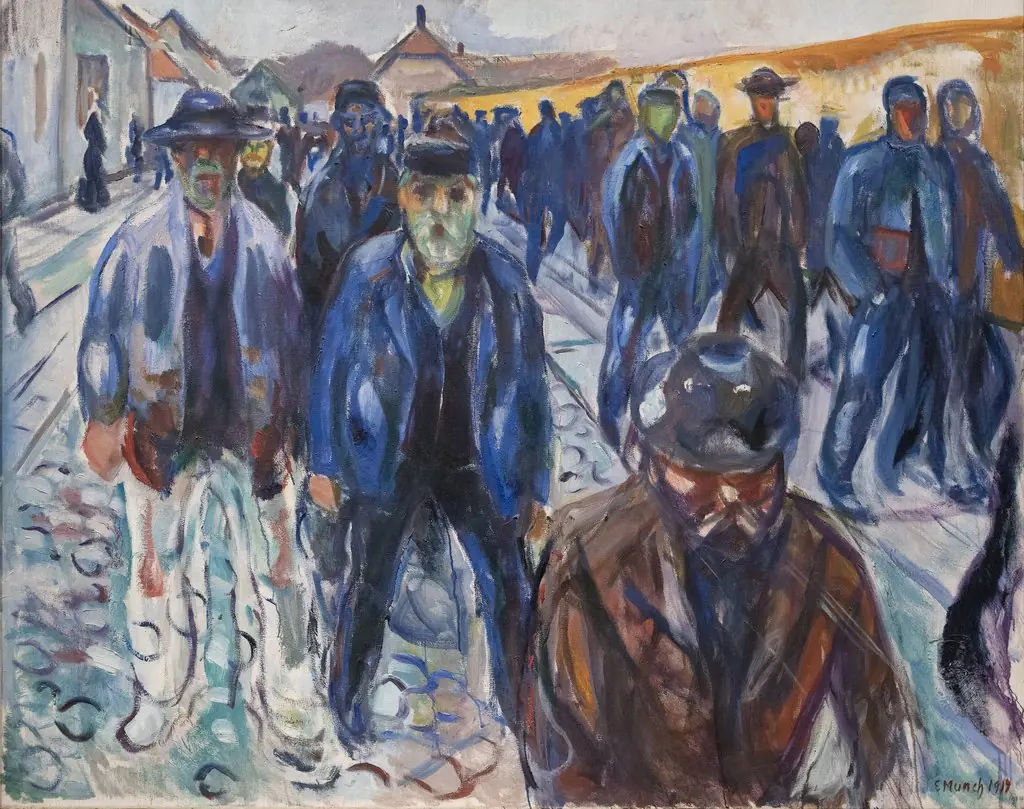
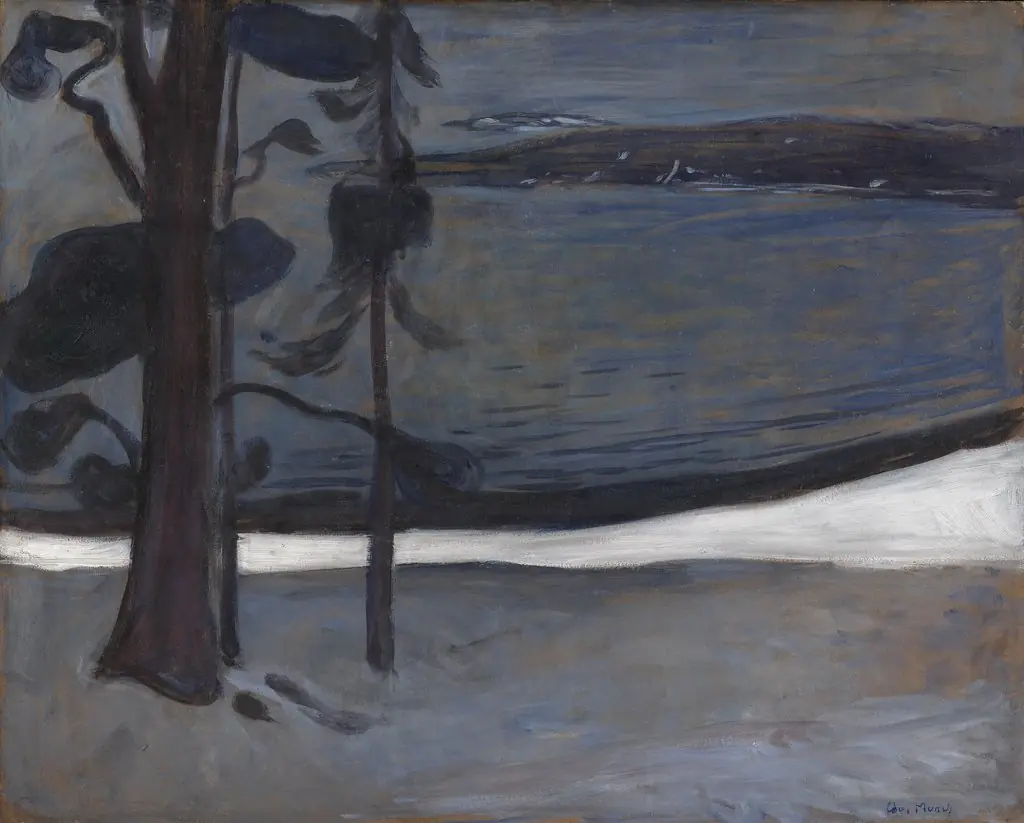
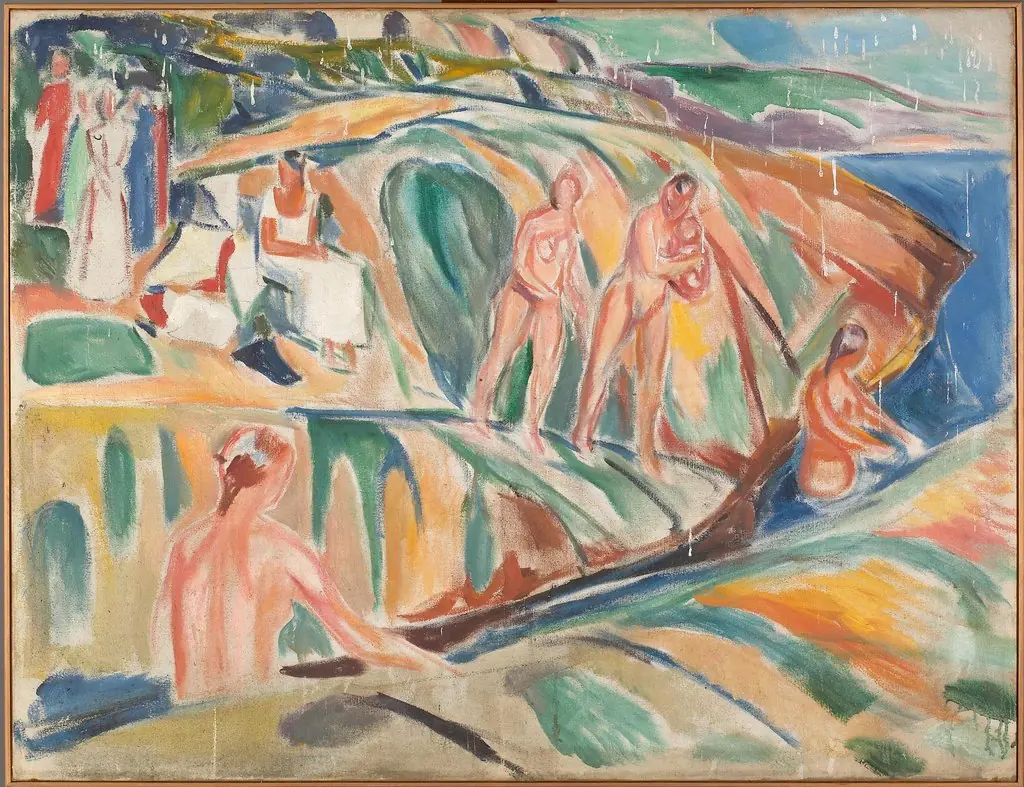
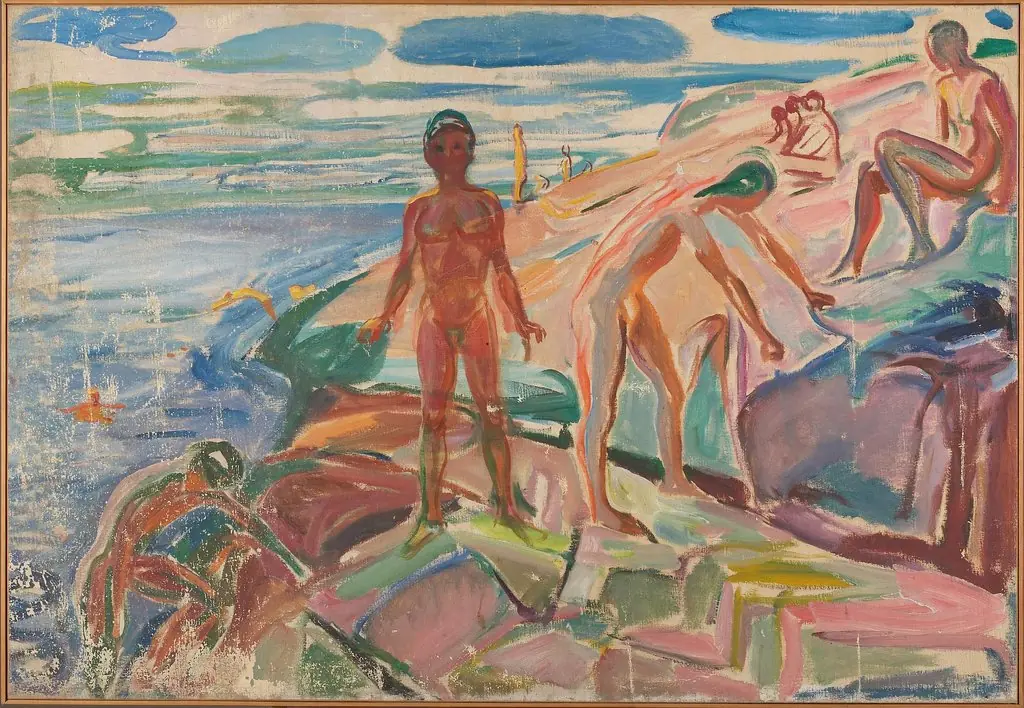
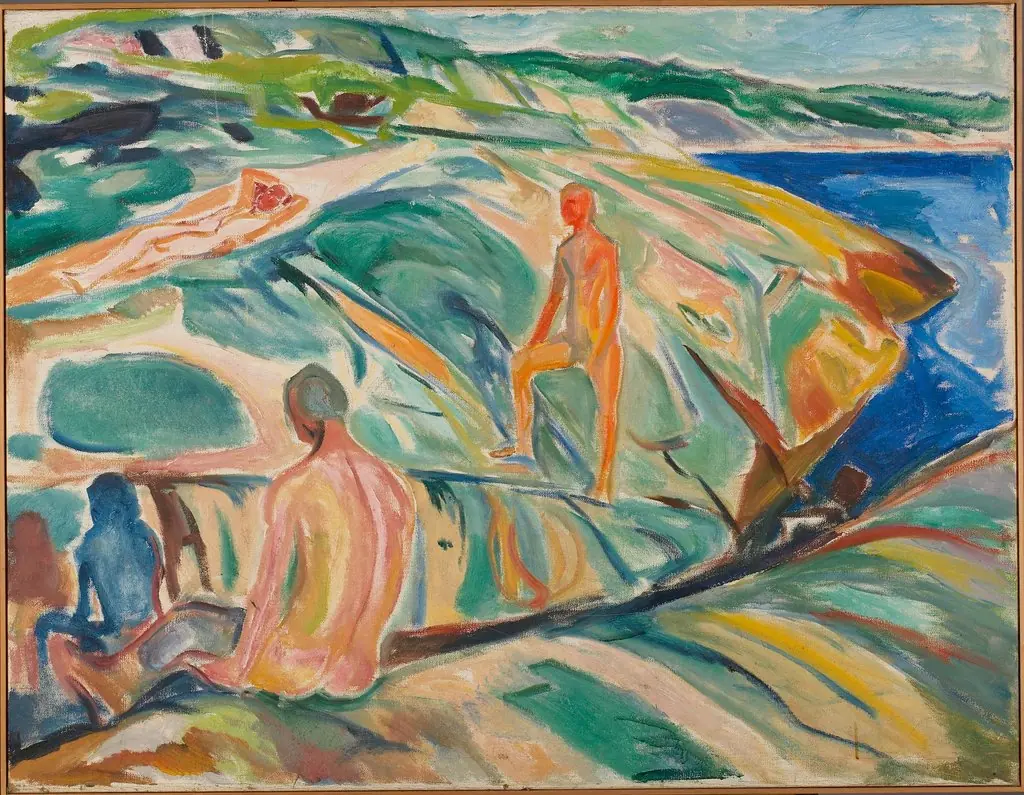
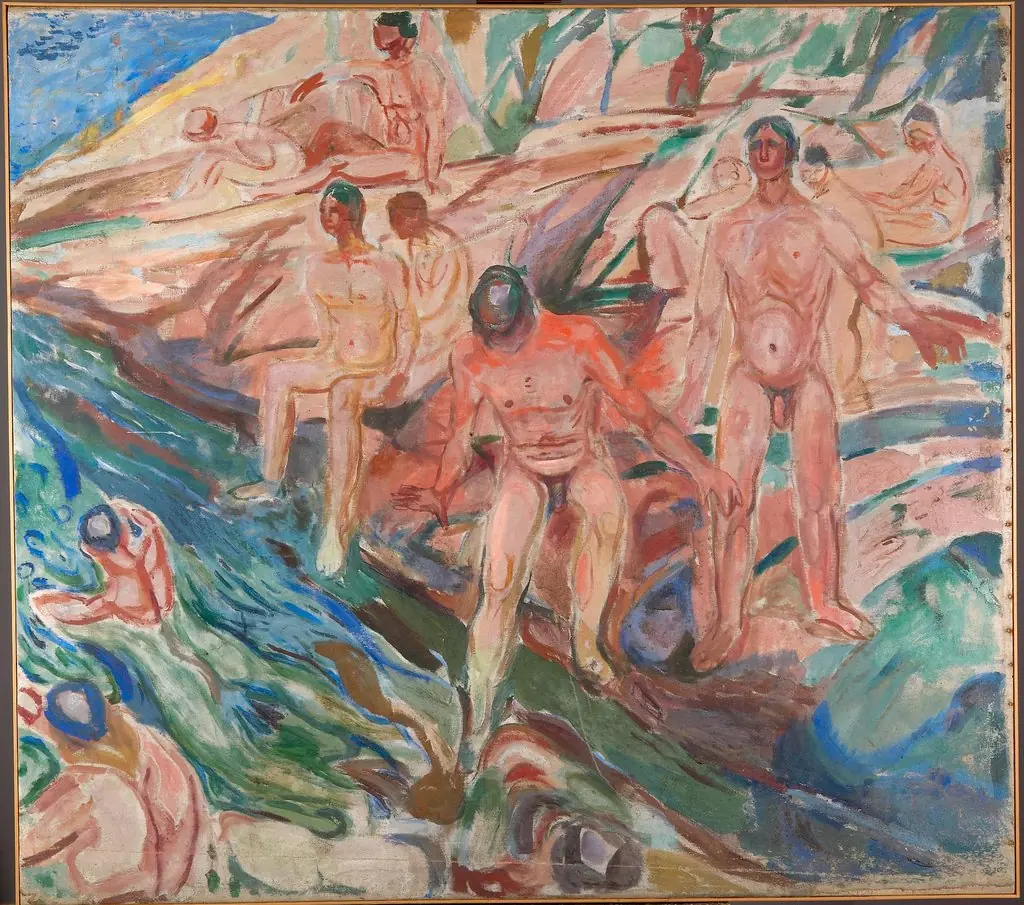
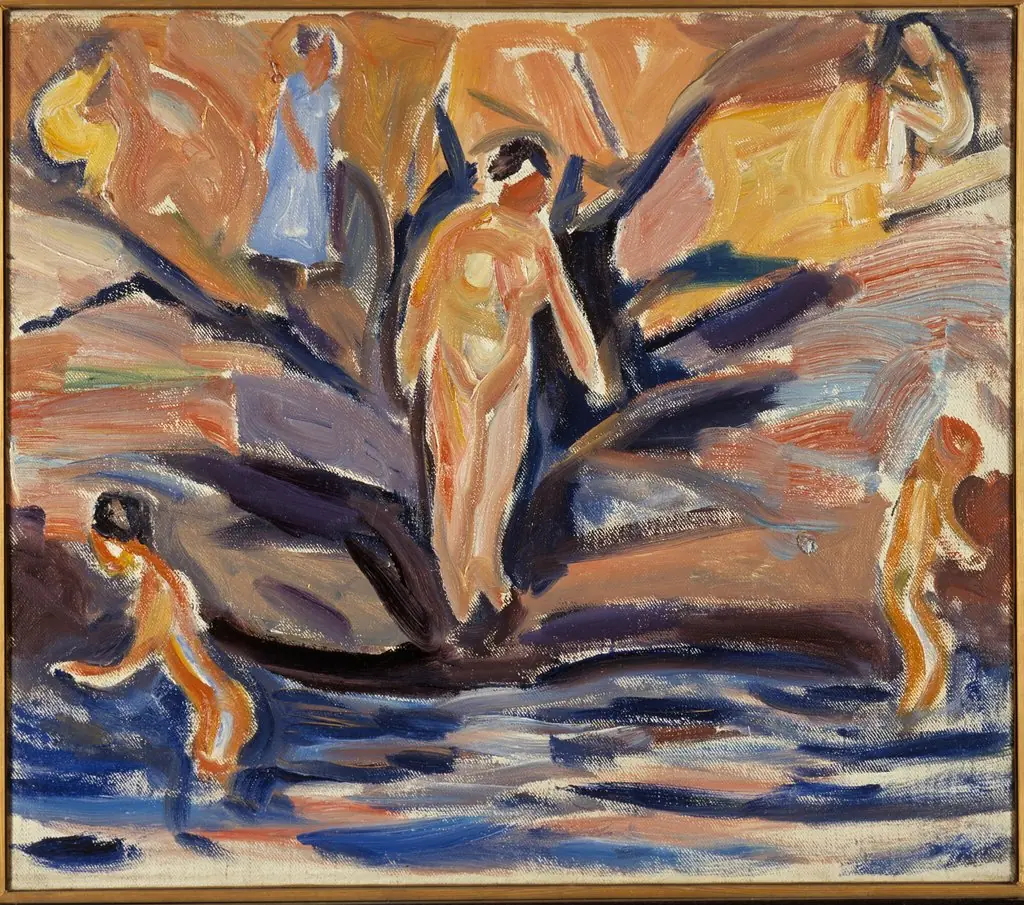
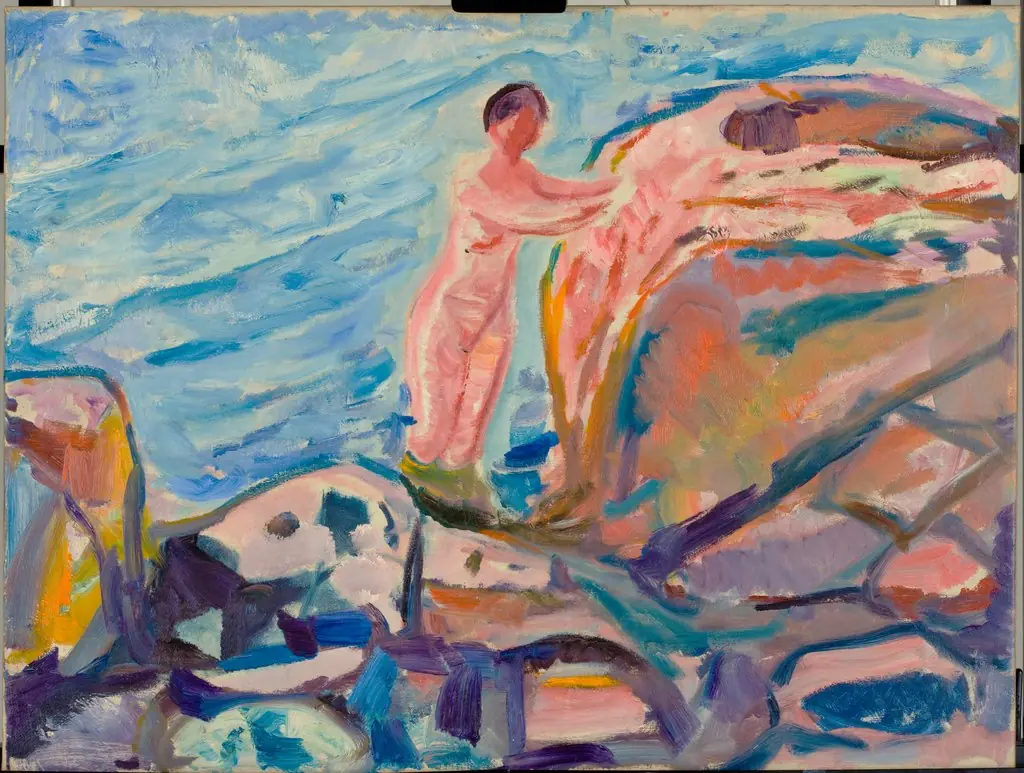
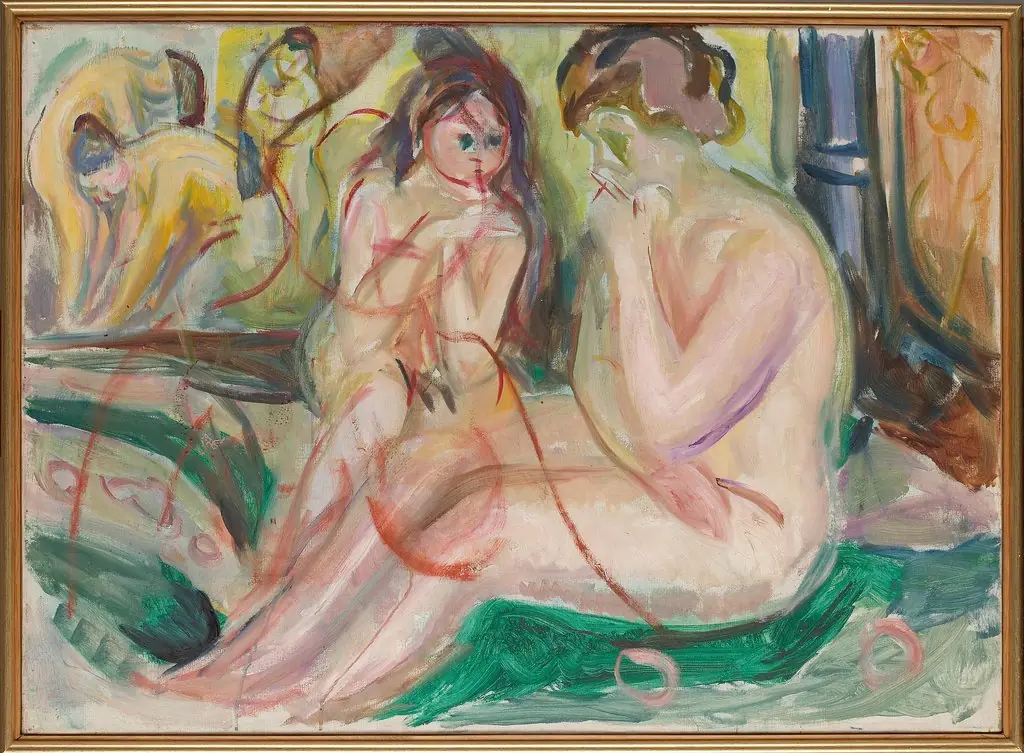
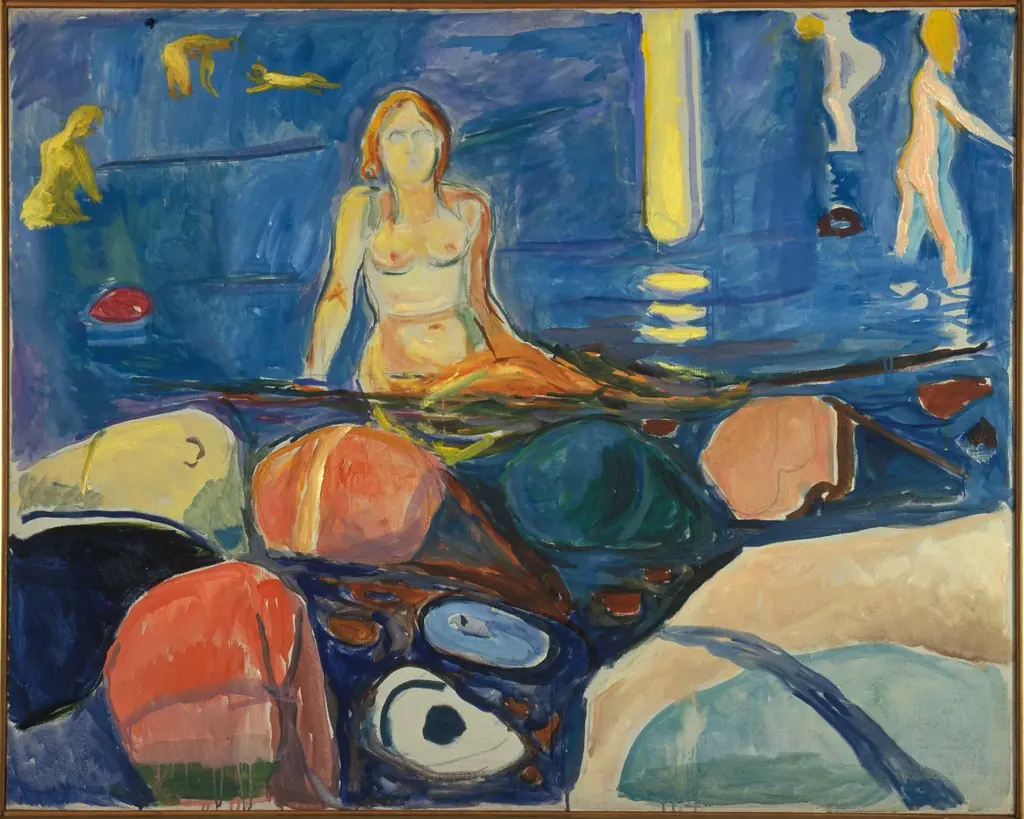
Bathing Women on Rocks is an oil painting by the Post-Impressionist artist Edvard Munch. It dates from 1915 and is held in the collection of the Munch Museum.
About this work
Overview
The scene unfolds on a rocky shore under natural light, reflecting Munch’s sustained interest in human presence within nature.
Painted in 1915, *Bathing Women on Rocks* is an oil on canvas work by Norwegian artist Edvard Munch. It portrays a group of nude women in a coastal landscape, engaged in quiet, unposed moments of rest and movement. The scene unfolds on a rocky shore under natural light, reflecting Munch’s sustained interest in human presence within nature. The painting is part of the Munch Museum’s permanent collection in Oslo.
Subject & Meaning
The figures are depicted without narrative or symbolic urgency, suggesting an emphasis on presence rather than story. Their nudity is rendered without eroticism or idealization, aligning with Munch’s broader exploration of vulnerability and bodily authenticity. The setting—unadorned rocks and open sea—grounds the figures in a raw, elemental world, evoking themes of solitude and transience common in his later work.
Technique & Style
Munch employed loose, expressive brushwork to convey texture and movement, particularly in the rendering of skin, rock, and water. His palette favors muted blues, greens, and ochres, with subtle shifts in tone to suggest sunlight filtering through atmosphere. The composition avoids symmetry, instead using asymmetrical groupings to create a sense of spontaneous, lived-in space. Light is not modeled realistically but emotionally, shaping mood over form.
History & Provenance
Created during Munch’s mature period, the painting reflects his retreat from the intense psychological themes of his earlier years toward more contemplative observations of daily life. It was acquired by the Munch Museum shortly after its creation and has remained in its collection since. No significant alterations or reworkings are documented, suggesting it was completed as intended.
Context
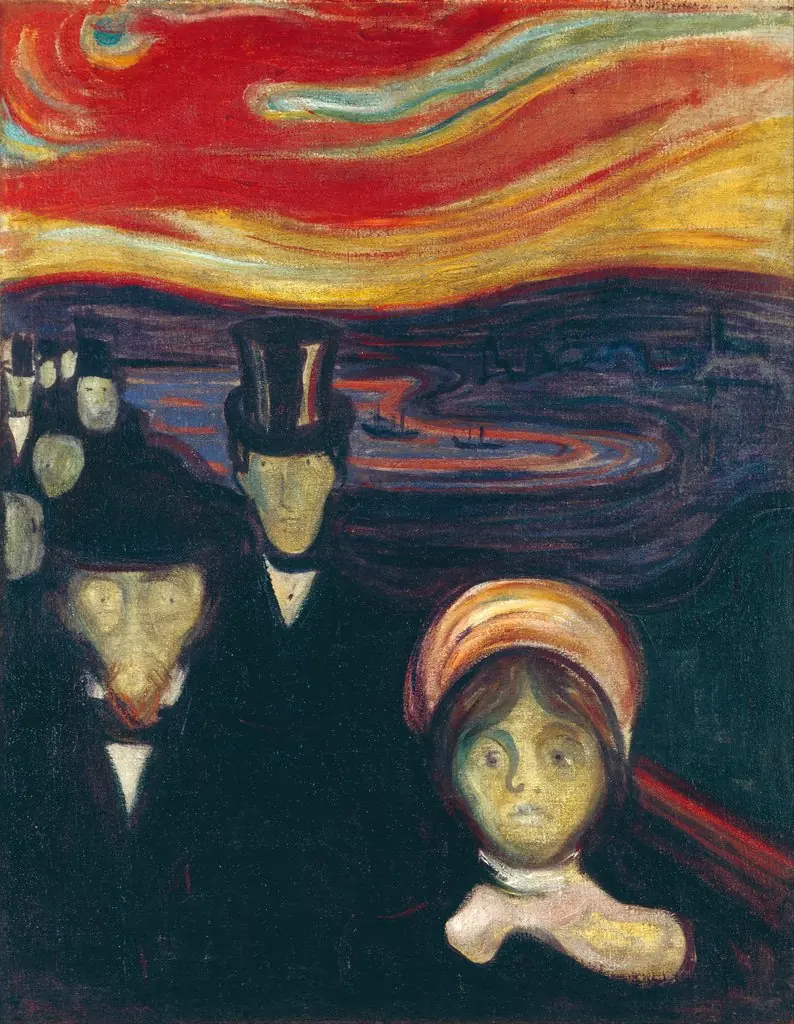
In the early 20th century, Munch increasingly turned to landscapes and figures in nature, distancing himself from the symbolic angst of *The Scream*. His exposure to Scandinavian light and coastal environments, combined with personal losses and a growing interest in health and renewal, influenced this shift. The work aligns with broader European trends toward naturalism, though filtered through his distinctive emotional lens.
Legacy
While less widely known than his expressionist icons, *Bathing Women on Rocks* exemplifies Munch’s quieter, more observational phase. It reveals his enduring engagement with the human body in nature and his ability to convey psychological resonance through atmosphere rather than drama. The painting contributes to understanding the evolution of his style beyond symbolic terror toward serene, introspective realism.
Artist & collection

Artist
Edvard Munch ( MUUNK; Norwegian: ; 12 December 1863 – 23 January 1944) was a Norwegian painter.