Artwork
Bathing Woman by a Red Cliff
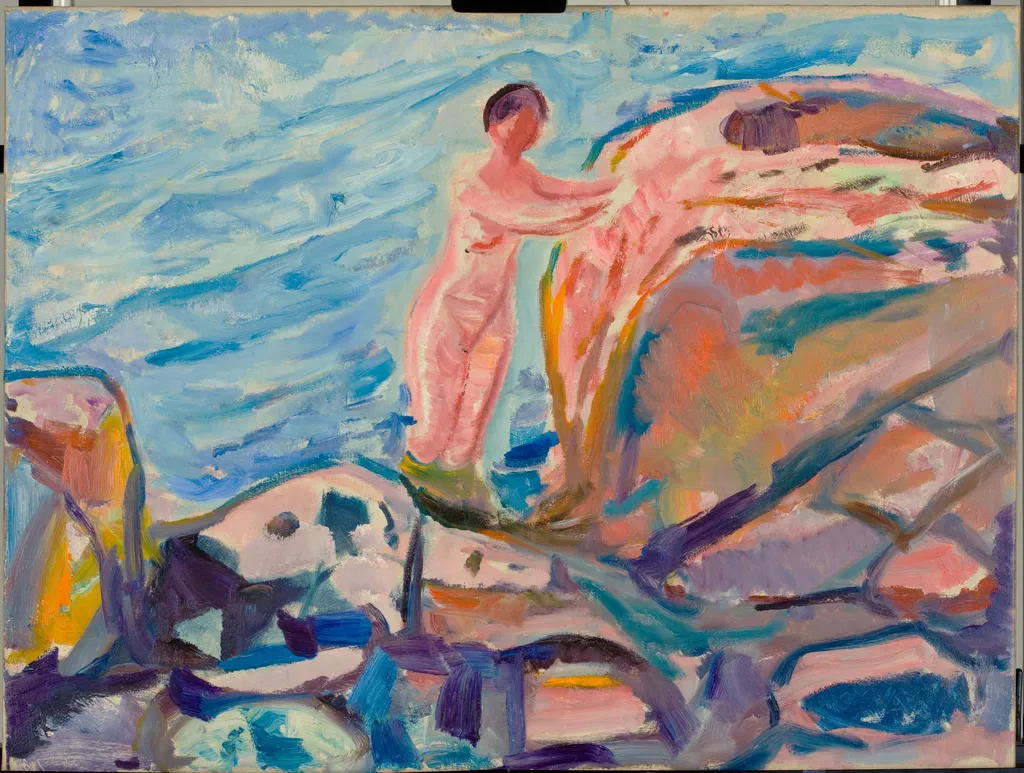
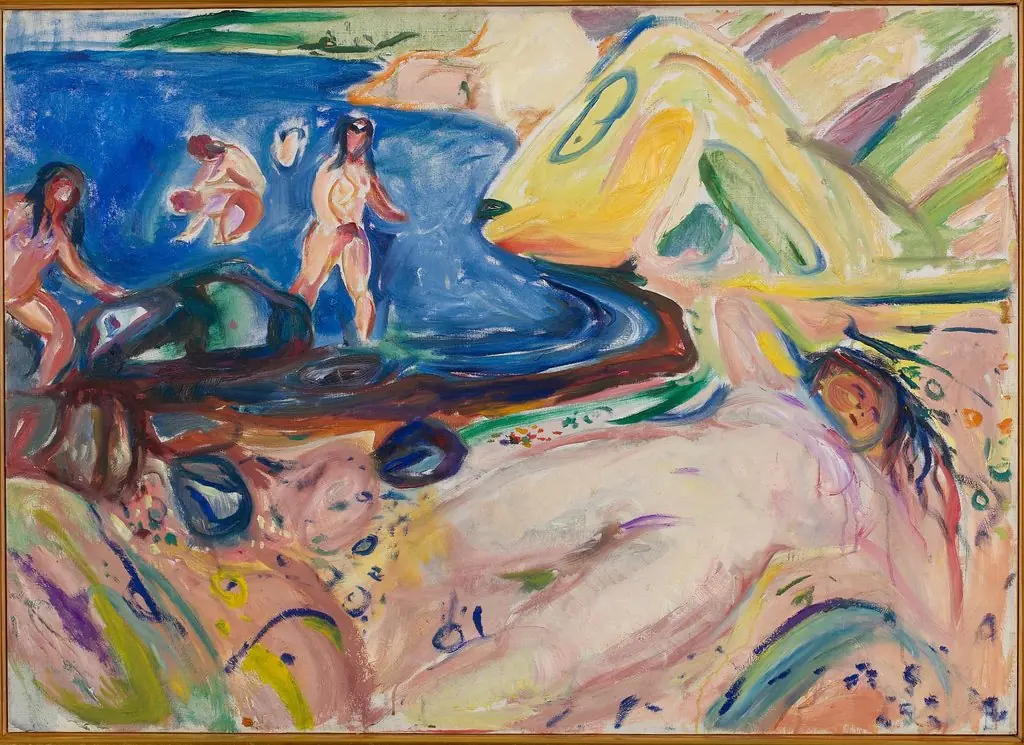
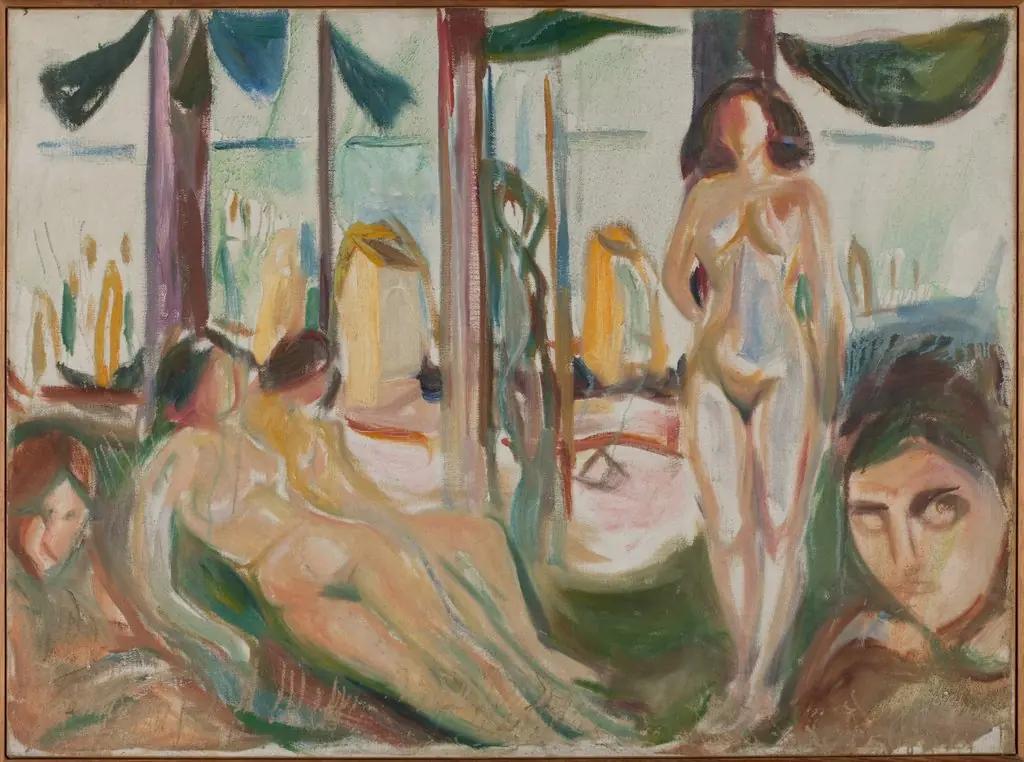
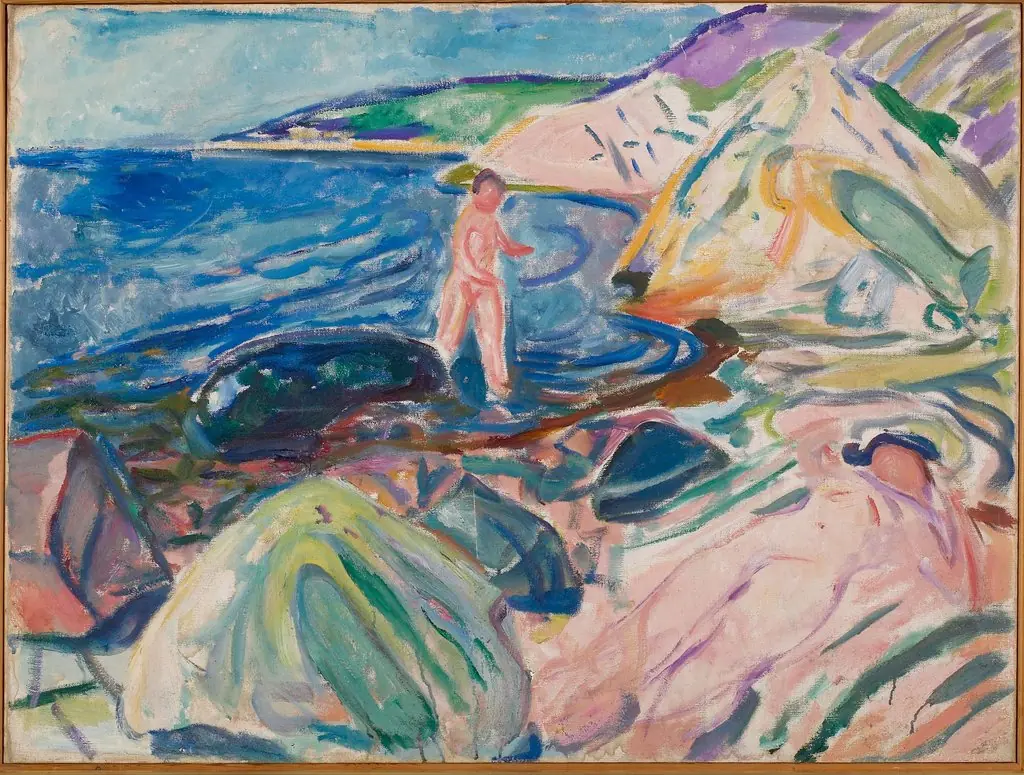
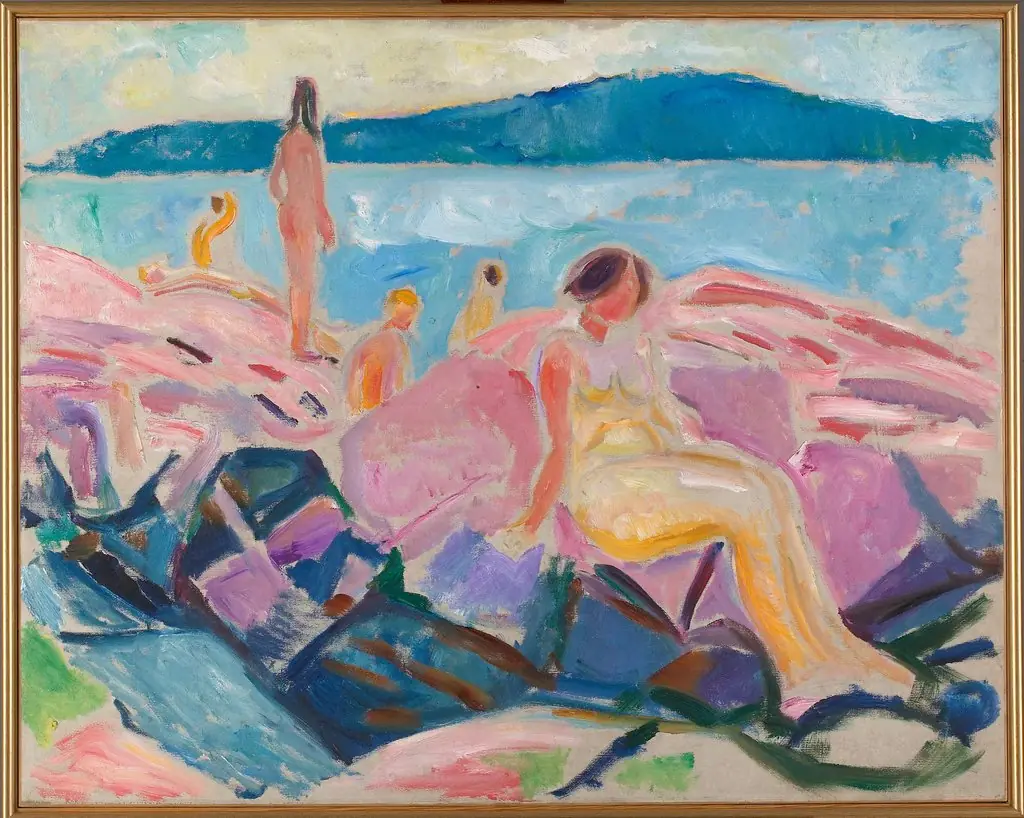
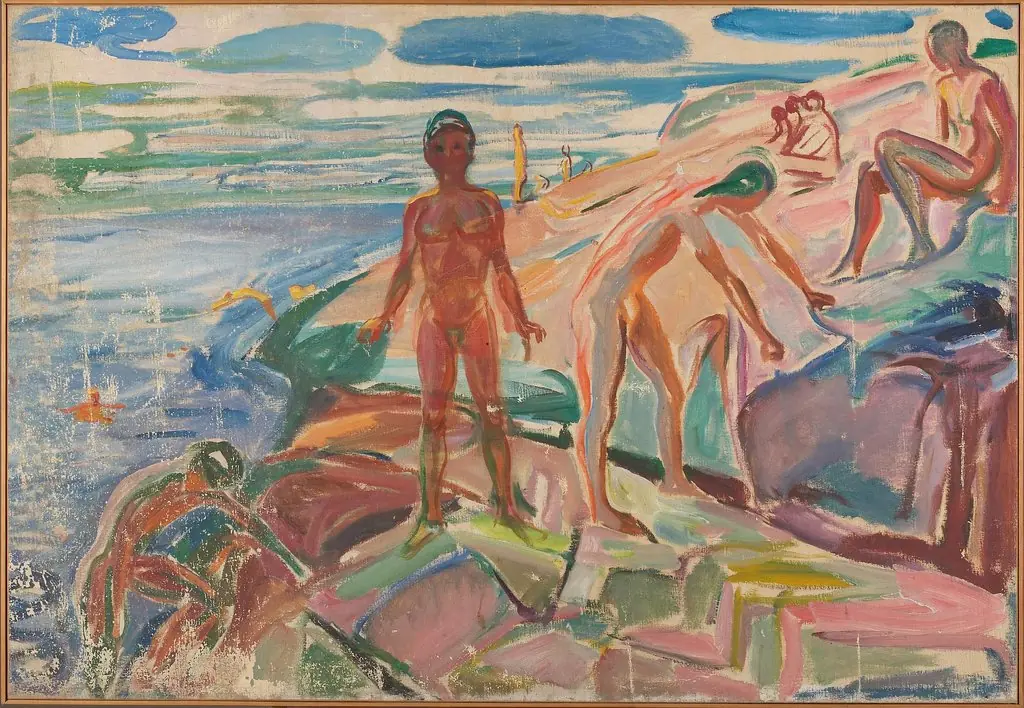
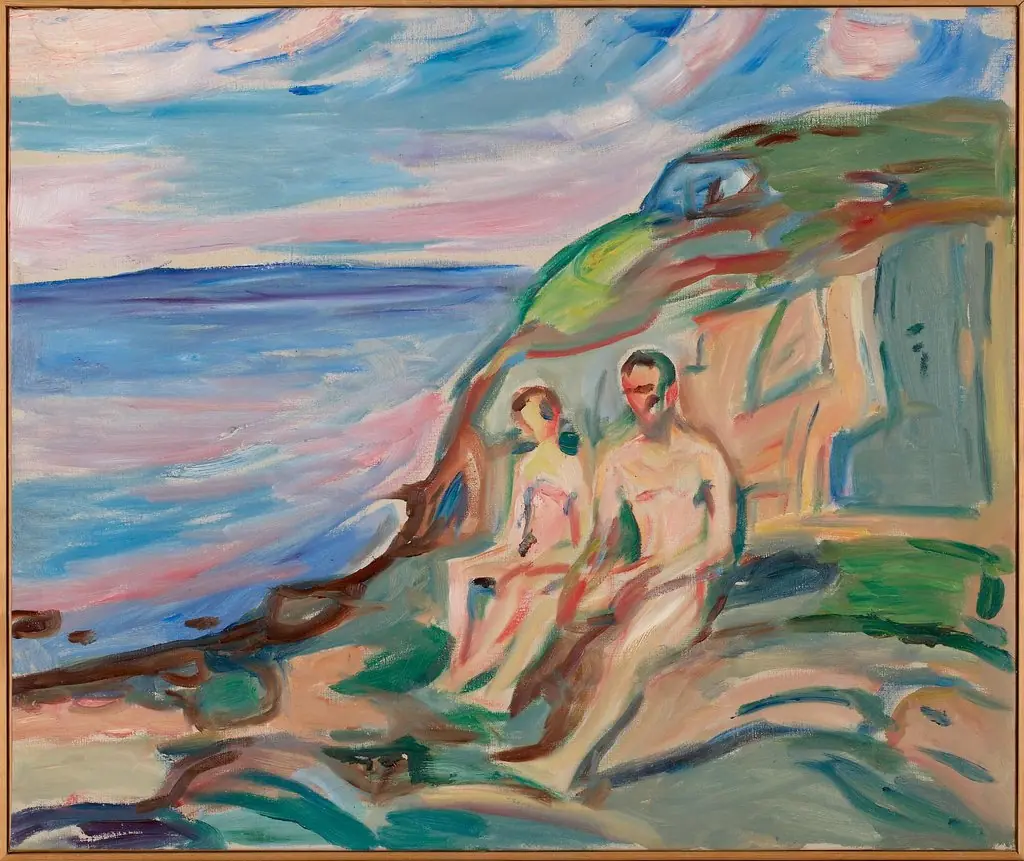
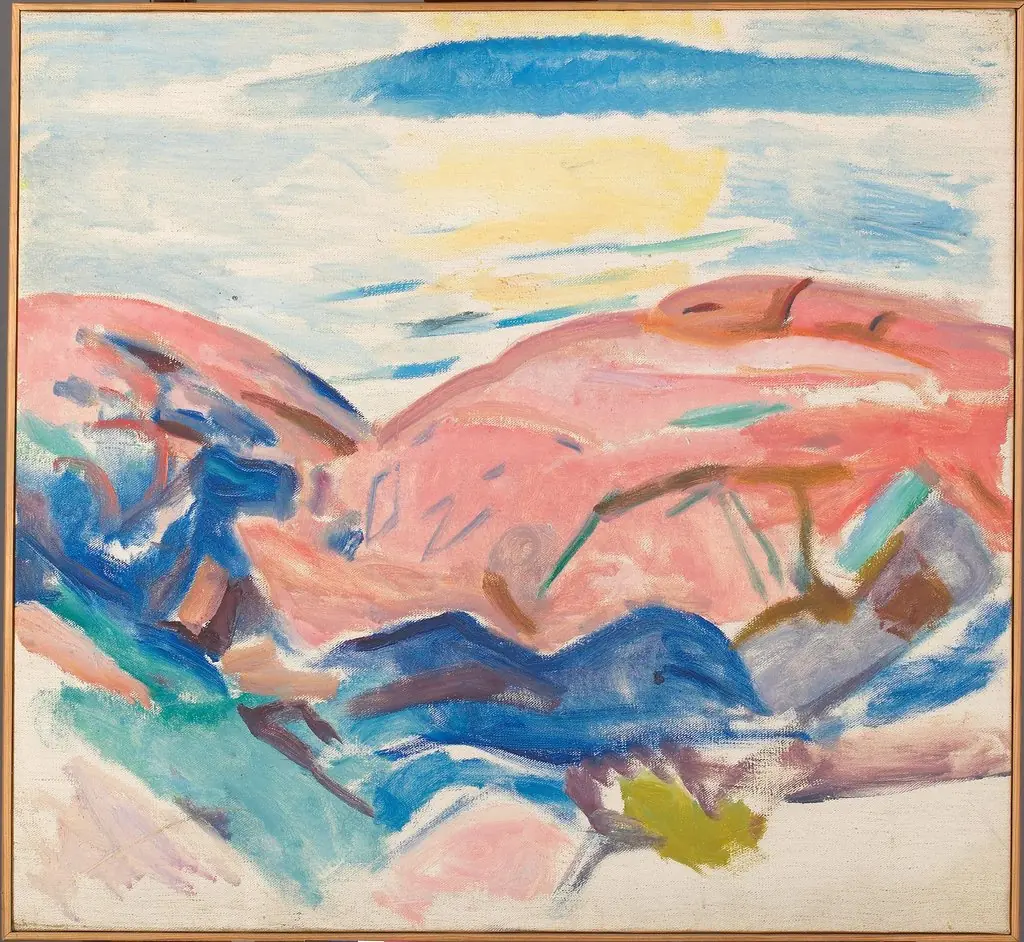
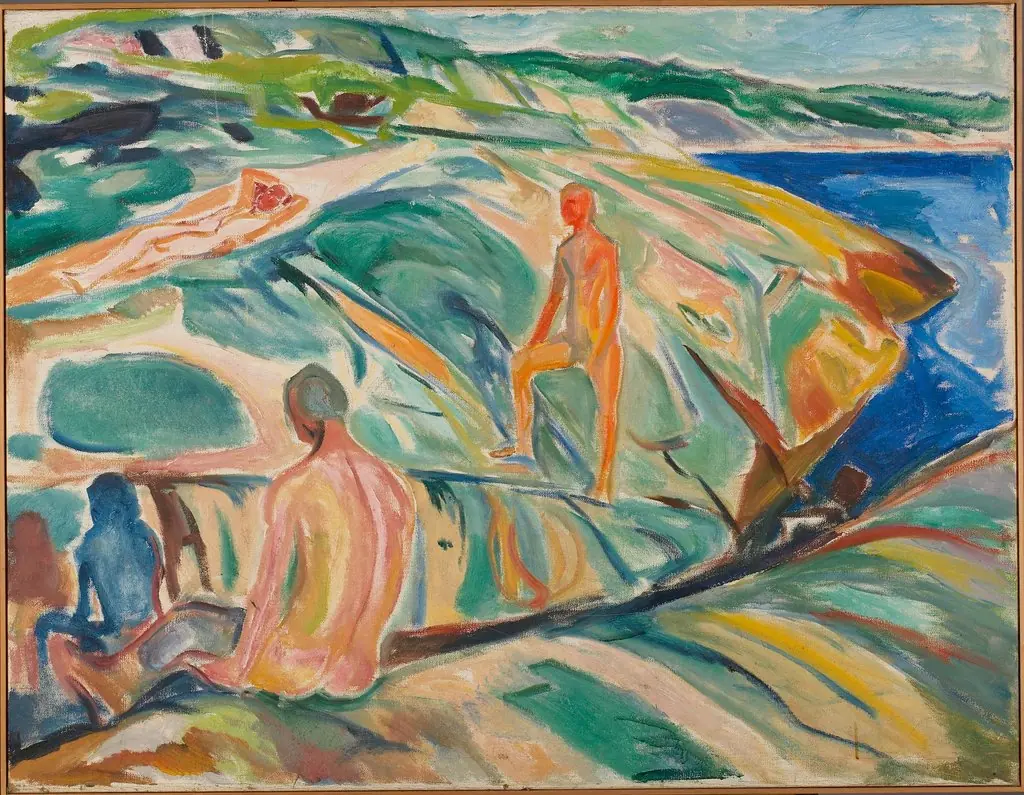
Bathing Woman by a Red Cliff is an oil painting by the Post-Impressionist artist Edvard Munch. It dates from 1914 and is held in the collection of the Munch Museum.
About this work
Overview
It captures a solitary female figure near a striking red cliff, rendered with minimal detail and heightened emotional tone.
Painted in 1914, *Bathing Woman by a Red Cliff* is an oil on canvas work by Norwegian artist Edvard Munch. It captures a solitary female figure near a striking red cliff, rendered with minimal detail and heightened emotional tone. The painting reflects Munch’s sustained interest in solitude, the human form, and nature’s psychological resonance. It is part of the permanent collection at the Munch Museum in Oslo, where many of his key works are preserved.
Subject & Meaning
The figure, nude beneath a loosely draped robe, stands with her back turned, isolated against a vivid geological form. Her posture suggests introspection or withdrawal, reinforcing themes of solitude and vulnerability that recur in Munch’s oeuvre. The red cliff, both natural and symbolic, may evoke emotional intensity or existential weight. The absence of facial features invites projection, shifting focus from identity to inner state.
Technique & Style
Munch employs broad, expressive brushwork for the robe and simplified, angular forms for the cliff, reducing detail to emphasize mood over realism. The palette is restrained: deep crimson, muted blues, and pale sky tones create a harmonious yet unsettling contrast. The composition’s flatness and deliberate lack of depth align with post-impressionist tendencies, prioritizing emotional impact over naturalistic representation.
History & Provenance
Created during Munch’s mature period, the painting emerged after his formative years in Kristiania and his exposure to philosophical circles influenced by Hans Jæger. It was retained by the artist throughout his life and later entered the collection of the Munch Museum upon its founding in 1963, ensuring its preservation as part of his artistic legacy. No significant provenance gaps are documented.
Context
In 1914, Munch was deeply engaged with themes of isolation and the human condition, themes shaped by personal loss and broader cultural anxieties preceding World War I. While not part of a named series, this work aligns with his broader exploration of figures in landscapes—often women—engaged in quiet, introspective moments. It reflects a shift from his earlier symbolic expressionism toward a more distilled, contemplative style.
Legacy
Though less widely known than *The Scream*, this painting exemplifies Munch’s enduring focus on emotional atmosphere through simplified form and color. It contributes to the understanding of his later work, where psychological depth is conveyed with increasing economy. Its presence in the Munch Museum anchors it as a quiet but significant testament to his lifelong inquiry into solitude and the natural world.
Artist & collection
Artist
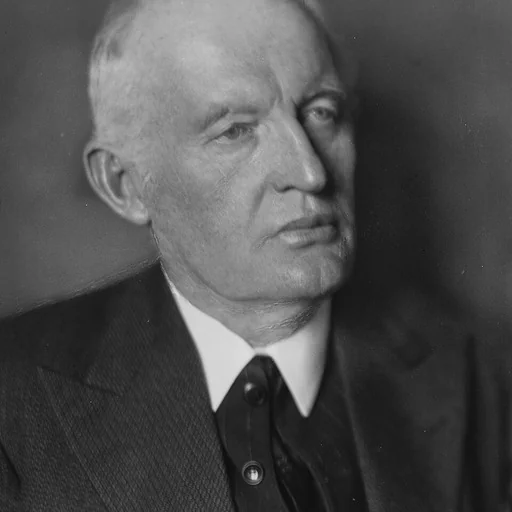
Edvard Munch ( MUUNK; Norwegian: ; 12 December 1863 – 23 January 1944) was a Norwegian painter.