Artwork
Still Life with Tomatoes, Leek and Casseroles
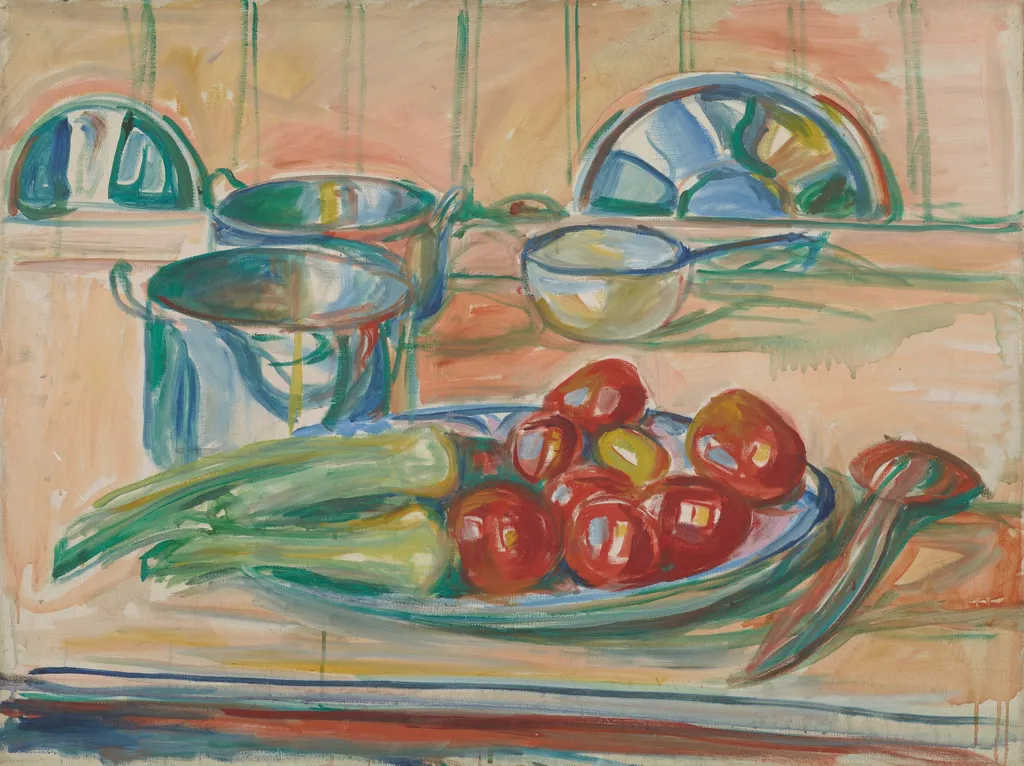
Still Life with Tomatoes, Leek and Casseroles is an oil painting by the Post-Impressionist artist Edvard Munch. It dates from 1926 and is held in the collection of the Munch Museum.
About this work
Overview
Executed in oil, the work reflects a quieter phase of the artist’s career, distinct from his more famous psychological themes.
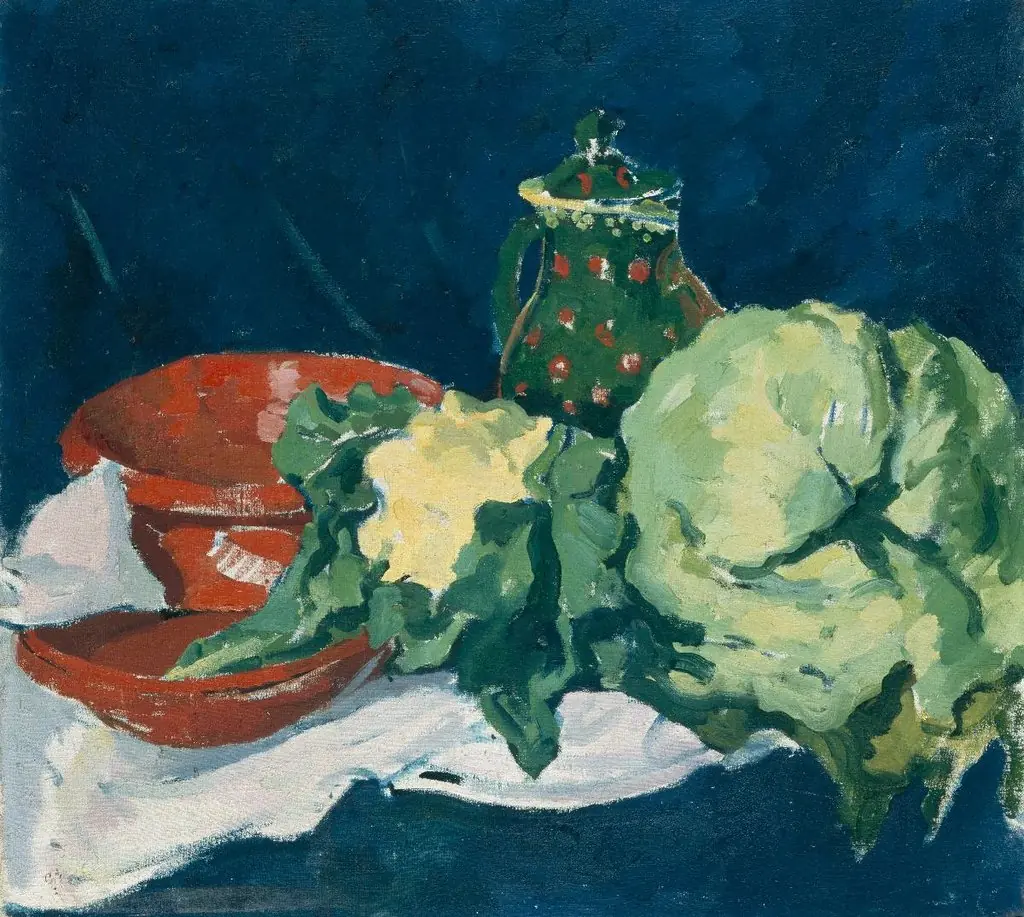
Painted in 1926, this still life by Edvard Munch features common kitchen items: leeks, tomatoes, and ceramic casseroles. Executed in oil, the work reflects a quieter phase of the artist’s career, distinct from his more famous psychological themes. The composition is unadorned, focusing on ordinary objects arranged with deliberate simplicity. Its placement in the Munch Museum underscores its role in documenting the breadth of his output beyond symbolic imagery.
Subject & Meaning
The arrangement of vegetables and cookware carries no overt narrative or allegory. Rather than evoking anxiety or existential dread, the painting presents domestic tranquility. Munch’s choice of humble, everyday items suggests an interest in the quiet dignity of routine. The absence of human presence invites contemplation of the material world, grounding his later work in sensory observation rather than emotional turmoil.
Technique & Style
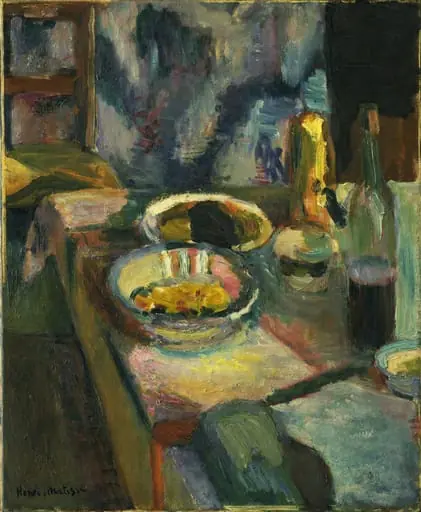
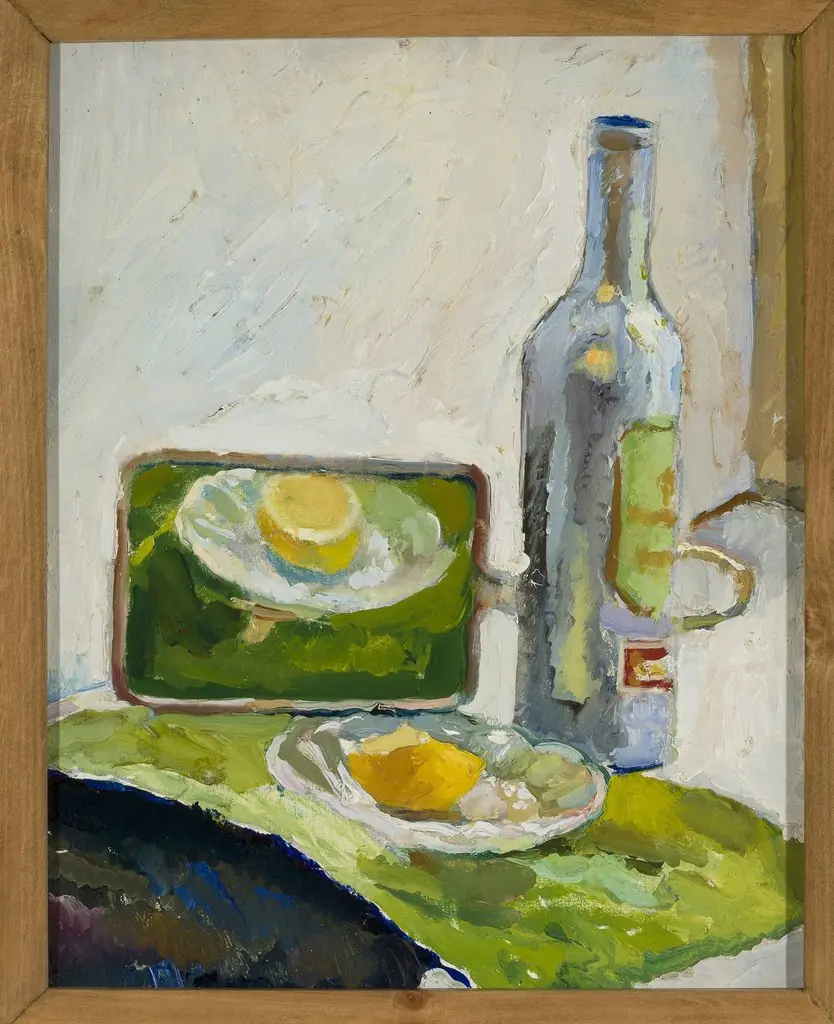
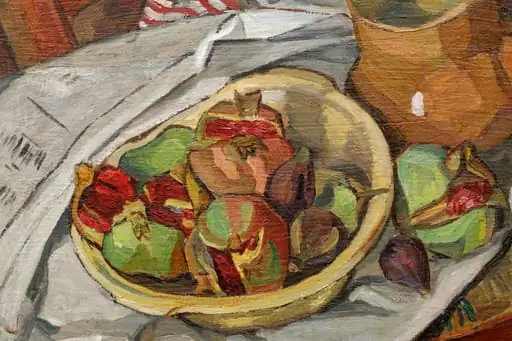
Munch applied oil paint with loose, energetic brushwork, emphasizing texture over precision. Thick strokes define the leafy greens of the leeks and the glossy skin of the tomatoes, while the casseroles are rendered with broader, flatter planes. The palette is restrained—earthy greens, muted reds, and browns—creating a somber harmony. Visible brushmarks convey immediacy, aligning the work with post-impressionist concerns for tactile surface and personal expression.
History & Provenance
Created during Munch’s later years, the painting remained in his personal collection until his death in 1944. It was later transferred to the Munch Museum in Oslo, established to preserve and exhibit his artistic legacy. The work’s inclusion in the museum’s permanent holdings reflects its value as a record of his evolving interests, particularly his return to still life after decades of psychological portraiture.
Context
By the 1920s, Munch had moved away from the intense symbolism of his youth. Influenced by a lifetime of personal loss and a growing interest in nature and domesticity, he turned to simpler subjects. This still life aligns with broader European trends in which artists revisited everyday scenes with renewed attention to materiality and gesture, distancing themselves from earlier avant-garde extremes.
Legacy
Though less known than his expressive figures, this painting contributes to understanding Munch’s full artistic range. It demonstrates his ability to convey depth through restraint, revealing that his engagement with emotion extended beyond overt drama. The work remains a quiet testament to his lifelong exploration of perception, form, and the emotional resonance of ordinary things.
Own this work as a print
Artist & collection
Artist
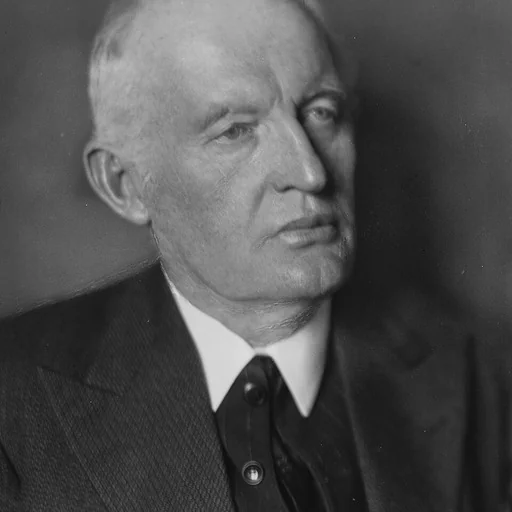
Edvard Munch ( MUUNK; Norwegian: ; 12 December 1863 – 23 January 1944) was a Norwegian painter.