Artwork
The Death of the Bohemian
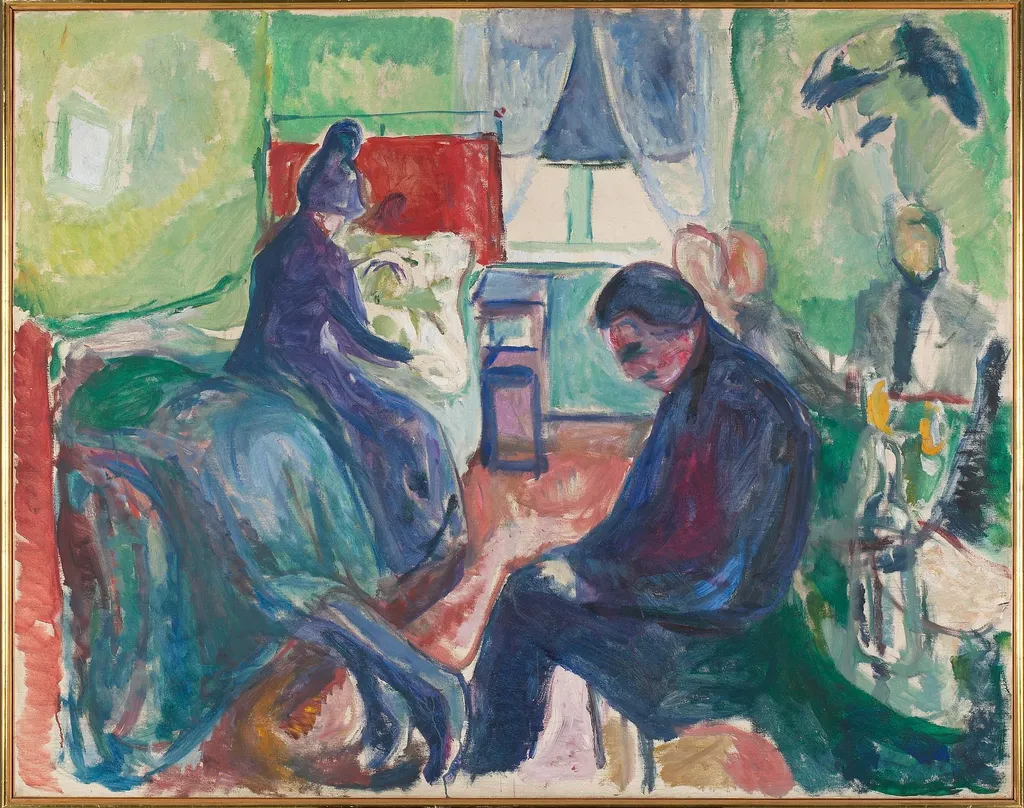
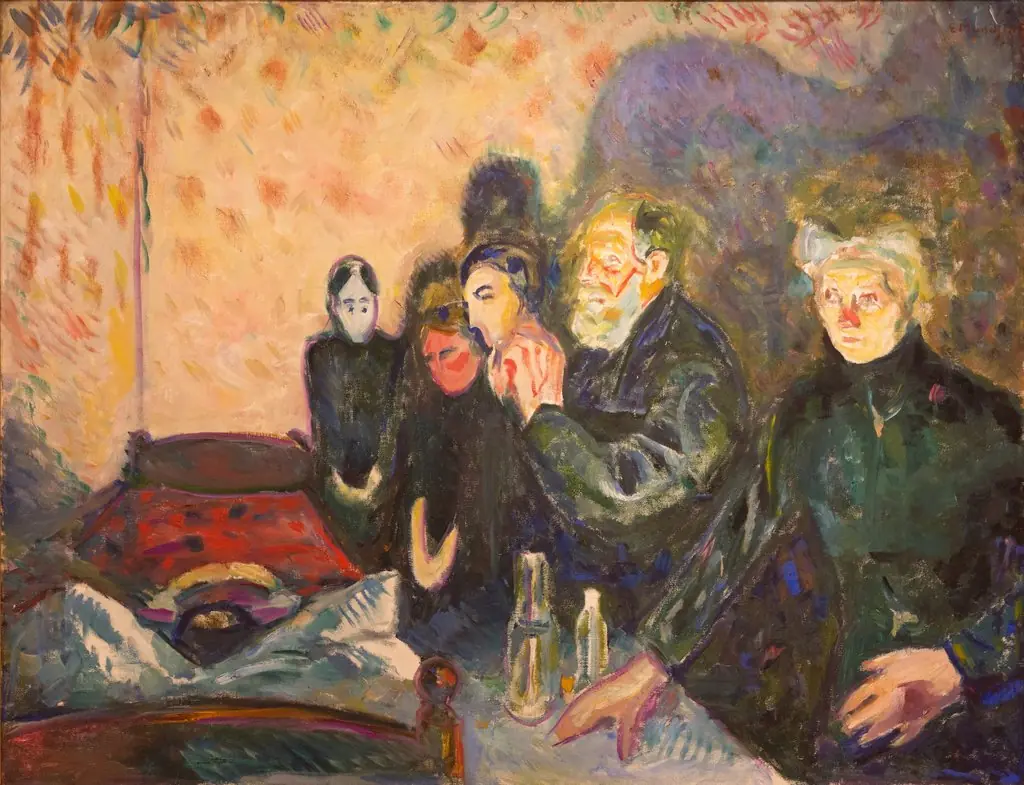
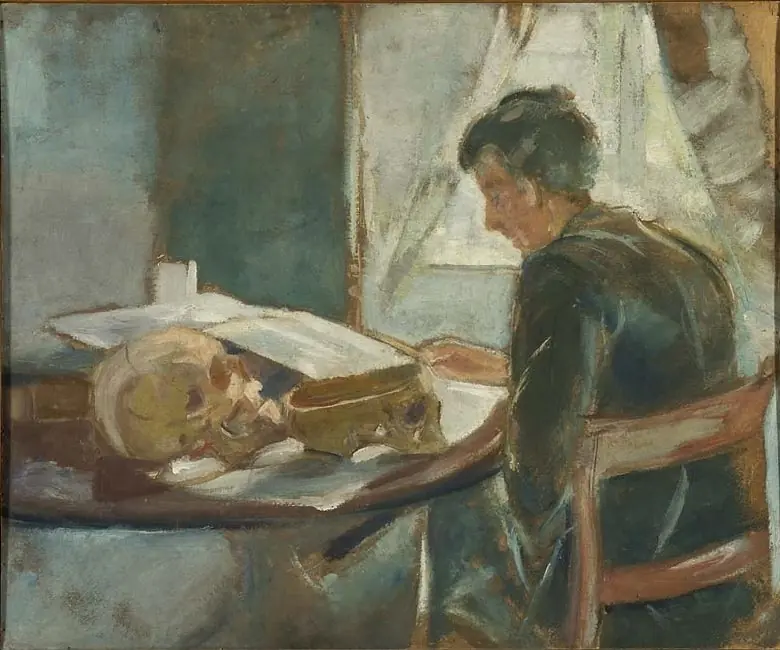
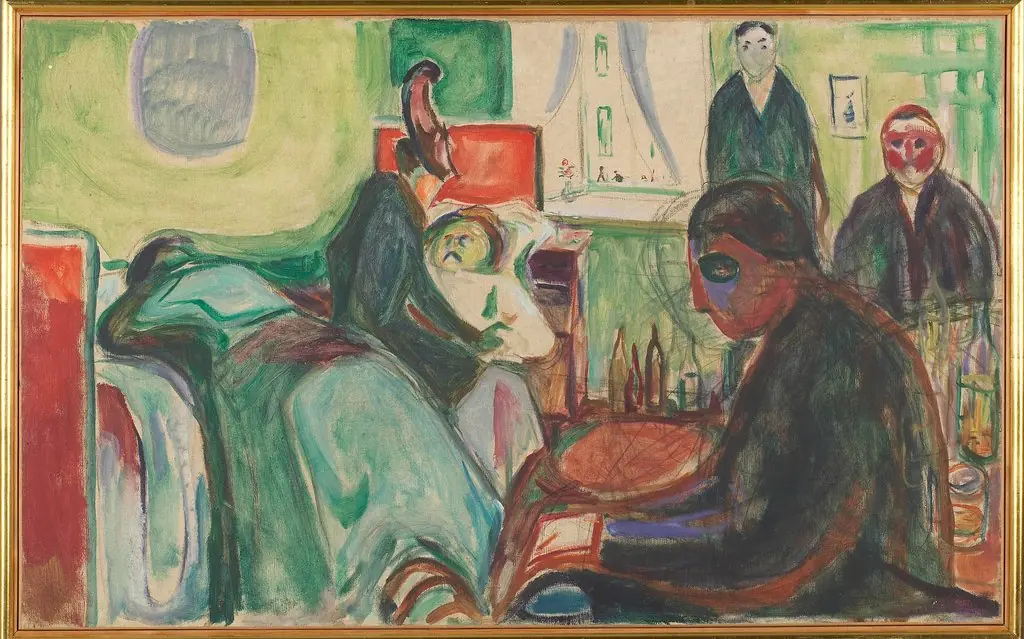
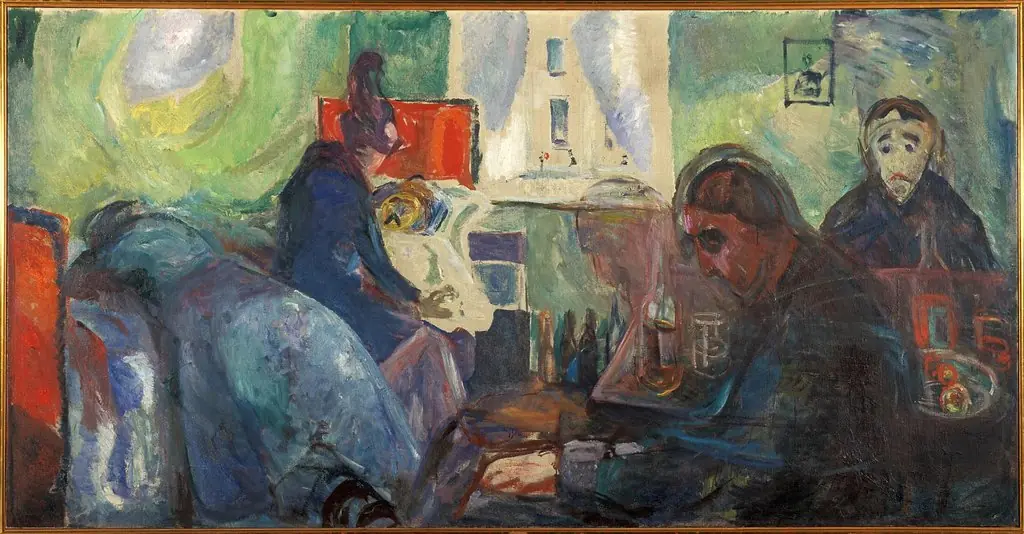
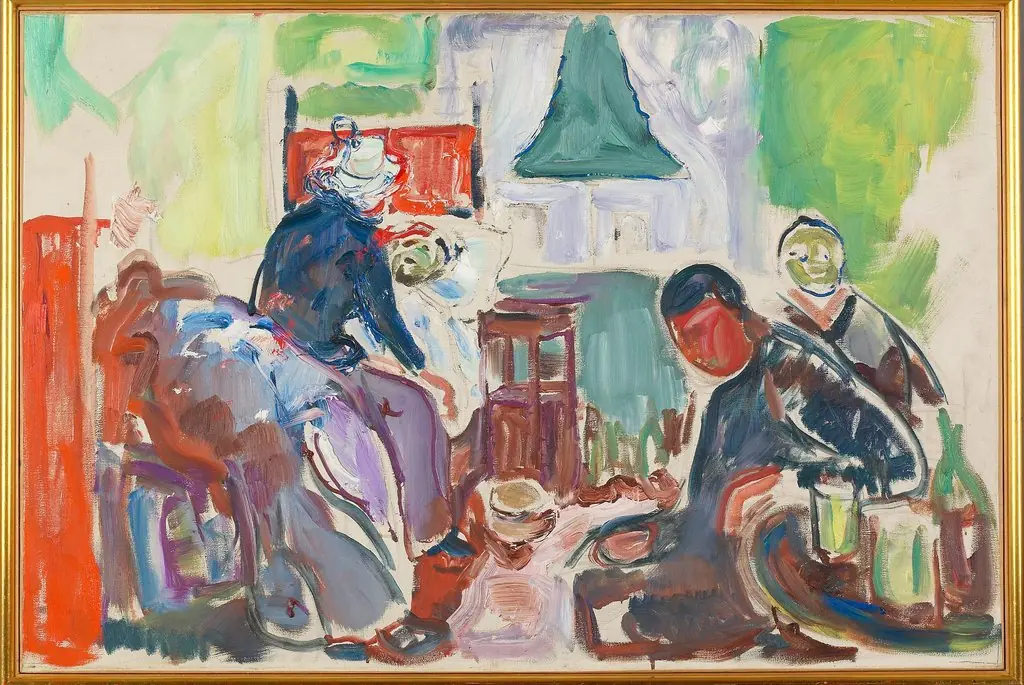
The Death of the Bohemian is an oil painting by the Post-Impressionist artist Edvard Munch. It dates from 1915 and is held in the collection of the Munch Museum.
About this work
Overview
Munch, deeply shaped by personal grief and illness, used the medium to explore emotional states rather than literal narratives.
Painted in 1915 by Edvard Munch, this oil on canvas work captures a moment of private mourning. Munch, deeply shaped by personal grief and illness, used the medium to explore emotional states rather than literal narratives. The painting is part of the Munch Museum’s permanent collection in Oslo, reflecting its significance in his later oeuvre. Its composition avoids theatricality, focusing instead on quiet, internalized sorrow.
Subject & Meaning
The figure, cloaked in dark clothing, sits slumped on the floor, head bowed as if overwhelmed by loss. The scene suggests the aftermath of death, though no corpse is visible. The man’s isolation and stillness imply a psychological weight—grief as an enduring presence. Objects in the room, familiar yet unremarkable, serve as silent witnesses, reinforcing the intimacy and solitude of the moment.
Technique & Style
Munch employed loose, expressive brushwork and heightened color to convey emotional tension. The room’s walls and furnishings are rendered in vivid, non-naturalistic hues—greens, reds, and yellows—that clash with the figure’s somber tones. This contrast amplifies the sense of inner dissonance. The brushstrokes are deliberate yet fluid, avoiding detail in favor of mood, aligning with his post-impressionist approach to psychological realism.
History & Provenance
Created during Munch’s mature period, the painting emerged after decades of personal trauma and artistic experimentation. It was acquired by the Munch Museum upon its founding in 1963, having remained in the artist’s possession until his death in 1944. The work’s provenance is well-documented, reflecting Munch’s careful stewardship of his legacy and his desire to preserve his emotional narratives intact.
Context
In 1915, Munch was navigating the aftermath of World War I and his own declining health. His work increasingly turned inward, away from public themes toward private grief. This painting reflects a broader shift in his art: less about societal anxiety, more about the quiet, inescapable weight of personal loss. It aligns with contemporaneous European introspective art, though rooted in his unique psychological lens.
Legacy
Though less widely known than 'The Scream,' this painting exemplifies Munch’s enduring focus on emotional authenticity. It influenced later artists exploring psychological depth through color and form, particularly in Nordic expressionism. Its quiet power lies in its restraint—no grand gestures, only the weight of absence. It remains a key example of how personal sorrow can be rendered with universal resonance.
Artist & collection
Artist
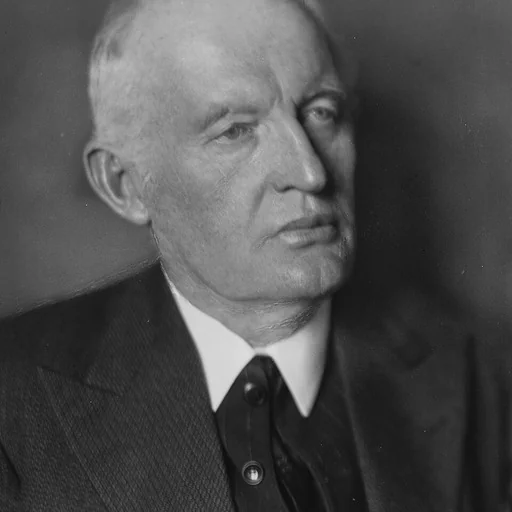
Edvard Munch ( MUUNK; Norwegian: ; 12 December 1863 – 23 January 1944) was a Norwegian painter.