Artwork
The Wedding of the Bohemian
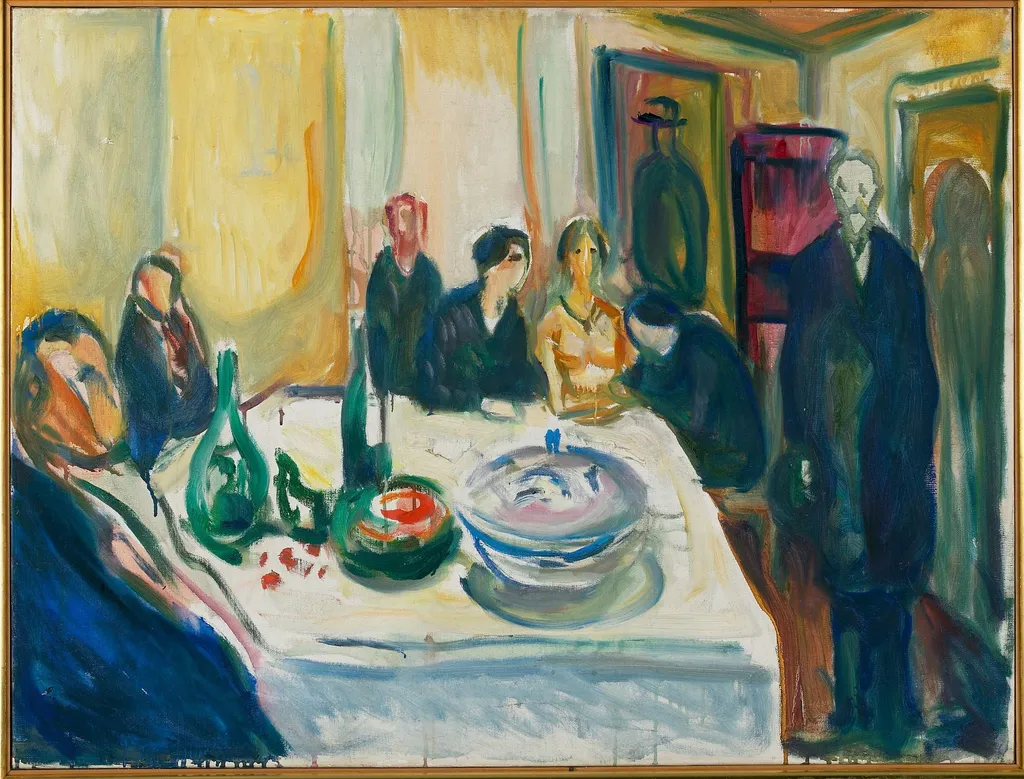
The Wedding of the Bohemian is an oil painting by the Post-Impressionist artist Edvard Munch. It dates from 1927 and is held in the collection of the Munch Museum.
About this work
Overview
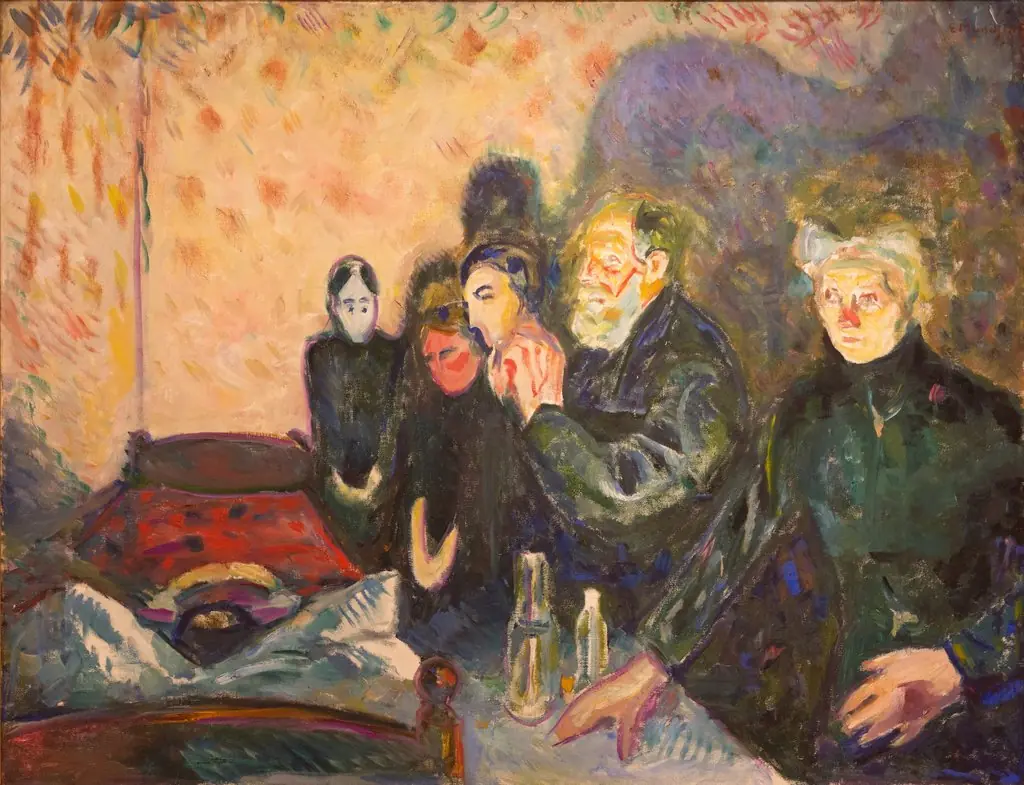
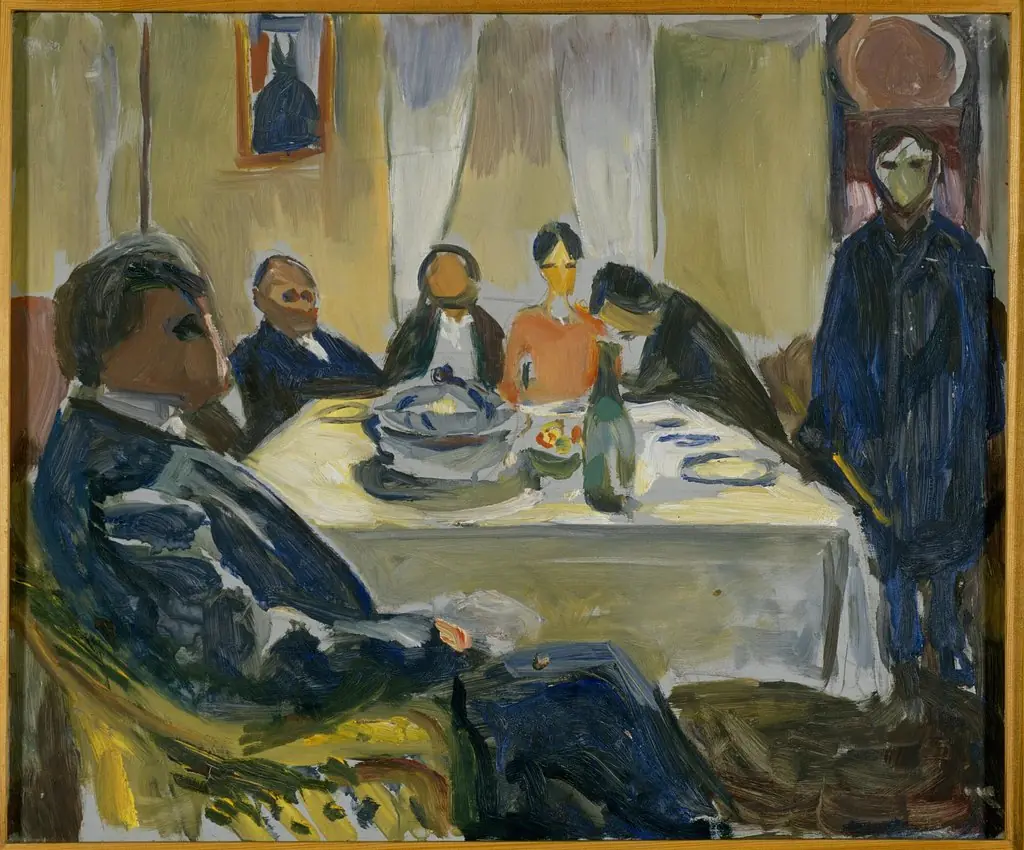
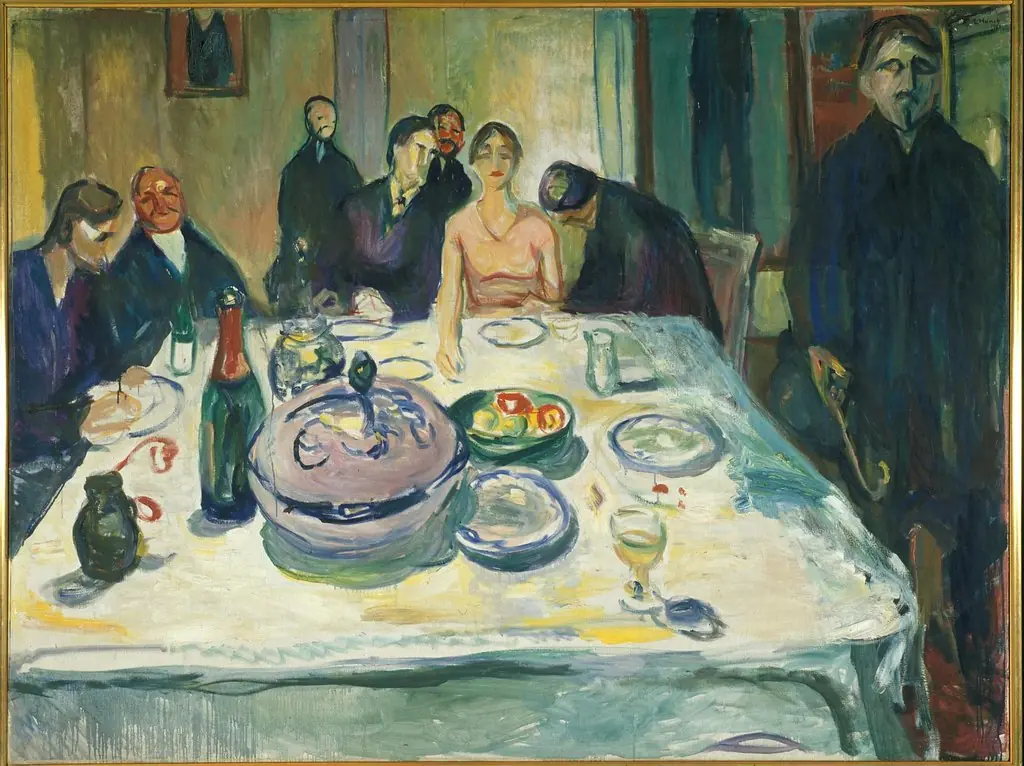
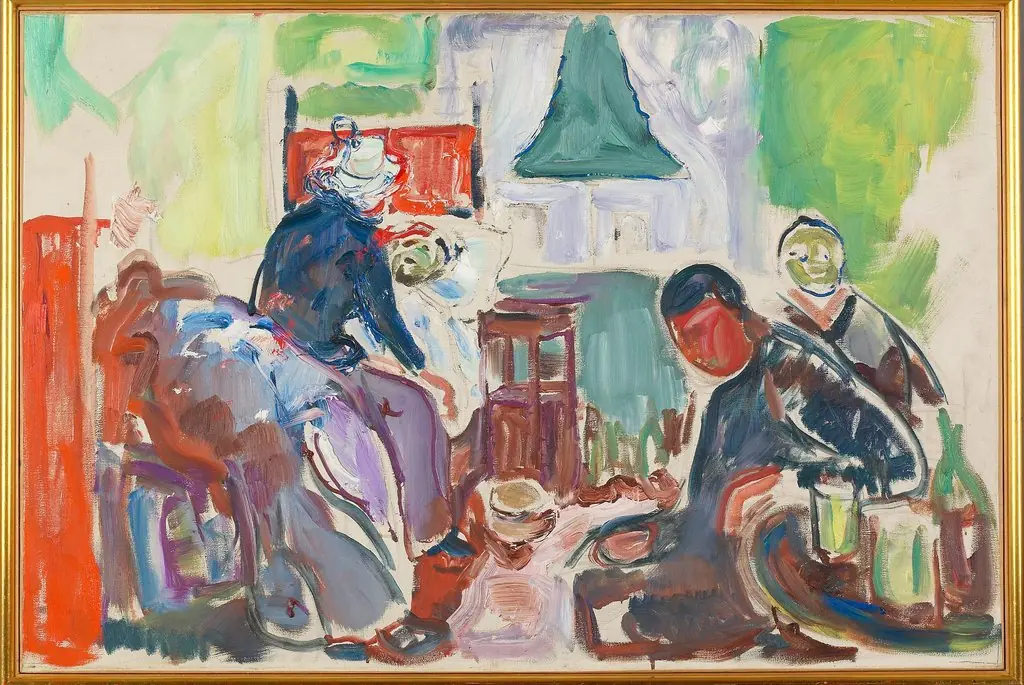
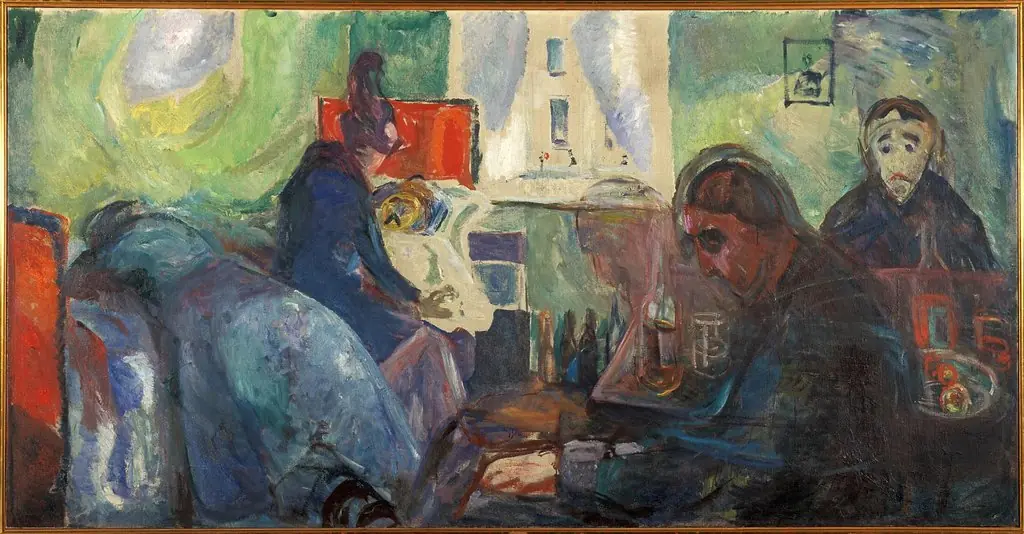
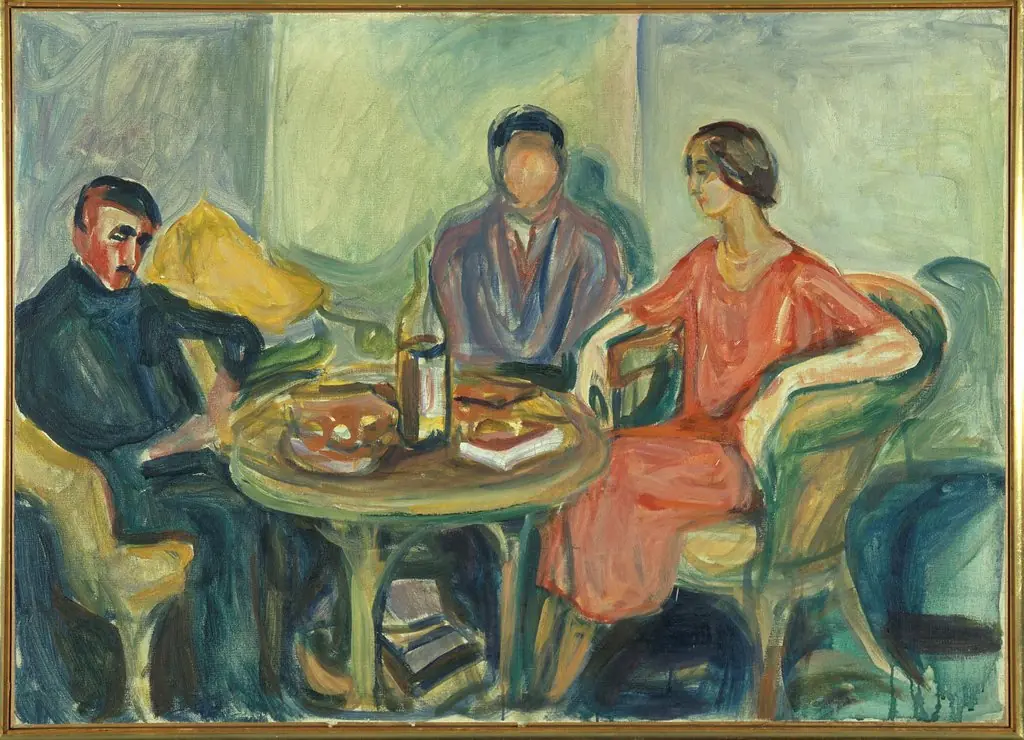
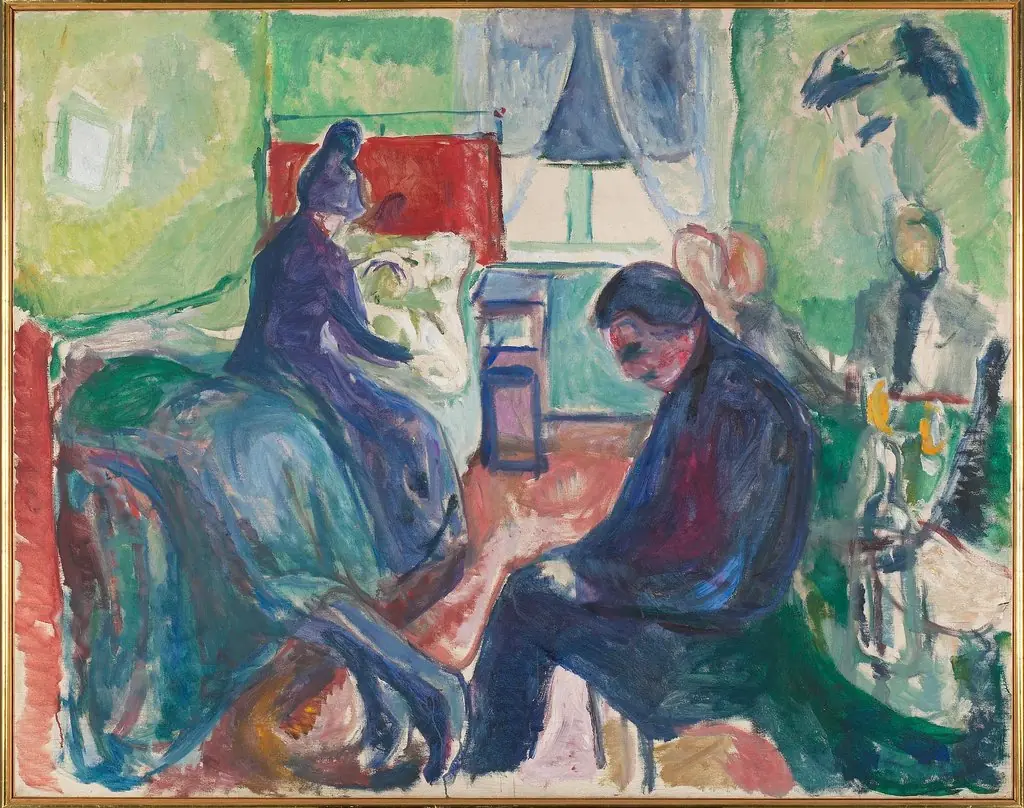
Created in 1927, *The Wedding of the Bohemian* is an oil painting by Norwegian artist Edvard Munch. Executed in a post‑impressionist idiom, the work presents a quiet interior scene centered on a group gathered around a table, rendered with muted tones and soft brushwork that convey a contemplative mood.
Subject & Meaning
The composition shows several figures in dark attire seated at a table covered with a white cloth, their faces indistinct, suggesting anonymity or introspection. The setting—a room with yellow walls and a doorway—frames the gathering as a moment of subdued reflection rather than a festive celebration, inviting viewers to consider themes of communion and inner dialogue.
Technique & Style
Munch employs a restrained palette of earth‑tones and delicate strokes, allowing the light on the tablecloth and the subtle color shifts on the walls to create depth. The softened edges and lack of facial detail are characteristic of his later style, emphasizing emotional atmosphere over precise representation.
History & Provenance
The painting is part of the permanent collection of the Munch Museum in Oslo, where it has been displayed since its acquisition. It reflects Munch’s mature period, following his formal training at the Royal School of Art and Design in Kristiania, where his exposure to radical ideas shaped his expressive approach.
Context
Produced during a phase when Munch was exploring genre scenes and interior narratives, the work aligns with his broader interest in the psychological undercurrents of everyday life. The title references a bohemian milieu, hinting at the artist’s ongoing engagement with non‑conformist cultural circles.
Artist & collection
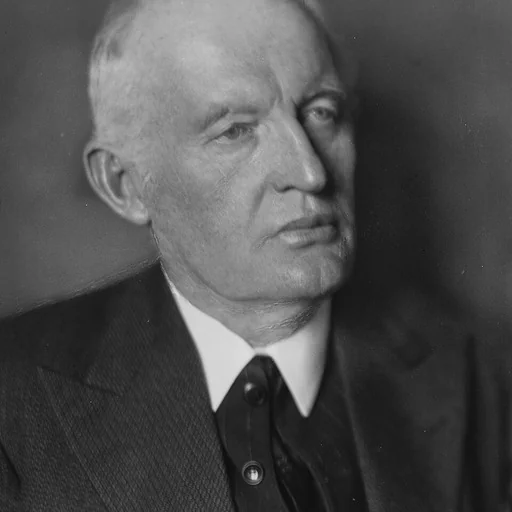
Artist
Edvard Munch ( MUUNK; Norwegian: ; 12 December 1863 – 23 January 1944) was a Norwegian painter.