Artwork
Village by the Sea
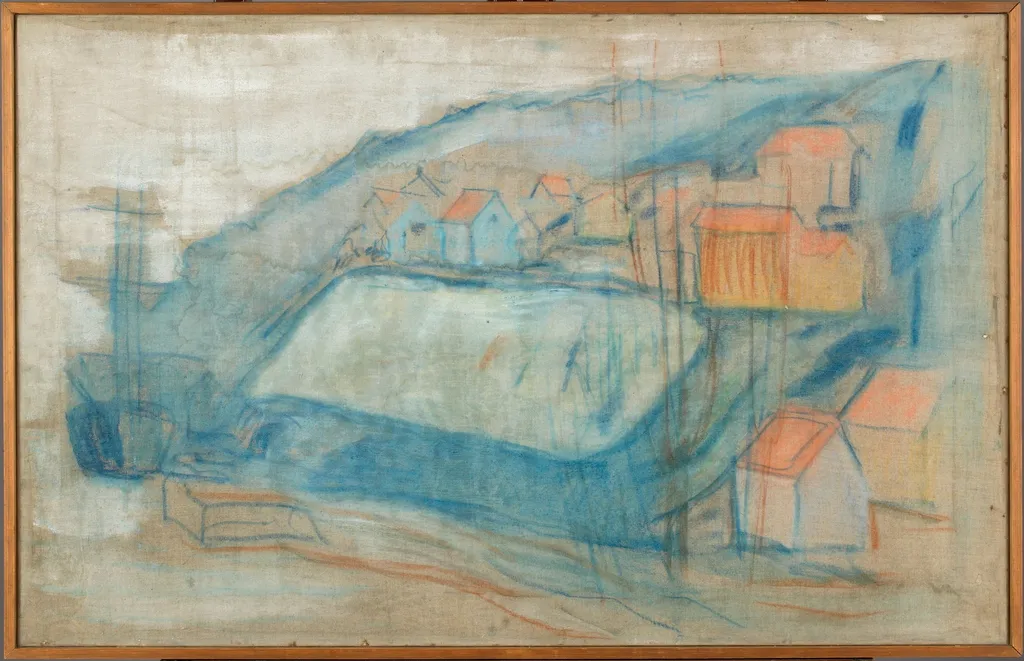
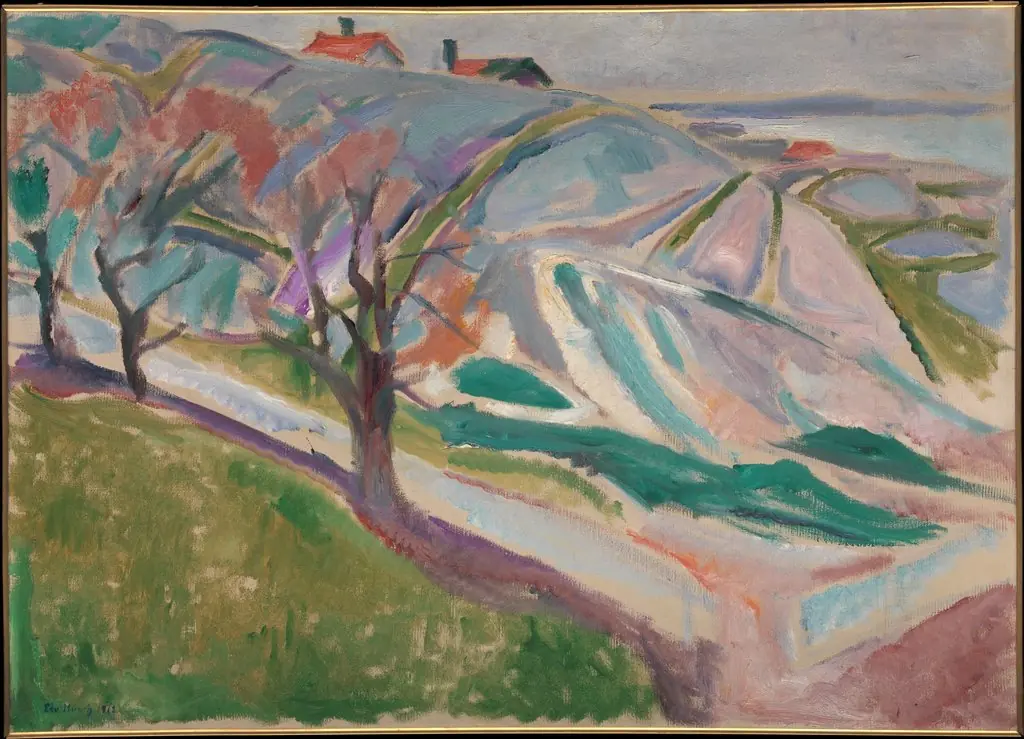
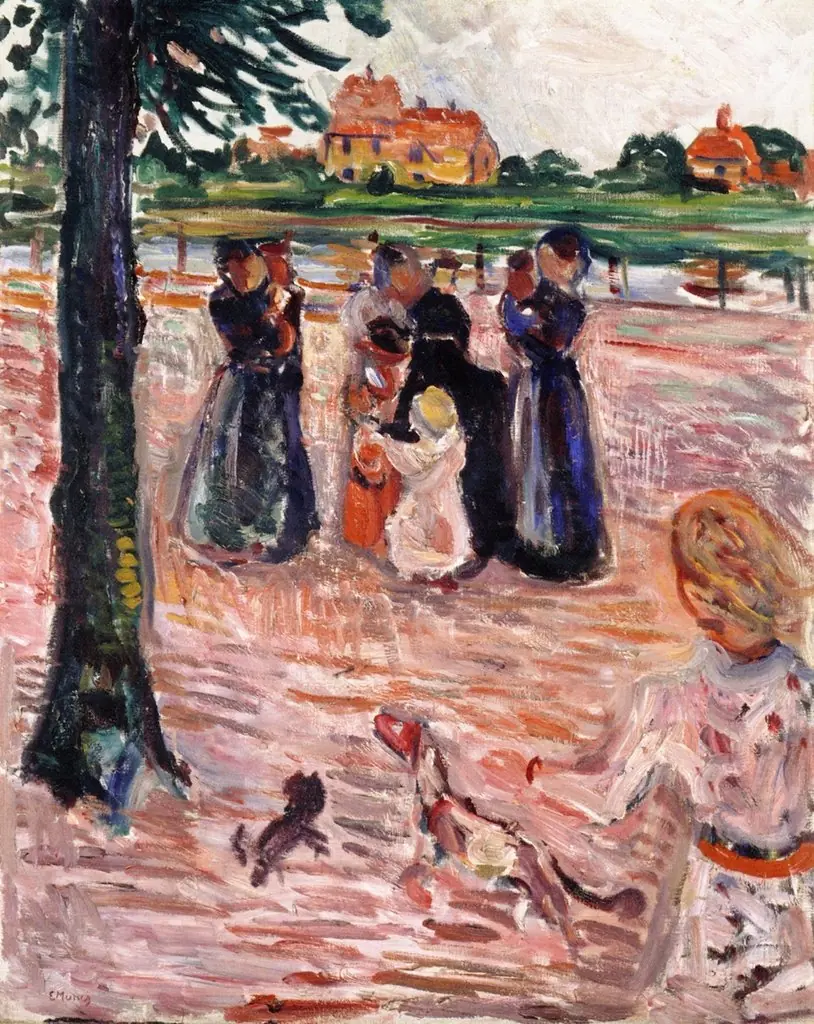
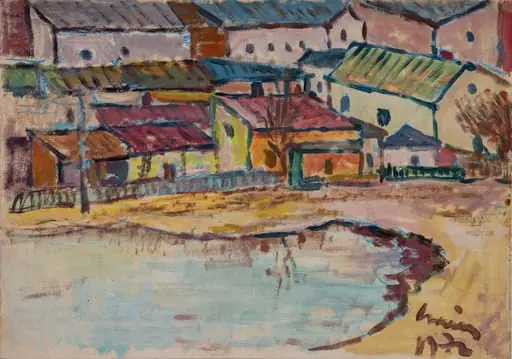
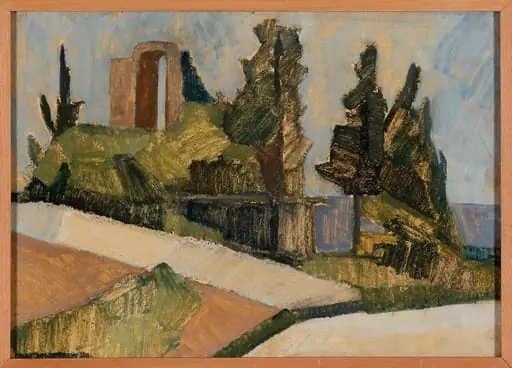
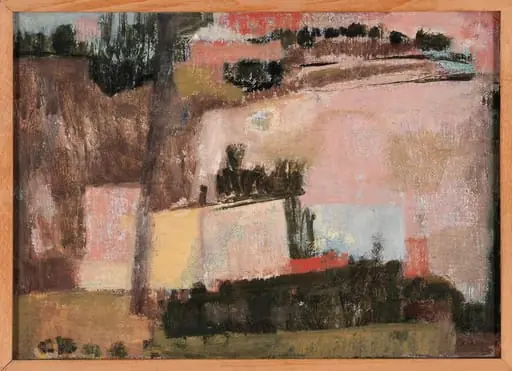
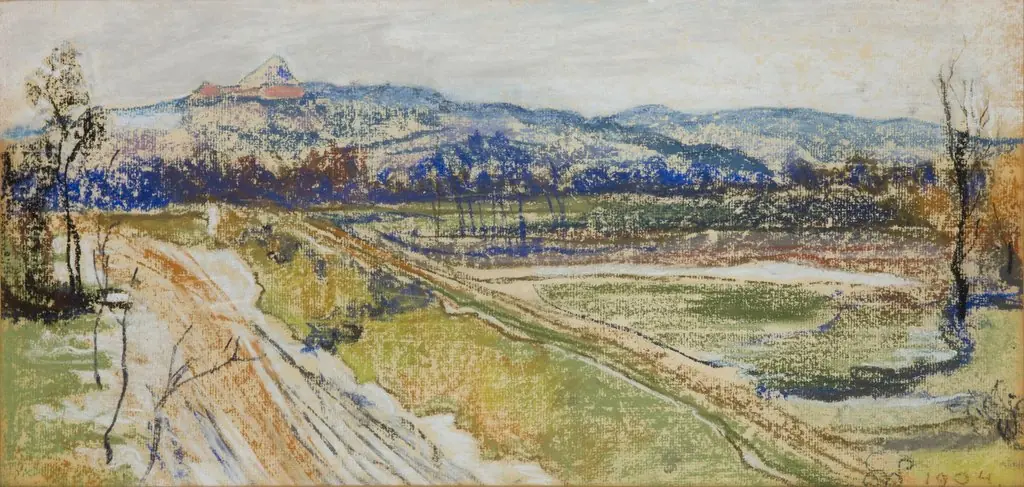
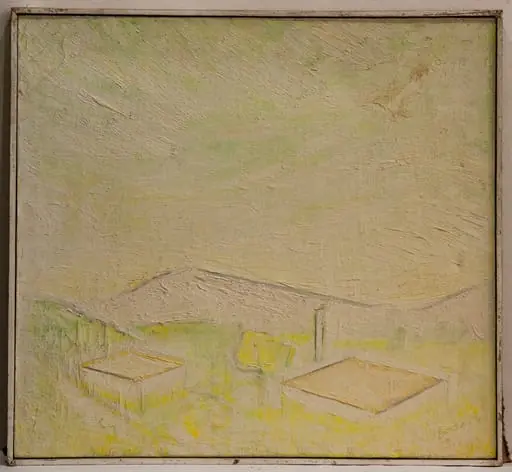
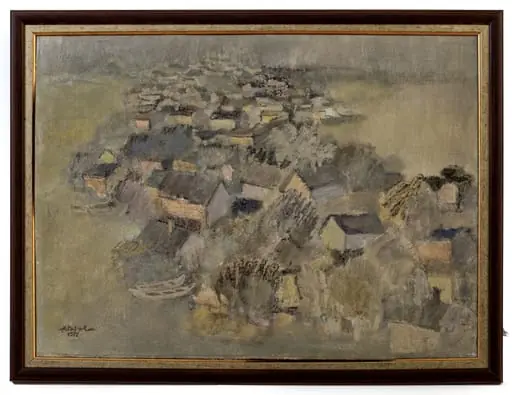
Village by the Sea is a tempera painting by the Post-Impressionist artist Edvard Munch. It dates from 1909 and is held in the collection of the Munch Museum.
About this work
Overview
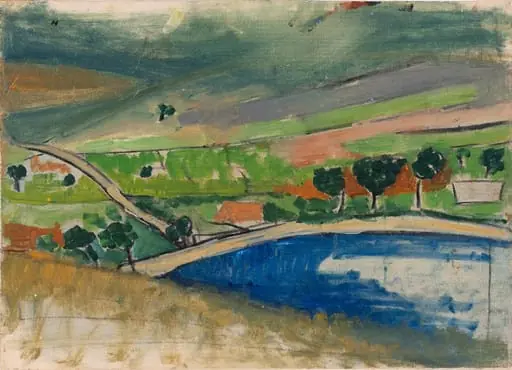
Created in 1909, *Village by the Sea* is a tempera painting by Norwegian artist Edvard Munch. The work depicts a small settlement perched on a hill overlooking a body of water, rendered with a subdued palette and visible brushwork that gives the scene a slightly abstract, dreamlike atmosphere. It is part of the collection of the Munch Museum in Oslo.
Subject & Meaning
The composition presents a quiet coastal village, its rooftops and trees clustered on a slope above the water’s edge. The muted tones and softened forms convey a sense of calm introspection, reflecting Munch’s tendency to infuse ordinary landscapes with emotional resonance.
Technique & Style
Munch employed tempera on canvas, a medium that allows for fine detail and layered color. The painting’s brushstrokes remain discernible, and the colors blend gently, producing the post‑impressionist surface texture that characterises much of his early twentieth‑century work.
History & Provenance
After its completion, the painting entered the holdings of the Munch Museum, the principal institution dedicated to the artist’s oeuvre. The museum acquired the work as part of its effort to preserve Munch’s legacy and to present a comprehensive view of his artistic development.
Context
Munch’s formative years were marked by personal illness and family loss, experiences that shaped his psychological approach to art. Trained at the Royal School of Art and Design in Kristiania (now Oslo), he developed a style that merged personal feeling with broader modernist trends, as seen in this landscape.
Artist & collection

Artist
Edvard Munch ( MUUNK; Norwegian: ; 12 December 1863 – 23 January 1944) was a Norwegian painter.