Artwork
Margine de sat
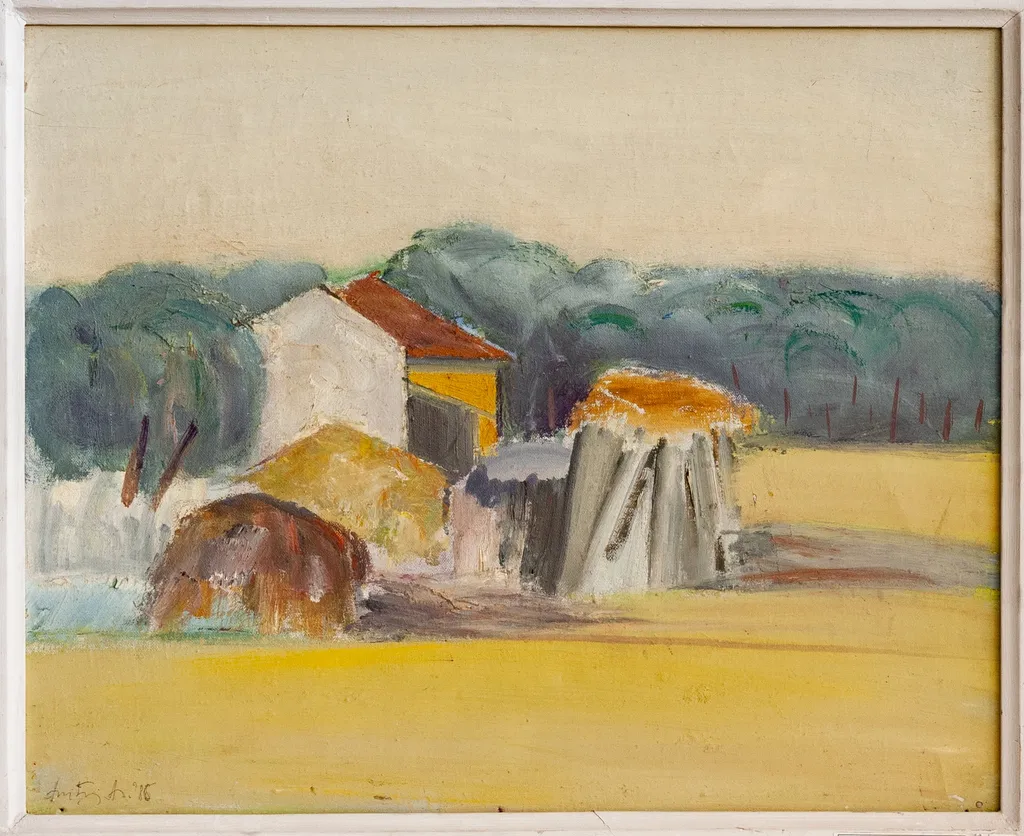
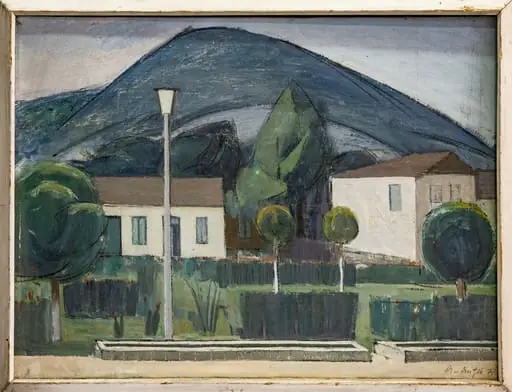
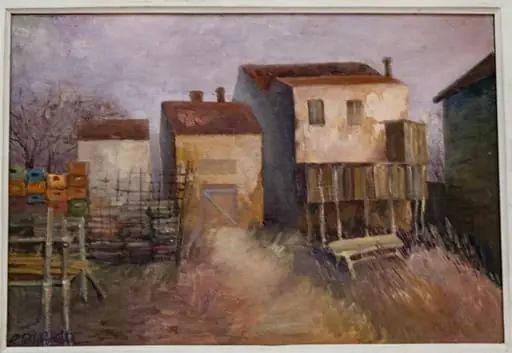
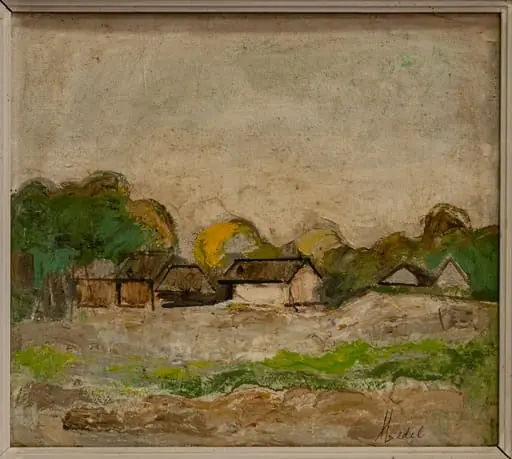
Margine de sat is a print by Aurel Aniței. It is held in the collection of the Gavrila Simion Eco-Museum Research Institute Tulcea. This small landscape depicts a quiet rural setting with a white house and a weathered barn.
About this work
Overview
The palette is restrained, dominated by earth tones and soft shadows, suggesting a moment caught without embellishment.
This small landscape depicts a quiet rural setting with a white house and a weathered barn. The composition is unadorned, focusing on ordinary structures against a muted sky. Painted with minimal detail and loose brushwork, it conveys a sense of immediacy, as if observed in passing. The palette is restrained, dominated by earth tones and soft shadows, suggesting a moment caught without embellishment.
Subject & Meaning
The scene presents no narrative or symbolic intent—only a humble farmstead in quiet repose. The aged barn, leaning wheel, and plain house reflect daily rural life without romanticization. The absence of figures or activity emphasizes stillness, inviting contemplation of ordinary spaces often overlooked. The work values presence over drama, honoring the quiet dignity of the countryside.
Technique & Style
Brushstrokes are swift and unrefined, applied with a sense of spontaneity. Paint is laid thinly in places, allowing the canvas to show through, while thicker applications suggest texture in the barn’s wood and metal. The sky is suggested rather than rendered, with faint washes of blue and green. This approach aligns with a direct, observational method, prioritizing sensation over precision.
History & Provenance
The work’s origin is undocumented, with no known exhibition history or collector lineage. It appears to be a private study, possibly created during a period of travel or residence in a rural area. Its modest scale and informal handling suggest it was not intended for public display, but rather as a personal record of a fleeting moment in the landscape.
Context
Created during a time when many artists were turning toward everyday subjects, this piece reflects a broader shift away from grand historical or idealized scenes. Its simplicity aligns with regionalist and plein-air traditions, where the act of painting outdoors emphasized direct experience. The lack of polish mirrors a growing interest in authenticity over polish in late 19th- to early 20th-century art.
Legacy
Though not widely known, the painting exemplifies a quiet strain of modern landscape practice that valued immediacy and restraint. Its approach anticipates later movements that embraced gesture and materiality over detail. For viewers drawn to its rawness, it serves as an accessible entry point to techniques like impasto and expressive brushwork found in broader modernist traditions.
Artist & collection
Artist
Romanian printmaker Aurel Aniței made calm landscapes in the mid-20th century, leaving numbered etchings and woodcuts of villages and river edges.
Museum
Gavrila Simion Eco-Museum Research Institute Tulcea
Continue through works from the same source collection.