Artwork
Woman with Sick Child. Inheritance
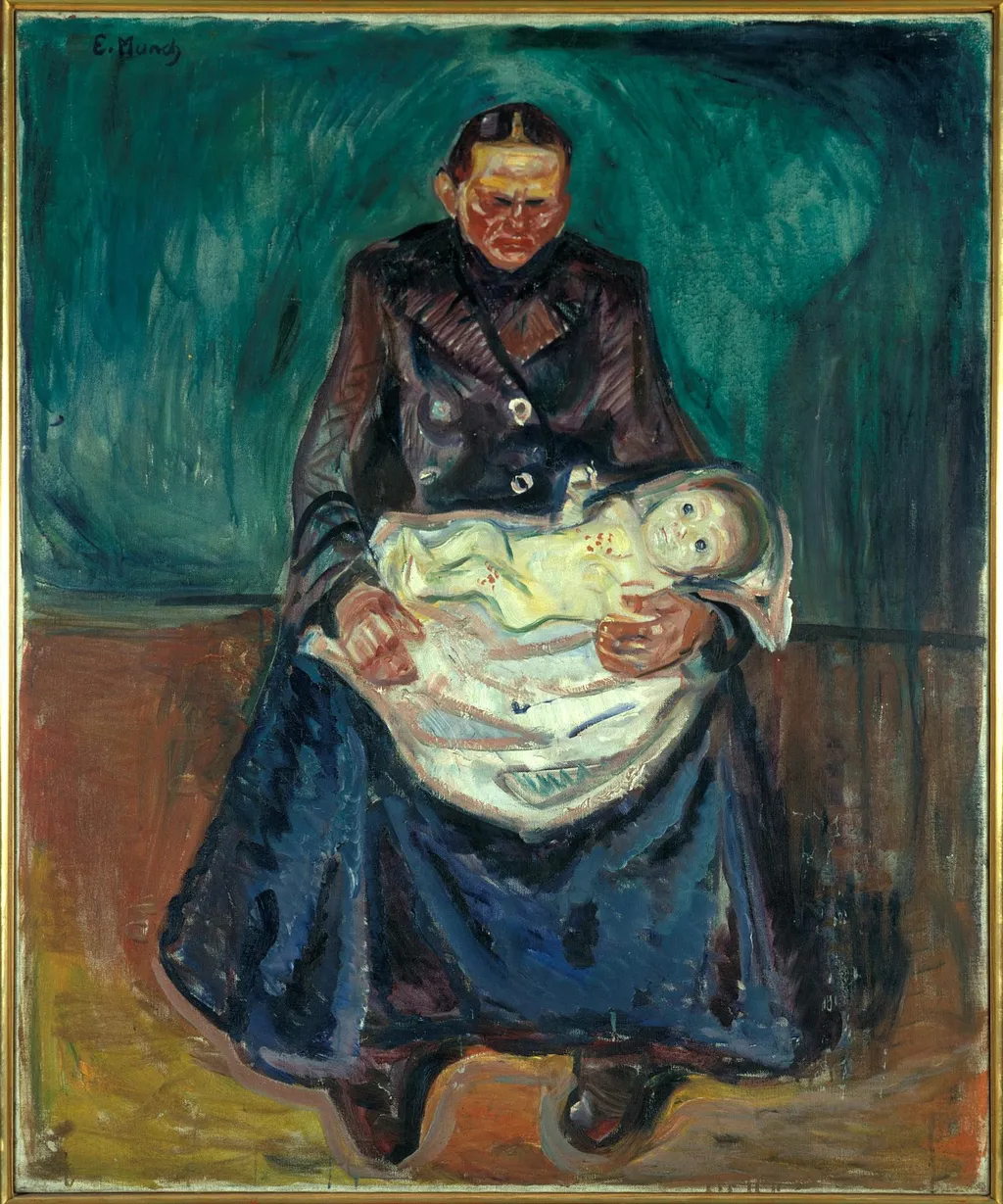
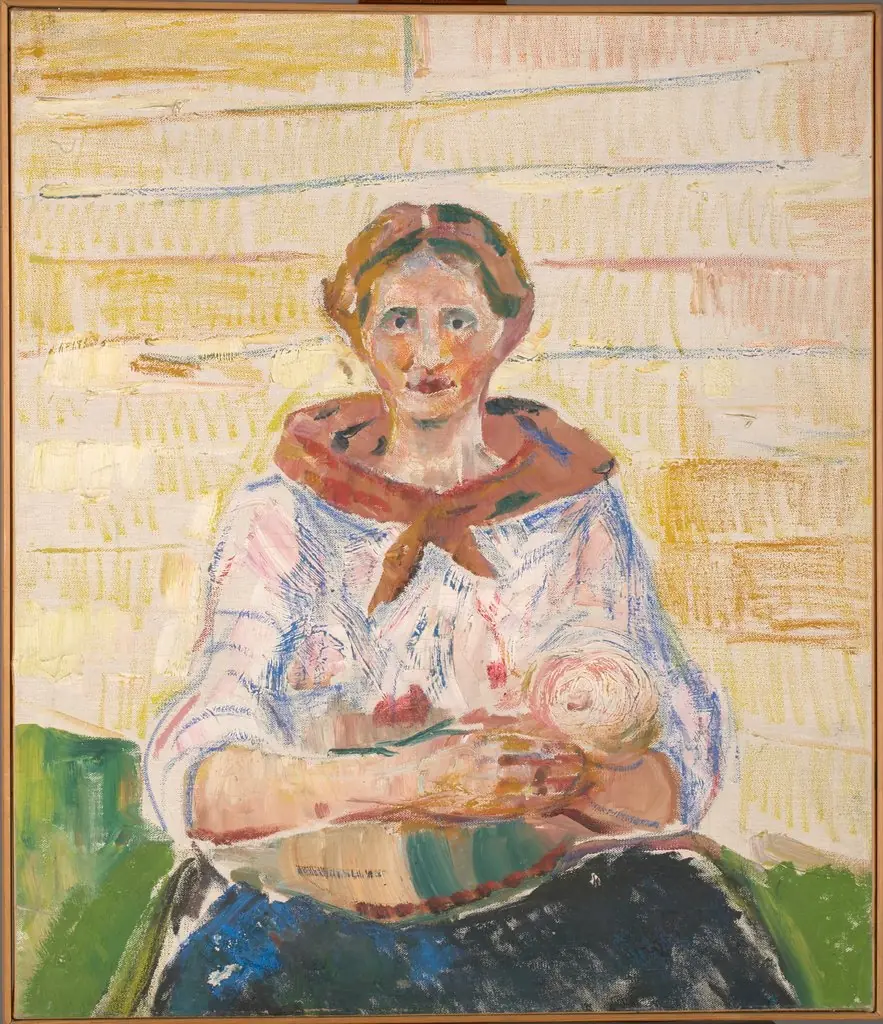
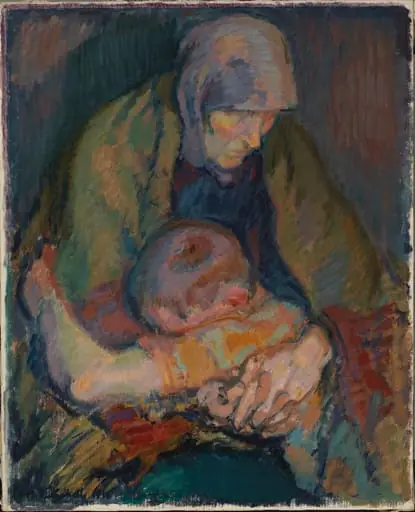
Woman with Sick Child. Inheritance is an oil painting by the Post-Impressionist artist Edvard Munch. It dates from 1905 and is held in the collection of the Munch Museum.
About this work
Overview
The painting resides in the Munch Museum in Oslo, where it is preserved as a key example of the artist’s emotionally charged oeuvre.
Painted in 1905 by Norwegian artist Edvard Munch, this oil-on-canvas work portrays a mother cradling a sick child. It is part of a broader series exploring themes of illness, grief, and familial bonds. The painting resides in the Munch Museum in Oslo, where it is preserved as a key example of the artist’s emotionally charged oeuvre. Munch’s personal history of loss deeply informed his artistic focus on vulnerability and suffering.
Subject & Meaning
The scene captures a quiet moment of despair: a woman, dressed in dark, constricting clothing, holds her pale, motionless child wrapped in white. Her face reveals anguish, while the child’s stillness suggests resignation or decline. The composition avoids narrative detail, emphasizing emotional weight over circumstance. The work conveys the isolating nature of illness within the family, reflecting Munch’s preoccupation with mortality and inherited suffering.
Technique & Style
Munch employs thick, expressive brushwork and a restrained palette dominated by muted greens, blues, and deep browns. Forms are simplified, with contours softened to evoke psychological tension rather than physical realism. The background’s hazy washes dissolve into the figures, blurring boundaries between subject and environment. This approach aligns with post-impressionist tendencies, prioritizing inner experience over external accuracy.
History & Provenance
Created during Munch’s mature period, the painting emerged after years of personal trauma and artistic experimentation. It was retained by the artist until his death in 1944, after which it entered the collection of the Munch Museum, established in Oslo to house his legacy. The work has remained largely unchanged in public view since its acquisition, continuing to serve as a central piece in exhibitions of his thematic cycles.
Context
Munch’s work in this era responded to broader European anxieties about disease, death, and the limits of medical knowledge. His own childhood, marked by the deaths of his mother and sister from tuberculosis, shaped his recurring motifs of illness and mourning. While contemporaries pursued formal innovation, Munch turned inward, using art to process inherited grief and the fragility of life.
Legacy
The painting endures as a quiet testament to emotional endurance. It influenced later expressionist artists who sought to externalize psychological states through form and color. Though not widely reproduced in popular culture, it remains a touchstone in studies of modern art’s engagement with suffering. Its power lies in its restraint—offering no resolution, only presence.
Artist & collection
Artist
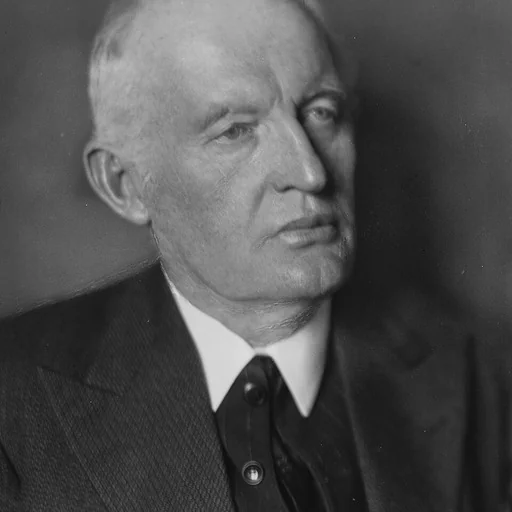
Edvard Munch ( MUUNK; Norwegian: ; 12 December 1863 – 23 January 1944) was a Norwegian painter.