Artwork
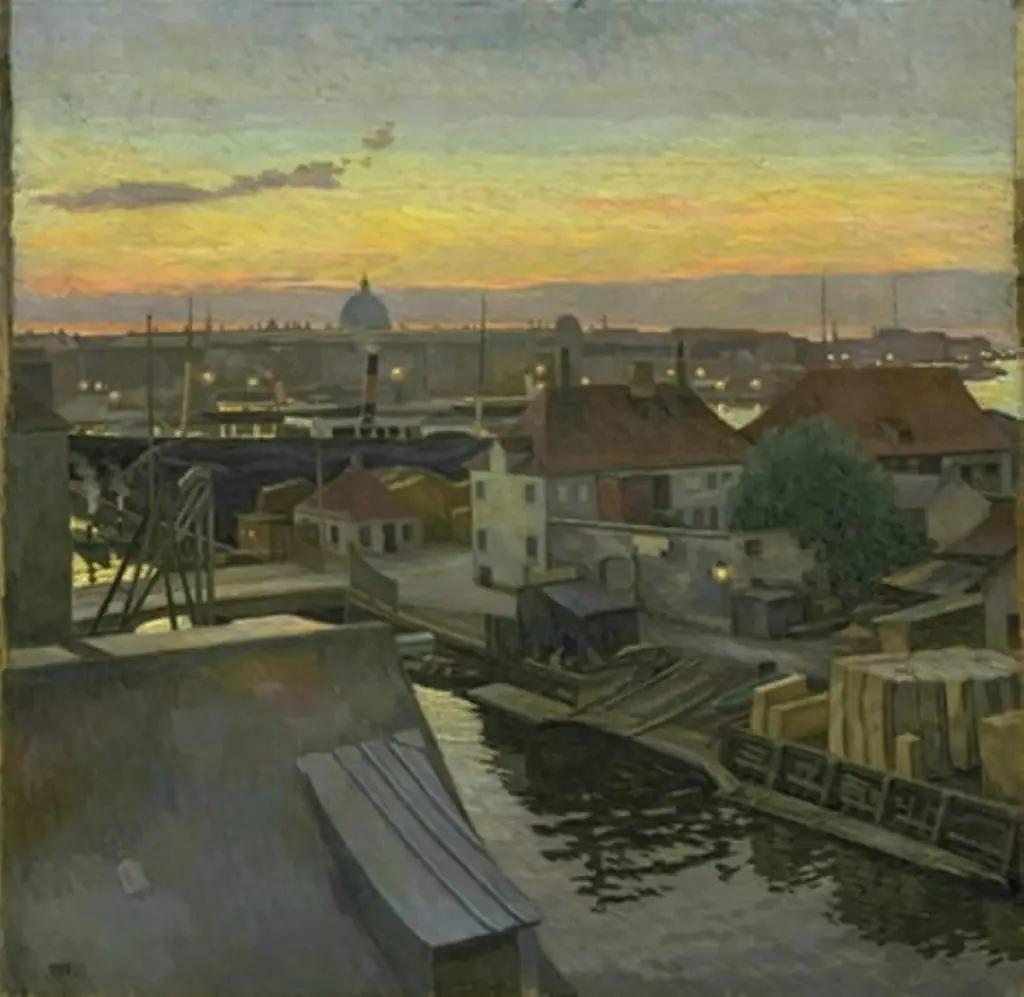
From Quai de la Tournelle, Paris
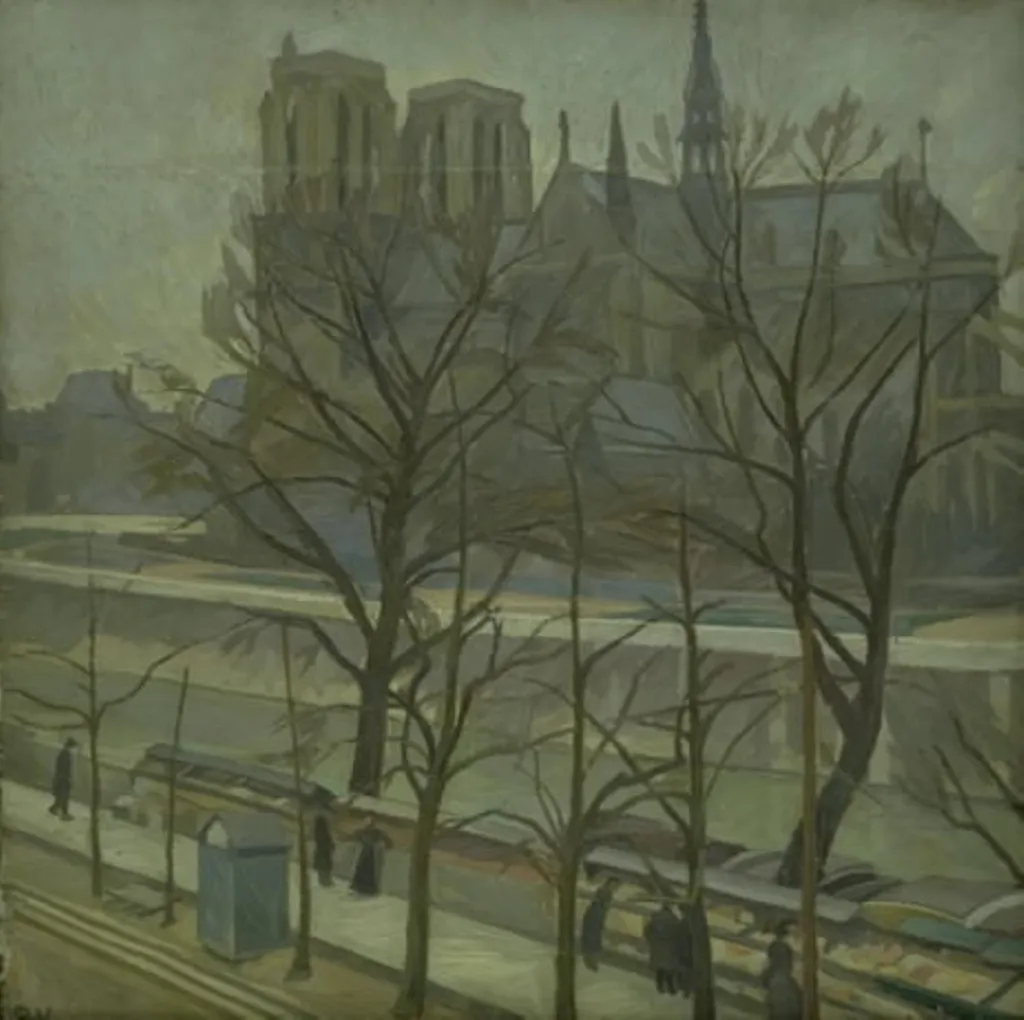
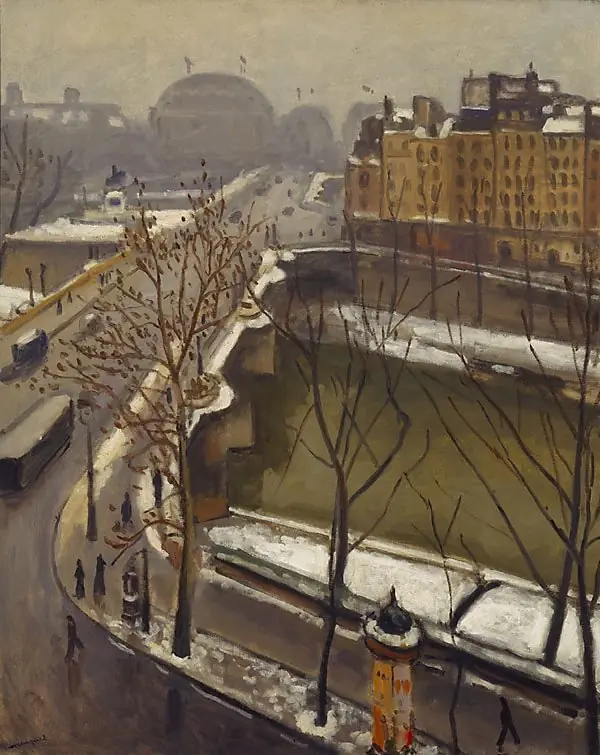
From Quai de la Tournelle, Paris is an oil painting by the Post-Impressionist artist Edvard Weie. It dates from 1912 and is held in the collection of the Statens Museum for Kunst.
About this work
Overview
Edvard Weie, a Danish artist active in the early 20th century, painted this urban landscape in 1912 during a stay in Paris.
Edvard Weie, a Danish artist active in the early 20th century, painted this urban landscape in 1912 during a stay in Paris. Executed in oil on canvas, the work captures a quiet moment along the Seine’s left bank. It belongs to the collection of Statens Museum for Kunst in Copenhagen and reflects Weie’s engagement with modern European painting trends of the period, particularly those moving beyond Impressionism.
Subject & Meaning
The scene presents a view from Quai de la Tournelle toward the Île de la Cité, dominated by the spires of Notre-Dame Cathedral rising above dense, smaller structures. Bare winter trees line the foreground street, where figures move subtly through the scene. The composition conveys a sense of solitude and pause, emphasizing the city’s architectural weight and the stillness of a cold, overcast day rather than its bustle.
Technique & Style
Weie employed a restrained palette of grays, browns, and muted greens, avoiding vivid contrasts in favor of tonal harmony. Brushwork is deliberate but not overly detailed, suggesting form through subtle shifts in value rather than sharp definition. The composition balances vertical architectural elements with horizontal lines of the riverbank, creating a calm, measured rhythm that aligns with post-Impressionist tendencies toward structural clarity.
History & Provenance
Painted during Weie’s time in Paris, the work entered the collection of Statens Museum for Kunst in Denmark, where it remains today. Weie, who studied in Copenhagen and traveled extensively in Europe, returned to Denmark in the mid-1910s. His recognition grew in the 1920s, culminating in the Eckersberg Medal in 1925, though this painting predates that honor and reflects his formative years abroad.
Context
In 1912, Paris was a hub for artists experimenting with new ways of seeing, from Fauvism to early Cubism. Weie’s approach, however, was more introspective, aligning with quieter modernist currents that favored atmosphere and structure over bold innovation. His work reflects a Danish sensitivity to light and mood, filtered through the urban environment of a city he observed as both visitor and student.
Legacy
Though not widely known outside Denmark, Weie’s urban scenes like this one contribute to a nuanced understanding of Nordic modernism’s engagement with continental Europe. His restrained style and focus on everyday urban quietude distinguish him from more radical contemporaries, offering a contemplative counterpoint to the era’s louder artistic experiments.
Artist & collection
Artist
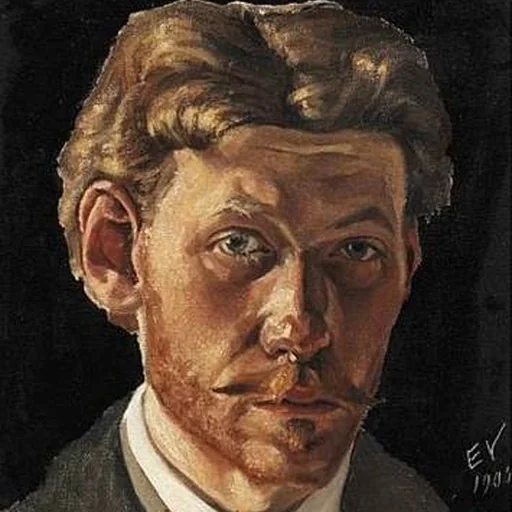
Viggo Thorvald Edvard Weie (18 November 1879 - 9 April 1943) was a Danish Modernist painter. He was a recipient of Eckersberg Medal in 1925. He died during 1943 in Frederiksberg.