Artwork
Self-portrait
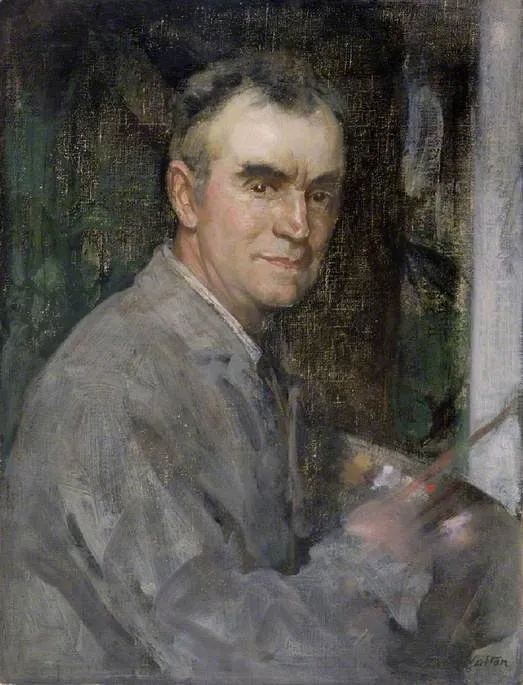
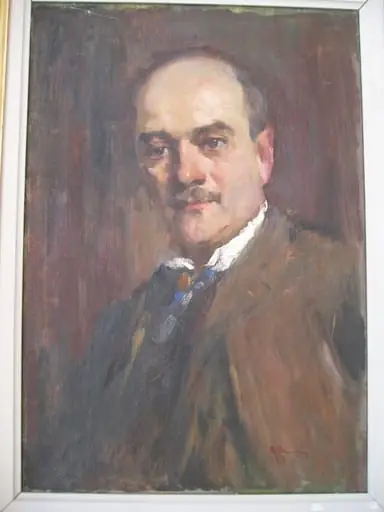
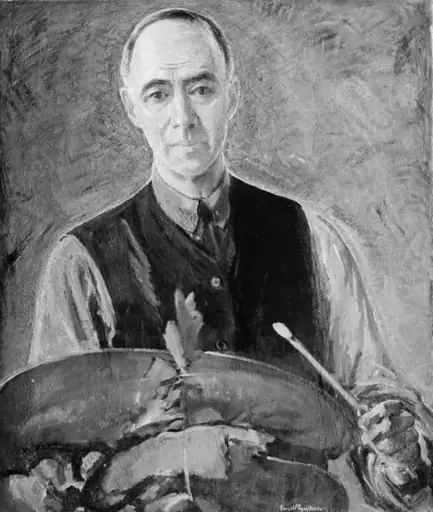
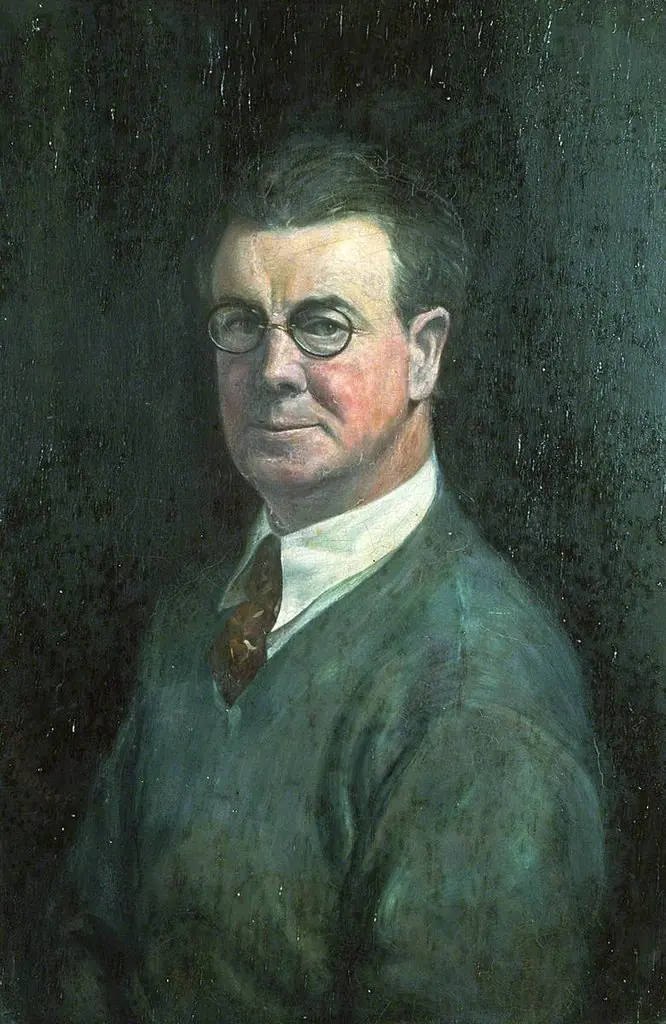
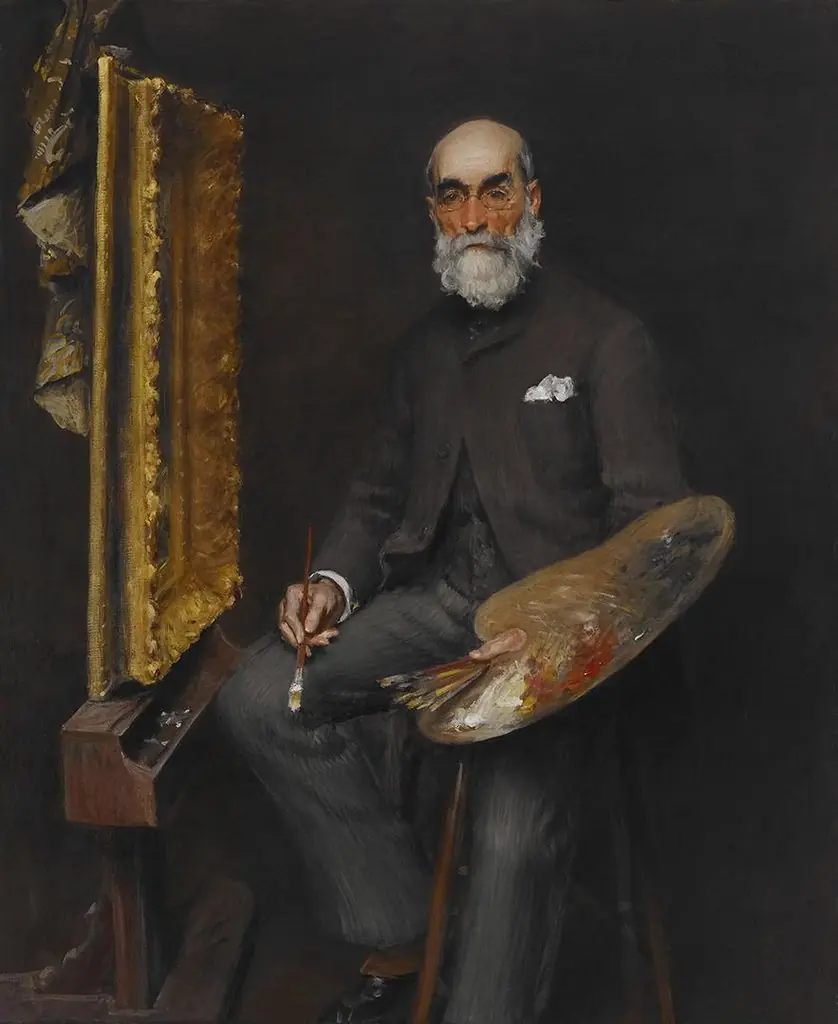
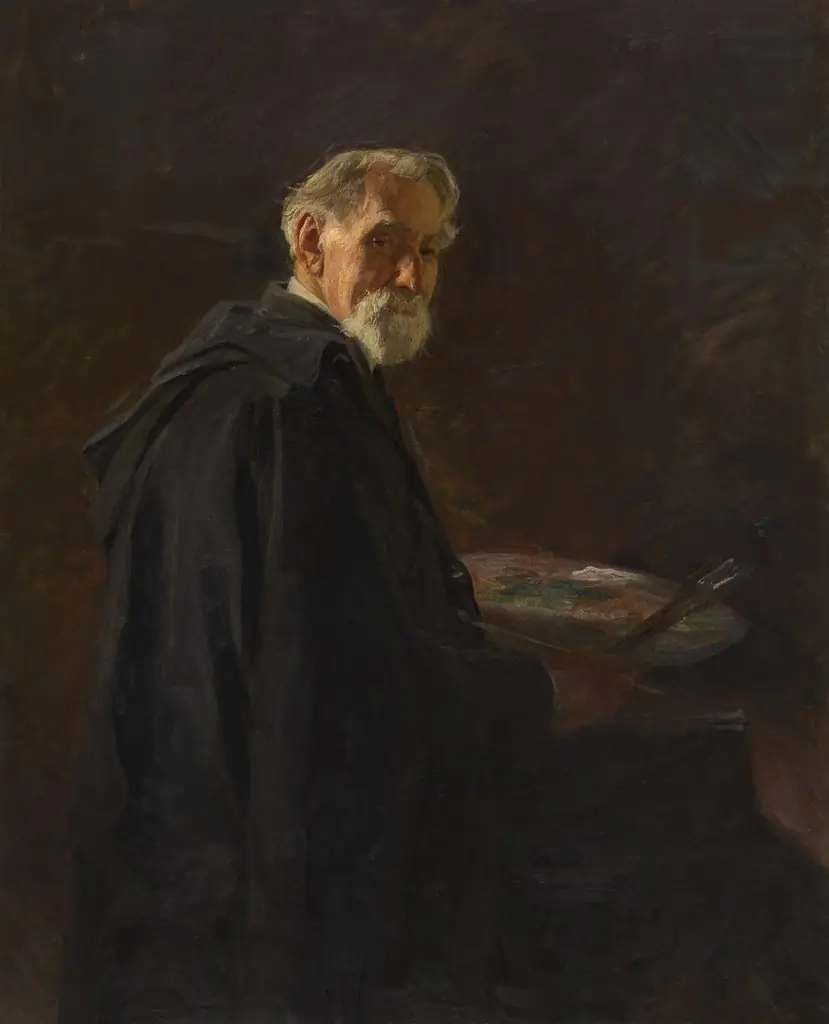
Self-portrait is an oil painting by Edward Arthur Walton. It dates from 1901 and is held in the collection of the Fitzwilliam Museum.
About this work
Overview
Edward Arthur Walton, a Scottish painter active in the late 19th and early‑20th centuries, produced a self‑portrait circa 1901. Executed in oil on canvas, the work presents the artist at his easel, offering a direct glimpse into his practice. The painting is part of the Fitzwilliam Museum’s collection, where it is displayed among other works of the period.
Subject & Meaning
In the composition, Walton appears seated before a canvas, his short dark hair framing a contemplative face. He wears a light‑coloured shirt and holds a paintbrush in his right hand, while a palette rests nearby. The setting underscores his identity as a working artist, inviting reflection on the act of creation and the personal connection between painter and subject.
Technique & Style
Walton employs oil paint to achieve a layered, tactile surface, allowing brushstrokes to remain visible and impart a subtle three‑dimensionality. The palette is restrained, dominated by muted tones that convey a quiet, introspective mood. The handling reflects the influence of the Düsseldorf school, with careful modelling of form and an emphasis on atmospheric subtlety.
History & Provenance
Created around the turn of the century, the self‑portrait entered the Fitzwilliam Museum’s holdings through acquisition in the early 20th century, though the exact purchase details remain modestly recorded. Its presence in the museum’s collection situates Walton alongside contemporaries, providing context for his role within Scottish art circles of his time.
Artist & collection
Artist
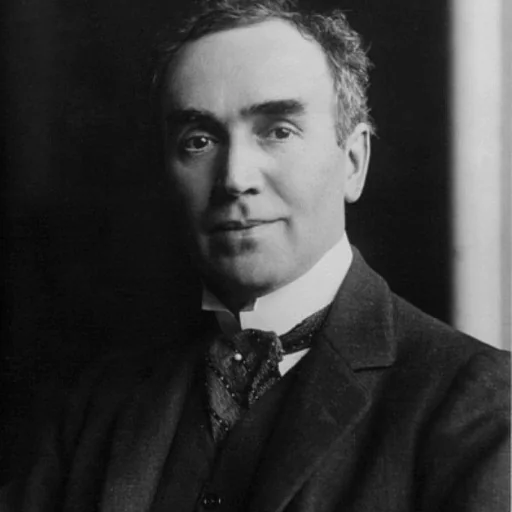
Edward Arthur Walton (15 April 1860 in Glanderston House, Barrhead, Renfrewshire – 18 March 1922 in Edinburgh) was a Scottish painter of landscapes and portraits, associated with the Düsseldorf school of painting.