Artwork
The Artist's Mother (Elizabeth Balfour Nicolson, Mrs Jackson Walton)
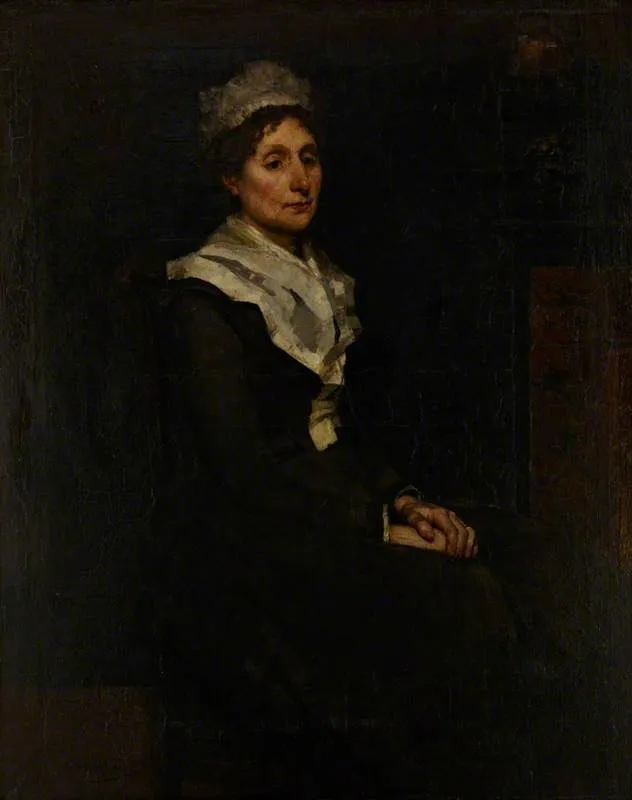
The Artist's Mother (Elizabeth Balfour Nicolson, Mrs Jackson Walton) is an oil painting by the Post-Impressionist artist Edward Arthur Walton. It dates from 1893 and is held in the collection of the National Galleries Scotland.
About this work
The artist's use of chiaroscuro, a technique that emphasizes contrasts between light and dark, adds depth and dimension to the portrait.
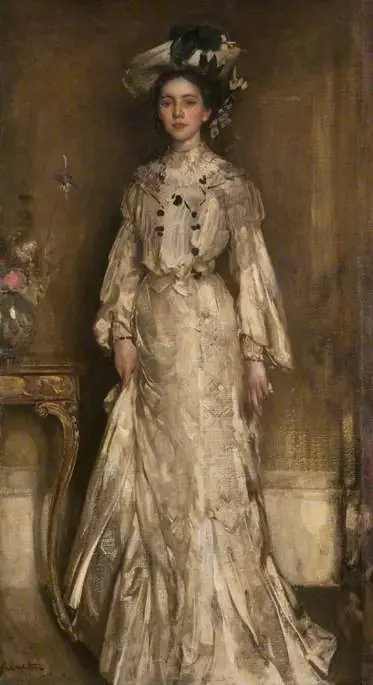
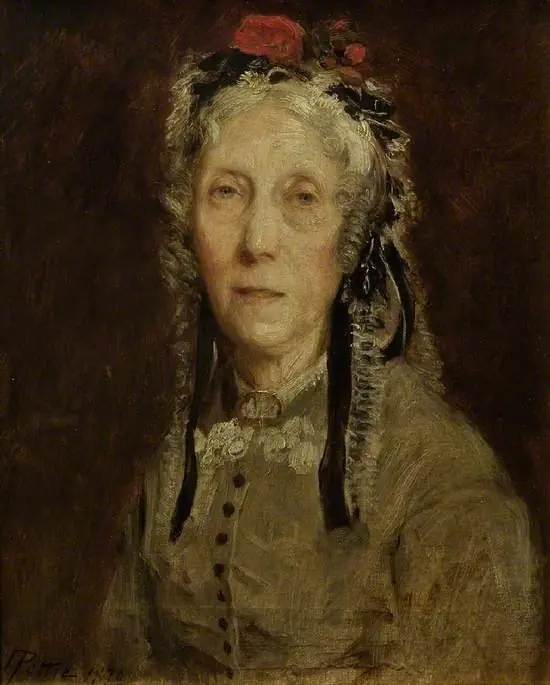
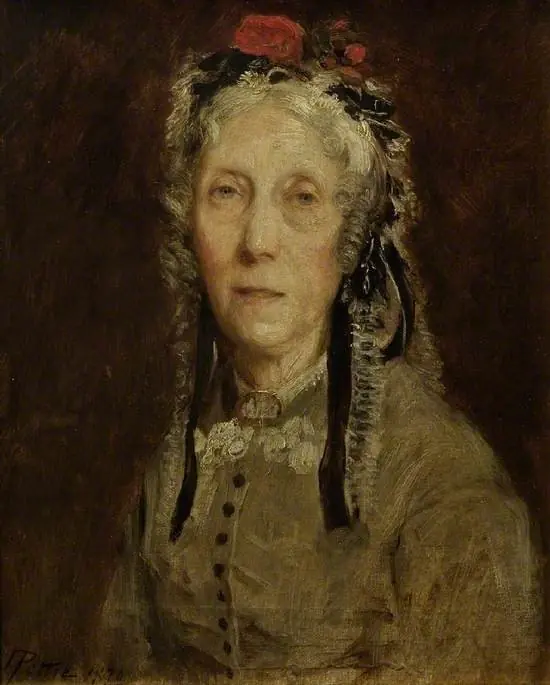
This portrait features a woman in a dark dress with a white collar, seated and facing the viewer. Her hands are clasped together in her lap. The background is dark, with subtle shading that suggests a sense of depth.
The woman's attire and hairstyle evoke a sense of formality and elegance, characteristic of the late 19th century. The artist's use of chiaroscuro, a technique that emphasizes contrasts between light and dark, adds depth and dimension to the portrait.
The painting's attention to detail and masterful use of light and shadow make it a compelling work. For more information on the artist's use of chiaroscuro, look up the technique.
Overview
Painted in 1893 by Scottish artist Edward Arthur Walton, this oil portrait depicts his mother, Elizabeth Balfour Nicolson, wife of Jackson Walton. Executed with quiet precision, the work reflects Walton’s interest in domestic subjects and his training under the Düsseldorf tradition. It resides in the Scottish National Gallery, where it stands as a representative example of late 19th-century British portraiture grounded in observation rather than idealization.
Subject & Meaning
The subject, the artist’s mother, is portrayed in a moment of stillness, her hands folded in her lap and her gaze directed outward with calm composure. Her formal attire—dark dress with a high white collar—suggests modesty and social standing typical of middle-class Victorian women. The absence of narrative or symbolic elements focuses attention on her presence, conveying dignity through restraint rather than grandeur.
Technique & Style
Walton employs chiaroscuro to model the figure with subtle gradations of light and shadow, giving volume to the face, hands, and fabric without harsh contrasts. The background recedes in muted tones, enhancing the figure’s solidity. Brushwork is controlled yet expressive, particularly in the rendering of the collar and hair, where fine strokes suggest texture without overt detail. The style leans toward realism with a quiet, introspective mood.
History & Provenance
The painting was completed in 1893 and remained in the Walton family until its acquisition by the Scottish National Gallery. It was not exhibited widely during Walton’s lifetime, and its significance grew posthumously as interest in Scottish art of the period increased. Its inclusion in the national collection reflects its value as a personal and artistic document of the era.
Context
Created during a time when British portraiture was shifting from academic rigidity toward more intimate, psychologically nuanced depictions, this work aligns with broader trends in late Victorian art. While Walton was influenced by the Düsseldorf school’s emphasis on technique, his focus on familial subjects reflects a growing interest in private life, paralleling developments in literature and photography of the period.
Legacy
Though not widely known outside Scotland, the portrait endures as a quiet testament to Walton’s sensitivity in capturing personal presence. It contributes to the understanding of how Scottish artists engaged with European traditions while cultivating a distinct domestic aesthetic. The painting continues to be studied for its restrained use of light and its unembellished portrayal of a mother’s dignity.
Artist & collection
Artist
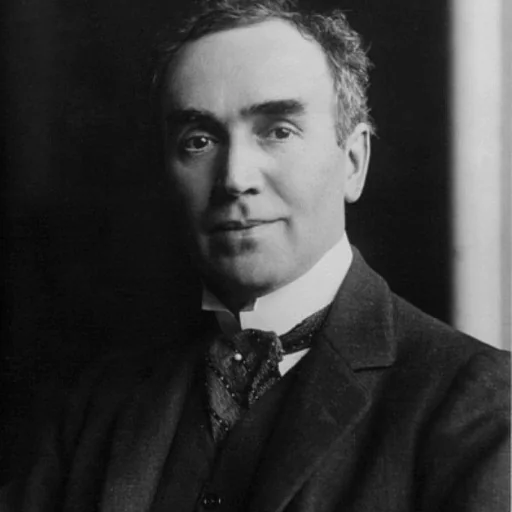
Edward Arthur Walton (15 April 1860 in Glanderston House, Barrhead, Renfrewshire – 18 March 1922 in Edinburgh) was a Scottish painter of landscapes and portraits, associated with the Düsseldorf school of painting.