Artwork
The Smithy at the Crossroads
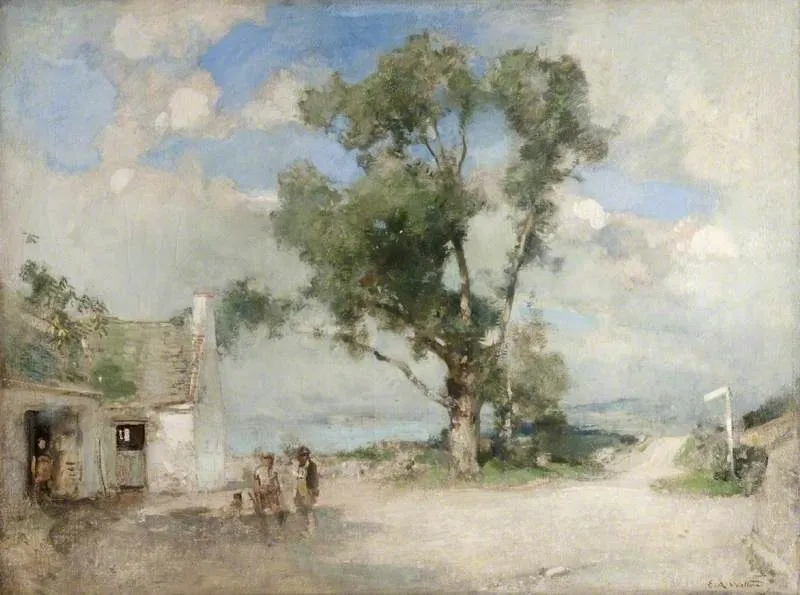
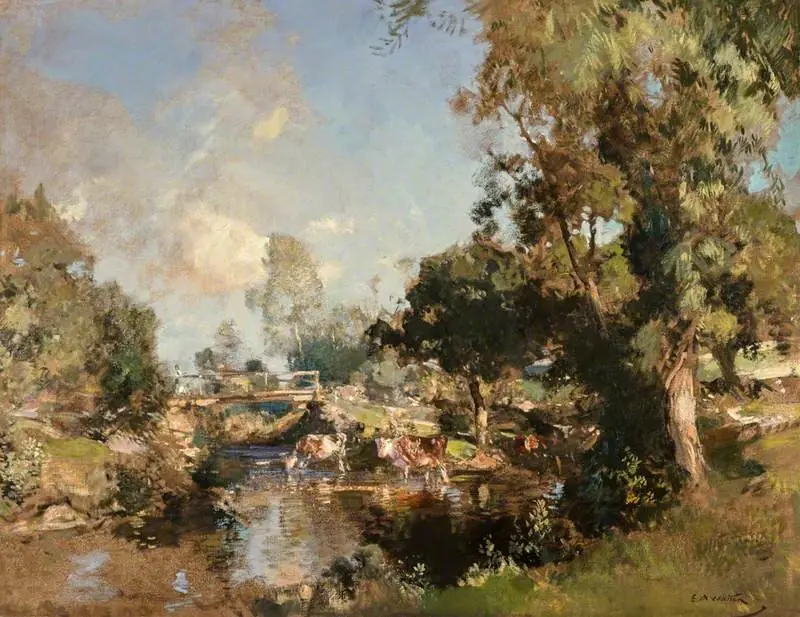
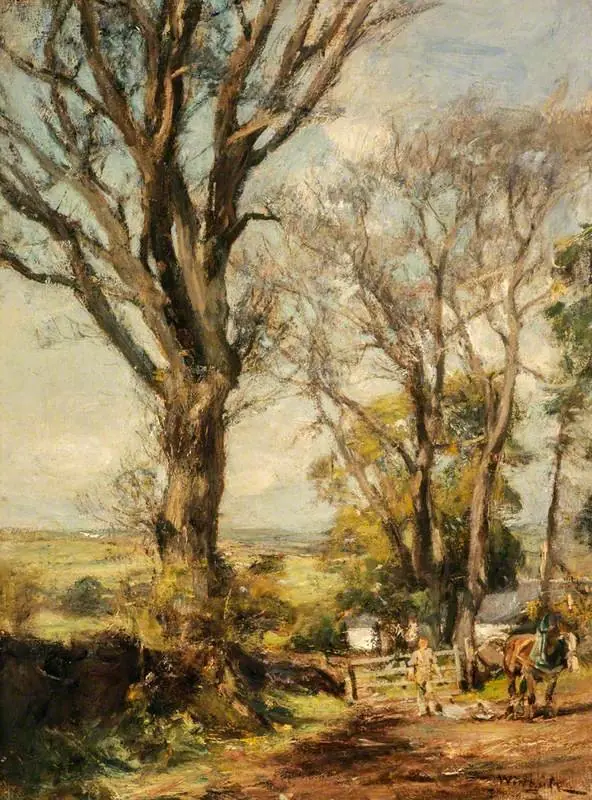
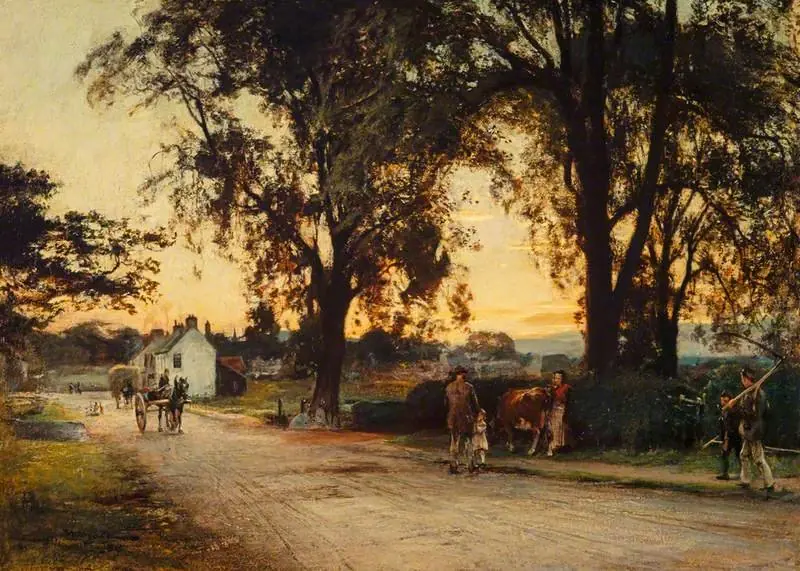
The Smithy at the Crossroads is an oil painting by Edward Arthur Walton. It dates from 1921 and is held in the collection of the Kelvingrove Art Gallery and Museum.
About this work
Overview
Walton, active until his death in 1922, often focused on everyday life in rural settings.
Painted in 1921 by Scottish artist Edward Arthur Walton, *The Smithy at the Crossroads* is an oil-on-canvas work that captures a quiet rural moment in the Scottish countryside. Walton, active until his death in 1922, often focused on everyday life in rural settings. The painting resides in the Kelvingrove Art Gallery and Museum in Glasgow, where it remains part of its permanent collection of late 19th- and early 20th-century British art.
Subject & Meaning
The scene centers on a modest cottage beside a crossroads, flanked by a prominent tree and two figures in quiet conversation. The absence of dramatic action and the stillness of the figures suggest a pause in daily life, perhaps after labor or during a moment of rest. The setting evokes solitude and continuity, reflecting the rhythms of rural existence without sentimentality or narrative climax.
Technique & Style
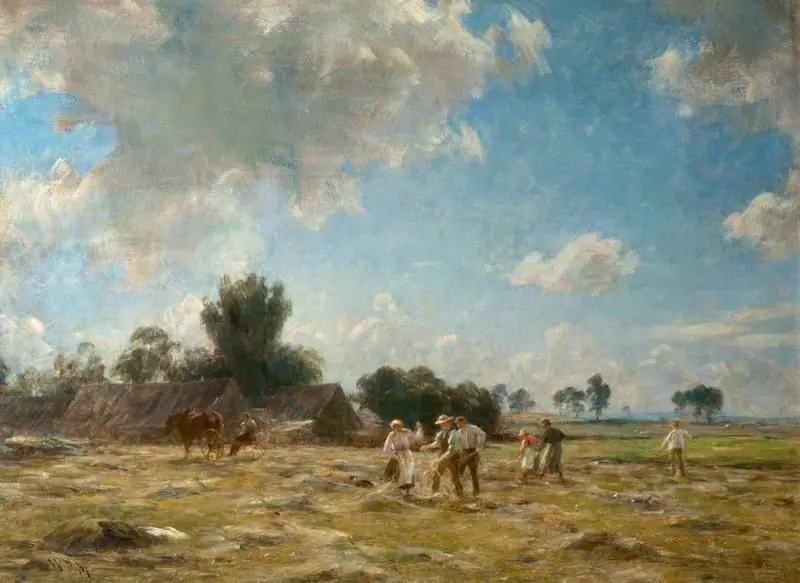
Walton employed muted, earth-toned pigments to convey a subdued atmosphere, emphasizing texture over sharp detail. Brushwork is soft and blended, particularly in the sky and foliage, contributing to a sense of calm. The composition directs the eye along the road into the distance, while the central tree anchors the scene, balancing the cottage and figures on the left. Light is diffused, enhancing the quietude of the moment.
History & Provenance
Created in the final year of Walton’s life, the painting entered the Kelvingrove collection shortly after its completion. There is no record of public exhibition prior to its acquisition, suggesting it may have been a personal or locally commissioned work. Its preservation within a public institution reflects its recognition as a representative example of Walton’s later output and Scottish genre painting of the era.
Context
Walton’s work emerged from a tradition influenced by the Düsseldorf school, emphasizing naturalism and atmospheric tone. In early 20th-century Scotland, such scenes offered a counterpoint to industrial urbanization, preserving an idealized vision of rural life. While not overtly political, paintings like this resonated with audiences seeking connection to a perceived simpler past.
Legacy
Though not widely reproduced, *The Smithy at the Crossroads* remains a quiet testament to Walton’s sensitivity to place and mood. It contributes to the broader understanding of Scottish genre painting beyond the more celebrated figures of his time. Its continued presence in Kelvingrove ensures its accessibility as an example of early 20th-century British realism rooted in regional observation.
Artist & collection
Artist
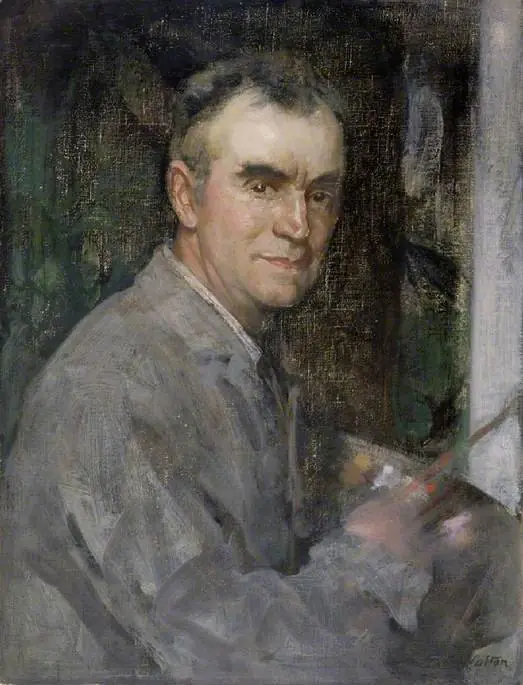
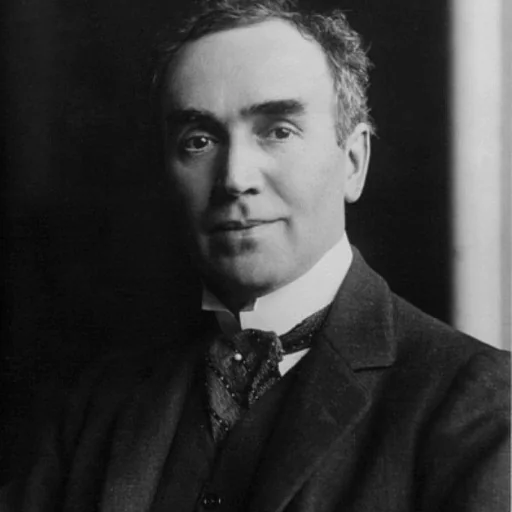
Edward Arthur Walton (15 April 1860 in Glanderston House, Barrhead, Renfrewshire – 18 March 1922 in Edinburgh) was a Scottish painter of landscapes and portraits, associated with the Düsseldorf school of painting.