Artwork
Jaunting car passing under an archway
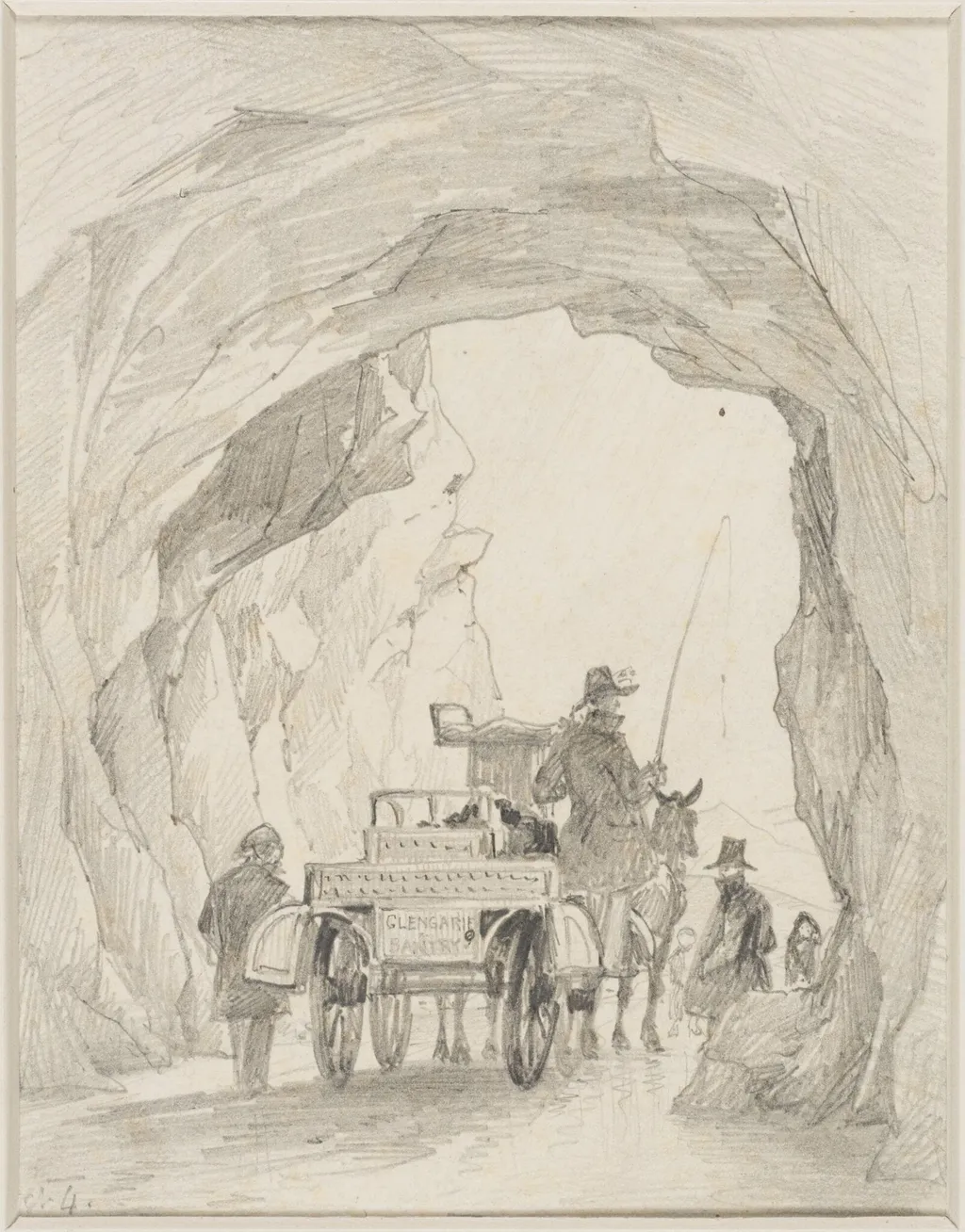
Jaunting car passing under an archway is a drawing by Edward William Cooke. It dates from 1850 and is held in the collection of the Victoria and Albert Museum. Created in 1850, this pencil drawing by Edward Cooke captures a moment of everyday urban life in Ireland.
About this work
Overview
Created in 1850, this pencil drawing by Edward Cooke captures a moment of everyday urban life in Ireland. It depicts a jaunting car—a traditional two-wheeled vehicle—passing beneath a stone archway. Rendered with loose, expressive lines, the scene conveys motion and transient activity, typical of Cooke’s observational approach to street scenes during the mid-nineteenth century.
Subject & Meaning
The scene holds no overt narrative, instead presenting a quiet, unembellished slice of daily life, emphasizing routine movement over drama or symbolism.
The drawing centers on a jaunting car, a common mode of transport in rural and small-town Ireland, carrying a man holding a long stick, likely a whip or guiding pole. Figures on either side of the path suggest bystanders or locals observing the passage. The scene holds no overt narrative, instead presenting a quiet, unembellished slice of daily life, emphasizing routine movement over drama or symbolism.
Technique & Style
Cooke employed cross-hatching and stippling to model form and suggest texture, particularly in the archway’s stonework and the car’s wooden frame. The background is left lightly shaded, allowing the darker, more defined outlines of the vehicle and figures to stand out. The sketchy, energetic lines of the arch suggest spontaneity, reinforcing the impression of a fleeting, observed moment rather than a polished composition.
History & Provenance
The drawing is part of a small body of works by Edward Cooke, an Irish artist known for documenting local scenes during the mid-1800s. Its provenance traces to private collections in Ireland, with no record of public exhibition during Cooke’s lifetime. It remains a rare surviving example of his observational drawings, offering insight into pre-Famine Irish urban life.
Context
In 1850, Ireland was still recovering from the early years of the Great Famine, and transportation like the jaunting car remained vital for rural communities. Cooke’s drawing reflects a society in transition, where traditional modes of travel persisted amid economic hardship. His focus on ordinary subjects aligns with a broader trend among Irish artists documenting everyday life during a period of social upheaval.
Legacy
Though Edward Cooke was not widely recognized in his time, this drawing contributes to a modest but valuable archive of 19th-century Irish visual culture. It serves as a documentary record of vernacular transport and street dynamics, offering historians and art scholars a tangible link to the rhythms of daily existence in pre-modern Ireland.
Own this work as a print
Artist & collection

 Mountainous Landscape
 The Pissing Horse
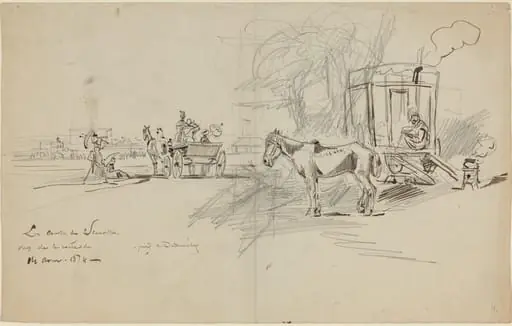 Les Courses de Deauville
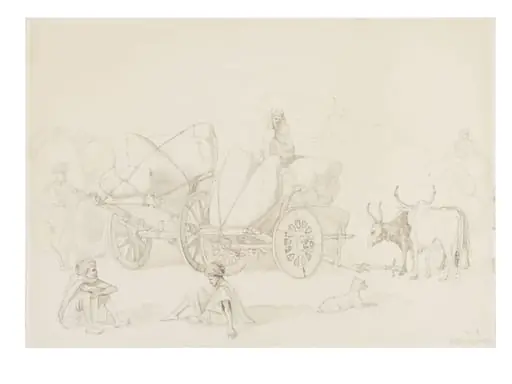 Farmers waiting for an offer at Khamgaom cotton market
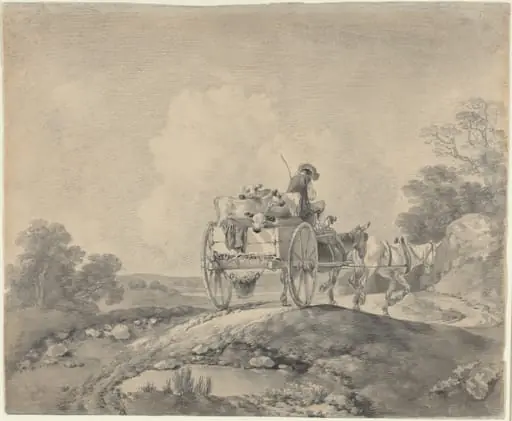 Drover with Calves in a Country Cart
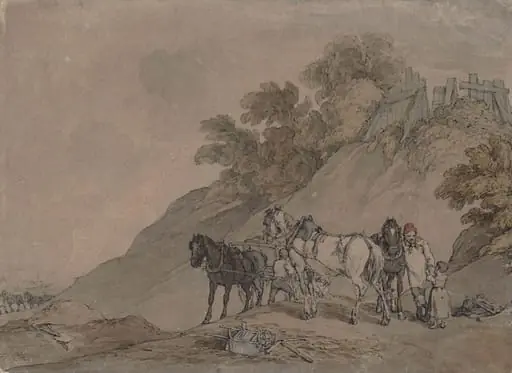 Cart and Team at a Gravel Pit
 Oxen and Dump Cart
 Wooded Landscape with Two Country Carts and Figures
 Lime Kiln, Cromer
 Carriage with Driver and Groom: Autumn
 Fiigures on a path leading to a rocky summit
 The Wagon Passing over a Bridge