Artwork
Boats on the beach at Hastings
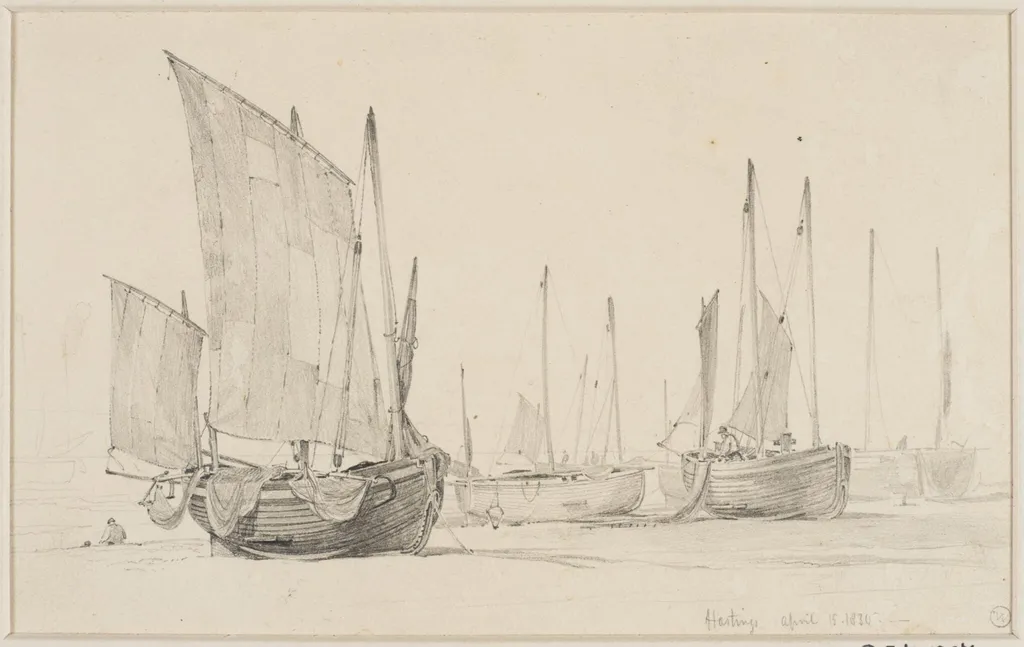
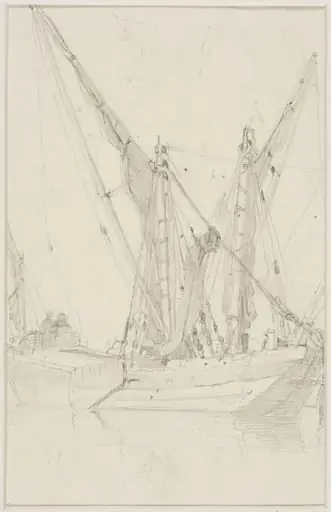
Boats on the beach at Hastings is a drawing by the Romanticist artist Edward William Cooke. It dates from 1830 and is held in the collection of the Victoria and Albert Museum.
About this work
If you like this style, check out cross-hatching to see how artists build texture with lines.
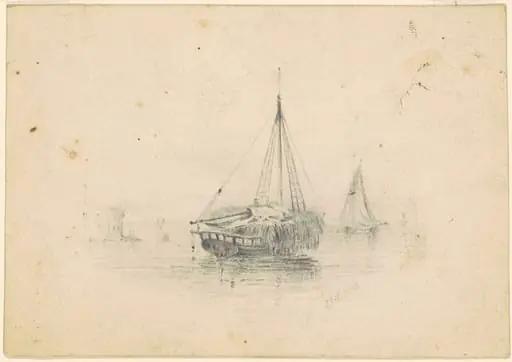
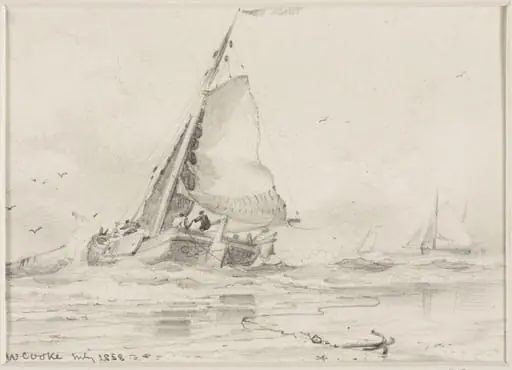
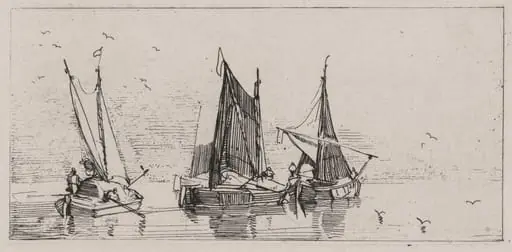
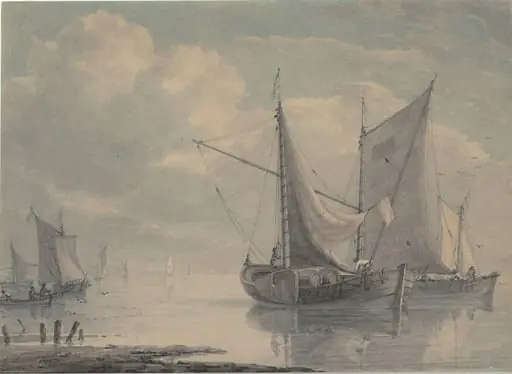
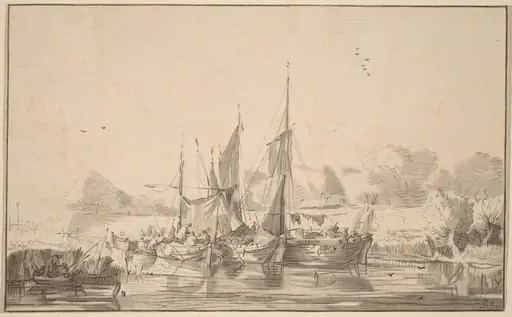
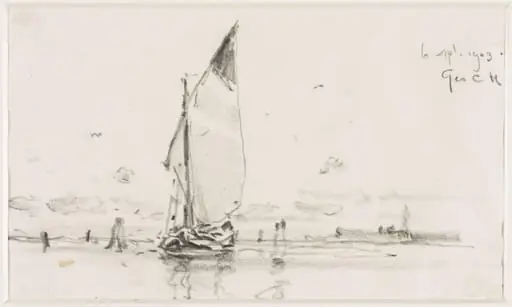
This sketch shows a row of small boats sitting on a sandy beach. The boats have tall, narrow sails and simple hulls. One boat in the middle has a person inside, and the water looks calm. The drawing is loose and quick, with light pencil lines.
The boats look like they’re waiting for something—maybe a tide or a trip. The date "April 15, 1830" is written in the corner, but the artist didn’t add much else.
If you like this style, check out cross-hatching to see how artists build texture with lines.
Overview
Edward William Cooke’s 1830 pencil drawing records a quiet coastal scene at Hastings. A line of modest vessels rests on a sandy shore, their slender masts bearing simple, unfilled sails. The composition is rendered in light, gestural strokes that suggest immediacy rather than detailed finish, capturing a fleeting moment on the beach.
Subject & Meaning
The work portrays a cluster of small boats awaiting the tide or a forthcoming voyage, their stillness hinting at anticipation. One vessel contains a solitary figure, emphasizing human presence amid the tranquil seascape. The calm water and unoccupied shoreline convey a sense of pause before activity, reflecting everyday maritime life in early‑19th‑century England.
Technique & Style
Cooke employs a loose graphite approach, using swift, airy lines to outline hulls and masts. The drawing relies on minimal shading, allowing the paper’s surface to suggest texture and depth. This economical handling of pencil creates a sense of atmosphere without elaborate cross‑hatching, focusing attention on form and spatial arrangement.
History & Provenance
The sketch bears the date “April 15, 1830” in the lower corner, indicating the moment of its creation. No further inscription or signature accompanies the work, suggesting it was a personal study rather than a commissioned piece. Its provenance traces back to Cooke’s own collection before entering public holdings in the late nineteenth century.
Artist & collection