Artwork
An Angel Brings the Dead Body of Abel to Heaven
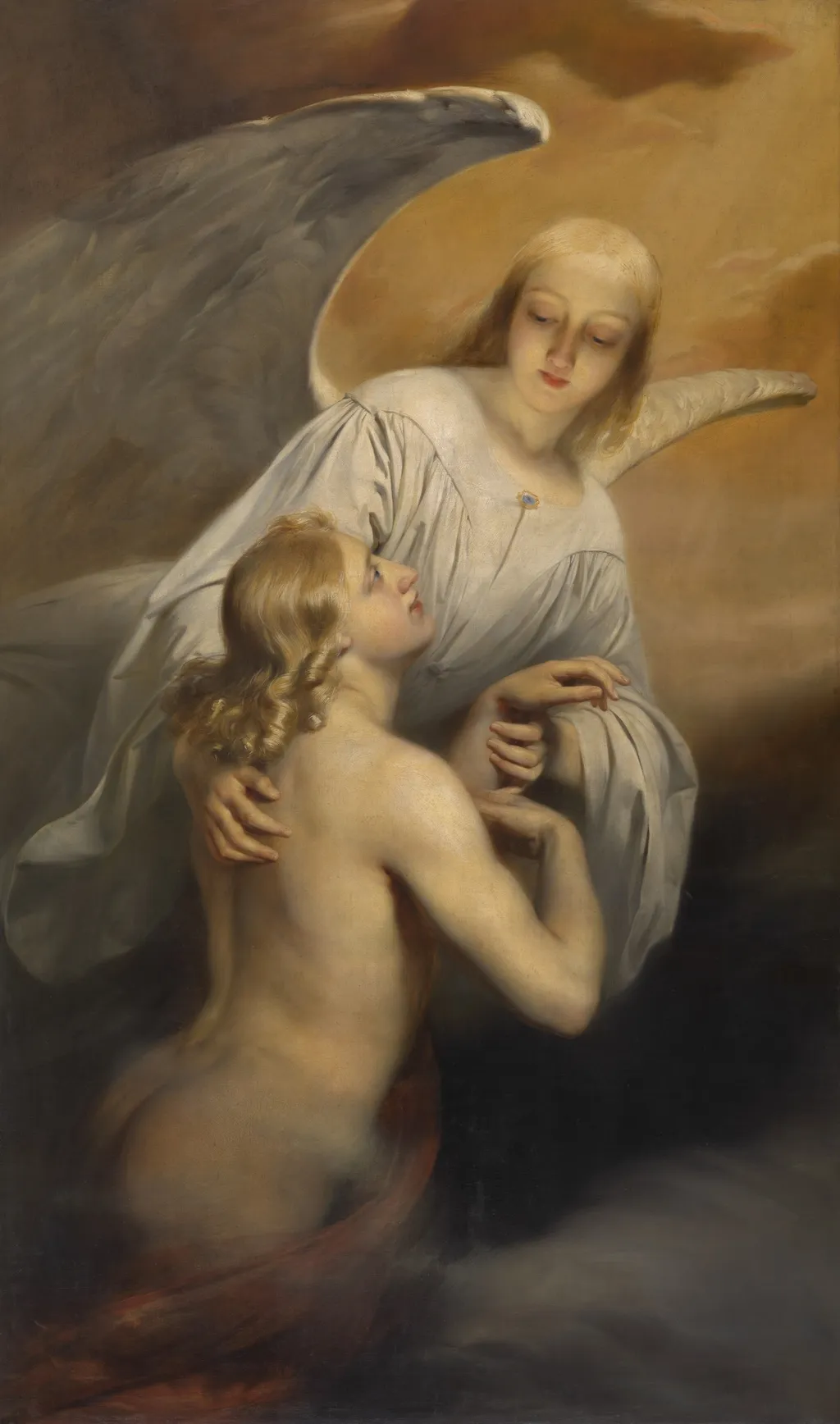
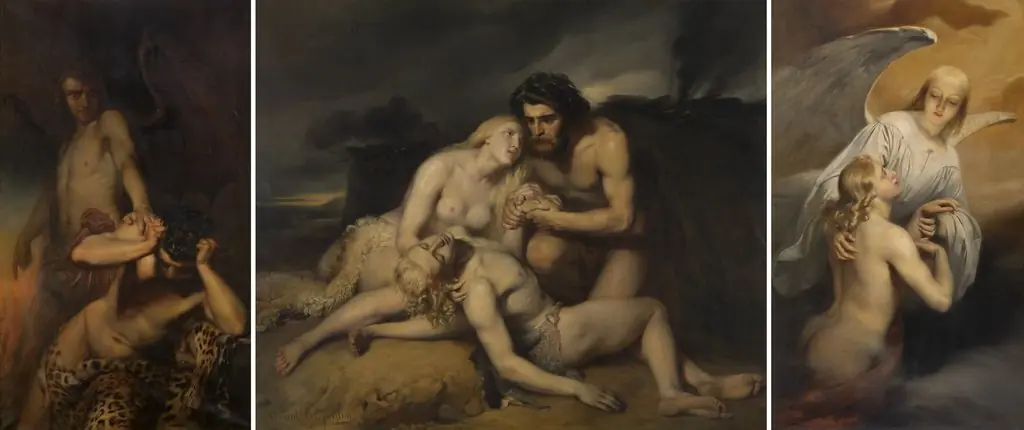
An Angel Brings the Dead Body of Abel to Heaven is an oil painting by the French Romanticist artist Edward Dujardin. It dates from 1843 and is held in the collection of the Royal Museum of Fine Arts Antwerp.
About this work
Overview
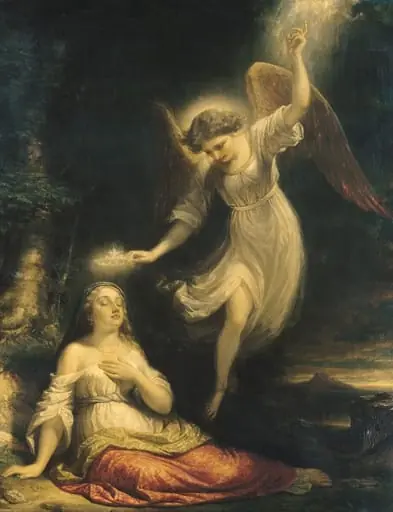
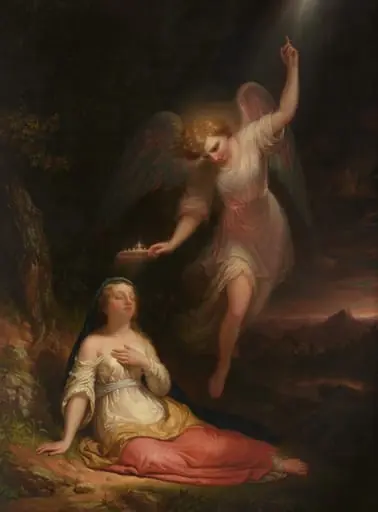
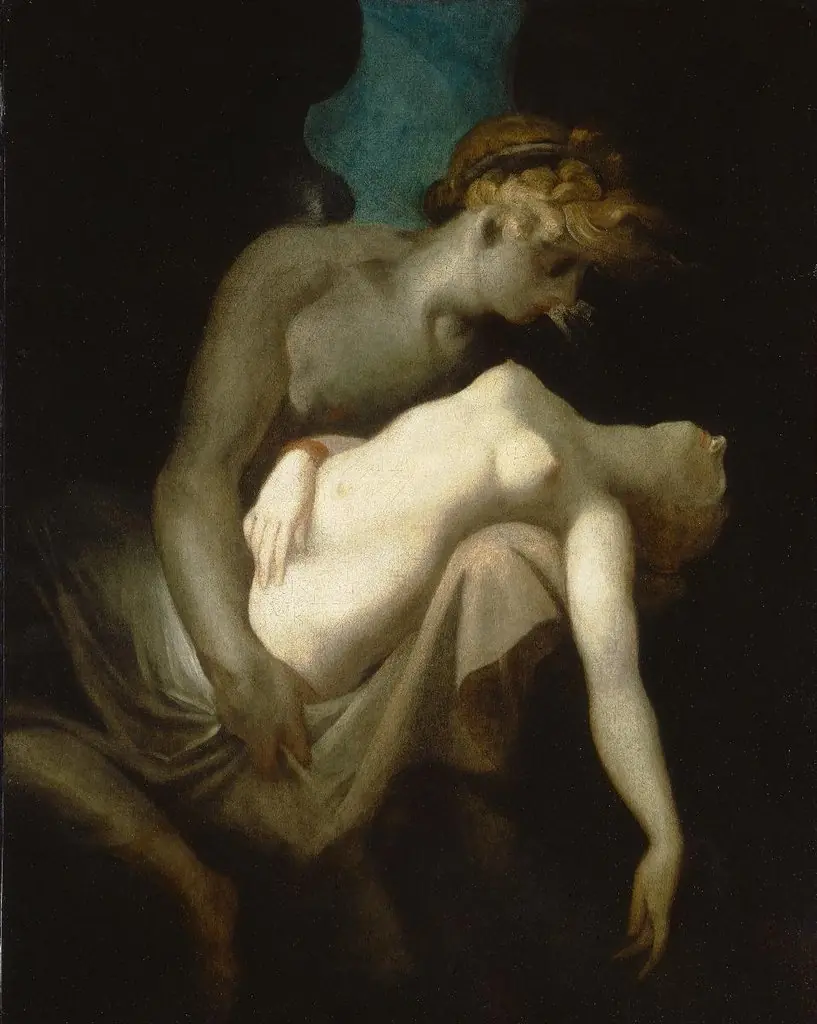
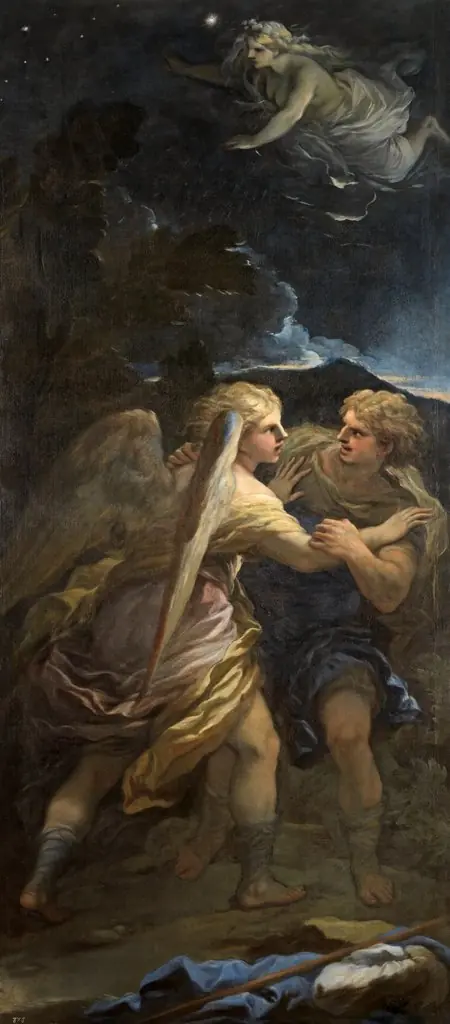
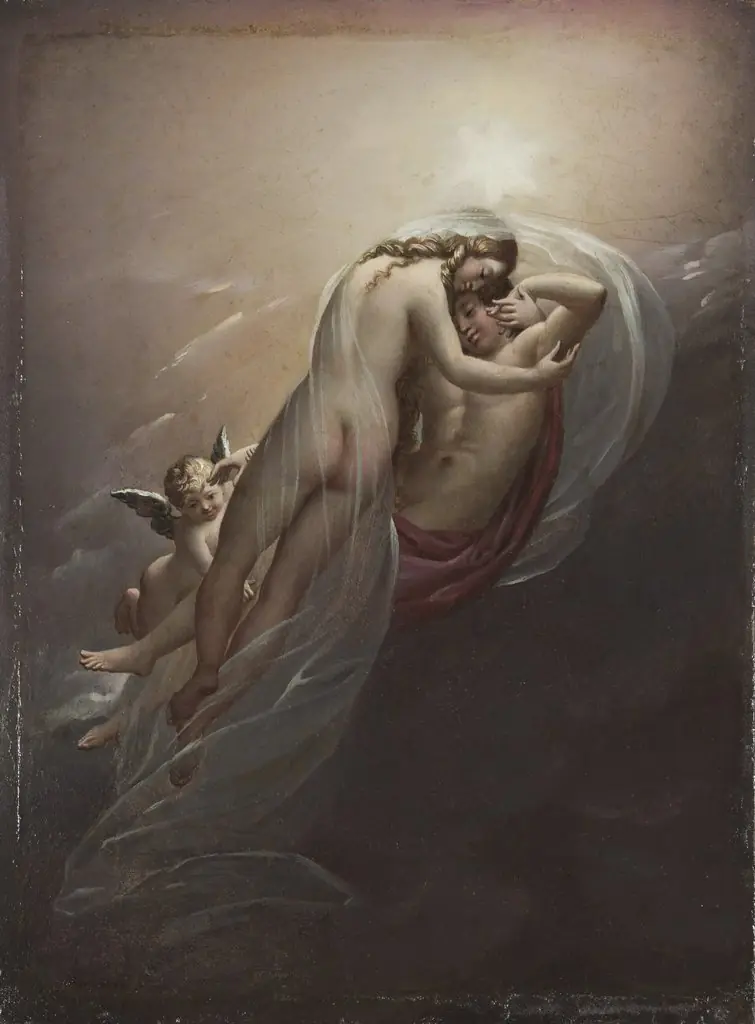
Painted in 1843 by Edward Dujardin, this oil on canvas work illustrates a moment from the biblical story of Cain and Abel. It portrays an angel transporting the body of Abel, the first murder victim, toward the divine. The composition emphasizes quiet solemnity rather than dramatic spectacle, focusing on the physical and spiritual transition of the deceased.
Subject & Meaning
The painting depicts Abel’s body being cradled by an angel, symbolizing divine care after unjust death. Abel’s nudity, softened by a red cloth, suggests vulnerability and purity, while the angel’s gentle hold conveys compassion. The closed eyes and reclining posture imply peaceful passage, reinforcing themes of mercy and the soul’s ascent beyond earthly violence.
Technique & Style
The angel’s flowing robe and wing are rendered in luminous whites and pale golds, contrasting subtly with the warm, hazy sky.
Dujardin employs soft, blended brushwork to render the figures with a tender realism. The angel’s flowing robe and wing are rendered in luminous whites and pale golds, contrasting subtly with the warm, hazy sky. Light falls gently across the bodies, enhancing the sense of stillness. The palette favors earthy ochres and muted yellows, grounding the scene in quiet reverence rather than celestial grandeur.
History & Provenance
Created in 1843, the painting entered the collection of the Royal Museum of Fine Arts Antwerp shortly after its completion. It has remained in the museum’s holdings since, with no documented public exhibitions beyond its initial display. Dujardin, a Belgian artist active in the mid-19th century, produced few widely known works, and this piece remains one of his most recognized.
Context
In early 19th-century Belgium, religious themes remained central to academic painting, even as secular subjects gained ground. Dujardin’s work reflects the lingering influence of Romanticism, emphasizing emotion and spiritual transcendence. This painting aligns with contemporaneous efforts to humanize biblical narratives through intimate, emotionally resonant scenes rather than grandiose iconography.
Legacy
Though not widely reproduced or studied outside Belgium, the painting endures as a quiet example of regional religious art from the period. Its restrained emotion and careful composition distinguish it from more theatrical treatments of the same subject. It continues to be displayed in Antwerp as part of the museum’s 19th-century Belgian collection, offering insight into local devotional aesthetics.
Own this work as a print
Artist & collection