Artwork
Expulsion of Adam and Eve
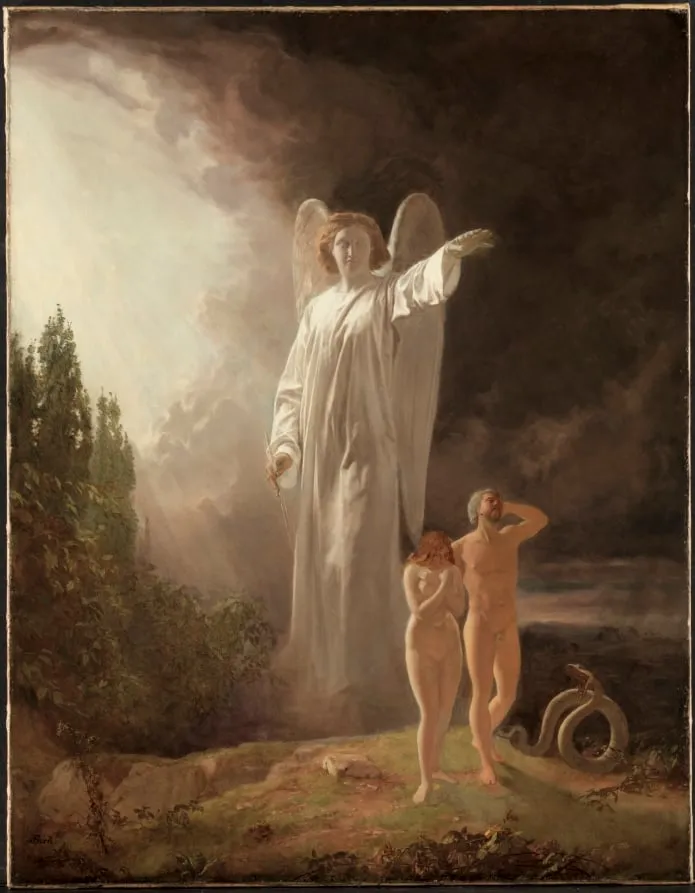
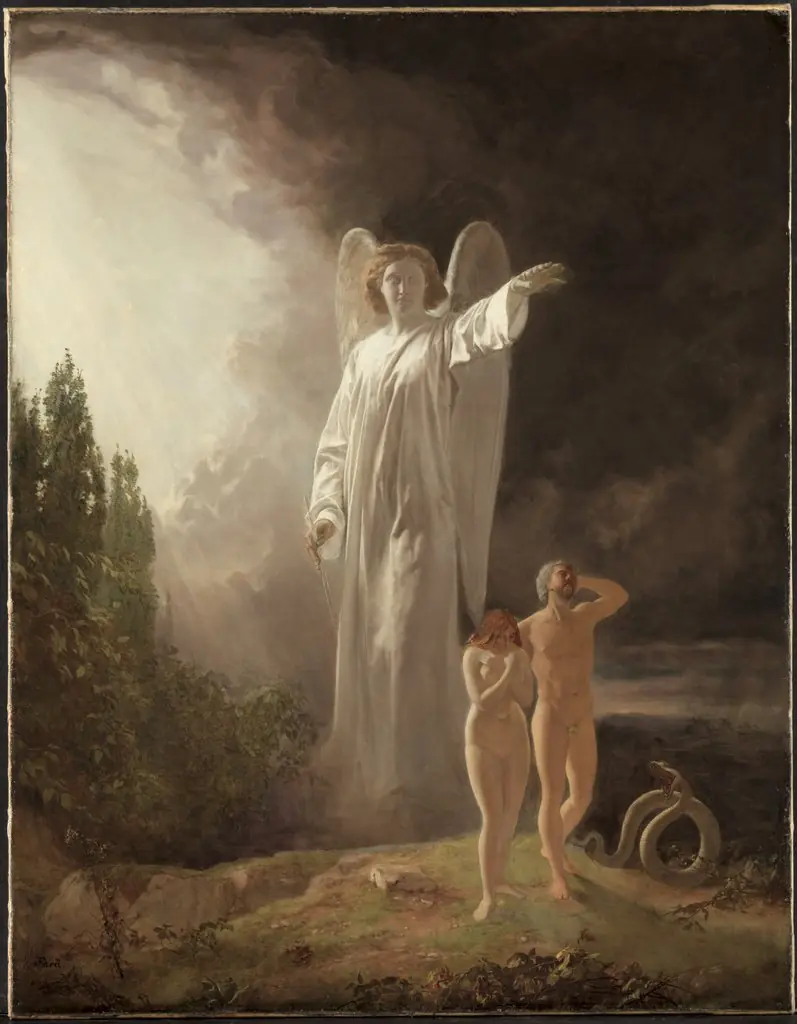
Expulsion of Adam and Eve is an unspecified painting by the British Romanticist artist John Faed. It dates from 1884 and is held in the collection of the Cleveland Museum of Art.
About this work
Overview
Expulsion of Adam and Eve is a painting depicting the biblical scene of Adam and Eve's expulsion from the Garden of Eden, inspired by John Milton's Paradise Lost (1667). The work diverges from traditional representations in its nuanced portrayal of the event.
Subject & Meaning
The painting shows Archangel Michael guiding Adam and Eve out of Eden, not guarding the gate with a fiery sword as typically depicted, but instead wielding a compass—a symbol associated with God's creative act. A serpent (Satan) is subtly present in the foreground, contrasting with the radiant, yet abandoned, garden.
Technique & Style
The composition conveys a sense of quiet melancholy, emphasizing a sorrowful departure rather than punitive expulsion. This mood is achieved through the angel's guiding posture and the unobtrusive presence of the serpent, suggesting a thoughtful, introspective approach to the narrative.
History & Provenance
Created by John Faed, the painting reflects his close reading of Paradise Lost, incorporating elements from the poem to create a distinctive interpretation of the expulsion narrative.
Context
This work can be contextualized within Scottish and Modern European art, particularly among pieces that prioritize storytelling with a contemplative or melancholic tone, as suggested by its alignment with the subject tag 'scotland, mod euro'.
Legacy
The painting's unique interpretation of a well-known biblical scene contributes to its significance, offering viewers a reflective, rather than dramatic, engagement with the story of Adam and Eve's expulsion.
Artist & collection