Artwork
Cain in the Spell of Satan
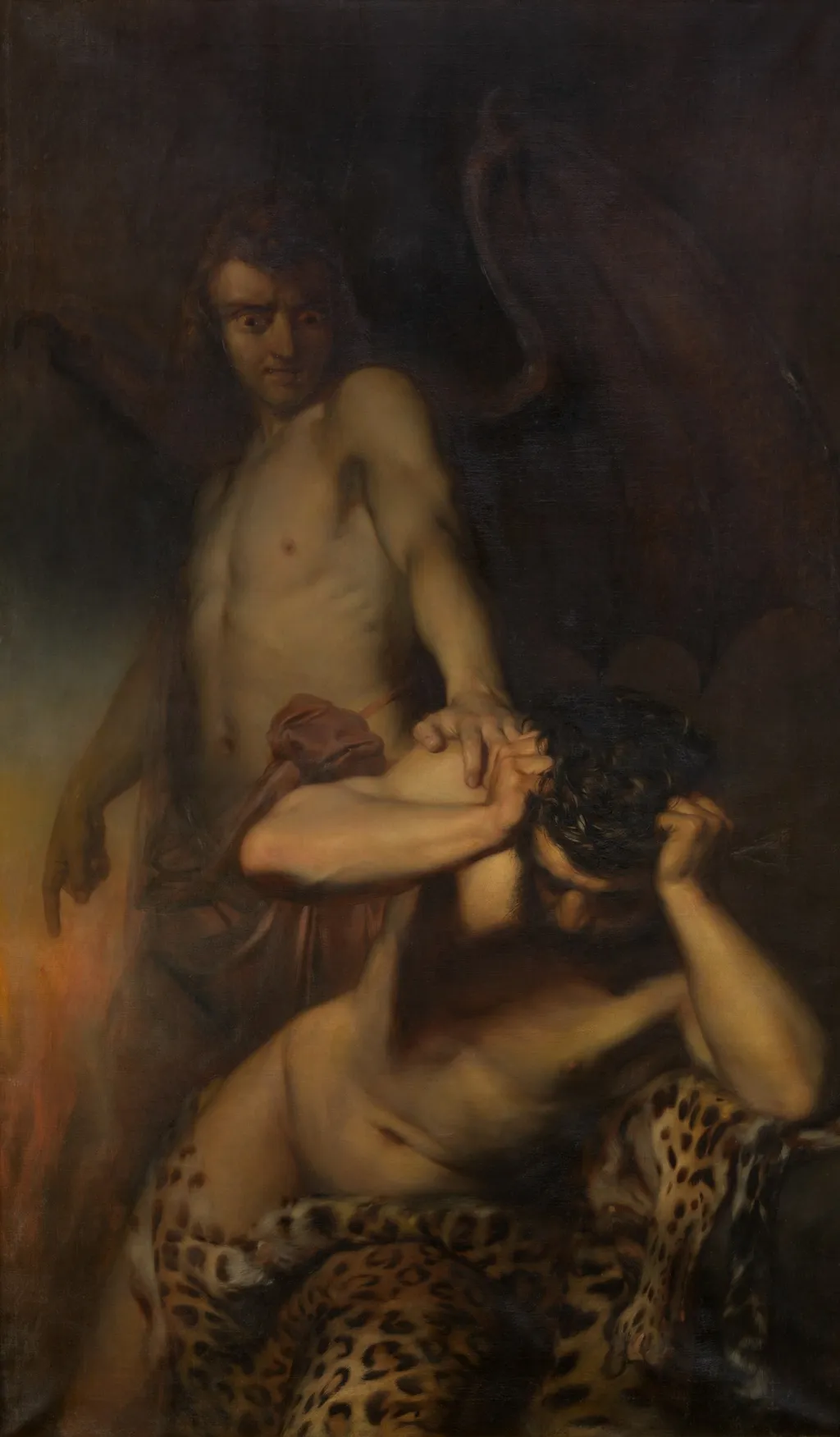
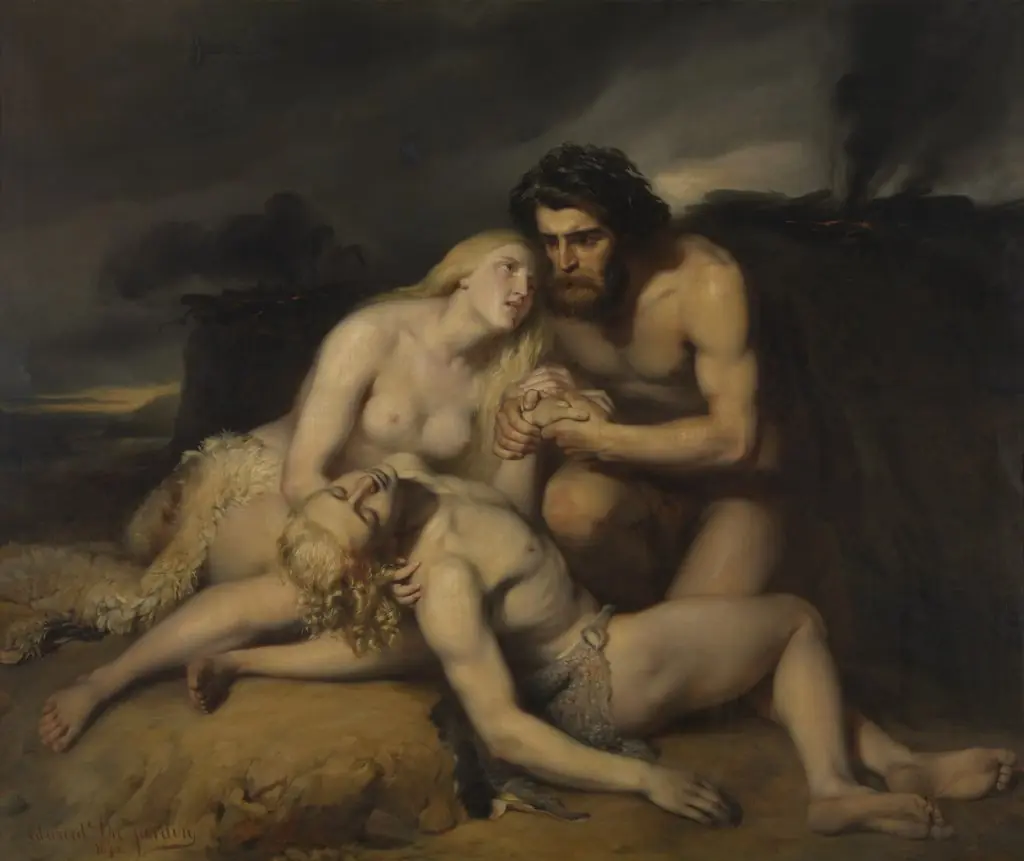
Cain in the Spell of Satan is an oil painting by Edward Dujardin. It dates from 1843 and is held in the collection of the Royal Museum of Fine Arts Antwerp.
About this work
Overview
Its composition centers on two figures in a dimly lit space, rendered with careful attention to posture and lighting to evoke psychological tension.
Painted in 1843 by Edward Dujardin, this oil on canvas work portrays a moment of spiritual crisis drawn from biblical narrative. The painting is part of the permanent collection at the Royal Museum of Fine Arts Antwerp. Its composition centers on two figures in a dimly lit space, rendered with careful attention to posture and lighting to evoke psychological tension. The scene is neither overtly violent nor explicitly narrative, instead inviting contemplation through restrained gesture and atmosphere.
Subject & Meaning
The painting illustrates Cain, the first murderer, under the influence of a malevolent presence, likely Satan. The crouching figure, clad in a leopard-skin loincloth, appears overwhelmed, hands pressed to his face in anguish or denial. The towering figure behind him, draped in red, seems to exert a subtle, coercive influence—neither fully visible nor overtly menacing, suggesting internal corruption rather than external force. The scene captures moral collapse in quiet, intimate terms.
Technique & Style
Dujardin employs chiaroscuro to heighten emotional contrast, directing light toward the figures’ torsos and faces while plunging the surroundings into deep shadow. The brushwork is precise, particularly in the rendering of skin and fabric, with subtle gradations suggesting texture and volume. The background fades into a muted, atmospheric haze, enhancing the isolation of the figures. The composition avoids theatricality, favoring psychological realism through restrained movement and muted color.
History & Provenance
Created in 1843, the painting entered the collection of the Royal Museum of Fine Arts Antwerp shortly after its completion. It remained relatively obscure in public discourse until the late 19th century, when interest in 19th-century Belgian religious painting revived. No significant alterations or restorations are documented, and its provenance traces directly from the artist’s studio to the museum’s holdings without intermediaries.
Context
Dujardin worked during a period when Belgian artists were redefining religious subjects through emotional realism rather than idealized grandeur. Influenced by Romanticism and the growing interest in psychological depth, this painting aligns with contemporaries who explored inner turmoil in biblical figures. Unlike grand altarpieces, it presents faith as a private struggle, reflecting broader shifts in 19th-century devotional art toward intimacy and ambiguity.
Legacy
Though not widely reproduced or studied, the painting remains a notable example of Belgian Romantic religious art. Its quiet intensity and psychological nuance distinguish it from more dramatic contemporaries. It continues to be referenced in scholarly discussions on the depiction of sin and moral ambiguity in 19th-century European painting, serving as a quiet but persistent testament to the era’s evolving spiritual aesthetics.
Artist & collection

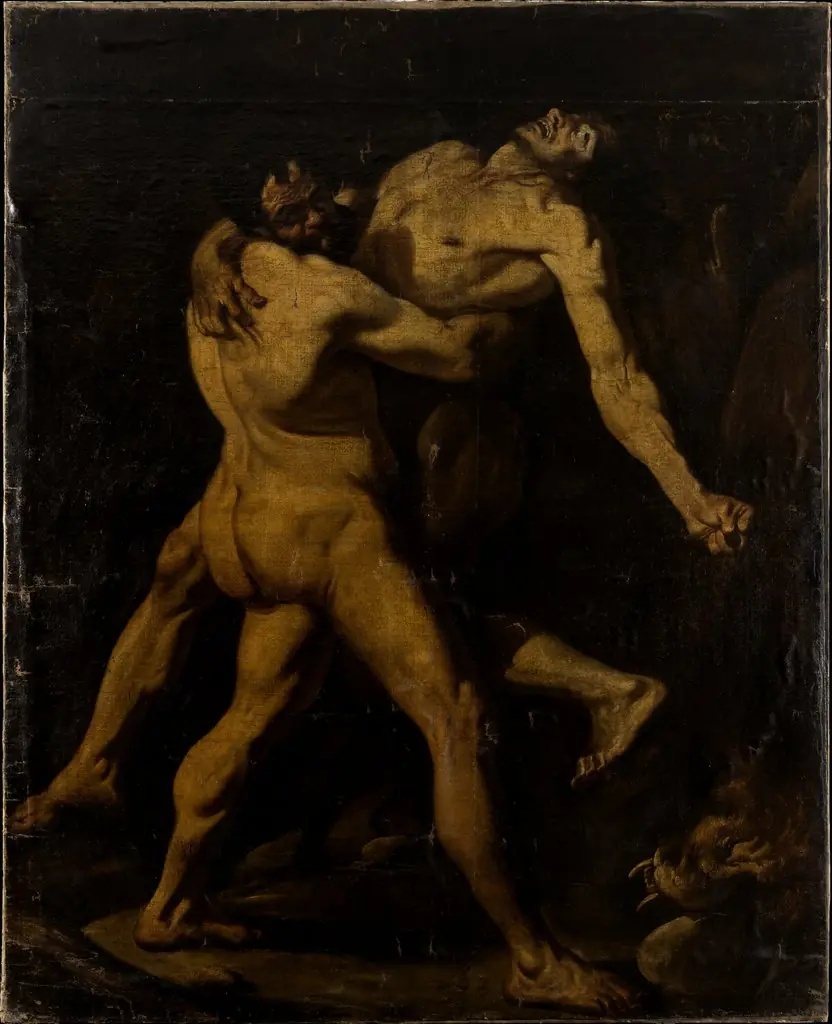 Hercules and Antaeus
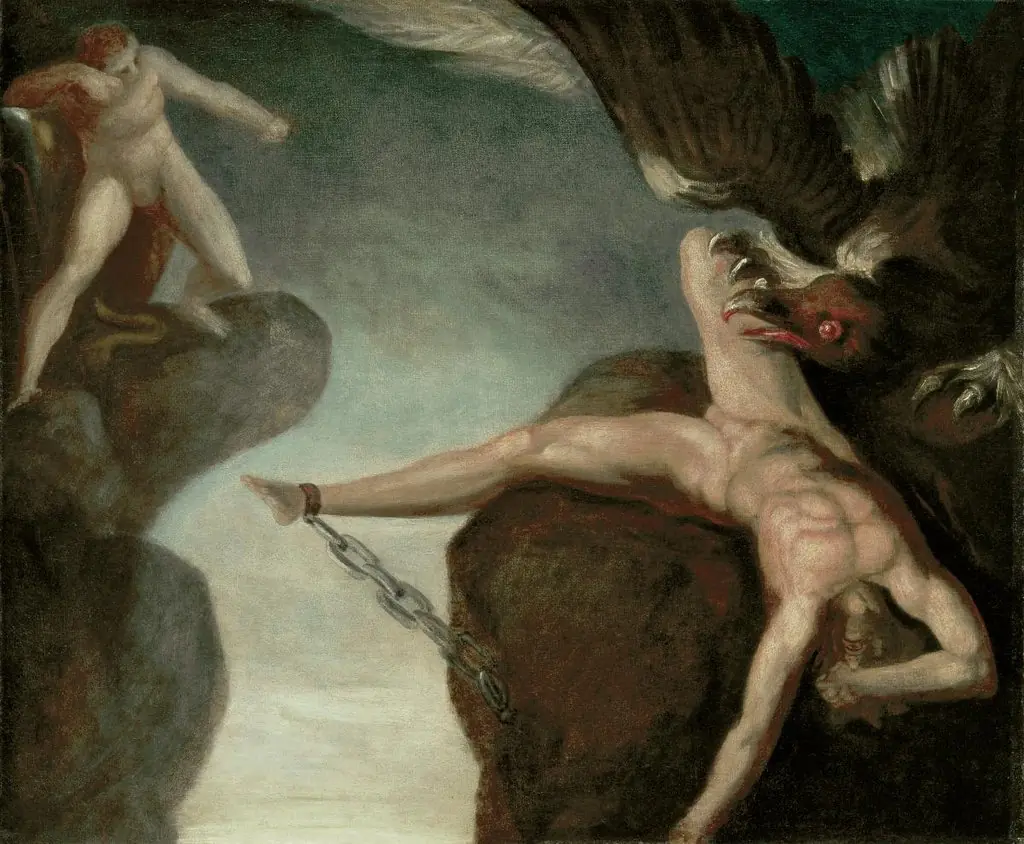 Herakles erlegt den Adler des Prometheus
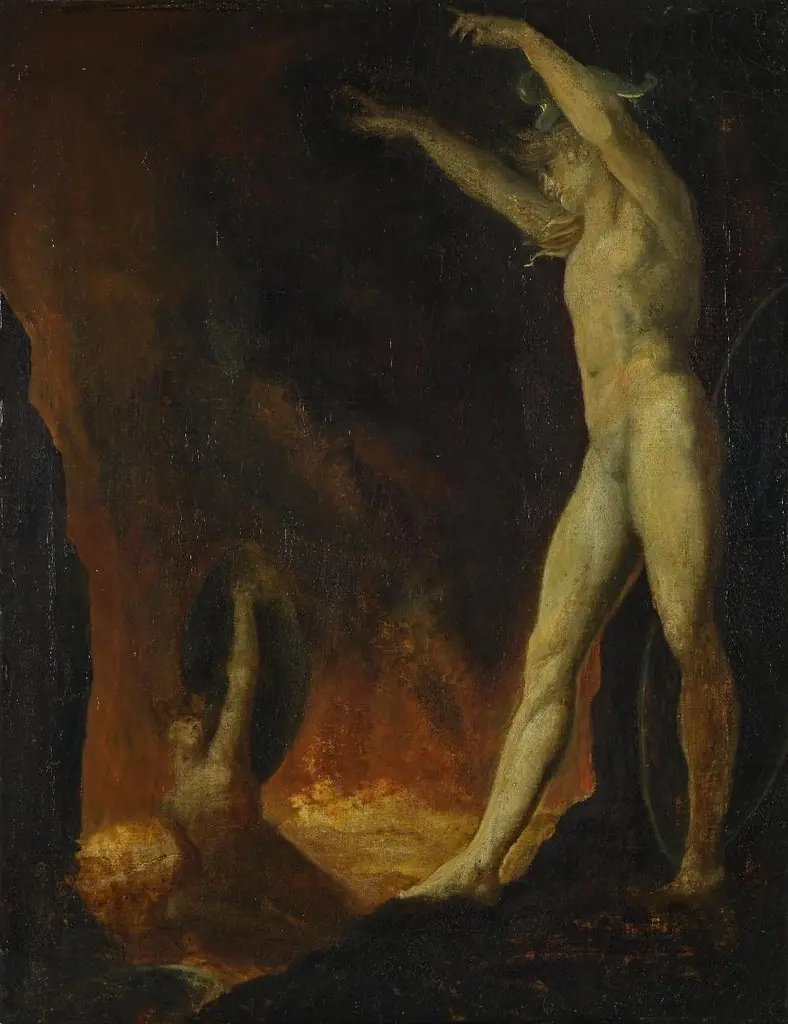 Satan über dem feurigen See, Beelzebub zu sich aufrufend
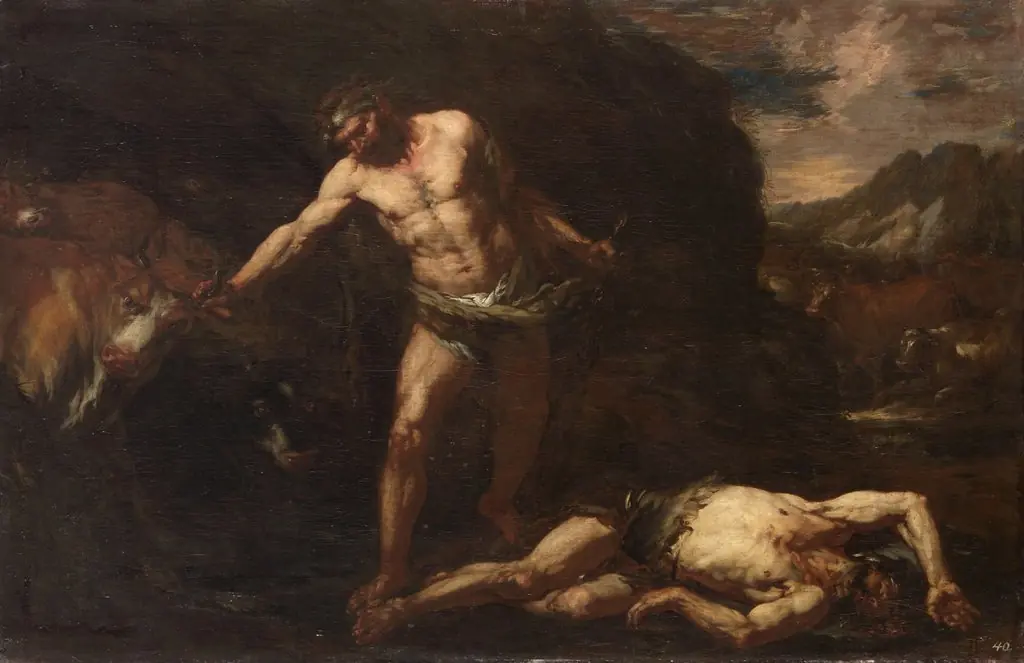 Hercules tötet den Riesen Cacus und raubt die Rinder des Geryoneus
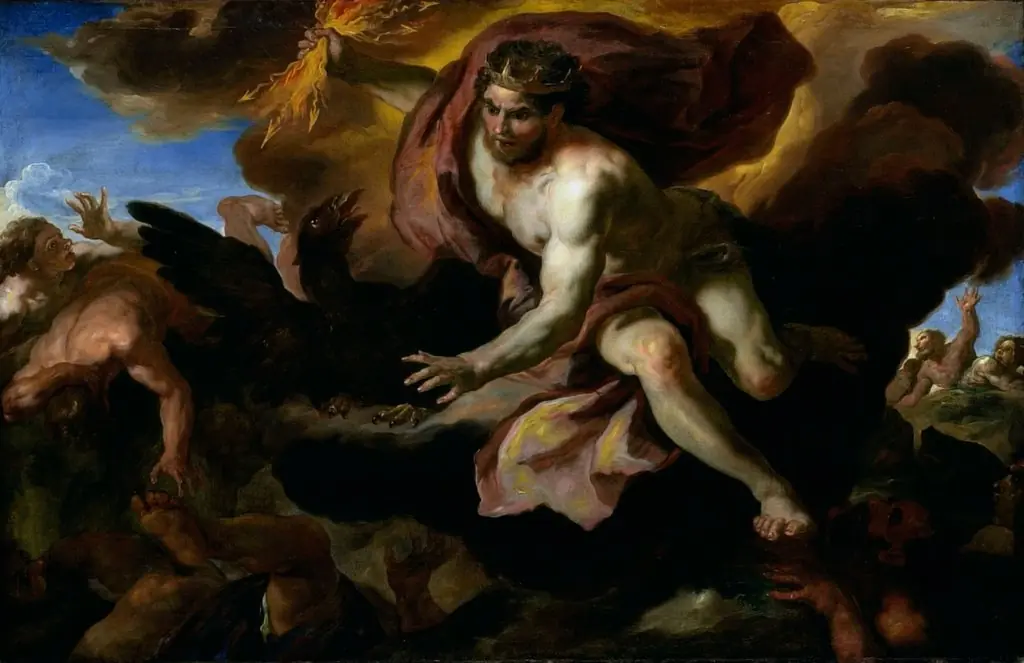 Jove casts his Thunderbolts at the Rebellious Giants
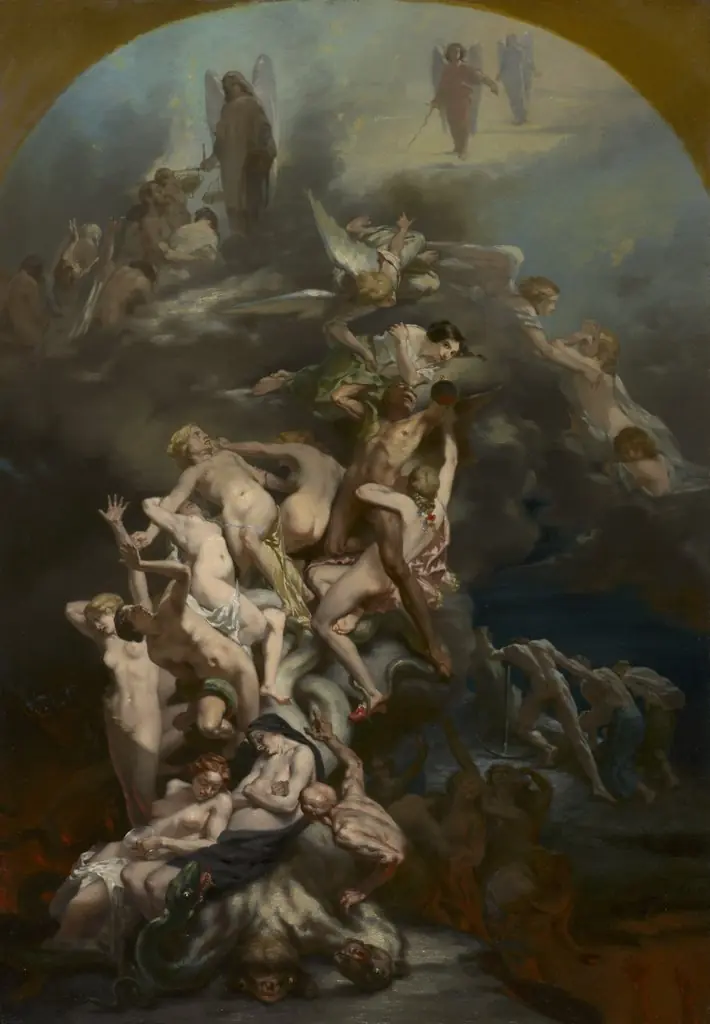 Heaven and Hell
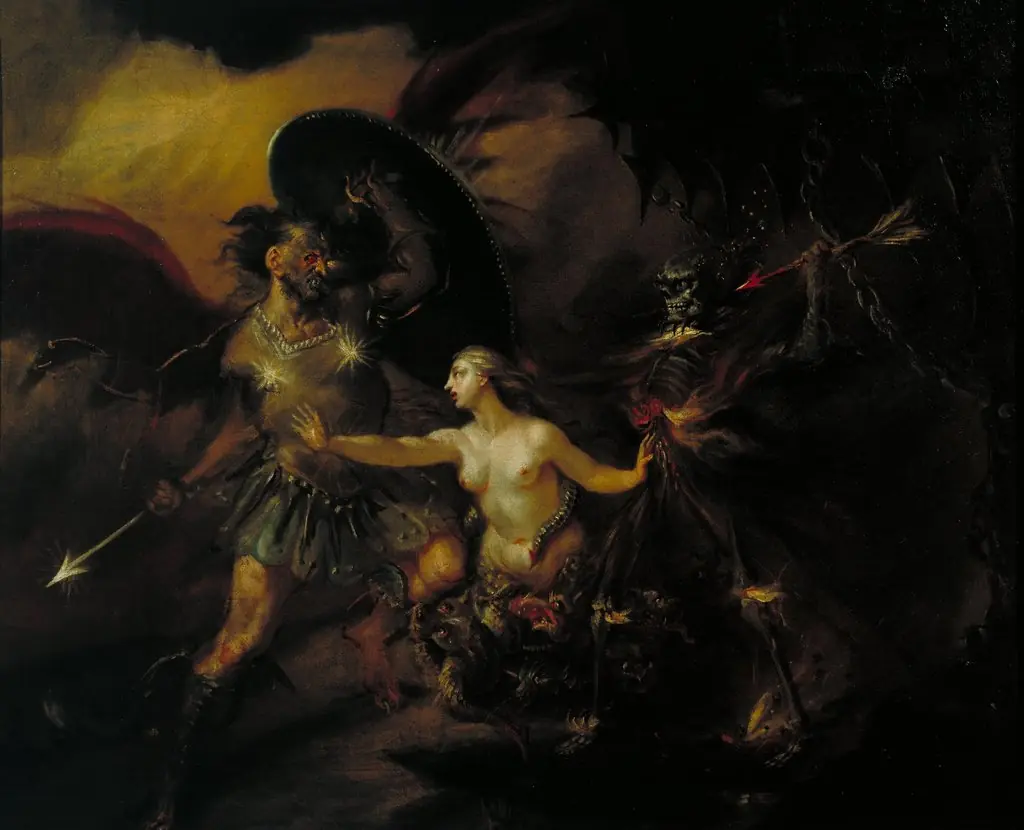 Satan, Sin and Death (A Scene from Milton's `Paradise Lost')