Artwork
Adam and Eve Discover the Dead Body of Abel
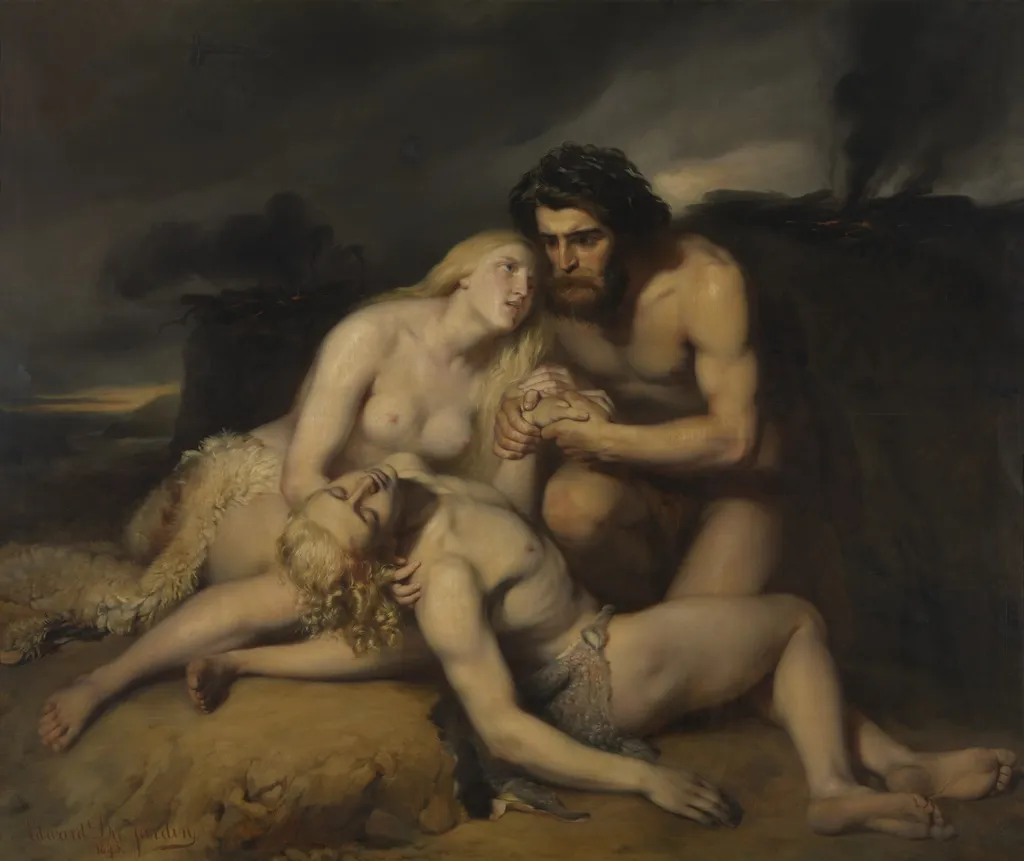
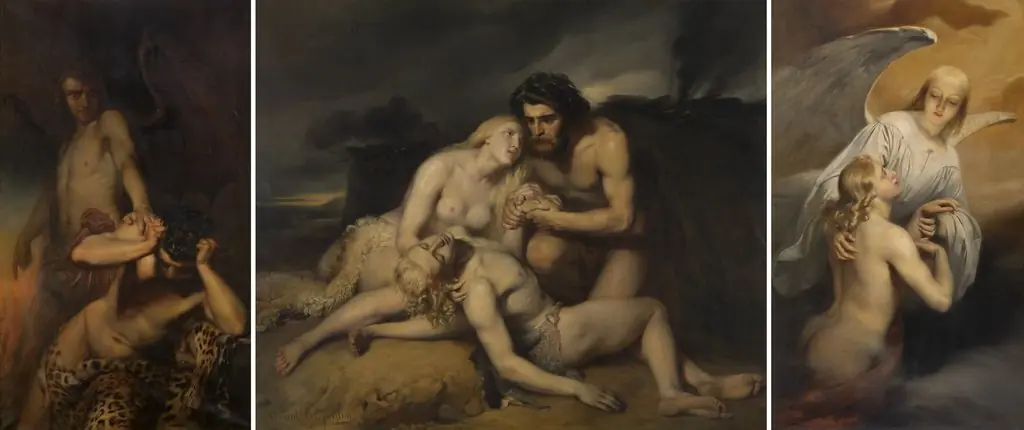
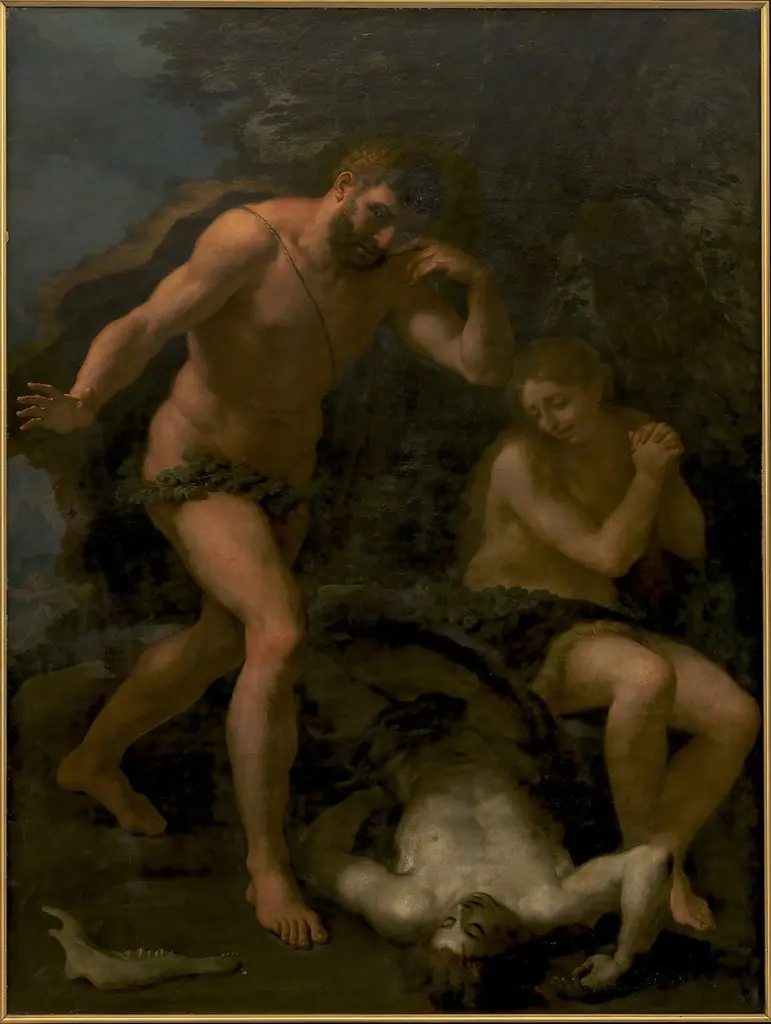
Adam and Eve Discover the Dead Body of Abel is an oil painting by Edward Dujardin. It dates from 1843 and is held in the collection of the Royal Museum of Fine Arts Antwerp.
About this work
Overview
The painting resides in the Royal Museum of Fine Arts Antwerp, where it remains one of Dujardin’s most recognized religious compositions.
Painted in 1843 by Edward Dujardin, this oil on canvas work depicts a moment from the biblical story of Cain and Abel. It captures Adam and Eve encountering the lifeless body of their son Abel, following his murder by Cain. The scene is rendered with quiet intensity, emphasizing grief over dramatic action. The painting resides in the Royal Museum of Fine Arts Antwerp, where it remains one of Dujardin’s most recognized religious compositions.
Subject & Meaning
The painting illustrates the first instance of death in human history, as described in Genesis. Adam and Eve, the first parents, confront the violent loss of their child, symbolizing the arrival of sorrow into the world. Adam’s averted gaze and clenched hand suggest overwhelming guilt or helplessness, while Eve’s fixed stare conveys shock and mourning. The composition frames their anguish as a universal moment of human loss.
Technique & Style
Dujardin employs a muted palette dominated by earth tones and shadow, reinforcing the scene’s gravity. The figures are rendered with soft modeling and careful attention to posture and gesture, conveying emotion without theatricality. The background’s overcast sky and distant dim light create a sense of isolation, drawing focus to the central tragedy. Brushwork is restrained, favoring emotional clarity over ornamental detail.
History & Provenance
Commissioned during a period of renewed interest in biblical narrative painting in Belgium, the work entered the collection of the Royal Museum of Fine Arts Antwerp shortly after its completion. It has remained in public ownership since, with no documented private transactions. Its preservation reflects its recognition as a significant example of mid-19th-century Flemish religious art.
Context
Dujardin painted this work amid a broader European revival of biblical themes in academic art, influenced by Romanticism’s emphasis on emotion and moral gravity. While contemporaries like Delacroix explored dramatic intensity, Dujardin chose restraint, aligning with quieter Flemish traditions. The painting reflects a cultural moment when religious subjects were still central to artistic expression, even as secular themes gained ground.
Legacy
Though not widely reproduced outside Belgium, the painting endures as a quiet testament to Dujardin’s skill in conveying profound emotion through understated composition. It is studied for its psychological depth and its departure from overtly dramatic biblical depictions. Within Antwerp’s museum holdings, it remains a key example of how religious narrative was interpreted with personal, human gravity in the 19th century.
Own this work as a print
Artist & collection