Artwork
Untitled
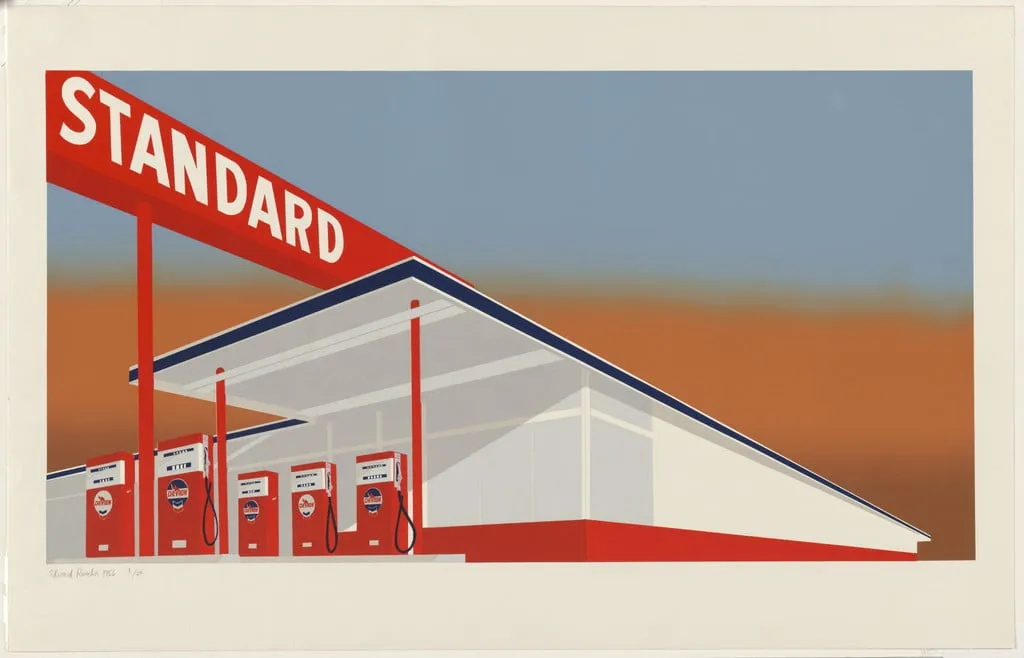
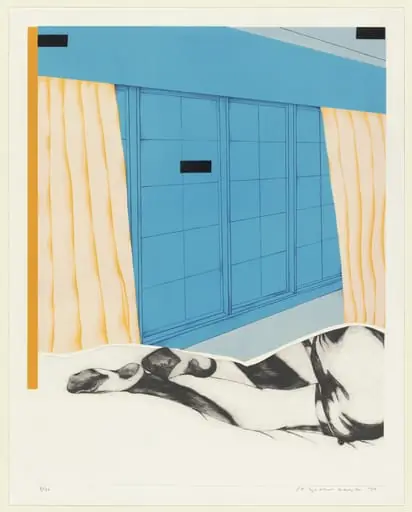
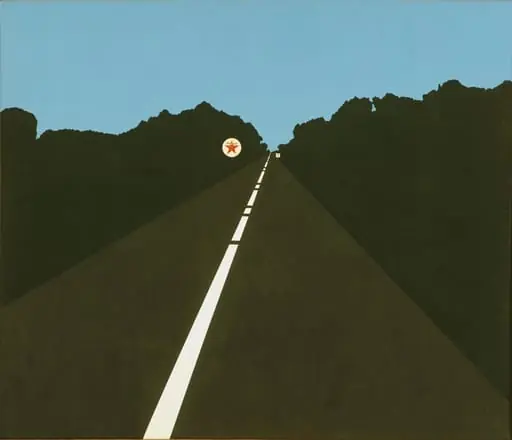
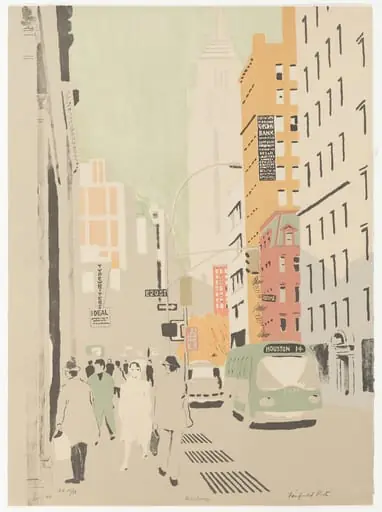
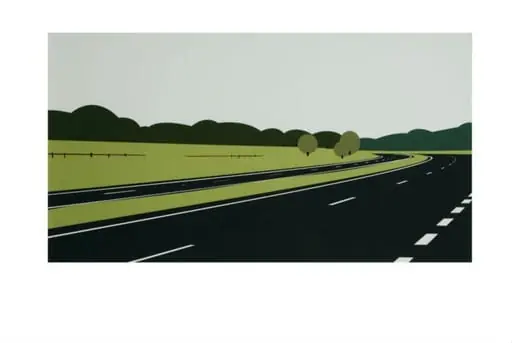
Untitled is an ink print by Edward Ruscha. It dates from 1966 and is held in the collection of the Museum of Modern Art.
About this work
Overview
The work belongs to a series that isolates mundane architectural subjects, stripping them of narrative context to emphasize form and repetition.
Edward Ruscha produced this screenprint in 1966, part of his broader exploration of American visual culture through printmaking. The work belongs to a series that isolates mundane architectural subjects, stripping them of narrative context to emphasize form and repetition. Its medium aligns with Ruscha’s interest in commercial reproduction techniques, reflecting his engagement with mass-produced imagery rather than traditional fine art methods.
Subject & Meaning
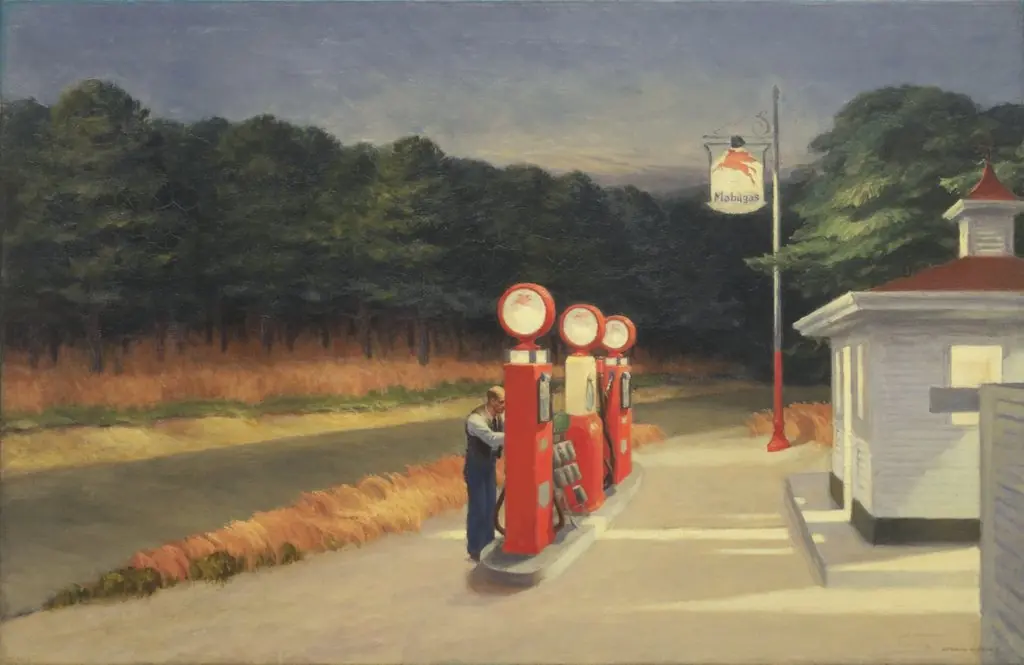
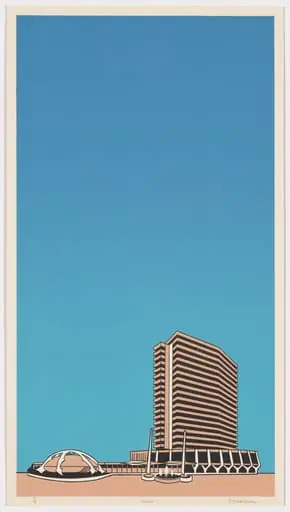
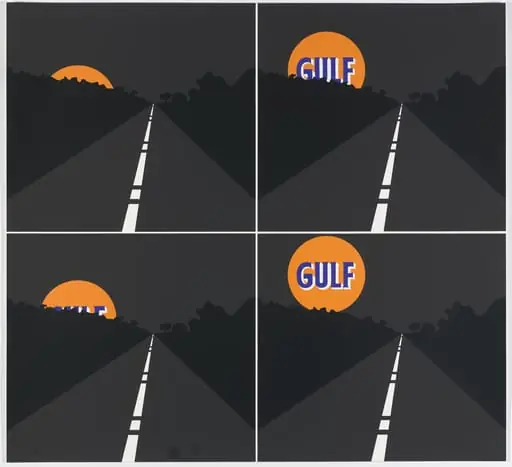
The image depicts a solitary gas station, rendered with minimal detail: a white structure, red base, dark blue roof, and four identical pumps. The red 'STANDARD' sign dominates the composition, evoking corporate branding. The empty setting and subdued lighting suggest a transitional hour—dawn or dusk—imbuing the scene with stillness. Ruscha presents the station not as a functional space but as a symbol of roadside Americana, stripped of human presence.
Technique & Style
Ruscha employed screenprinting to achieve flat, uniform fields of color and sharp edges, mirroring advertising aesthetics. The palette—bold red, white, blue, and orange—is deliberately limited, enhancing the graphic quality. Forms are simplified, with no shading or texture, reinforcing a sense of detachment. This approach aligns with Pop Art’s fascination with commercial visuals, while avoiding overt irony or critique.
History & Provenance
Created in 1966, the print entered the collection of The Museum of Modern Art, where it remains part of its permanent holdings. It was made during a period when Ruscha was actively producing works based on Los Angeles architecture and signage, often drawing from his own photographs. The piece reflects his early commitment to documenting the ordinary landscapes of postwar America through reproducible media.
Context
In the mid-1960s, Ruscha was part of a generation of artists redefining subject matter in American art, turning to everyday structures like gas stations, parking lots, and apartment buildings. His work responded to the rise of car culture and the homogenization of urban landscapes. Unlike contemporaries who embraced celebrity or consumerism, Ruscha focused on anonymity and repetition, offering quiet observations rather than commentary.
Legacy
This screenprint exemplifies Ruscha’s influence on conceptual and minimalist practices, particularly in how language and architecture intersect. His use of commercial techniques and banal subjects paved the way for later artists examining the aesthetics of the mundane. The work’s enduring presence in major collections underscores its role in redefining what constitutes worthy subject matter in postwar American art.
Artist & collection
Artist
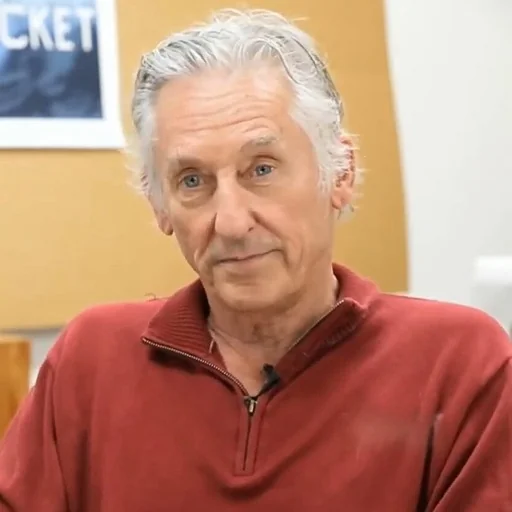
Edward Joseph Ruscha IV (, roo-SHAY; born December 16, 1937) is an American artist associated with the pop art movement.