Artwork
At Five Ponds, North Waterford, Maine
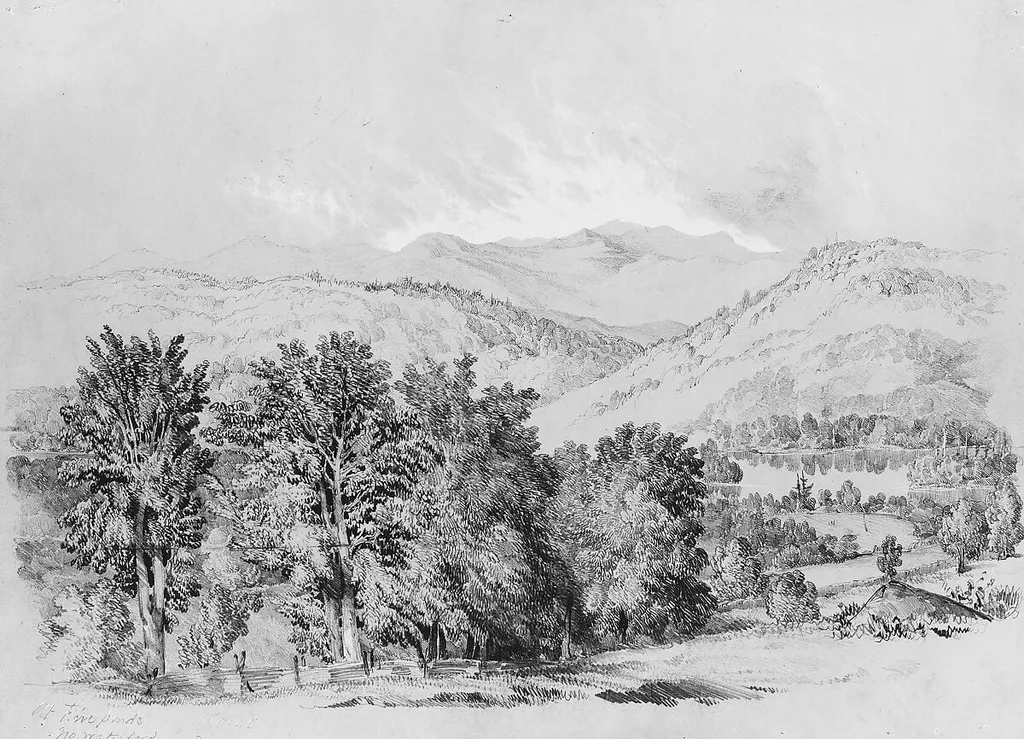
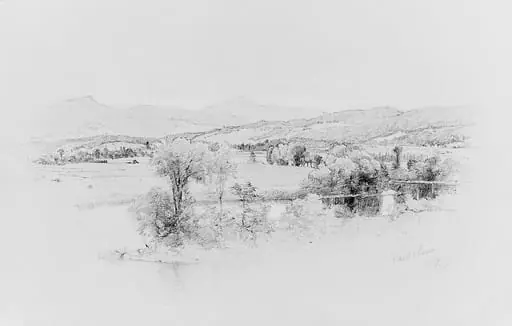
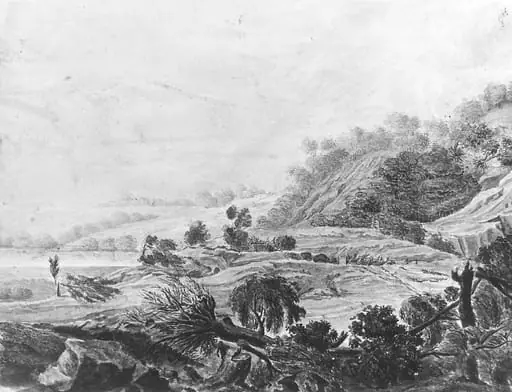
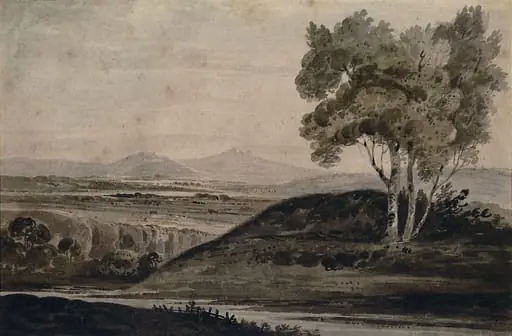
At Five Ponds, North Waterford, Maine is a graphite drawing by the Romanticist artist Edward Seager. It dates from 1845 and is held in the collection of the Metropolitan Museum of Art.
About this work
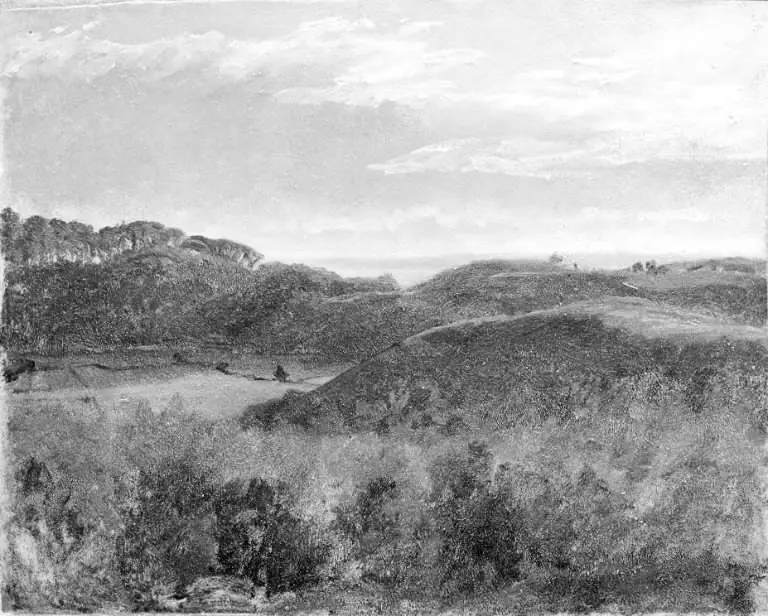
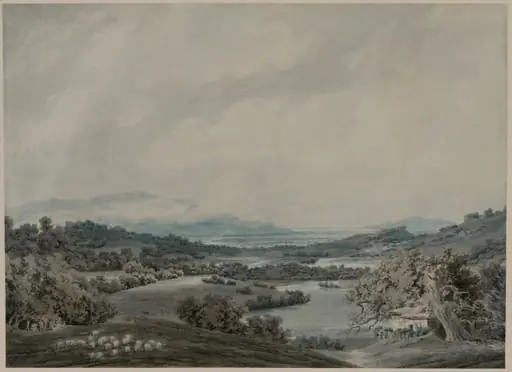
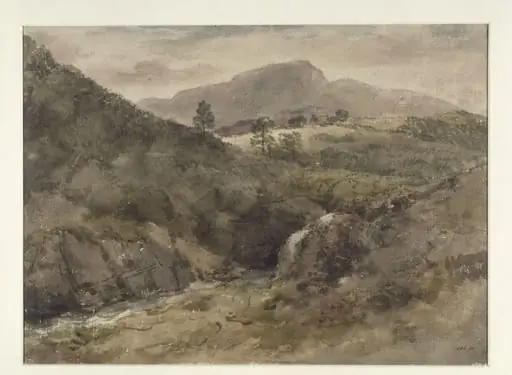
You see a quiet forest scene: five still ponds, tall pines, and a low mountain ridge under a soft sky.
You see a quiet forest scene: five still ponds, tall pines, and a low mountain ridge under a soft sky. The lines are sharp where the artist scratched into the surface—like carving light into paper.
Seager made this in 1845, when most American artists were painting grand history scenes. Instead, he chose a simple corner of Maine, treating it with care. The scratched lines (called sgraffito) let him draw light itself, not just shapes.
To see how other artists painted quiet places, look up the subject *American landscapes*.
Overview
Edward Seager’s drawing, titled At Five Ponds, North Waterford, Maine, dates to around 1845. Executed on buff‑colored paper prepared with gesso, the work portrays a tranquil forest setting: a low ridge, a solitary tree, and five reflective ponds beneath a muted sky. The composition emphasizes the quiet, unadorned character of a remote Maine landscape.
Technique & Style
The piece combines graphite drawing with sgraffito, a method in which the artist scratches through the surface layer to reveal lighter tones beneath. This incising creates crisp, luminous lines that suggest the play of light on water and foliage, allowing Seager to render atmospheric effects without relying on broad washes or pigment.
Subject & Meaning
Rather than grand historical narratives favored by many of his contemporaries, Seager focuses on an ordinary slice of nature. The arrangement of ponds, pines, and ridge invites contemplation of the subtle rhythms of the New England wilderness, reflecting a modest, observational approach to the American landscape.
History & Provenance
Created in the mid‑1840s, the drawing entered the American Wing of the museum’s collection, where it is displayed among other works that document early American topographical art. Its provenance traces back to private holdings before acquisition by the institution, underscoring its relevance to the period’s regional artistic output.
Artist & collection