Artwork
The Guillemot and the Puffin of the Isle of Man
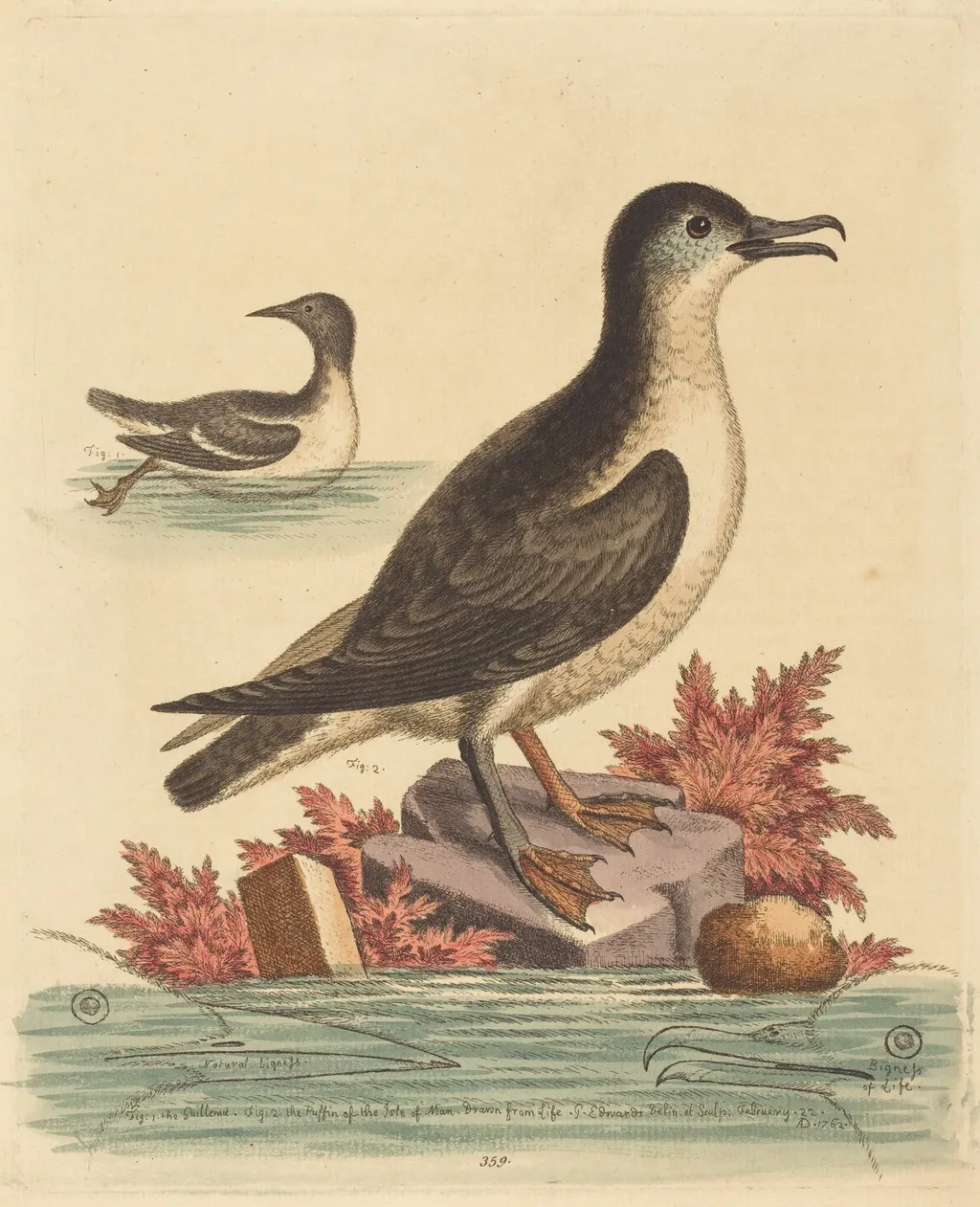
The Guillemot and the Puffin of the Isle of Man is an ink print by the Romanticist artist George Edwards. It dates from 1762 and is held in the collection of the National Gallery of Art.
About this work
The puffin’s bright beak stands out against the softer gray of the guillemot.
This etching shows two birds, a guillemot and a puffin, perched on rocks. They face each other like a pair of neighbors chatting. The puffin’s bright beak stands out against the softer gray of the guillemot.
George Edwards made this in 1762. He was one of the first artists to focus only on birds. His drawings helped people learn what these birds actually looked like.
Look for another etching by Edwards, George next.
Overview
The Guillemot and the Puffin of the Isle of Man is a hand-colored etching created by George Edwards in 1762, depicting two seabirds in a naturalistic setting.
Subject & Meaning
The print features a guillemot and a puffin perched on rocks, facing each other in a conversational pose. The contrast between the puffin's vibrant beak and the guillemot's subdued gray plumage is a notable visual element.
Technique & Style
Executed as a hand-colored etching, the work showcases Edwards' ability to balance detailed rendering with the expressive potential of etching, enhanced by selective coloring.
History & Provenance
Created in 1762 by George Edwards, a pioneering bird artist, this etching is part of his contributions to the field of ornithological illustration, aiding in the accurate visualization of bird species.
Context
Edwards' focus on birds was innovative for his time, setting him apart as an artist dedicated to ornithological subjects, thereby contributing to educational and scientific understanding.
Legacy
This etching, along with Edwards' other works, has facilitated the identification and appreciation of bird species, leaving a lasting impact on both art and ornithology.
Artist & collection


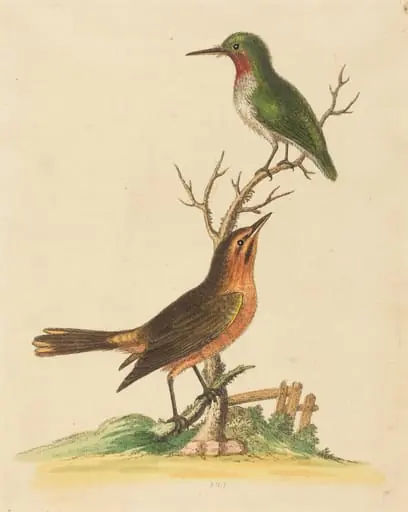 Green Bird with Red Throat and Brown and Orange Bird
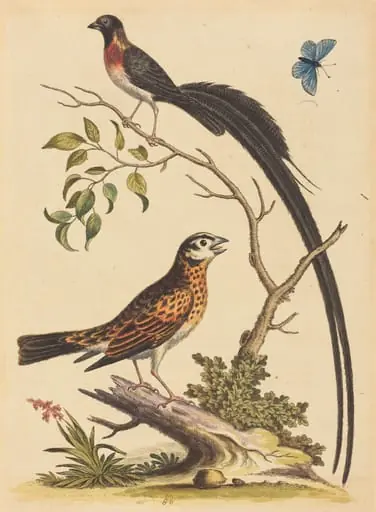 Two Birds, One with Very Long Tailfeathers, and Blue Butterfly
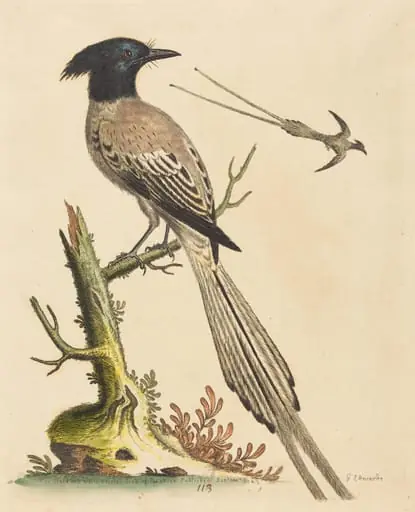 The Black and White Crested Bird of Paradise
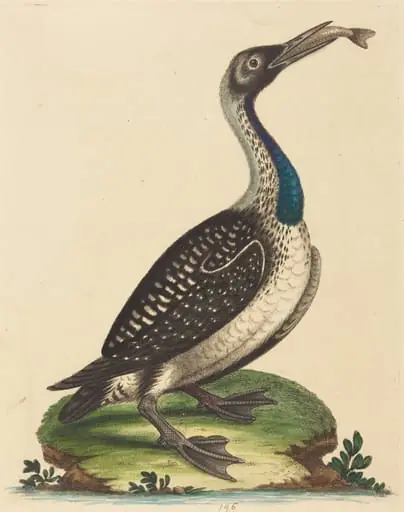 Black and White Water-Fowl with Blue Throat
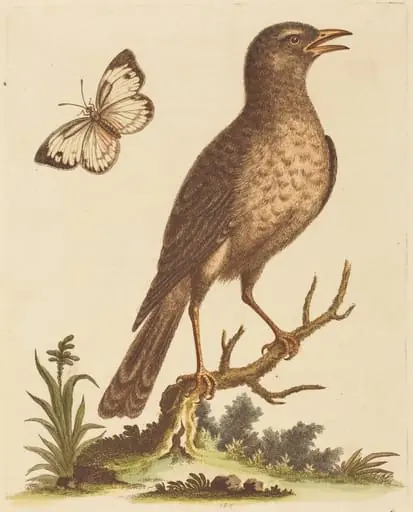 Brown Bird with a Butterfly
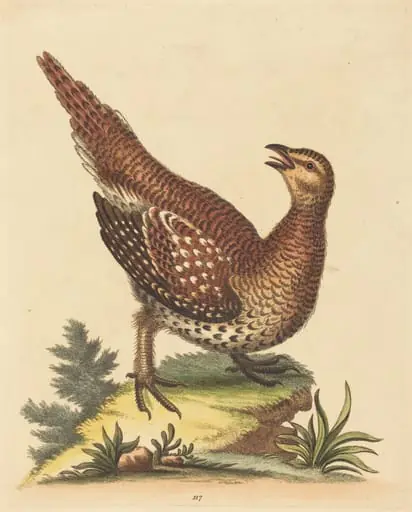 Brown Speckled Bird
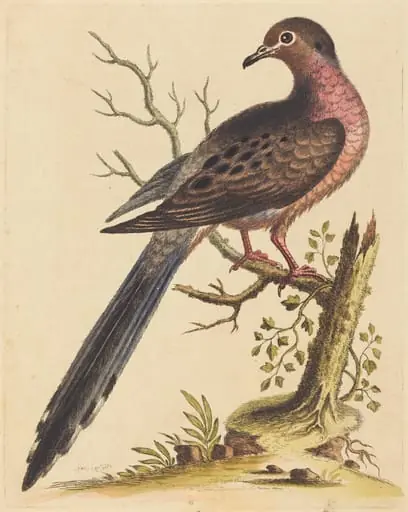 Fedoa Americana pectore ruso
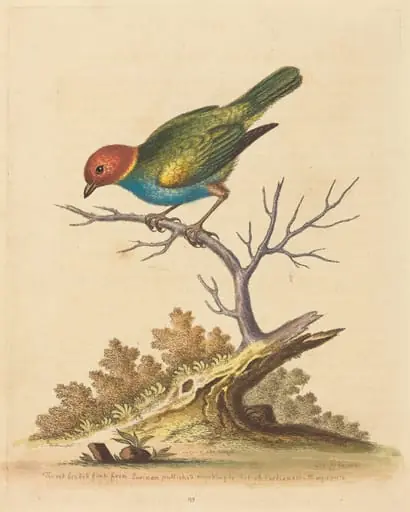 The Red-Headed Finch from Surinam