Artwork
Fedoa Americana pectore ruso
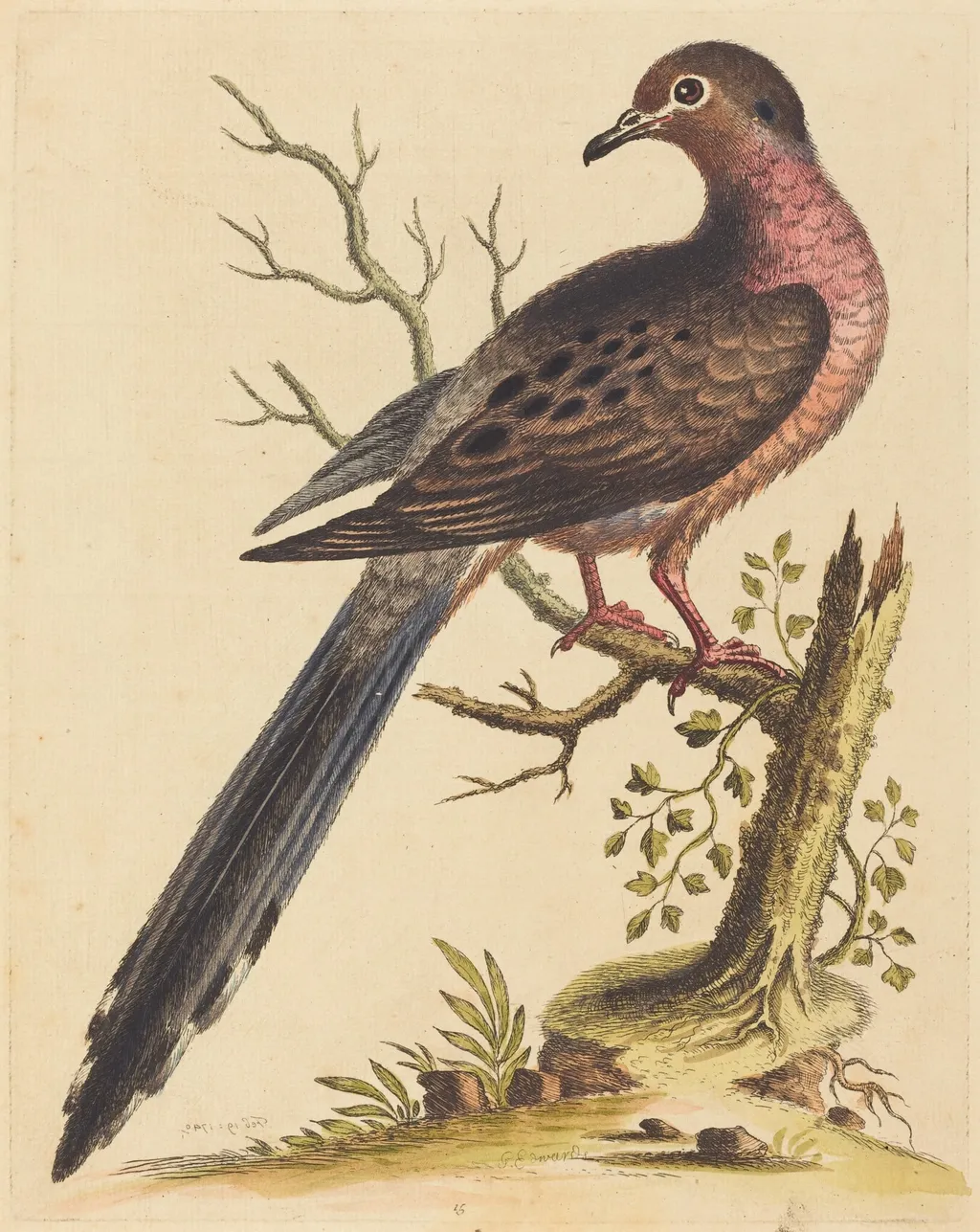
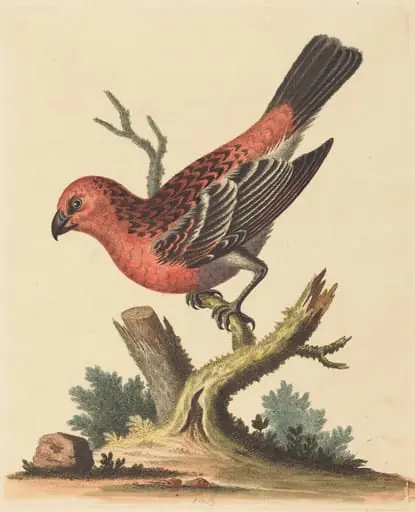
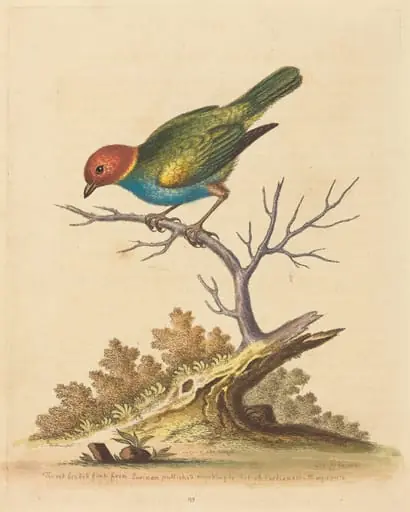
Fedoa Americana pectore ruso is an ink print by the Baroque artist George Edwards. It dates from 1740 and is held in the collection of the National Gallery of Art.
About this work
Overview
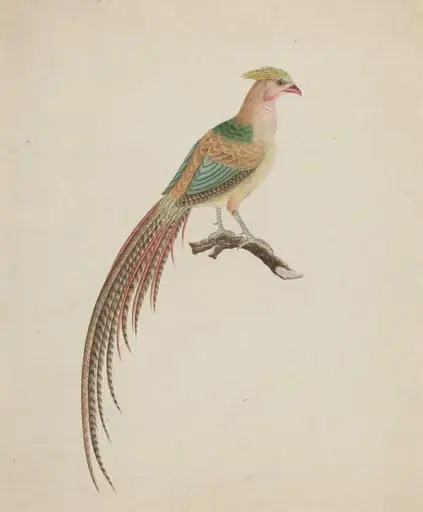
Fedoa Americana pectore ruso is a hand‑coloured etching on laid paper produced by the English engraver George Edwards in 1740. The work depicts a solitary bird perched on a stark branch, its plumage rendered in a blend of brown and pink tones, with a long, fanned tail and a sharply defined beak.
Subject & Meaning
The image portrays a bird—identified by its scientific name Fedoa americana—captured in a moment of stillness. The minimal background of a few green leaves and a tuft of grass suggests a natural setting, emphasizing the creature’s form and coloration rather than narrative content.
Technique & Style
Edwards employed precise line work to delineate the feather texture and the bird’s anatomy, while the hand‑applied colour washes provide a gentle warmth to the figure. The use of laid paper, with its characteristic ribbed texture, enhances the tactile quality of the print.
History & Provenance
Created in the mid‑18th century, the etching reflects the period’s interest in natural history illustration. Although specific ownership records are scarce, works by Edwards were commonly circulated among collectors of scientific and decorative prints during the Enlightenment.
Context
The piece belongs to a broader tradition of ornithological prints that combined scientific observation with artistic rendering. In the 1740s, such images served both educational purposes and aesthetic tastes, bridging the gap between scholarly documentation and decorative art.
Artist & collection


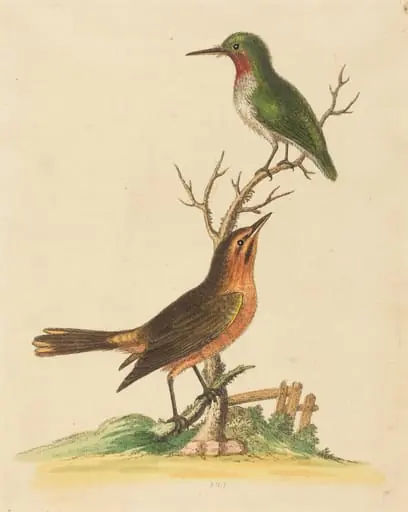 Green Bird with Red Throat and Brown and Orange Bird
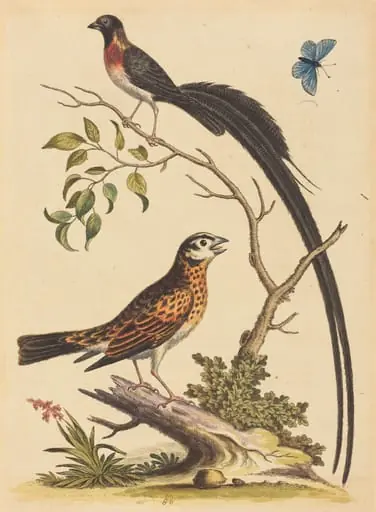 Two Birds, One with Very Long Tailfeathers, and Blue Butterfly
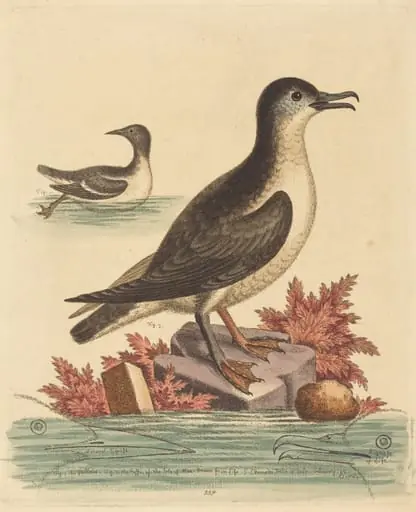 The Guillemot and the Puffin of the Isle of Man
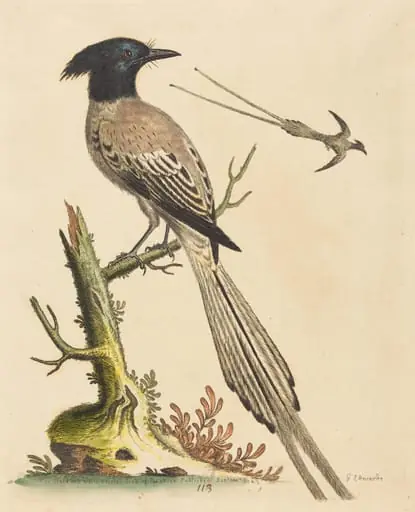 The Black and White Crested Bird of Paradise
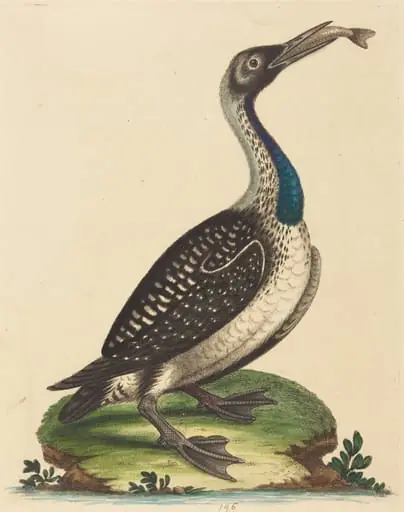 Black and White Water-Fowl with Blue Throat
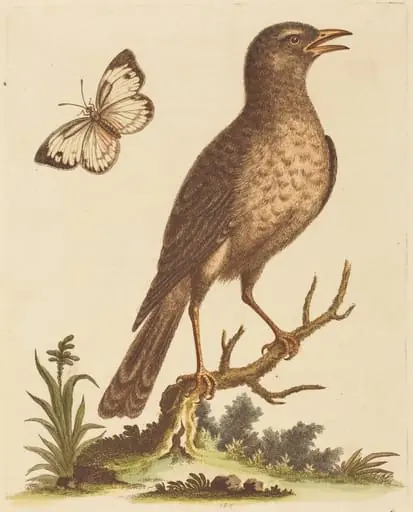 Brown Bird with a Butterfly
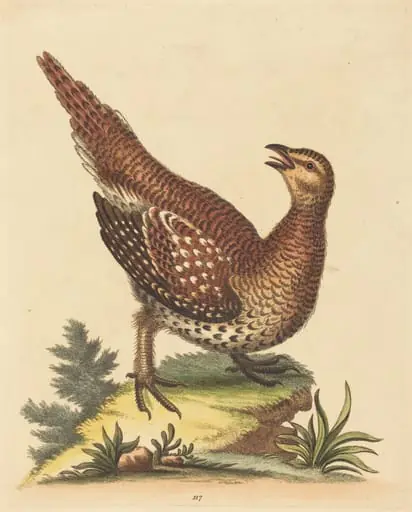 Brown Speckled Bird
 The Red-Headed Finch from Surinam