Artwork
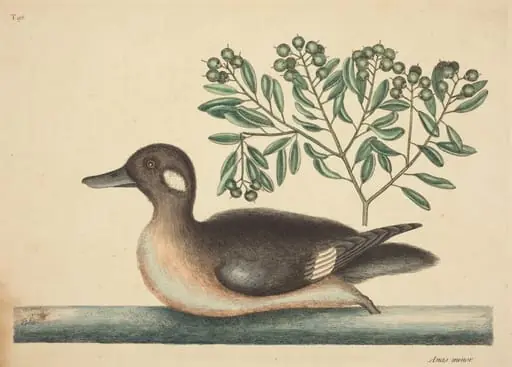
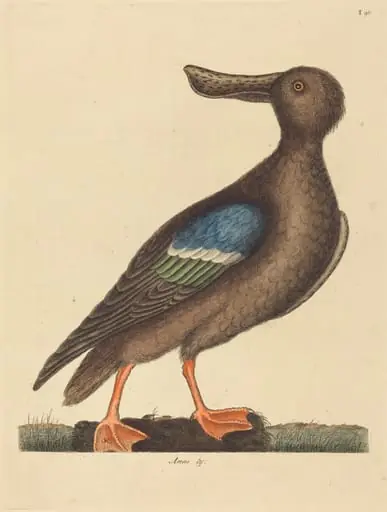
The Blue Winged Shoveler (Anas clypeata foemina)
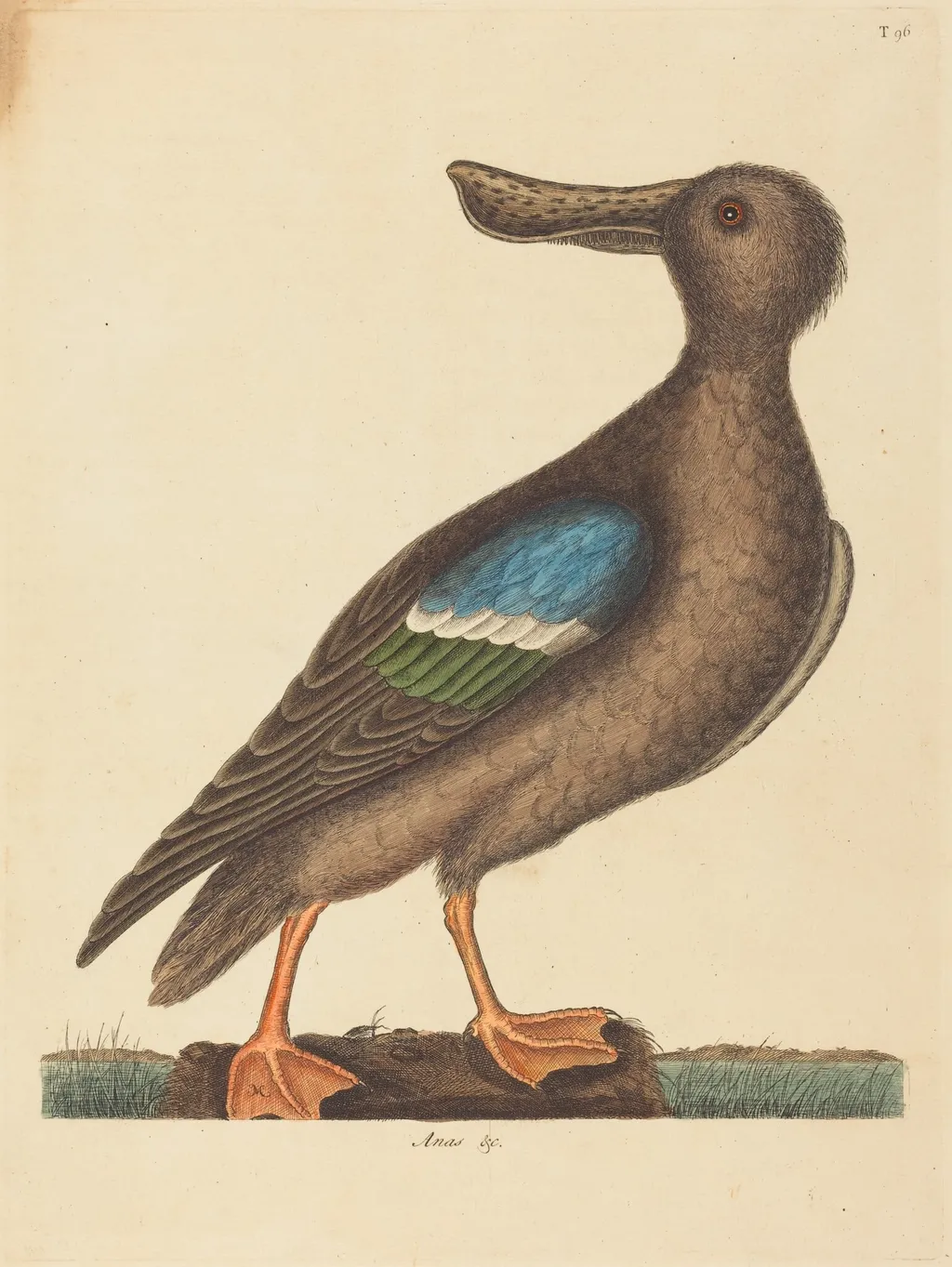
The Blue Winged Shoveler (Anas clypeata foemina) is an ink print by the Romanticist artist Mark Catesby. It is held in the collection of the National Gallery of Art.
About this work
Overview
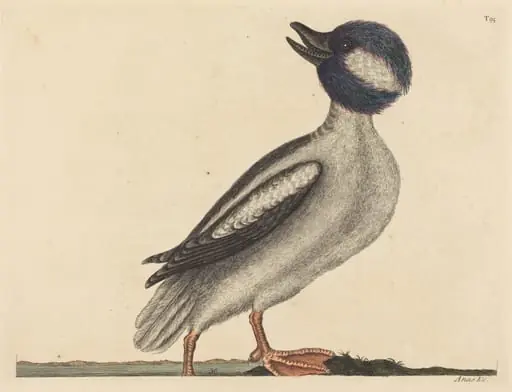
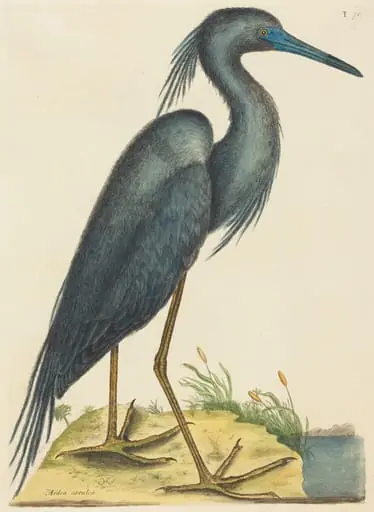
Catesby produced these works during and after his time in the American colonies, combining scientific observation with artistic precision.
Created in 1754, this print by Mark Catesby depicts a female blue-winged shoveler duck in shallow water. Executed in etching and engraving with hand-applied color on laid paper, it belongs to a series of natural history illustrations documenting North American wildlife. Catesby produced these works during and after his time in the American colonies, combining scientific observation with artistic precision.
Subject & Meaning
The image captures a female blue-winged shoveler in its natural wetland habitat, emphasizing plumage details that distinguish it from the male. The earthy browns of its body contrast with the vivid blue of its wing feathers, reflecting the bird’s adaptive camouflage and seasonal behavior. Catesby’s focus on accurate anatomical features suggests a commitment to scientific representation rather than idealized aesthetics.
Technique & Style
Catesby used etching and engraving to render fine linear details of feathers and water, then added color by hand to enhance realism. The use of laid paper, common in 18th-century printmaking, provided a textured surface that complemented the organic forms. His style blends meticulous draftsmanship with a restrained palette, avoiding theatricality in favor of clarity and botanical and zoological fidelity.
History & Provenance
The print was published as part of Catesby’s two-volume *Natural History of Carolina, Florida and the Bahama Islands*, released between 1729 and 1747. Though the duck plate appeared later, in 1754, it was produced using the same methods and observational framework. Original impressions were distributed among European scientific institutions and collectors, establishing Catesby as a key figure in early American natural history illustration.
Context
Catesby worked during a period when European interest in New World biodiversity was growing. Without access to established museums or libraries, he relied on direct observation, sketching specimens in situ across the southeastern colonies. His work preceded Linnaean classification, yet his plates provided foundational visual records for later taxonomists studying North American fauna.
Legacy
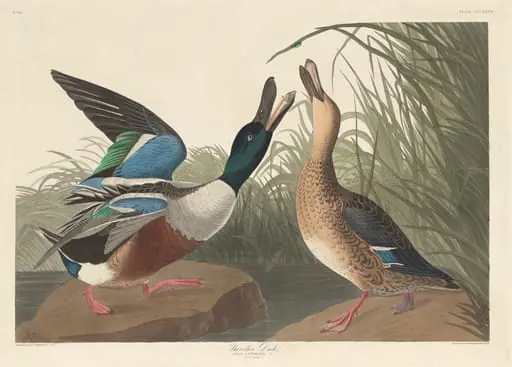
Catesby’s illustrations influenced subsequent naturalists, including Audubon, by demonstrating the value of field-based documentation. Though later works achieved greater technical polish, Catesby’s prints remain valued for their authenticity and early record of species now altered or diminished by habitat change. His approach set a precedent for integrating art and science in ecological study.
Artist & collection

Artist
Mark Catesby (24 March 1683 – 23 December 1749) was an English naturalist who studied the flora and fauna of the New World.