Artwork
Black Tern
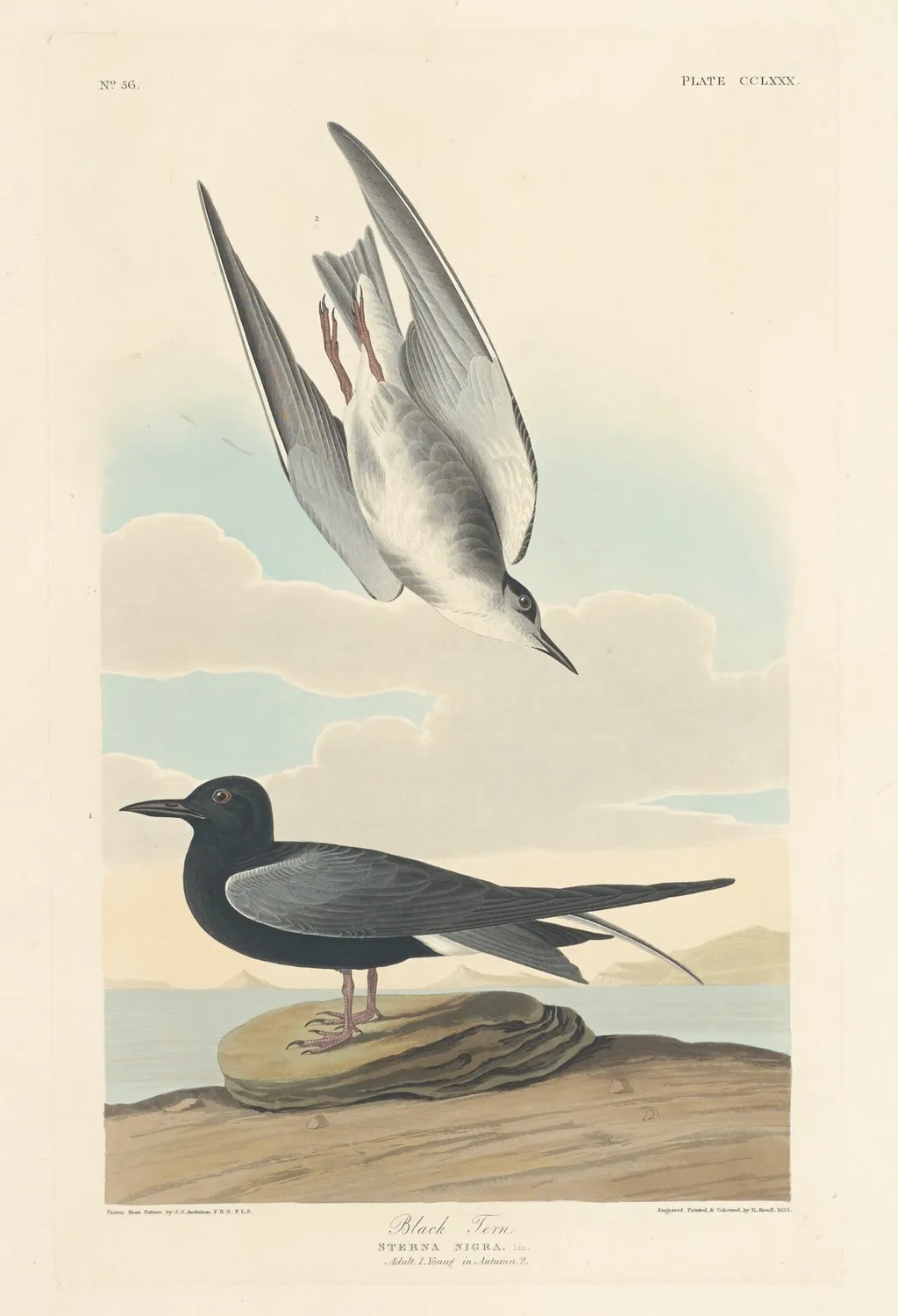
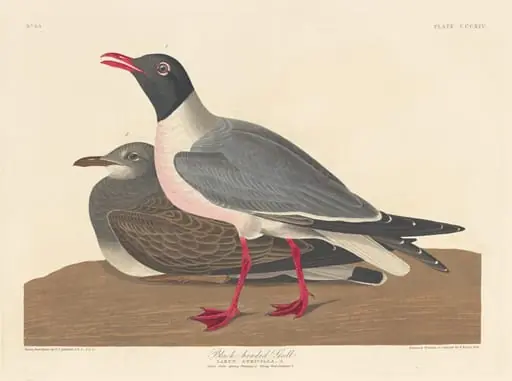
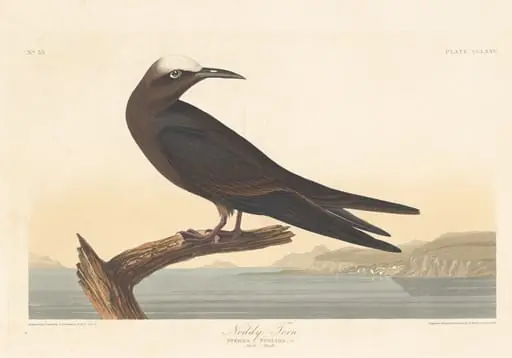
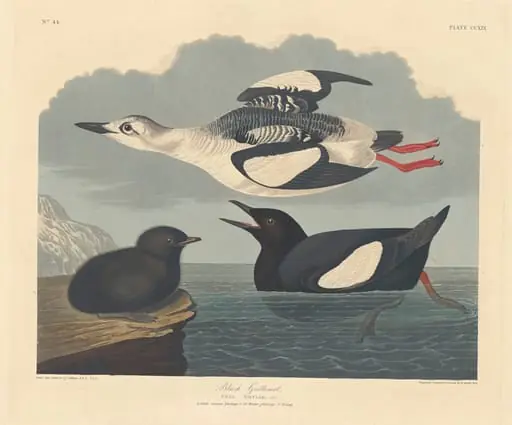
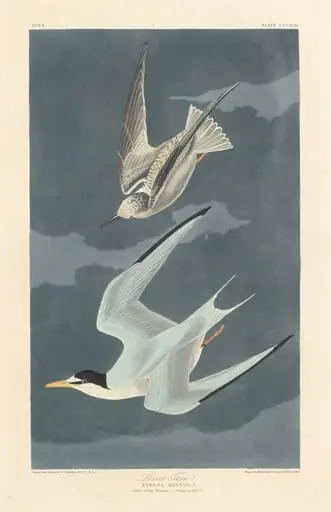
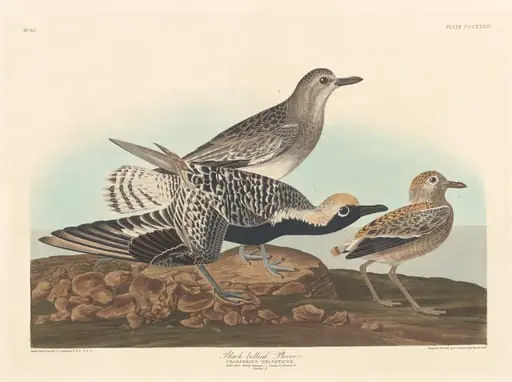
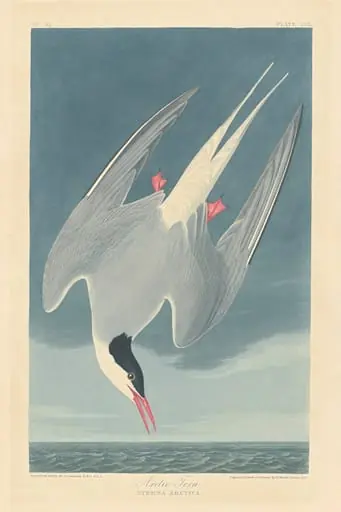
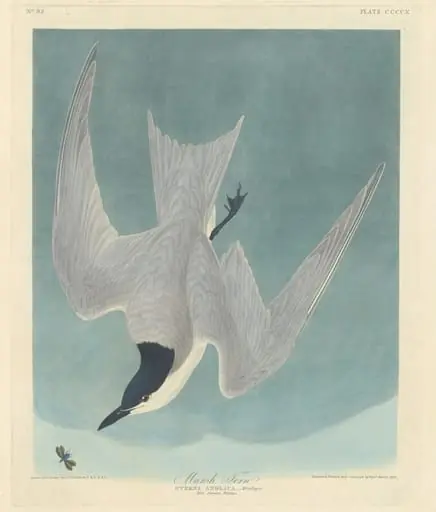
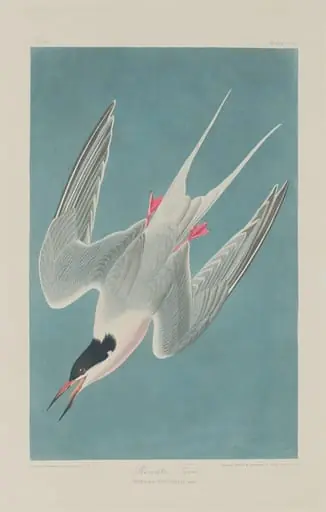
Black Tern is an ink print by the Romanticist artist Robert Havell Jr.. It dates from 1835 and is held in the collection of the National Gallery of Art.
About this work
Overview
The work belongs to a series documenting North American avian species, reflecting scientific interest in birdlife during the early 19th century.
Robert Havell Jr. produced this hand-colored engraving and aquatint in 1835 on Whatman wove paper, a support favored for its durability and fine texture. As part of a family of printmakers, Havell continued a tradition of technical precision and naturalistic illustration. The work belongs to a series documenting North American avian species, reflecting scientific interest in birdlife during the early 19th century.
Subject & Meaning
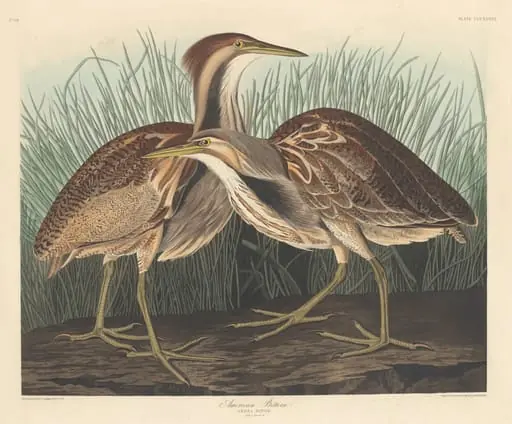
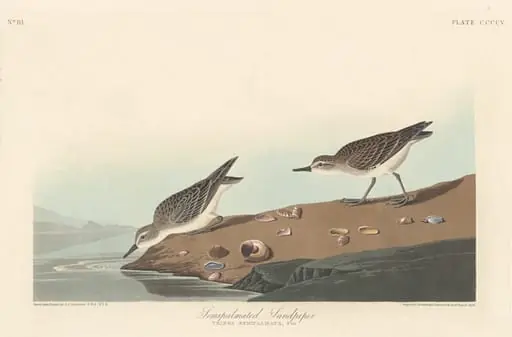
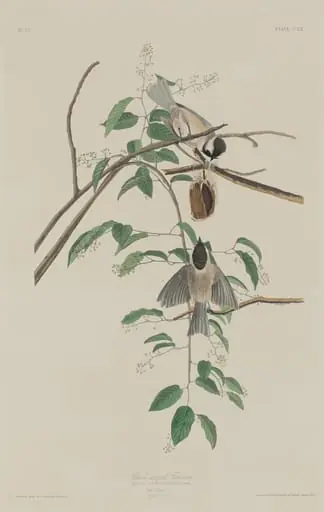
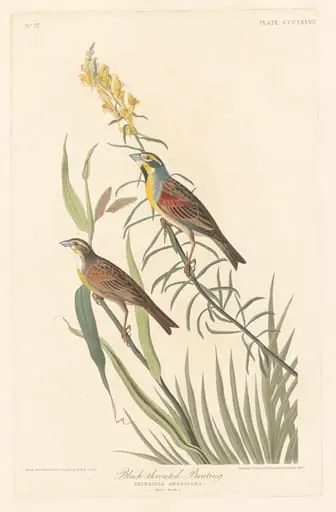
The print portrays two black terns, a migratory seabird known for its agile flight and coastal habitat. One bird soars with wings extended, the other perches on a rocky outcrop, its dark plumage contrasting with the lighter tones of the sky and water. The Latin label *Sterna nigra* anchors the image in scientific classification, suggesting an intent to document rather than idealize the species.
Technique & Style
Havell employed aquatint to achieve subtle gradations of tone, particularly in the sky and water, while fine engraving lines defined feather textures and wave patterns. Hand-coloring added naturalistic hues to the birds’ plumage, enhancing realism without overt stylization. The use of Whatman paper allowed for delicate ink retention, supporting the intricate detail characteristic of his family’s printmaking practice.
History & Provenance
The Havell family, active in London and later in the United States, specialized in ornithological prints during the early 1800s. Robert Havell Jr. worked closely with naturalist John James Audubon, producing plates for *The Birds of America*. This print likely originated from that project or a related endeavor, circulating among scientific and collector circles in the mid-19th century.
Context
In the 1830s, detailed natural history illustration was closely tied to scientific exploration and colonial documentation. Artists like Havell operated at the intersection of art and science, producing images for academic audiences and private collectors. The focus on native species reflected growing interest in American biodiversity, even as European techniques dominated the medium.
Legacy
Havell’s prints, including this one, remain valued for their technical rigor and fidelity to natural forms. Though overshadowed by Audubon’s fame, Havell’s contributions to ornithological printmaking helped standardize visual documentation of bird species. His work continues to be studied for its role in shaping early American natural history imagery.
Artist & collection

Artist
The Havell family of Reading, Berkshire, England, included a number of notable engravers, etchers and painters, as well as writers, publishers, educators, and musicians.