Artwork
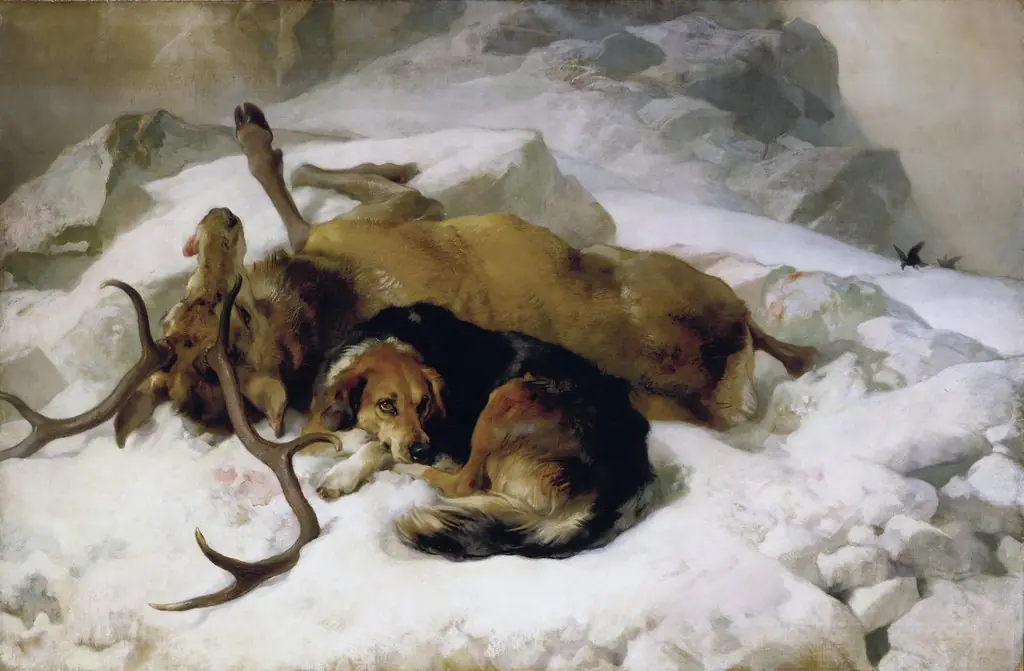
Highland Shepherd’s Dog in the Snow (previously known as 'Sheepdog Rescuing a Ram from a Snowdrift')
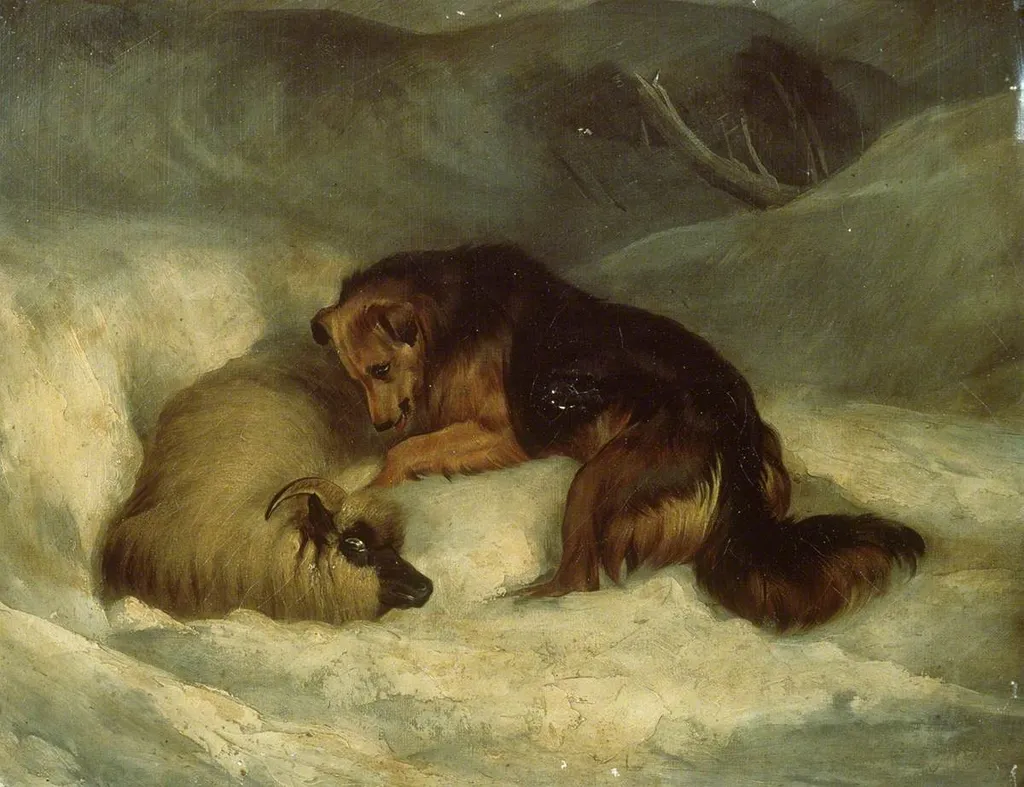
Highland Shepherd’s Dog in the Snow (previously known as 'Sheepdog Rescuing a Ram from a Snowdrift') is an oil painting by Edwin Landseer. It is held in the collection of the National Library of Wales.
About this work
Overview
Painted in 1890 by Edwin Landseer, this oil work portrays a Highland shepherd’s dog and a ram in a wintry landscape. Once titled with a narrative of rescue, the painting now emphasizes a quieter, more contemplative bond between the two animals. It resides in the National Library of Wales, where it is valued for its emotional subtlety and detailed rendering of natural elements under snow.
Subject & Meaning
The scene evokes a sense of mutual endurance in harsh conditions, reflecting themes of loyalty and quiet coexistence rather than dramatic rescue.
The painting centers on a large, dark-coated dog standing vigil beside a recumbent ram, both rendered with attention to anatomical accuracy. The ram, its horns curved and coat thick with snow, appears resting rather than in distress. The dog’s alert posture suggests guardianship, not intervention. The scene evokes a sense of mutual endurance in harsh conditions, reflecting themes of loyalty and quiet coexistence rather than dramatic rescue.
Technique & Style
Landseer employed fine brushwork to capture the texture of fur against snow, using layered glazes to suggest depth and cold. The dog’s dark coat contrasts with the ram’s lighter, woolly form, while the snow is rendered with soft, muted tones to avoid artificial brightness. The background fades into hazy hills and distant trees, enhancing the stillness of the foreground. His style blends realism with a restrained romanticism, avoiding melodrama.
History & Provenance
The painting was originally titled to imply a heroic rescue, but later scholarship reinterpreted its intent. It entered the collection of the National Library of Wales in the 20th century, where it has remained. Its title was revised to reflect a more accurate reading of the scene, aligning with Landseer’s later interest in animal behavior over anthropomorphized drama. No significant alterations to the canvas are recorded.
Context
Created near the end of Landseer’s career, this work reflects his lifelong fascination with animals in natural settings. By 1890, Victorian audiences had grown skeptical of overly sentimental animal narratives. Landseer responded with quieter compositions, emphasizing observation over storytelling. The painting aligns with a broader shift in 19th-century British art toward naturalism and emotional restraint in depictions of wildlife and domesticated animals.
Legacy
Though less widely exhibited than Landseer’s earlier dramatic works, this painting is recognized for its nuanced portrayal of animal companionship. It contributes to the understanding of his artistic evolution and the changing cultural attitudes toward animals in art. Scholars cite it as an example of how 19th-century painters moved from theatricality toward empathetic, observational realism in animal subjects.
Artist & collection

Artist
Sir Edwin Henry Landseer was an English painter and sculptor, well known for his paintings of animals – particularly horses, dogs, and stags. His best-known work is the lion sculptures at the base of Nelson's Column in Trafalgar Square.