Artwork
Chevy
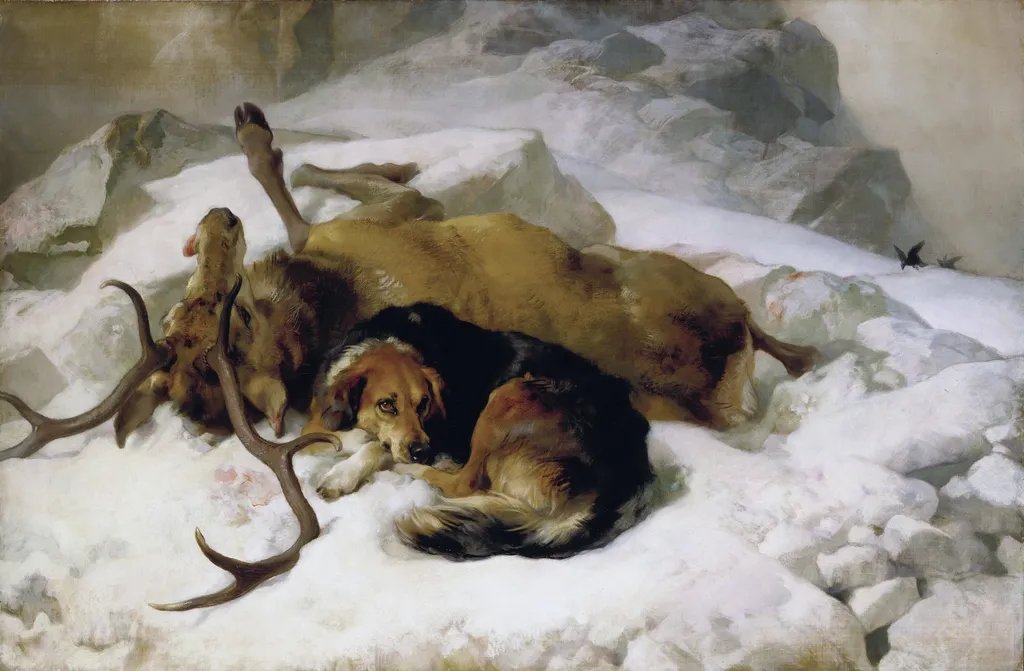
Chevy is an oil painting by the British Romanticist artist Edwin Landseer. It dates from 1868 and is held in the collection of the Detroit Institute of Arts.
About this work
Overview
Edwin Landseer’s 1868 oil painting titled “Chevy” presents a quiet winter tableau in which a small dog lies beside the carcass of a stag. The composition is rendered in muted browns, grays and whites, set against a snowy ground strewn with rocks. The work is part of the collection of the Detroit Institute of Arts.
Subject & Meaning
The image juxtaposes the living animal with the dead one: a brown‑black dog curled up, its gaze directed downward, and a stag on its side, antlers still present and tongue protruding. The dog’s posture and expression have been read as a gesture of mourning, suggesting an emotional response to the loss of the deer.
Technique & Style
Landseer employs oil on canvas to achieve a soft, atmospheric quality, using layered brushwork to model the fur of the dog and the sleek hide of the stag. The limited palette of earth tones and cool whites reinforces the wintry setting, while subtle tonal shifts convey the texture of snow and the roughness of surrounding stones.
History & Provenance
Created in the late nineteenth century, “Chevy” entered the Detroit Institute of Arts’ holdings in the early twentieth century, where it has remained on view. The painting reflects Landseer’s continued interest in animal subjects, a theme that defined much of his career and appealed to Victorian audiences.
Own this work as a print
Artist & collection

Artist
Sir Edwin Henry Landseer was an English painter and sculptor, well known for his paintings of animals – particularly horses, dogs, and stags. His best-known work is the lion sculptures at the base of Nelson's Column in Trafalgar Square.

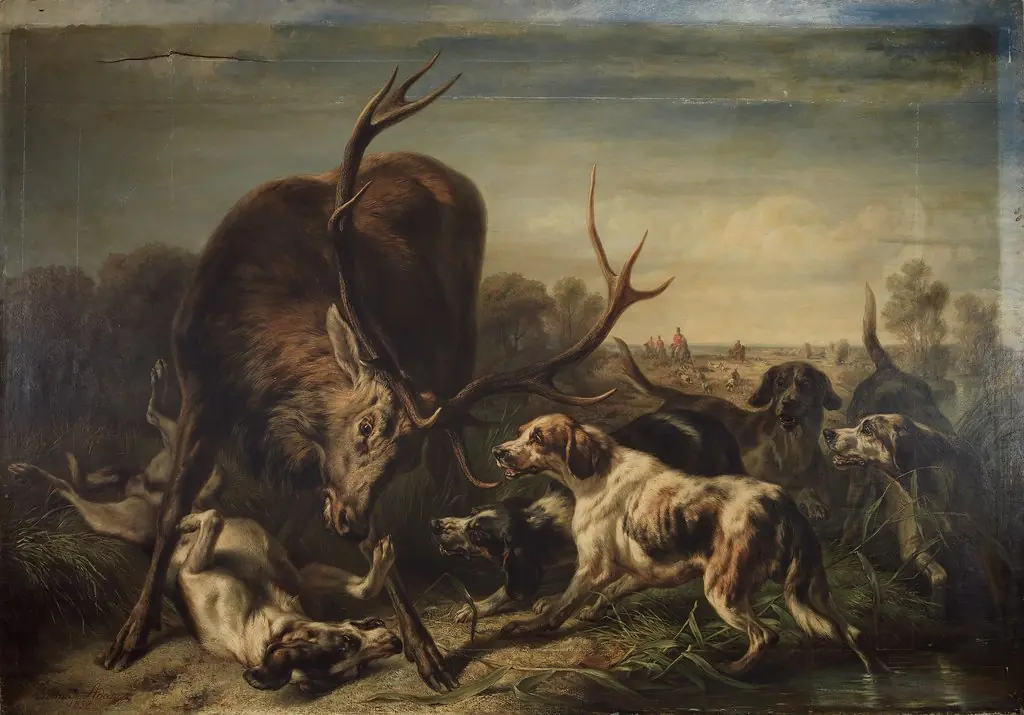 Hirsch, von Hunden gestellt
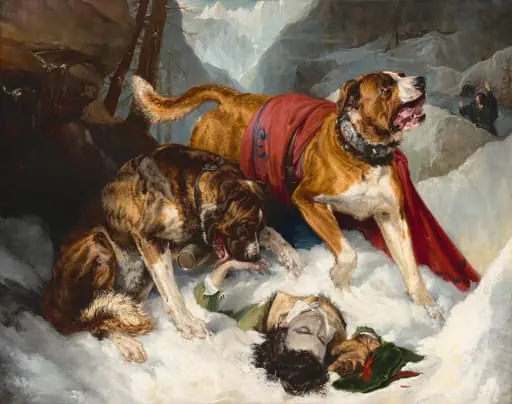 Alpine Mastiffs Reanimating a Distressed Traveler
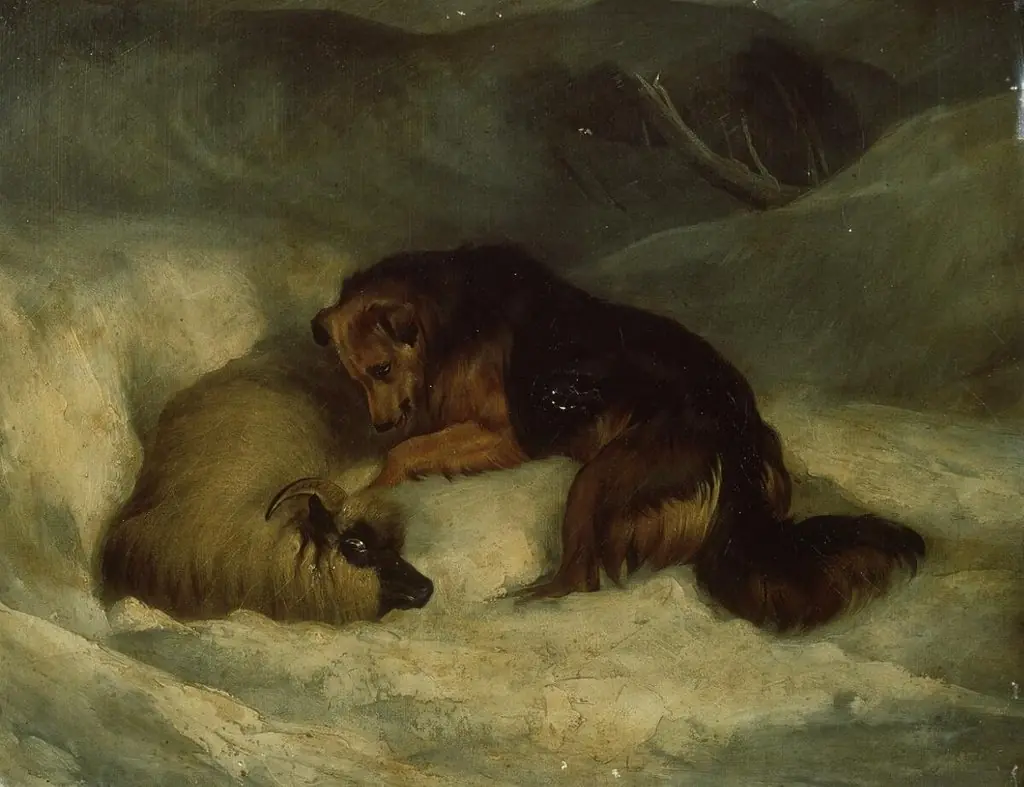 Sheepdog rescuing ram from snowdrift
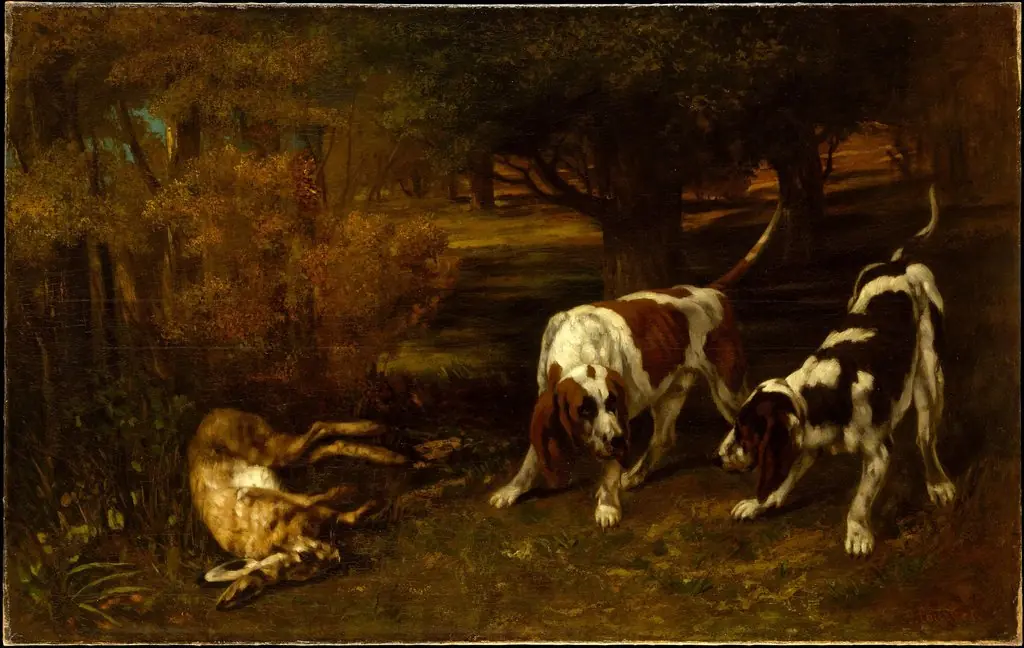 Hunting Dogs with Dead Hare
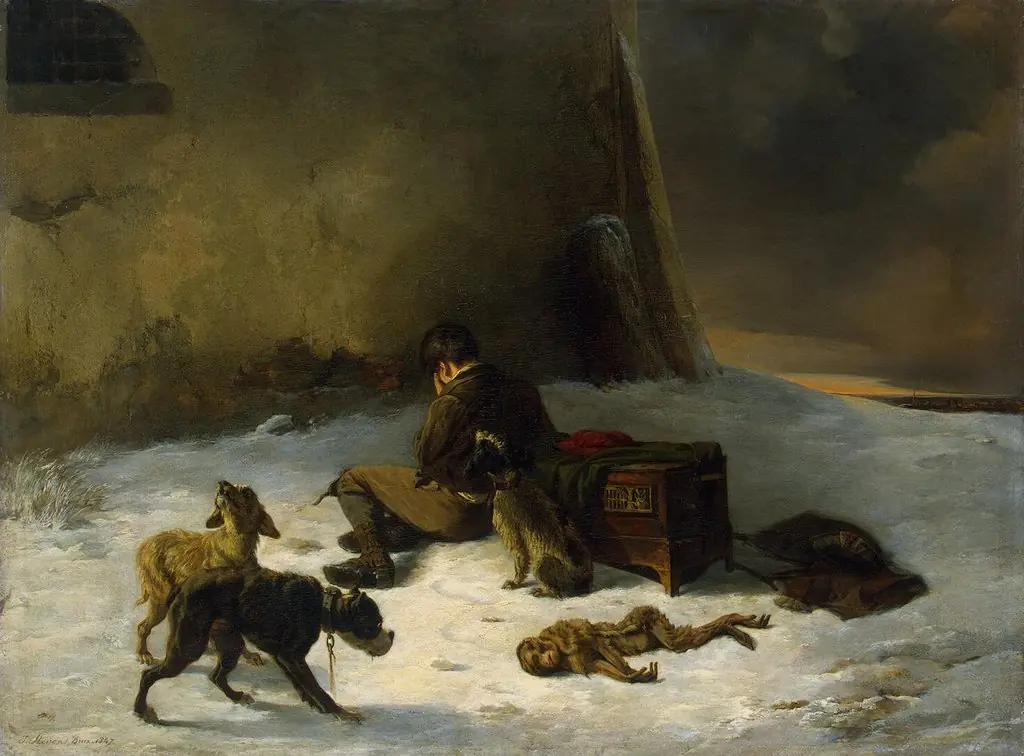 Travelling Actor's Misfortune
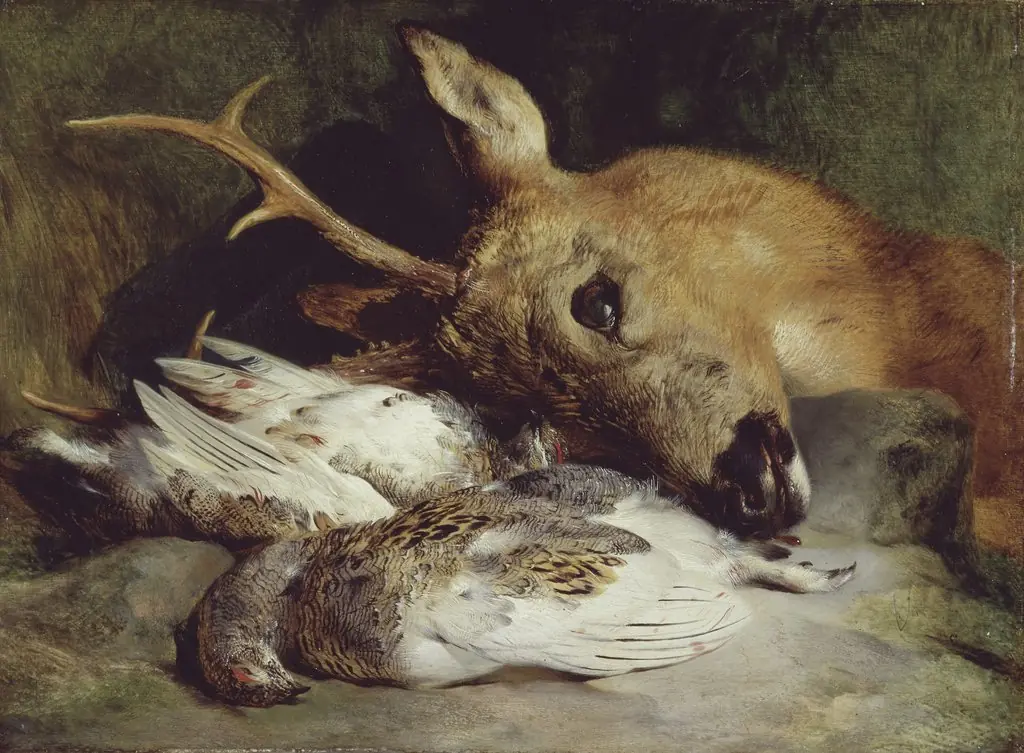 Head of a Roebuck and Two Ptarmigan
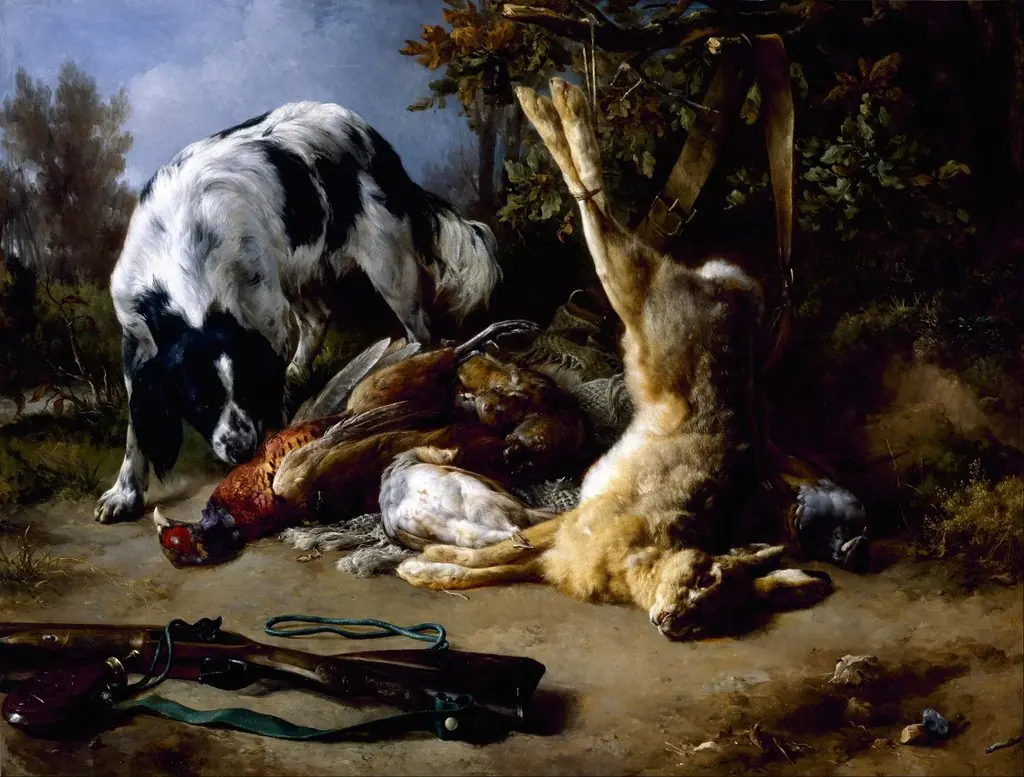 Spaniel with a Still Life of Dead Game
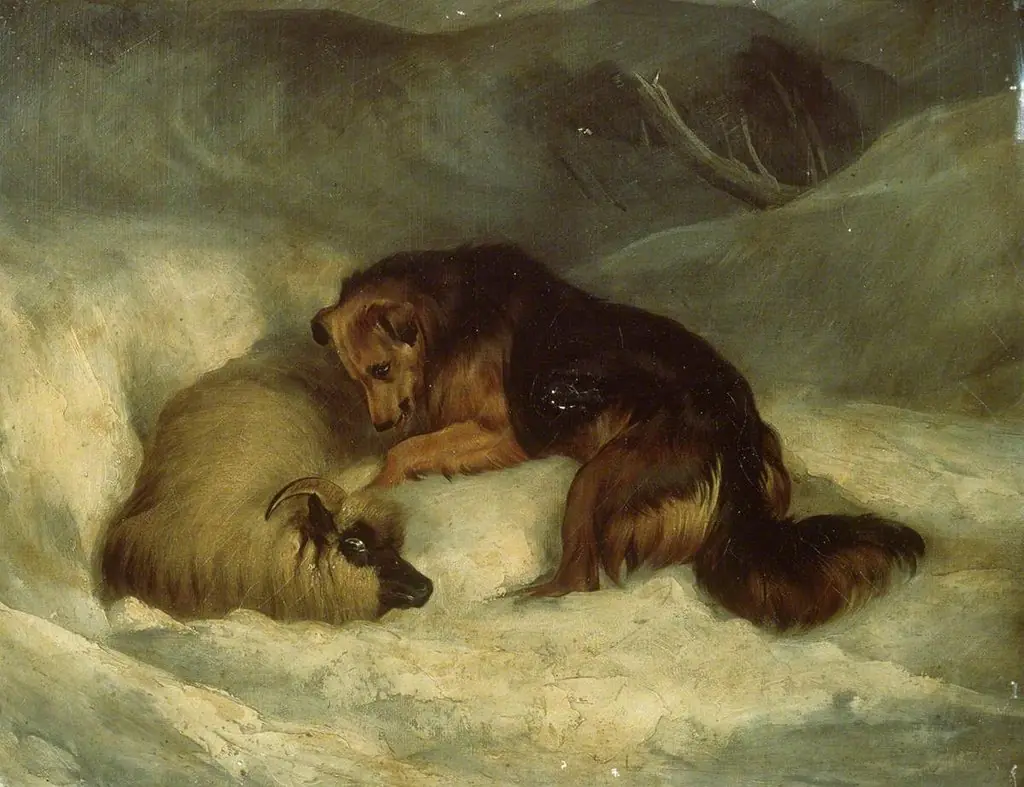 Highland Shepherd’s Dog in the Snow (previously known as 'Sheepdog Rescuing a Ram from a Snowdrift')
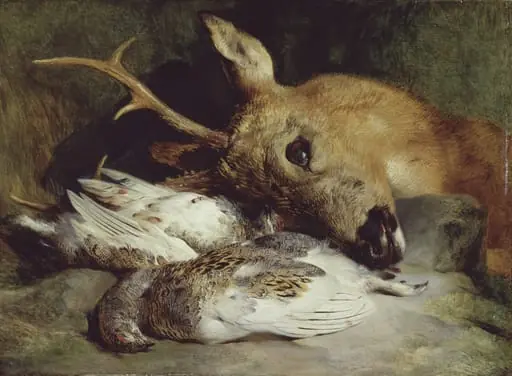 Head of a Roebuck and Two Ptarmigan
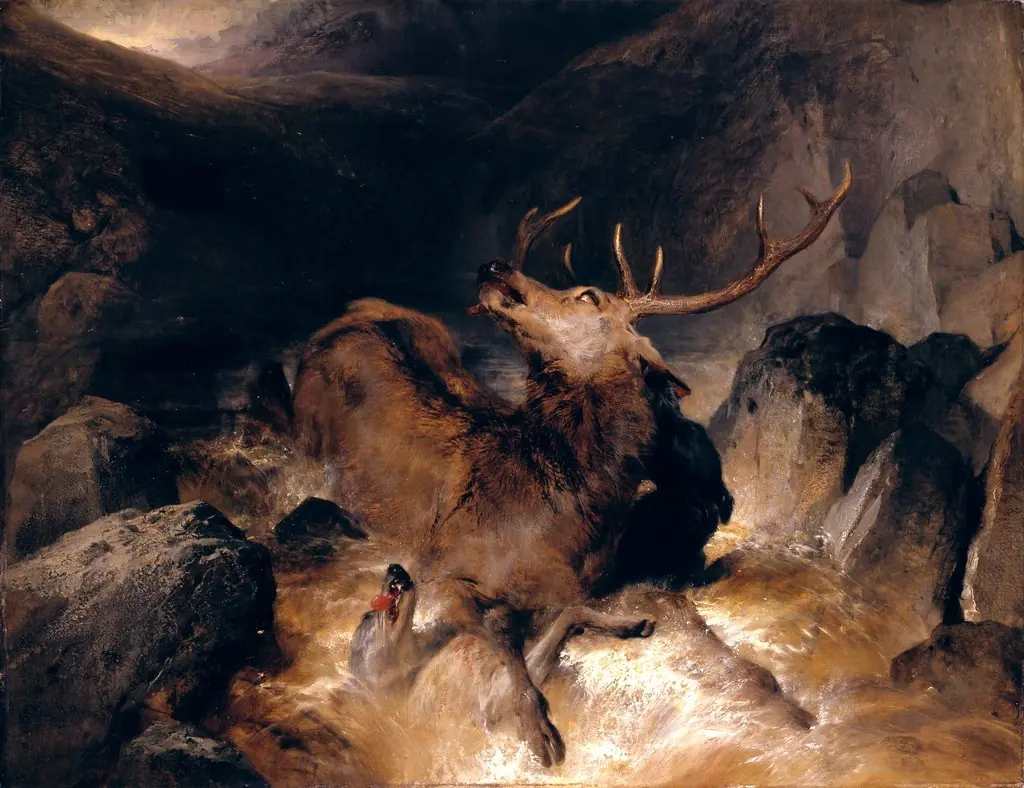 Deer and Deer Hounds in a Mountain Torrent
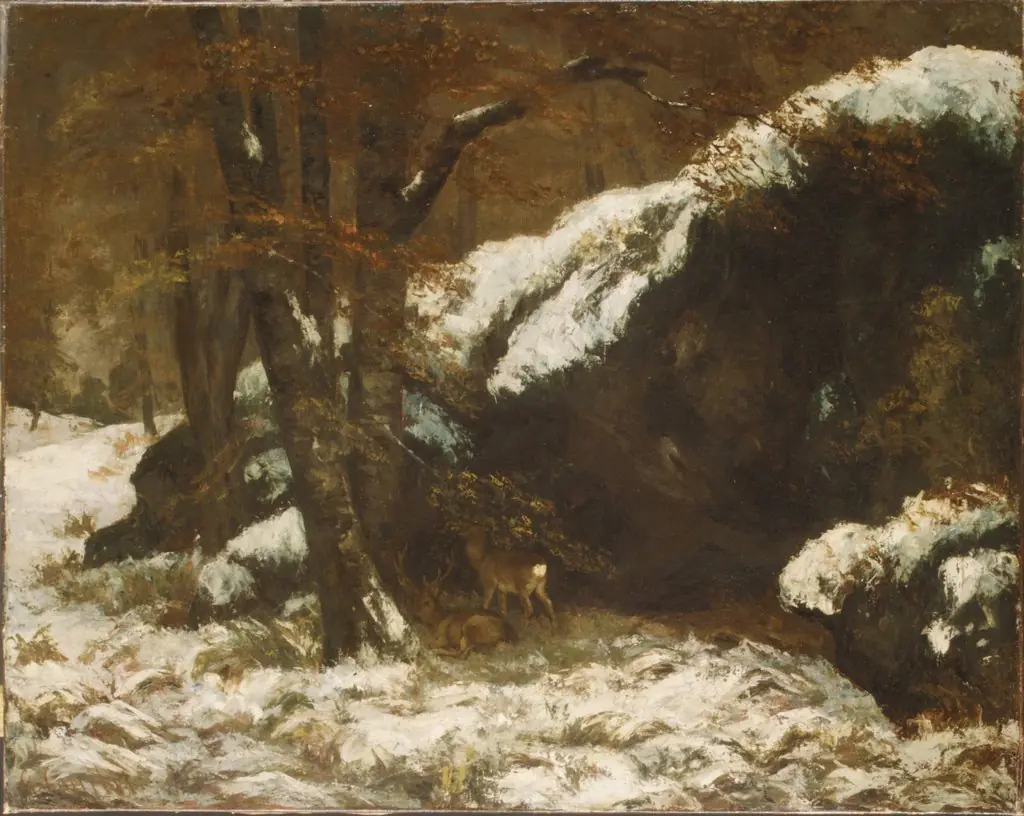 The Deer
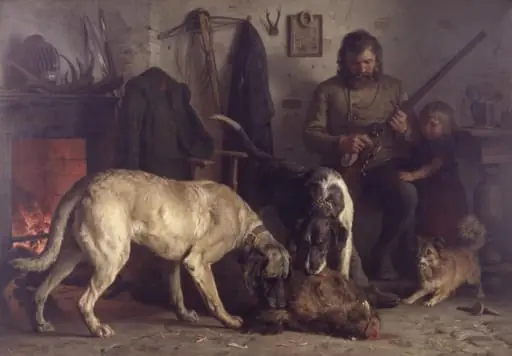 After the Boar Hunt