Artwork
Ptarmigan in a Landscape
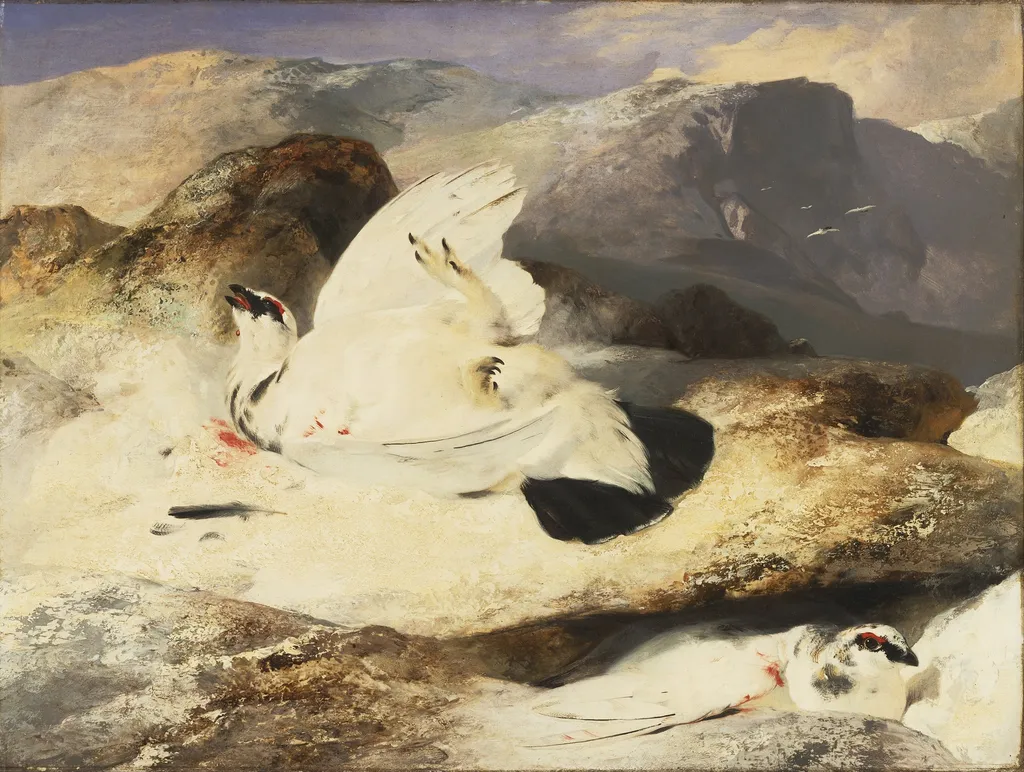
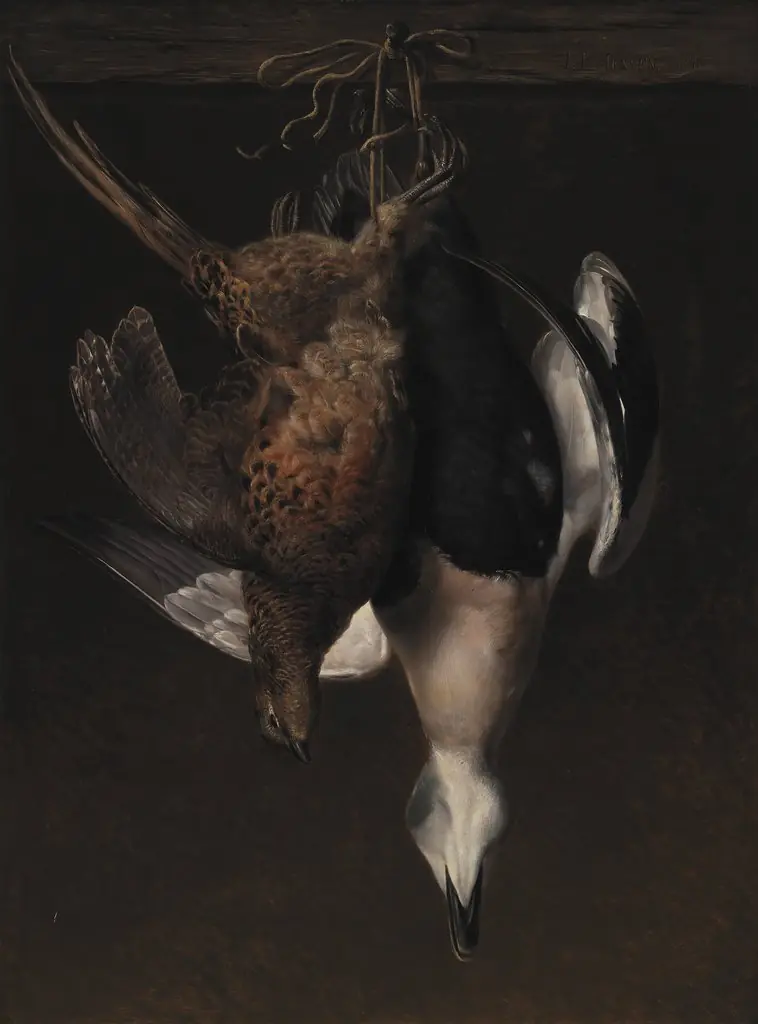
Ptarmigan in a Landscape is an oil painting by the British Romanticist artist Edwin Landseer. It dates from 1833 and is held in the collection of the Philadelphia Museum of Art.
About this work
Overview
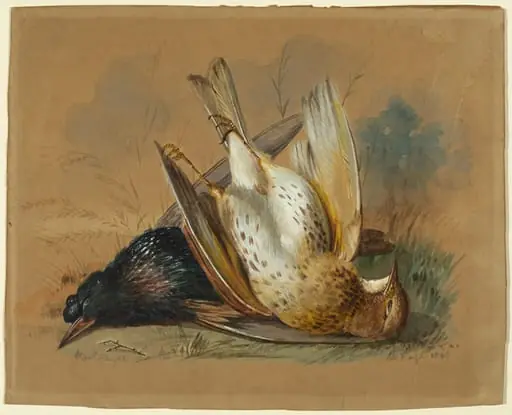
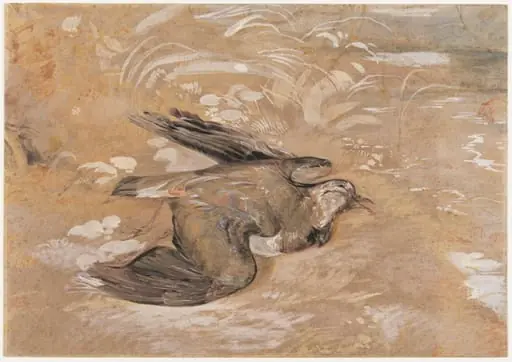
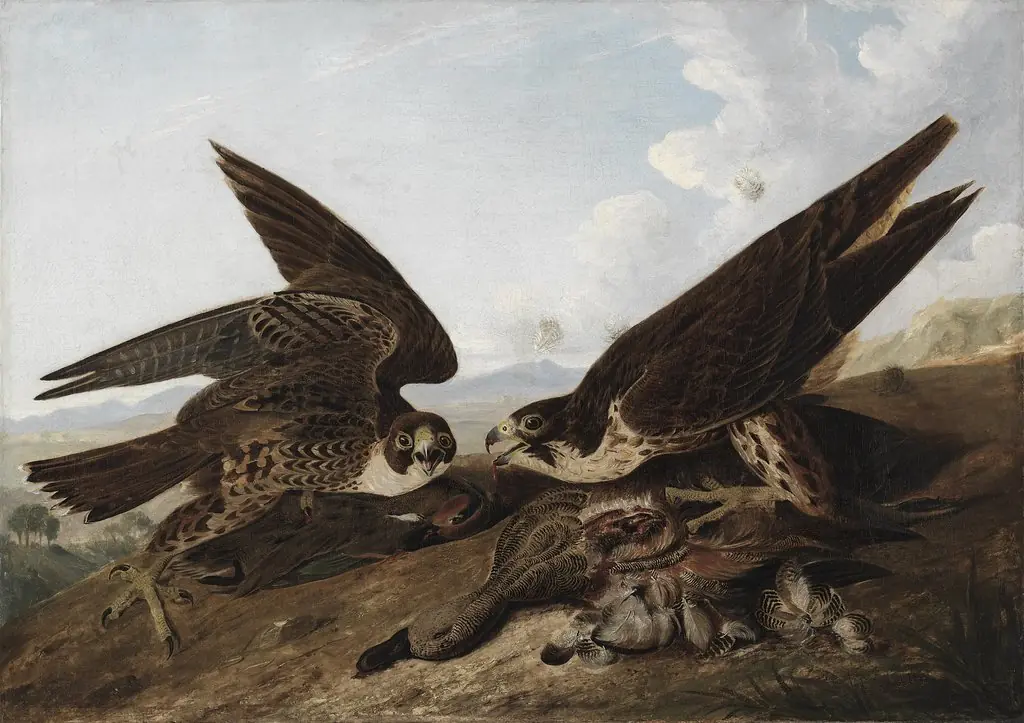
Painted in 1833 by Edwin Landseer, this oil on canvas work presents a quiet, rugged Scottish highland scene inhabited by two rock ptarmigan.
Painted in 1833 by Edwin Landseer, this oil on canvas work presents a quiet, rugged Scottish highland scene inhabited by two rock ptarmigan. The composition centers on the birds’ stillness against a backdrop of weathered stone and distant peaks, under a pale, cloud-streaked sky. The painting’s quiet tone and precise observation reflect Landseer’s interest in natural life, rendered without overt drama but with careful attention to detail.
Subject & Meaning
The two ptarmigan, one lying supine with reddish stains on its feathers and the other upright and alert, suggest a moment of death or injury amid the wilderness. The contrast between motion and stillness evokes the fragility of life in harsh environments. Rather than idealizing nature, Landseer presents it with unembellished realism, hinting at the violence inherent in survival without sentimentality.
Technique & Style
Landseer employed fine brushwork to render the birds’ white plumage and the textured surfaces of rock and sky. The palette is restrained—dominated by cool grays, muted blues, and the subtle reds of blood—enhancing the somber mood. The birds are placed low in the frame, drawing the viewer’s eye to their vulnerability, while the expansive landscape reinforces their isolation within a vast, indifferent terrain.
History & Provenance
The painting was completed in 1833, during Landseer’s early career, when he was gaining recognition for his animal subjects. It entered the collection of the Philadelphia Museum of Art in the 20th century, where it remains today. Its journey from Britain to the United States reflects broader 19th-century patterns of art collecting and the transatlantic interest in British Romantic naturalism.
Context
In the 1830s, British artists increasingly turned to nature as a subject worthy of serious depiction, moving beyond purely mythological or aristocratic themes. Landseer’s focus on wildlife, particularly in remote landscapes, aligned with growing scientific curiosity about natural history and the Romantic fascination with untamed environments, even as industrialization reshaped the British countryside.
Legacy
This work exemplifies Landseer’s role in elevating animal painting beyond decorative genre scenes toward psychological and ecological observation. Though less celebrated than his later canine portraits, this early piece reveals his commitment to portraying nature with emotional nuance and anatomical accuracy, influencing later naturalist painters and wildlife illustrators.
Own this work as a print
Artist & collection

Artist
Sir Edwin Henry Landseer was an English painter and sculptor, well known for his paintings of animals – particularly horses, dogs, and stags. His best-known work is the lion sculptures at the base of Nelson's Column in Trafalgar Square.