Artwork
Sancho Panza and Dapple (from Cervantes' 'Don Quixote')
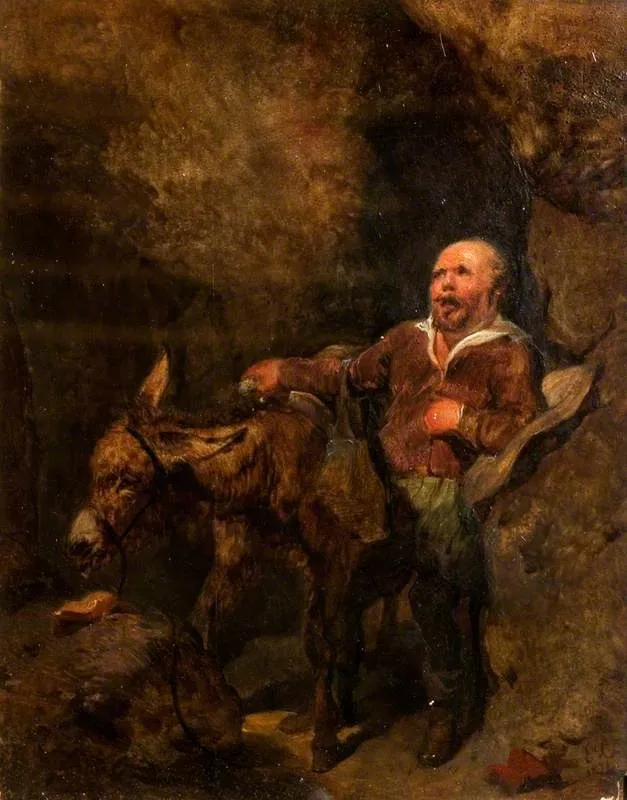
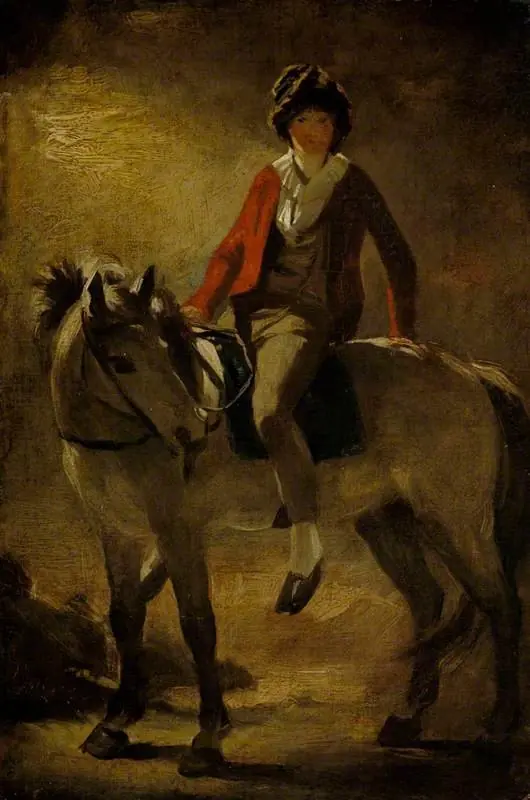
Sancho Panza and Dapple (from Cervantes' 'Don Quixote') is an unspecified painting by Edwin Landseer. It dates from 1824 and is held in the collection of the Victoria and Albert Museum.
About this work
Overview
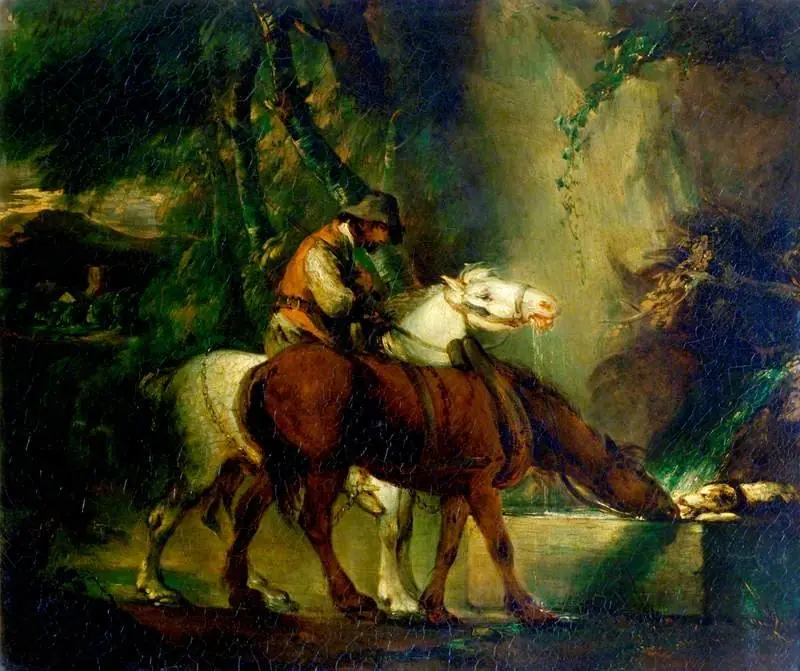
Painted in 1824 by Edwin Landseer, this work illustrates a moment from Cervantes' Don Quixote, focusing on Sancho Panza and his donkey, Dapple.
Painted in 1824 by Edwin Landseer, this work illustrates a moment from Cervantes' Don Quixote, focusing on Sancho Panza and his donkey, Dapple. Rendered in oil on canvas, the scene captures a quiet pause in their journey. The painting is part of the Victoria and Albert Museum’s collection, where it remains one of Landseer’s early literary-inspired compositions, predating his later fame for animal portraiture.
Subject & Meaning
Sancho Panza, faithful squire to the deluded knight Don Quixote, stands beside his donkey in a shadowed landscape. The figure’s modest attire and the donkey’s alert posture suggest a moment of stillness amid their travels. The scene evokes the quiet dignity of ordinary life, contrasting with the grandeur of chivalric fantasy. Landseer emphasizes companionship and endurance, key themes in Cervantes’ narrative.
Technique & Style
Landseer employs a restrained palette of browns and greens, with subtle contrasts to define form in near-darkness. The donkey’s ears and the glint of its bridle draw attention without overt drama. Background lights are faintly suggested, enhancing the nocturnal atmosphere. Brushwork is precise yet unobtrusive, favoring atmospheric depth over theatricality, reflecting early Romantic sensibilities in British art.
History & Provenance
Created when Landseer was twenty-three, the painting was likely made as a study for a larger literary project. It entered the Victoria and Albert Museum’s collection in the 19th century, possibly through a bequest or acquisition tied to the museum’s focus on applied arts and narrative illustration. Its preservation reflects early Victorian interest in literary subjects as legitimate artistic themes.
Context
In the 1820s, British artists increasingly turned to literature for subject matter, seeking moral or emotional resonance beyond classical or religious themes. Landseer’s choice of Sancho Panza aligns with a broader trend of illustrating Cervantes’ novel, which was widely read and admired for its humanism. This work reflects a shift toward domestic, character-driven narratives in British painting.
Legacy
Though not among Landseer’s most celebrated works, this painting illustrates his early engagement with narrative and animal psychology—traits that would define his later career. It stands as a quiet testament to the appeal of literary realism in early 19th-century British art, offering a grounded counterpoint to the era’s more dramatic historical scenes.
Artist & collection

Artist
Sir Edwin Henry Landseer was an English painter and sculptor, well known for his paintings of animals – particularly horses, dogs, and stags. His best-known work is the lion sculptures at the base of Nelson's Column in Trafalgar Square.